Best Charcoal Grill with Rotisserie (2026): Size, Type and Buying Guide
Disclosure: We may earn a commission when you buy through links on this page, at no extra cost to you. As an Amazon Associate I earn from qualifying purchases. Learn more

A plain guide to the best charcoal grill with rotisserie: grill types, sizes, running costs and care for your space and household.
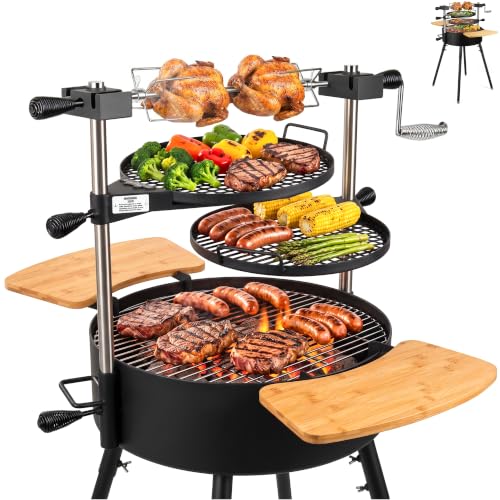
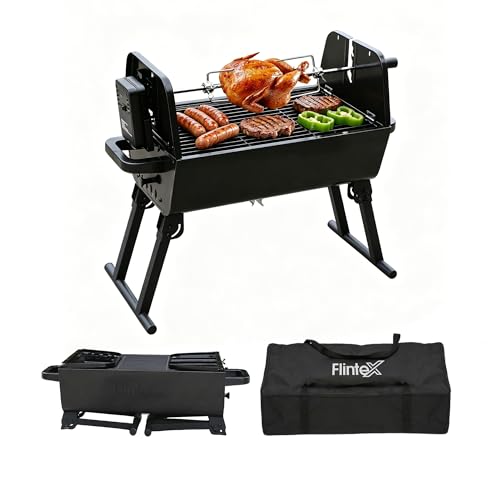
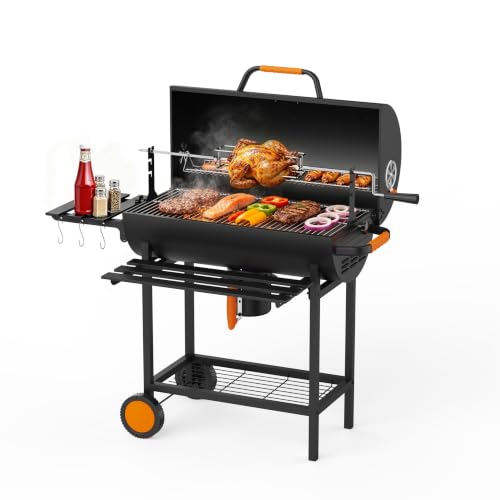
A Sunday chicken turning slowly over charcoal can anchor a family meal, but only if the grill fits your patio, your household, and the way you actually cook. Choosing the best charcoal grill with rotisserie is less about the longest feature list and more about matching cooking area, spit clearance, and heat control to your space and the number of people at your table. This guide walks through sizes, types, fuel costs, and budgets, and the comparison table below sums up the main style choices.



Quick Answer: The Short Version
Start with the space you have and the food you plan to spin. A kettle grill with a rotisserie ring, or a grill sold with its own spit, suits most homes because it grills weeknight meals well and still handles a whole chicken or a small roast. Tight patios point you toward compact models, and our guide to the best charcoal grill covers strong options without a rotisserie if you decide the spit is optional. Larger barrel and kamado styles reward bigger gatherings but demand more floor space and more charcoal.
Before You Buy: A Quick Checklist for Choosing a Charcoal Grill
Size: Match It to Your Space
Measure the spot where the grill will live, then leave clear room on every side for the lid, the motor, and safe movement while you carry hot food. An 18 inch kettle fits a small patio and cooks for two to four people, while a 22 inch model gives you space for a whole chicken on the spit plus vegetables on the grate. A 26 inch grill suits larger families but needs a generous footprint. If floor space is truly tight, look at the options in our guide to the best small charcoal grill before you commit.
Which Type Fits Your Routine
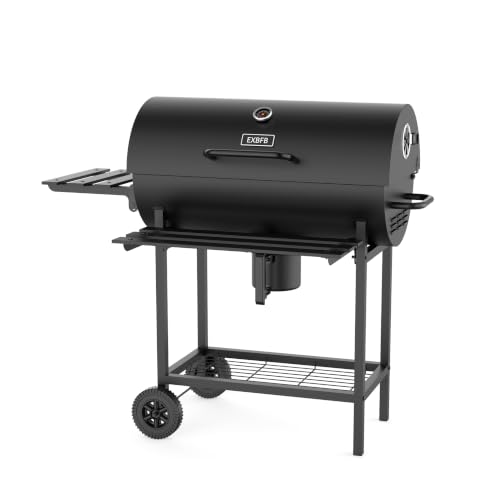
Kettle grills are the most flexible choice, since a ring raises the lid and creates the headroom a spinning chicken needs. Barrel grills offer a long cooking chamber that suits larger roasts, but they take up more patio length. Kamado grills hold heat with thick ceramic walls and sip fuel during long cooks, though they weigh a great deal and cost more. Portable and tabletop models travel well for camping and tailgating, and our roundup of the best portable charcoal grill explains what those compact designs can realistically hold.
Features Worth Paying For, and Ones to Skip
Pay for a sturdy spit rod, forks that grip firmly, and a motor with enough strength for unbalanced loads, because a stalled roast cooks unevenly. An adjustable charcoal tray or a divided coal bed helps you move heat away from dripping fat. A removable ash catcher speeds cleanup, and a side table gives you a landing spot for tongs and trays. Skip novelty extras you will rarely use, such as extra warming racks that crowd the lid or decorative trim. If smoking matters as much as spinning, compare the models in our guide to the best charcoal grill with smoker.
Fuel Type and Running Cost
Lump charcoal lights fast and burns hot with little ash, while briquettes burn longer and more evenly for a rotisserie cook that may run past an hour. Budget for charcoal as an ongoing cost, since a large grill burns noticeably more fuel per session than a compact one. A chimney starter removes the need for lighter fluid and gives you reliable ignition, and our tutorial on how to start a charcoal grill covers the timing. Store charcoal somewhere dry, because damp fuel is hard to light.
Cooking Area and Heat Output
Manufacturers list cooking area in square inches, but rotisserie cooking depends more on clearance than on grate size. Measure the distance from the spit rod to the lid and to the coal bed, because a tall bird must clear both through a full turn. Charcoal grills rarely use BTU ratings the way gas grills do, since output depends on the amount of charcoal and the airflow you allow. Two smaller coal piles banked to the sides usually beat one large pile under the food, which can flare and scorch the skin.
Build Materials and Rust Resistance
A porcelain enamel coating over steel resists rust well if you avoid chipping it with metal tools. Stainless steel parts handle weather better and clean up easily, though thin stainless steel can discolor under high heat. Cast iron grates hold heat and mark food nicely but need seasoning and dry storage to stay free of rust. Check the legs, wheels, and motor bracket as closely as the bowl, because wobble under a heavy roast is both annoying and unsafe.
Realistic Budget Ranges
Under about $100, expect a basic kettle and a simple add on rotisserie kit with modest motor strength. Between about $100 and $300, you get sturdier construction, better ash handling, and kits designed for the grill rather than adapted to it. From about $300 to $500, thicker materials, smoother dampers, and stronger motors become common. Above about $500, kamado and premium barrel designs offer insulation and longevity, but results still depend on your fire management.
Types Compared: Three Styles That Suit Real Homes
Compare the three styles below against your space, household size, and routine.
Kettle Grills With a Rotisserie Ring
This is the default choice for most homes. A metal ring sits between the bowl and the lid, raising the lid and holding the spit at the right height. You keep a versatile grill for burgers and steaks on ordinary days, then add the ring when you want a chicken or roast. Parts and replacement kits are widely available. The trade off is capacity, since a very large bird will crowd a standard kettle and may not clear the lid.
Kamado Grills With a Rotating Insert
Kamado models use a rotating cooking insert in place of a traditional spit on some designs, or accept a spit within their deep chamber. Their insulation holds a steady temperature for long, slow turns and uses less charcoal per cook. They suit keen cooks who also bake, roast, and smoke in the same vessel. The drawbacks are weight, price, and fragility during moves, since ceramic can crack if the grill tips or drops.
Barrel and Santa Maria Style Grills With a Spit
Long barrel grills and Santa Maria designs give you the most room for large cuts and multiple items turning together, which suits big family gatherings. Some let you raise or lower the cooking surface to manage heat, a real advantage when fat drips and flames rise. They demand the most patio space and the most charcoal, and their lids and seals vary widely in quality. Pick this style only if you regularly cook for a crowd.
Our Selection Process
We weighed cooking area, spit clearance, heat control, build quality, fuel use, assembly effort, and cleaning when comparing styles for this guide. The criteria come from manufacturer specifications and from patterns in verified buyer feedback about motors, fit, and durability. Treat the guidance as a framework for your own shortlist.
Do You Really Need a Rotisserie on a Charcoal Grill?
A best charcoal grill with rotisserie setup earns its cost when you cook whole birds and roasts often enough to enjoy slow, even browning and meat that bastes in its own juices as it turns. If you mostly grill chops, burgers, and vegetables, a standard grate gives you similar results with less gear to store and clean. Many kettles accept a ring kit later, so you can start plain and add the spit once you know you will use it. New owners will find our guide on how to use a charcoal grill useful for vents, zones, and timing before the first spin.
Safety belongs in this decision as well. Keep the motor cord away from the hot bowl, place the grill on a level surface away from walls and railings, and use heat resistant gloves when you handle the spit, because the rod and forks stay hot long after the food comes off.
Common Buying Mistakes to Avoid
- Buying a 26 inch grill for a small patio, then discovering the lid and motor leave no safe working room.
- Checking grate size but not spit clearance, so a tall chicken scrapes the lid or drags through the coals.
- Choosing the cheapest motor available, which stalls under a heavy or poorly balanced roast.
- Forgetting ongoing costs for charcoal, replacement grates, and a cover when setting the total budget.
- Paying for smoking or searing extras you never use while skimping on ash cleanup you face after every cook.
- Assuming a rotisserie kit fits every grill of the same diameter, when ring shape and lid fit vary by design.
Cost of Ownership and Care
Beyond charcoal, plan for replacement cooking grates, new spit forks, and an occasional motor over the life of the grill. Empty ash after each cook once it is fully cold, because ash holds moisture against the bowl and speeds rust. Brush the grate while it is warm, wipe the exterior with a damp cloth, and oil cast iron lightly before storage. Keep the motor indoors, since rain is its fastest route to failure. Check bolts, legs, and wheels each season so a loaded spit never meets a wobbly frame.
FAQ
How do you clean the spit rod and forks after rotisserie cooking?
Let the rod and forks cool until you can handle them safely, then soak them in hot soapy water to loosen baked on juices. A nylon brush handles most residue without scratching the finish, and a paste of baking soda helps on stubborn spots. Dry every part fully before storage, because the fork tines trap moisture in their crevices. Keep the motor housing away from water entirely and wipe it with a dry cloth instead.
How long does a charcoal grill usually last?
A well kept steel kettle often serves for many years, and the bowl usually outlasts the grates, ash sweep, and wheels that wear first. Treat rust spots early by cleaning them and touching up exposed metal, since small patches spread once the coating fails. A bowl that has rusted through, or legs that no longer hold the grill steady, signal replacement rather than repair. Ceramic kamado bodies can last far longer, provided the shell never cracks from impact or sudden temperature shock.
Is a charcoal grill worth it for quick weeknight meals?
It can be, if you adjust your method to the clock. Use a smaller bed of charcoal and a chimney starter, and choose thinner cuts that cook soon after the coals are ready. Foods like skewers, sausages, and fish fillets suit this faster routine better than a whole chicken does. The real trade off is planning, since charcoal asks for a lighting window that a gas burner does not.
Do you need to truss a chicken before putting it on a rotisserie?
Yes, trussing matters more on a spit than on a grate. Tie the legs together and secure the wings close to the body so nothing flops as the bird turns. Loose parts swing the load off balance, strain the motor, and cook unevenly, and a dangling wing can catch on the grate. Center the bird on the rod and tighten both forks firmly before you start the fire, then try one slow turn by hand to confirm it clears everything.
What size rotisserie setup do you need for a whole turkey?
Measure the bird against the clearance between the spit rod, the lid, and the coal bed, and confirm the motor rating covers the full weight of the bird plus the rod. A counterbalance helps heavier loads turn smoothly and reduces strain on the motor gears. Most standard kettles suit a modest turkey at best, so choose a larger grill if a holiday bird is a firm plan.
Final Thoughts
Match the style to your home first, then check spit clearance, motor strength, and build quality before you spend on extras. The product table above pulls those trade offs together so you can compare at a glance. For most households, a kettle with a well fitted ring is the best charcoal grill with rotisserie choice, offering everyday grilling plus the occasional slow turned roast without taking over the patio. Measure your space, count your usual diners, and let those two facts lead the decision.