Best Charcoal Grill Under $100 (2026): Size, Type and Budget Guide
Disclosure: We may earn a commission when you buy through links on this page, at no extra cost to you. As an Amazon Associate I earn from qualifying purchases. Learn more
A plain guide to the best charcoal grill under 100 dollars: grill types, sizes, running costs and care for your patio and household.
A small patio, a shared yard, and four hungry people on a Saturday can make a big grill feel like the wrong purchase. A compact grill that fits your space and your routine will get used far more often. If you are looking for the best charcoal grill under 100 dollars for everyday family cooking, this guide helps you choose by space, household size, and total cost, and the comparison table below sums up the main types at a glance.
You do not need a long list of features at this price. You need enough cooking area for your usual meals, simple control of the fire, and a body that cleans up without fuss.



Quick Answer: What Fits Most Homes Under $100
For most homes, a 22 inch kettle grill offers the best balance of cooking area, lid control, and simple storage. It handles burgers, chicken pieces, and vegetables for a family without crowding the grate. Homes with a balcony, a tiny patio, or only one or two people to feed often do better with an 18 inch kettle or a portable model that stores in a closet or car trunk.
Small barrel and hibachi styles suit compact yards and cooks who mostly grill over direct heat for short sessions. They take up little room, but they give you less lid space and less control for slower cooking. Decide the type from your space and group size first, before you look at extras.
Before You Buy: A Quick Checklist for Choosing a Charcoal Grill
Size: Match It to Your Space
Measure the spot where the grill will sit and where it will be stored, and leave clear space around it while it is hot. An 18 inch grate suits one or two people and a narrow balcony, while a 22 inch grate gives a family of four room to move food away from direct heat. A 26 inch grill is rarely found under $100 and needs a larger yard. If floor space is your main limit, compare footprints in our guide to the best small charcoal grill before you buy.
Which Type Fits Your Routine
Kettle grills are the most flexible choice at this price, because the deep bowl and domed lid support both direct grilling and slower cooking with the lid closed. Barrel grills give a long grate that suits rows of sausages or corn, but many budget models lose heat through thin lids. Portable and tabletop models are built for picnics, camping, and very small homes, and hibachi grills are simple open grates for fast cooking over high heat. Ceramic kamado grills, offset smokers, and large Argentine or Santa Maria styles almost always cost well above this budget.
Features Worth Paying For and Ones to Skip
Pay for adjustable vents on the lid and bowl, because airflow is how you raise or lower the temperature. An ash catcher or a removable ash pan is also worth it, since it keeps cleanup quick and stops ash from blowing across a patio. Sturdy legs and a plated steel cooking grate matter every time you cook. Skip costly extras at this price, such as a rotisserie kit, a large side table, or a built in smoker box, because the money is better spent on thicker steel and a lid that seals well.
Fuel Type and Running Cost
All of these grills burn charcoal, but your ongoing cost depends on how much you use per cook and how often you grill. Briquettes burn evenly and for a long time, which suits family meals, while lump charcoal lights fast and burns hotter for searing, though the pieces vary in size. A chimney starter removes the need for lighter fluid and gives you lit coals in about 20 minutes.
Cooking Area and Heat Output
Charcoal grills are not rated by BTU the way gas grills are, because heat comes from the amount and arrangement of the coals. Judge a grill by its cooking area in square inches and by how much charcoal the bowl holds. About 200 square inches suits two people, while about 350 to 400 square inches gives a family room for a main dish and sides at once. A deeper bowl lets you bank coals to one side for a hot zone and a cooler zone.
Build Materials and Rust Resistance
Most grills under $100 use thin steel with a porcelain enamel coating on the bowl and lid, and that coating is your main defense against rust. Check that the coating looks even, with no bare spots around the rim or leg joints. Thicker steel holds heat more steadily and resists dents, but it adds weight. Stainless steel parts appear mostly on small fittings at this price, not on the whole body.
Realistic Budget Ranges
Spending under $100 buys a sound kettle, portable, or hibachi grill with basic vents and an ash pan, but you give up thick steel and large cooking areas. At about $200 to $300, grills add better coatings, hinged grates, and more stable carts. At about $500 and above, you find heavier construction built for frequent smoking. When you shop for the best charcoal grill under 100 dollars, focus on fit and build basics rather than chasing features that belong to a higher tier.
Types Compared: What Your Money Buys Under $100
Kettle Grills for Everyday Family Cooking
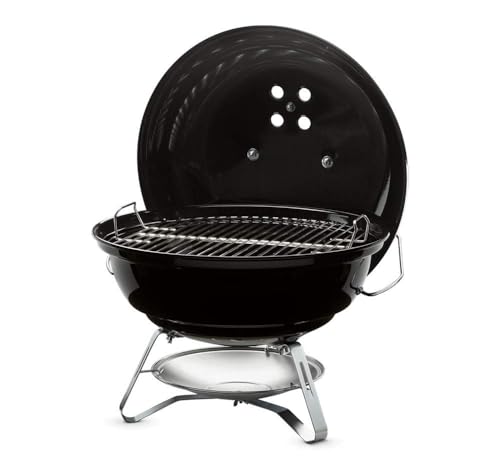
A kettle grill is the safest starting point for a home that grills a mix of foods each week. The round grate and tall lid let you cook chicken with the lid down, sear steaks over banked coals, and keep finished food warm on the cooler side. Most family size kettles at this price are simple to assemble. The main tradeoff is storage height, since the lid and legs need more room than a flat portable model. For a broader view of sizes and prices, see our guide to the best charcoal grill.
Portable and Tabletop Grills for Small Spaces
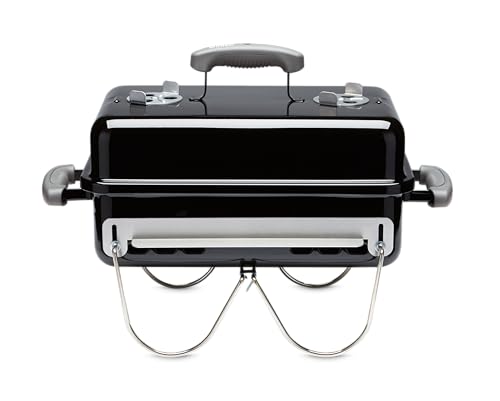
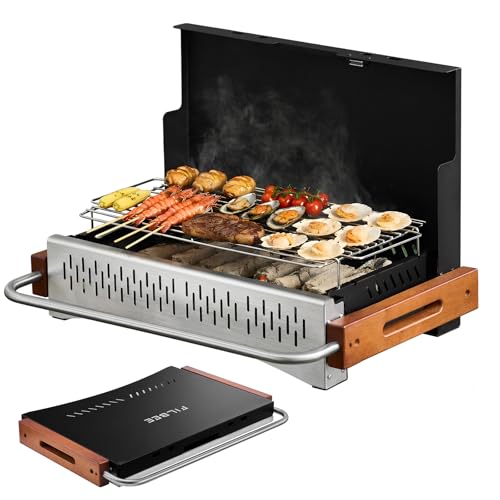
Portable and tabletop grills suit renters, balcony cooks, and anyone who grills at a park or campsite as often as at home. They light fast, use little charcoal, and store on a shelf when the meal is done. The limit is capacity, since a small grate cooks in batches for a group, and short legs mean you need a stable, heat safe table. If portability is your top need, compare the options in our guide to the best portable charcoal grill alongside the kettles above.
Small Barrel and Hibachi Grills for Compact Yards
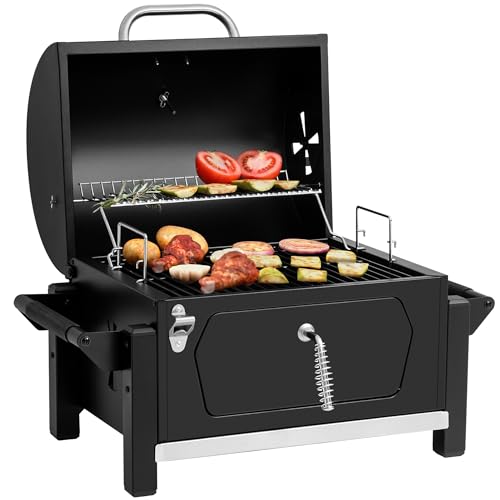
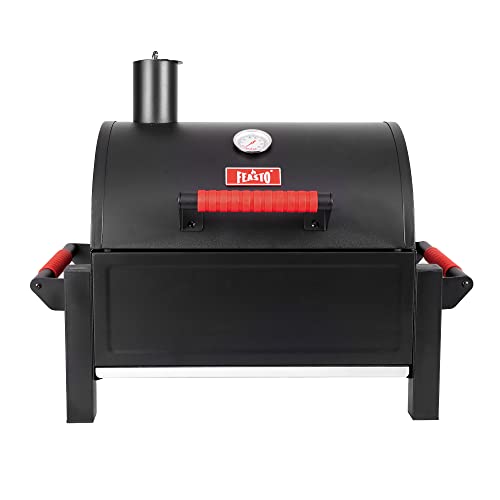
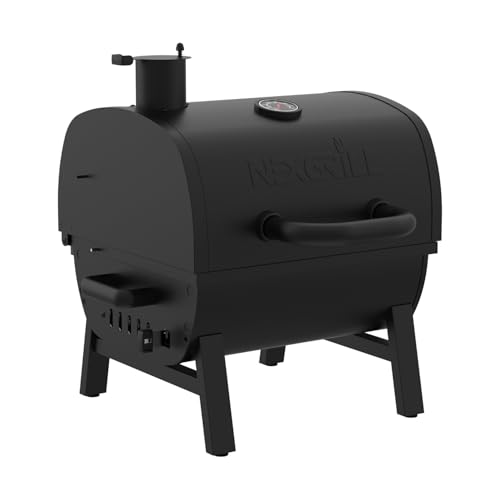
A small barrel grill gives you a rectangular grate that fits long foods neatly and often includes a simple warming rack. It works well for a compact yard where a round kettle would waste corner space. A hibachi is even simpler, with an open cast iron or steel grate that gets very hot for skewers and thin cuts, but it offers no lid for slower cooking. Both need closer attention to the fire, because there is less room to move food away from flare ups.
Our Selection Process for Charcoal Grills at This Price
This guide ranks types and criteria, not individual models. We compare cooking area, vent design, ash handling, materials, and assembly needs using manufacturer specifications and the patterns that show up in verified buyer feedback. We favor designs that fit common patios, feed typical household sizes, and clean up quickly after a weekday meal.
What You Get and Give Up Under $100
Under $100, you get real charcoal flavor, simple parts, and a grill that is cheap to repair, because grates and ash pans are widely sold as spares. You give up the thick steel that holds temperature for hours, the tight lid seals that make long smoking easy, and extras such as carts with shelves or gas assisted lighting. If you plan to smoke large cuts often, look at our guide to the best charcoal grill with smoker to see what the next price step adds.
You also give up some convenience compared with other fuels. Charcoal needs lighting time, ash disposal, and a dry place to store the bag. If you are weighing that tradeoff, our charcoal vs pellet grill comparison lays out the cost and effort differences. For many homes, the lower purchase price offsets the extra minutes spent lighting coals.
Common Buying Mistakes to Avoid
- Buying a grate that is too large for your patio, so the grill crowds walkways and is hard to store.
- Choosing by feature count alone and ending up with thin steel and a lid that leaks heat.
- Forgetting the cost of a chimney starter, a cover, and replacement grates when you set your budget.
- Picking a tabletop model for a large family, which forces you to cook every meal in small batches.
- Ignoring vent design, then struggling to lower the temperature when food cooks too fast.
Cost of Ownership and Care
Ongoing costs stay modest if you plan for them. A bag of briquettes for regular weekend use, a replacement grate every few seasons, and a cover to keep rain off the lid are the main expenses. There are no burners, igniters, or gas hoses to replace, which keeps long term upkeep simple and cheap for most homes.
Care is mostly about ash and moisture. Let coals cool fully, empty the ash pan after every few cooks, and brush the grate while it is still warm so residue comes off easily. Wipe the outside with a damp cloth, check the legs and vents for rust spots, and store the grill under a cover or indoors during wet months. Good habits here add seasons of use, and our guide on how to use a charcoal grill covers safe everyday handling in more detail.
FAQ
Can you get a good charcoal grill for under $100?
Yes, if good means a grill that cooks family meals reliably and cleans up without fuss. At under $100, a simple kettle with adjustable vents and an ash catcher covers burgers, chicken, and vegetables very well. What you will not get is heavy steel for long smoking sessions or a large cart with shelves.
How long does a charcoal grill under $100 last?
With regular ash removal and dry storage, a budget charcoal grill often lasts about 3 to 5 years of frequent use. The bowl coating and the cooking grate usually wear first, because heat and moisture attack them at every cook. Keeping the grill covered and replacing a worn grate instead of the whole grill can stretch that life further.
Is a charcoal grill worth it compared with a gas grill?
For many homes, yes, because the purchase price is far lower and the flavor from real coals is hard to match. The tradeoff is time, since you wait for coals to light and you manage the fire by hand. If your household grills on busy weeknights and values speed above all, gas may fit better. If weekend flavor and a low starting cost matter most, charcoal wins.
What is the best charcoal grill under $100 for a small family?
For a small family, the best fit is usually a 22 inch kettle, because it cooks a main dish and sides in one round without crowding. Look for vents on both the lid and the bowl, an ash catcher you can empty with one hand, and legs that feel stable on your patio surface. An 18 inch kettle is the better pick only when storage space is tight, since its smaller grate means cooking in batches for four people.
What makes one budget charcoal grill brand more reliable than another?
Reliability at this price comes from construction details rather than a name. Look for an even porcelain enamel coating, welds that feel solid at the leg joints, and spare grates and ash pans that are easy to order. A simple design with standard parts will usually outlast a feature heavy model built from thin, painted steel.
Final Thoughts
Start with your space and your usual group size, then pick the type that fits that routine. A 22 inch kettle suits most families, a portable model suits small homes and trips away, and a compact barrel or hibachi suits fast cooking in a tight yard. Use the product table above to compare cooking area and ash handling side by side, and choose the best charcoal grill under 100 dollars for the way your household actually cooks, not for the longest feature list.