Best Charcoal Grill for Beginners (2026): Size, Type and Buying Guide
Disclosure: We may earn a commission when you buy through links on this page, at no extra cost to you. As an Amazon Associate I earn from qualifying purchases. Learn more
A plain guide to the best charcoal grill for beginners: grill types, sizes, running costs and care for your space and household.
Picture your first Saturday cookout at home. The burgers are ready, the family is hungry, and you are standing over a grill you barely know, guessing at vent settings and hoping the coals stay lit. That moment is exactly why the best charcoal grill for beginners is not the biggest or fanciest model on the shelf. It is the one that fits your patio, your household, and your patience while you learn.
This guide helps you choose by space, household size, and budget instead of by marketing claims. Work through the checklist below, compare the three grill styles that suit most new cooks, and use the comparison table below to line up sizes and features before you spend anything.





Quick Answer: The Short Version for New Grillers
For most homes, a 22 inch kettle grill is the safest first purchase. It gives you room to cook for four or five people and simple vents for learning heat control. Smaller households can start with an 18 inch model and spend less. If you want the wider picture beyond starter needs, our guide to the best charcoal grill covers the full range of styles and sizes.
Before You Buy: A Quick Checklist for Choosing a Charcoal Grill for Beginners
Seven checks decide whether a grill feels friendly in your first season or fights you every weekend.
Size: Match It to Your Space
An 18 inch grill cooks comfortably for one or two people and tucks into a corner of a small patio. A 22 inch grill is the middle ground most families land on, with room for a full load of burgers plus a cooler zone for vegetables. A 26 inch grill suits big gatherings but eats storage space and burns more charcoal per cook. If floor space is your tightest limit, look at the best small charcoal grill options before you commit to a full size kettle.
Which Type Fits Your Routine
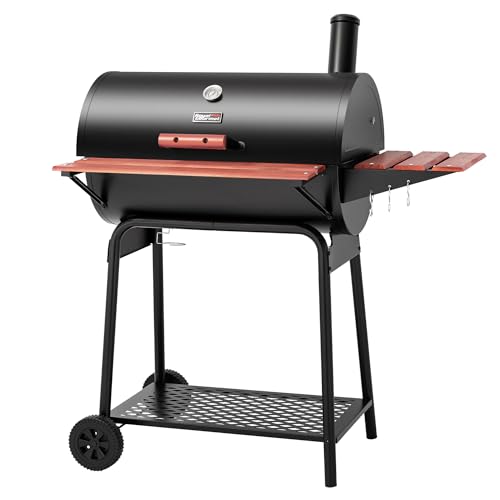
Kettle grills are the classic starter shape, with a round bowl, a domed lid, and vents top and bottom that make heat control easy to learn. Barrel grills give a long cooking surface for ribs but use more fuel. Kamado grills hold heat superbly, yet they are heavy and cost far more than most beginners need to spend. Portable and hibachi styles cook small amounts fast and store in a closet. For weekly family dinners, the kettle shape is hard to beat.
Features Worth It (and Ones to Skip)
Pay for vents that move smoothly, a removable ash catcher, a hinged cooking grate that lets you add coals without lifting food off, and legs that feel planted when you lean on the lid handle. A lid thermometer helps you learn, even if it reads roughly. Skip the rotisserie kits, pizza attachments, and electronic fan controllers in your first year. Those extras solve problems you do not have yet, and each one adds parts to clean and store.
Fuel Type and Running Cost
Charcoal is a steady ongoing cost, so think in bags per season rather than price per bag. A household grilling twice a week through summer might use roughly a bag every two or three weeks, depending on grill size. A chimney starter costs about $15 to $25 once and removes the need for lighter fluid for good. Store bags off the floor in a dry spot, because damp charcoal lights poorly and burns unevenly.
Cooking Area and Heat Output
Cooking area is the number that matters, listed in square inches. A typical 18 inch kettle offers about 240 square inches, while a 22 inch kettle offers about 360 square inches, enough for roughly a dozen burgers at once. Ignore BTU figures in listings, because that rating belongs to gas grills. On a charcoal grill, heat comes from how much coal you load and how far you open the vents, so a modest grill can still sear hard with coals piled on one side.
Build Materials and Rust Resistance
Porcelain enamel over steel is the standard beginner friendly finish, since it sheds rain and wipes clean, and it lasts until the enamel chips. Stainless steel resists rust well but costs more. Cooking grates come in plated steel, which is light and cheap, or cast iron and stainless steel, which hold heat better and survive longer. Whatever you choose, check the leg joints and the ash pan, because thin metal in those spots is where bargain grills fail first.
Realistic Budget Ranges
Under $100 buys a basic small kettle or portable grill with plated grates and simple vents, a fair way to learn. About $100 to $200 is where most beginners should shop, since this range brings an ash catcher, a hinged grate, and sturdier legs. About $200 to $300 adds better enamel and a built in thermometer. Above $300 you are paying for heavier materials and longer service life rather than better food, so spend there only if you plan to grill for many years.
Grill Styles Compared: Three Ways to Start
Instead of chasing specific models, match your home to one of these three styles, each covering a different mix of space and budget.
The Standard Kettle for Most Homes
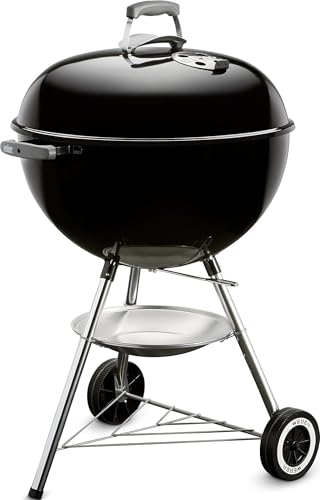
A 22 inch kettle on a wheeled stand is the default choice for a family of three to five with a normal patio. You get two zone cooking by banking coals to one side, a lid that turns the grill into a small oven for chicken pieces, and parts that stay easy to find years later. The trade off is storage, since the round bowl and stand claim a footprint you cannot fold away between cooks.
The Compact Grill for Small Spaces and Small Budgets
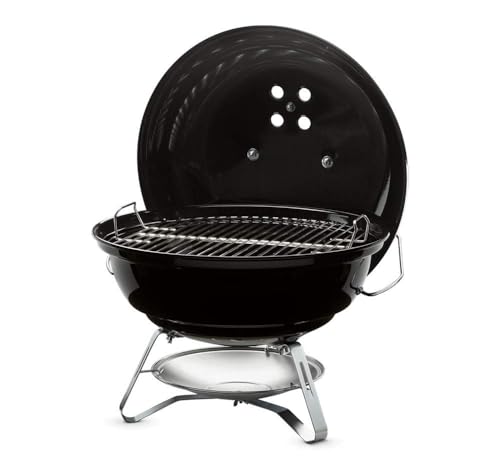
If you cook for one or two on a balcony or a tailgate, an 18 inch kettle or a sturdy portable grill keeps the hobby cheap and the cleanup short. Short legs and folding designs store in a closet or car trunk, and the smaller coal load lowers fuel cost per cook. Our roundup of the best portable charcoal grill models shows how much cooking room you give up at each size, which is the main compromise here.
The Heavier Grill as a Long Term Investment
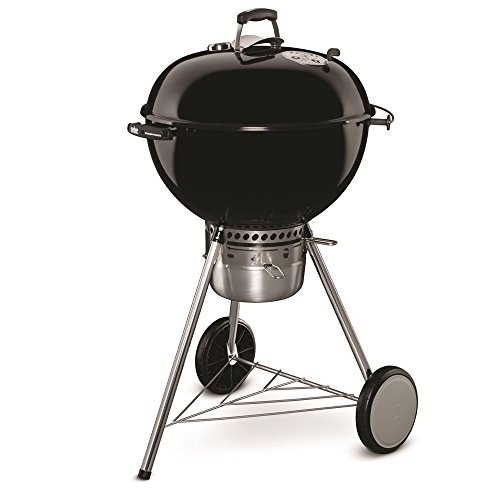
Some beginners know they will grill weekly for a decade, and for them a heavier enamel kettle with a full ash management system, a hinged stainless grate, and a cart frame with a work surface makes daily use calmer. Ash drops into an enclosed container instead of blowing across the patio, and the cart gives you a place to set trays down. You pay roughly double the midrange price, but you buy it once.
How to Judge Any Grill You Are Considering
Score every candidate on the same five points: cooking area for your household, vent control that moves in small steps, build quality in the bowl and legs, fuel use per cook, and how assembly and cleaning look in the manual. Weigh manufacturer specifications against patterns in verified buyer reviews, especially repeat comments about wobbly legs or vents that stick. A grill that scores evenly across all five will serve you better than one that shines in a single area.
Living With It: What Really Matters Day to Day
The honest rhythm of charcoal cooking is about 15 to 20 minutes of lighting and waiting before food goes on, then relaxed cooking once the coals settle. Beginners often enjoy that pause once they expect it, and our walkthrough of how to use a charcoal grill shows the simple vent routine that keeps temperatures steady. Plan where the grill lives before you buy, since a grill stored three steps from the kitchen door gets used far more than one buried in a shed.
Charcoal asks more of you than a pellet grill, which feeds fuel on its own and holds a set temperature. In return you get higher searing heat, lower purchase cost, and no dependence on electricity or mechanical parts. If you are torn between the two, the side by side in charcoal vs pellet grill lays out the effort, flavor, and cost differences in plain terms.
Common Buying Mistakes to Avoid
- Buying a 26 inch grill for a household of two, so every small cook wastes charcoal and storage space.
- Choosing by cooking area alone and ignoring vent quality, which leaves you unable to hold a steady low temperature.
- Skipping the ash catcher to save money, then dealing with ash blowing across the patio after every cook.
- Forgetting to measure your storage spot, so the new grill spends winter uncovered and rusts early.
- Spending the whole budget on the grill and leaving nothing for a chimney starter, a cover, and a spare bag of charcoal.
Cost of Ownership and Care
Beyond charcoal, budget for a cover at about $20 to $40, a replacement grate every few years, and a coil brush as needed. Let ash cool fully, ideally a full day, then empty it into a metal container with a lid, never into a plastic bin or paper bag. Brush the grate while it is still warm after cooking, and oil it lightly before the next cook to slow rust. Always grill outdoors in open air, since charcoal produces carbon monoxide that is dangerous in enclosed spaces, and keep the grill away from siding and overhangs while it is lit.
Your Questions, Answered
What makes a charcoal grill brand reliable for a beginner?
Reliability shows up less in the logo and more in support. A dependable maker keeps replacement grates, dampers, and leg parts in stock for years, publishes clear assembly manuals, and honors warranty claims without a fight. Before you buy, search the brand site for the spare parts list of the exact size you want. If parts for older models are still sold, that is a strong sign your grill can be repaired instead of replaced.
How do you clean a charcoal grill between different foods?
For back to back cooks with different flavors, such as fish followed by chicken, let the grate run hot with the lid closed for about ten minutes after the first food comes off. The heat burns residue down to pale ash that brushes away easily, and the next food picks up far less of the earlier flavor. Wipe the grate with a lightly oiled paper towel held in tongs before reloading, which also refreshes the nonstick layer of seasoning on the metal.
Is a charcoal grill worth it for a beginner?
Yes, if you accept a short learning period. Most new cooks need about three sessions to get a feel for vent positions, and the first session often runs too hot or too cool. After that, the skills transfer to almost every grill you will ever use, and the flavor from real coals is something gas cannot copy. If weeknight speed matters more than flavor, a small gas grill may suit you better.
How long does a charcoal grill last?
A midrange enamel kettle kept under a cover commonly serves about five to ten years, while thin bargain models stored outdoors without cover may rust through in two or three. The bowl and lid usually outlast the parts, so expect to replace the cooking grate and ash sweeps once during that span. Storing the grill under a roof edge or in a garage, even without a cover, often adds more life than any upgrade in metal thickness.
Should a beginner use lump charcoal or briquettes?
Briquettes are the easier training fuel, since they are uniform in size and burn at a steady, predictable rate for an hour or more. Lump charcoal lights faster and responds quicker when you open the vents, but piece sizes vary and it burns hotter for a shorter time. Many beginners start with briquettes for the first season, then try lump for high heat searing once vent control feels natural. Either way, avoid instant light products if you dislike chemical smells near food.
Final Thoughts
Start with the size your space and household truly need, spend in the middle budget range, and put vents and ash handling ahead of extras. Do that, and the best charcoal grill for beginners for your home stops being a guess and becomes an easy call. When your grill arrives, read our guide on how to start a charcoal grill before the first cook, and compare your short list against the product table above.