Best Chandeliers for Living Room in 2026: Buying Guide
Disclosure: We may earn a commission when you buy through links on this page, at no extra cost to you. As an Amazon Associate I earn from qualifying purchases. Learn more

A living room chandelier guide covering size, brightness, warm color temperature, dimming, style and installation.
A living room chandelier has a harder job than most fixtures in your home. It has to light conversation, reading, and movie nights, and it also hangs in plain sight as the main decorative piece of the room. Shoppers often stall on the same questions: how bright is bright enough, what size fits the space, and which style will still look right in five years. This guide walks you through finding the best chandelier for living room use by comparing types, brightness, size, and installation, so you can judge the options in the comparison table below with confidence.




Who Should Buy Which Chandelier for the Living Room?
Hosts Who Entertain Often
If your living room regularly holds a crowd, you need broad, even light that reaches the corners of the seating area rather than a single bright pool in the middle. Look for fixtures with many arms or tiers and bulbs that point outward or upward, since that spread reduces harsh shadows on faces. A dimmer matters here too, because full brightness suits a gathering while lower light suits a quiet evening after guests leave.
Families Who Read and Watch TV in the Same Room
A room that doubles as a reading spot and a TV room needs light you can control in layers. Choose a chandelier with a dimmer or separate circuits so the fixture can support a book at one end of the sofa without washing out the screen at the other. Shades or frosted bulbs help here, because bare bulbs create glare that reflects on the screen and tires your eyes during long viewing sessions.
Homeowners Refreshing a Room on a Budget
If the chandelier is part of a wider refresh with paint and new textiles, the fixture should carry the style of the room without consuming the whole budget. Simpler metal or rattan designs cost less than crystal, and many accept standard bulbs you may already own. Spend on correct size first, since a well proportioned simple fixture looks better than a small ornate one lost on a large ceiling.
Chandelier Types Compared
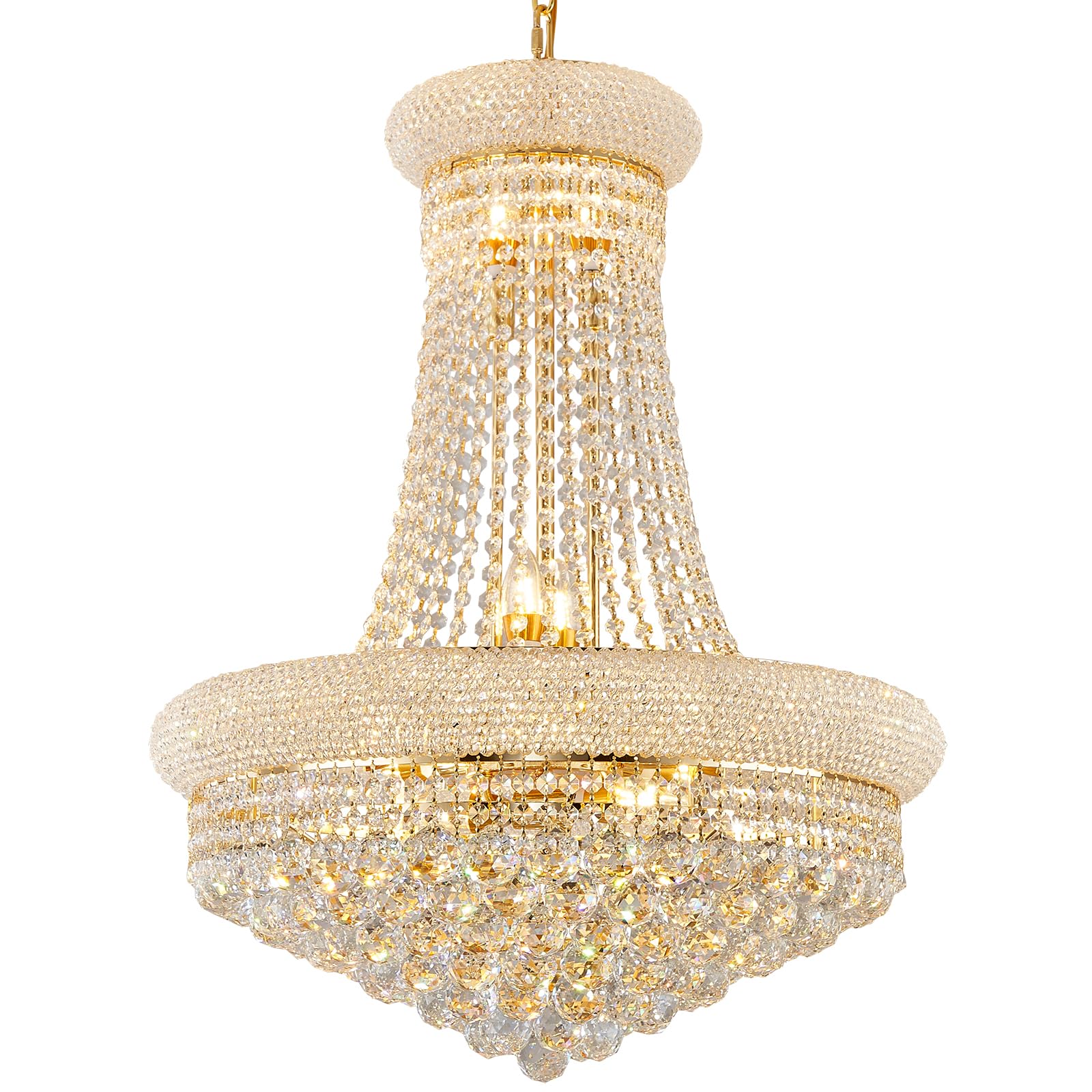
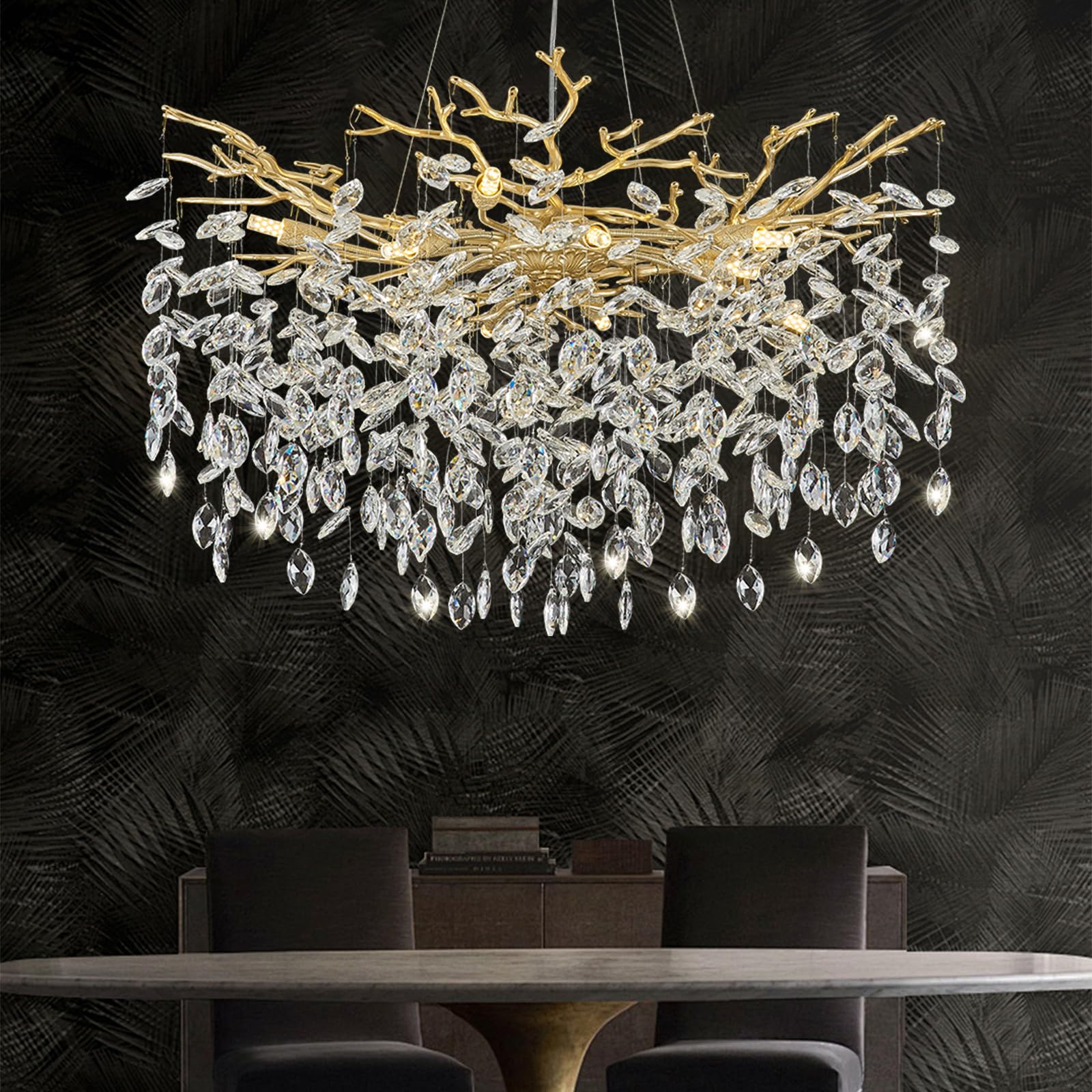
Style is the first filter, because a fixture that fights your furniture will bother you every day no matter how well it performs. Crystal chandeliers use cut glass pieces to scatter light and suit formal rooms with traditional furniture. Modern designs use clean lines, geometric frames, and finishes such as matte black or brushed gold, and they pair well with low profile sofas and uncluttered rooms. If you lean toward that look, our guide to the best modern chandelier styles covers the main shapes in more depth.
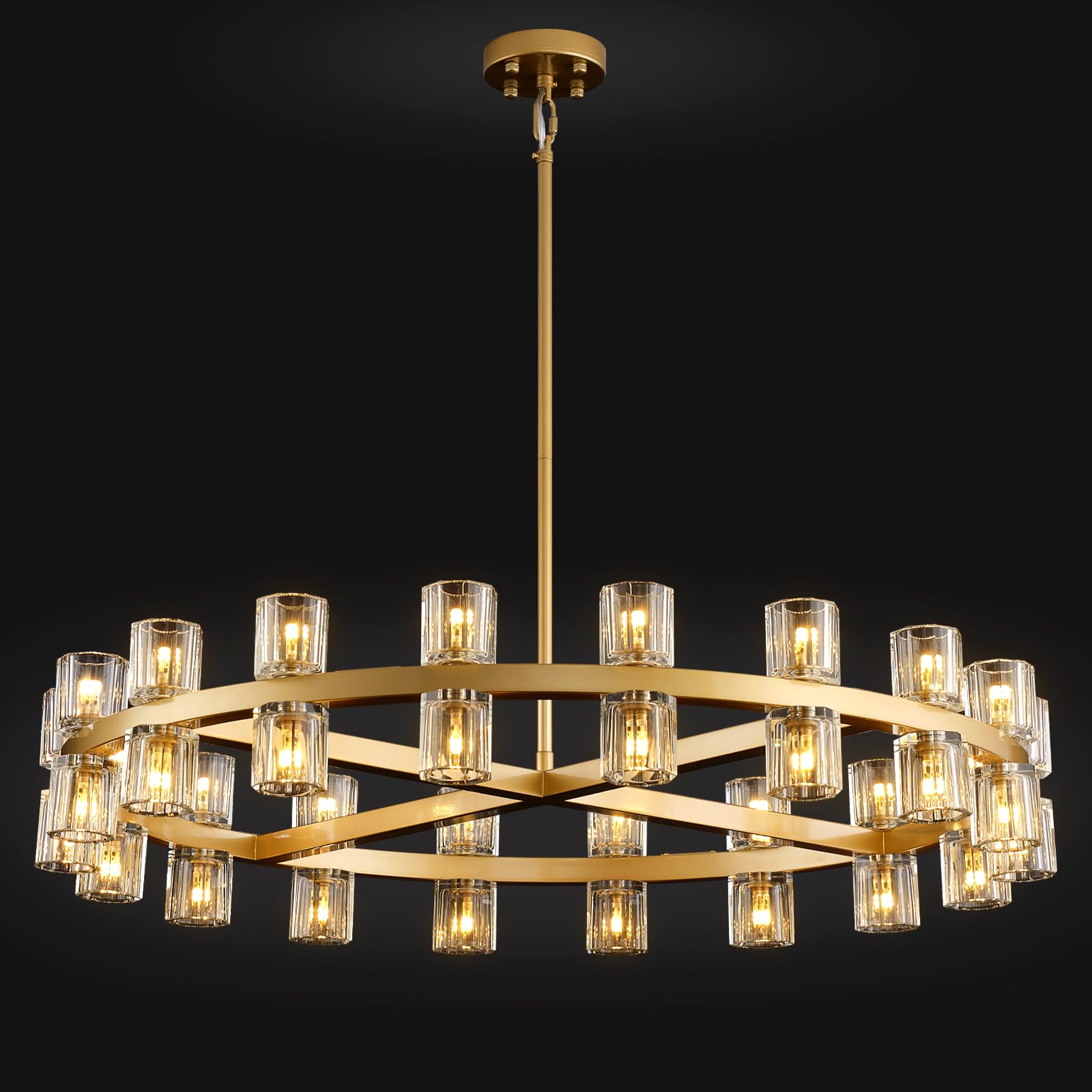
Farmhouse and rustic chandeliers use wood, distressed metal, and candle style bulbs to give a warm, relaxed feel that suits casual seating and natural fabrics. Sputnik designs send arms out from a central sphere in many directions, which spreads light widely and makes a strong focal point in rooms with simple furniture. Linear chandeliers stretch bulbs along a bar and work over long seating layouts or open floor plans where a round fixture would leave the ends dim. Wagon wheel designs hang a large ring of lights and fit big rooms with high ceilings, while rattan chandeliers soften the light through woven shades and suit relaxed, texture rich spaces.
Finish ties the fixture to the rest of the room. Gold tones warm up neutral paint and wood floors, while black finishes give contrast against light walls and disappear against dark ceilings. Match the finish to hardware you already have, such as door handles and lamp bases, rather than introducing a third metal tone. For a wider look at shapes across all rooms, the overview of the best chandelier types is a useful starting point before you narrow down.
Key Features to Compare
Lumens and Color Temperature
Brightness is measured in lumens, and a living room generally needs about 10 to 20 lumens per square foot from all light sources combined. A chandelier rarely carries the whole load, so plan for it to supply roughly half, with floor lamps and table lamps adding the rest. Color temperature shapes the mood: bulbs around 2700K give a warm glow that flatters skin and wood, while 3000K looks slightly crisper for reading. Avoid mixing temperatures in one fixture, since mismatched bulbs make some arms look yellow and others look white.
Fixture Size and Placement
A common sizing rule adds the room length and width in feet and converts that sum to inches for the fixture diameter. A room of 12 by 16 feet points to a chandelier about 28 inches wide. Hang the fixture so its bottom sits at least 7 feet above the floor in an open area, which keeps sight lines clear and stops tall guests from ducking. In rooms with ceilings above 9 feet, raise the fixture by about 3 inches for each extra foot of ceiling height.
Dimmable and Smart Options
Dimming gives one fixture several jobs, from bright light for games to low light for films. Check that the chandelier, the bulbs, and your wall dimmer all agree: LED bulbs need a compatible dimmer, or they may flicker or hum at low settings. Smart bulbs add scheduling and voice control, but they can conflict with a wall dimmer, so pick one control method and commit to it. If you plan to use smart bulbs, leave the wall switch simple and control brightness from the app instead.
Installation, Hardwired or Plug In
Most chandeliers are hardwired into a ceiling junction box, which gives a clean look with no visible cord. The box must be rated to support the fixture weight, and heavier pieces need a brace between joists. Plug in chandeliers hang from a hook and run a cord to an outlet, which suits renters and rooms with no ceiling wiring. Before you buy, read through how to install a chandelier so you know what the job involves and when to hire an electrician instead.
Energy Efficiency and Bulb Type
LED bulbs use far less electricity than incandescent bulbs of the same brightness and last for years, which matters on a fixture where changing a bulb means fetching a ladder. Integrated LED chandeliers build the light source into the design and can be very slim, but when the LEDs fail the whole fixture usually needs replacing. Models with standard sockets let you swap bulbs cheaply and change color temperature later. For most living rooms, socket based fixtures offer the better long term value.
How Much Should You Spend?
Under $100, expect smaller fixtures in simple metal or faux crystal, suited to compact rooms and first apartments. About $100 to $250 buys larger diameters, better finishes, and dimmable designs from a wide range of styles, and this is where most living rooms land. About $250 to $500 adds real crystal or glass, heavier construction, and finer detail that reads well in a formal room. At around $500 and above, you pay for scale, handcrafted elements, and statement designs for large or high ceiling spaces. Spending more does not add brightness by itself, so judge each tier by size and build rather than price alone.
What Matters Most in a Living Room Chandelier
A living room differs from a dining room because there is no table anchoring the fixture, so the chandelier must light a wide area and look right from every seat. That is why spread of light and viewing angle from below matter more here than raw output. If you are also shopping for the dining space, the guide to the best chandelier for dining room explains how table centered sizing rules differ. A bedroom fixture can be softer and lower in output, as the comparison in the best chandelier for bedroom guide shows, but a living room piece must handle guests, games, and everyday tasks in one footprint.
Common Mistakes to Avoid
- Buying by looks alone and ending up with too few lumens, so the room still feels dim at night.
- Choosing a diameter that ignores room size, which makes a small fixture look lost or a large one crowd the ceiling.
- Hanging the fixture too low over an open floor area, so tall guests walk into its lowest point.
- Pairing LED bulbs with an old dimmer that cannot run them, which causes flicker and buzzing.
- Mounting a heavy chandelier on a standard ceiling box that is not rated for its weight.
- Picking a trend driven style that clashes with fixed elements like flooring and built in shelving.
How to Make Your Chandelier Last Longer
Dust settles on upward facing bulbs and crystal pieces and slowly dulls the light, so wipe the fixture with a dry microfiber cloth every few weeks. Turn off power at the breaker before any cleaning that involves moisture or bulb changes. Check once a year that the mounting hardware and chain links still feel tight, since a fixture that sways slightly with door slams can loosen over time. Keep spare bulbs from the same batch you installed, because a replacement bought years later may differ slightly in color. Our walkthrough of how to choose a chandelier also covers matching bulb bases and socket types before you stock up.
FAQ
What size chandelier works above a coffee table?
When a coffee table sits under the fixture, you can hang the chandelier lower than the open floor rule allows, since nobody walks through that space. Keep the bottom about 30 to 36 inches above the table surface so seated guests can see each other under it. The fixture should also stay narrower than the table, ideally about half to two thirds of its length, so the proportions look balanced from the sofa.
Can a chandelier be the only light source in a living room?
It can, but the result is usually flat light with shadowed corners and glare near the center. A chandelier works best as the ambient layer, with table lamps or a floor lamp adding pools of light where you read or work. If wiring a full layered setup is not possible, choose a fixture with upward facing shades that bounce light off the ceiling, which spreads illumination more evenly than downward facing bulbs alone.
How long does a chandelier last?
The metal frame and wiring of a quality chandelier can serve for decades if the mounting stays secure and the finish is kept dry. The realistic wear points are the bulbs, the dimmer electronics, and plated finishes in humid homes, which may dull over time. Integrated LED models are limited by their built in drivers, often rated around 25,000 to 50,000 hours, after which the whole fixture may need professional service or replacement.
Is a chandelier worth it in a small living room?
Yes, if you scale it down and keep the design open rather than dense. A compact fixture with exposed bulbs or a simple ring shape gives a small room a finished focal point without visual weight. It can also free up floor space, because one ceiling fixture may replace a floor lamp in a tight corner. Choose a flush or semi flush style if the ceiling is under 8 feet so headroom stays comfortable.
How do you clean crystal chandelier pieces without removing them?
Lay a towel under the fixture, switch off the power, and spray a cloth with a mix of water and a small amount of glass cleaner rather than spraying the pieces directly. Wipe each piece and let it air dry before restoring power. Wear cotton gloves while you work, because bare fingers leave oils that attract dust back onto freshly cleaned crystal faster than almost anything else.
Final Thoughts
Start with size and brightness, then let style and finish follow, and the fixture will serve the room instead of fighting it. Check your ceiling box rating and dimmer compatibility before ordering, and keep the product table above open while you compare diameters and lumen figures. For most homes, the best chandelier for living room use is a correctly sized, dimmable fixture in a style your furniture already supports, bought at the tier where build quality improves rather than where decoration simply gets heavier.