Best Chair Cushions Dining: Buying Guide for 2026
Disclosure: We may earn a commission when you buy through links on this page, at no extra cost to you. As an Amazon Associate I earn from qualifying purchases. Learn more

Seat size, foam firmness, spill resistant fabric and secure ties: how to pick the best chair cushions dining chairs need for lasting comfort.
Hard dining chairs look neat, but they turn a relaxed dinner into a short one. Guests shift, stand early, and lean away from the table long before dessert. The best chair cushions dining rooms need solve that problem without sliding around, clashing with your decor, or soaking up every spill. This guide shows you how to judge size, fill, fabric and fastening before you use the product table below to compare options.
Start with how your household actually eats. A family that clears plates in twenty minutes needs something different from hosts whose friends linger for two hours over coffee. Chair shape and table height matter just as much as softness.






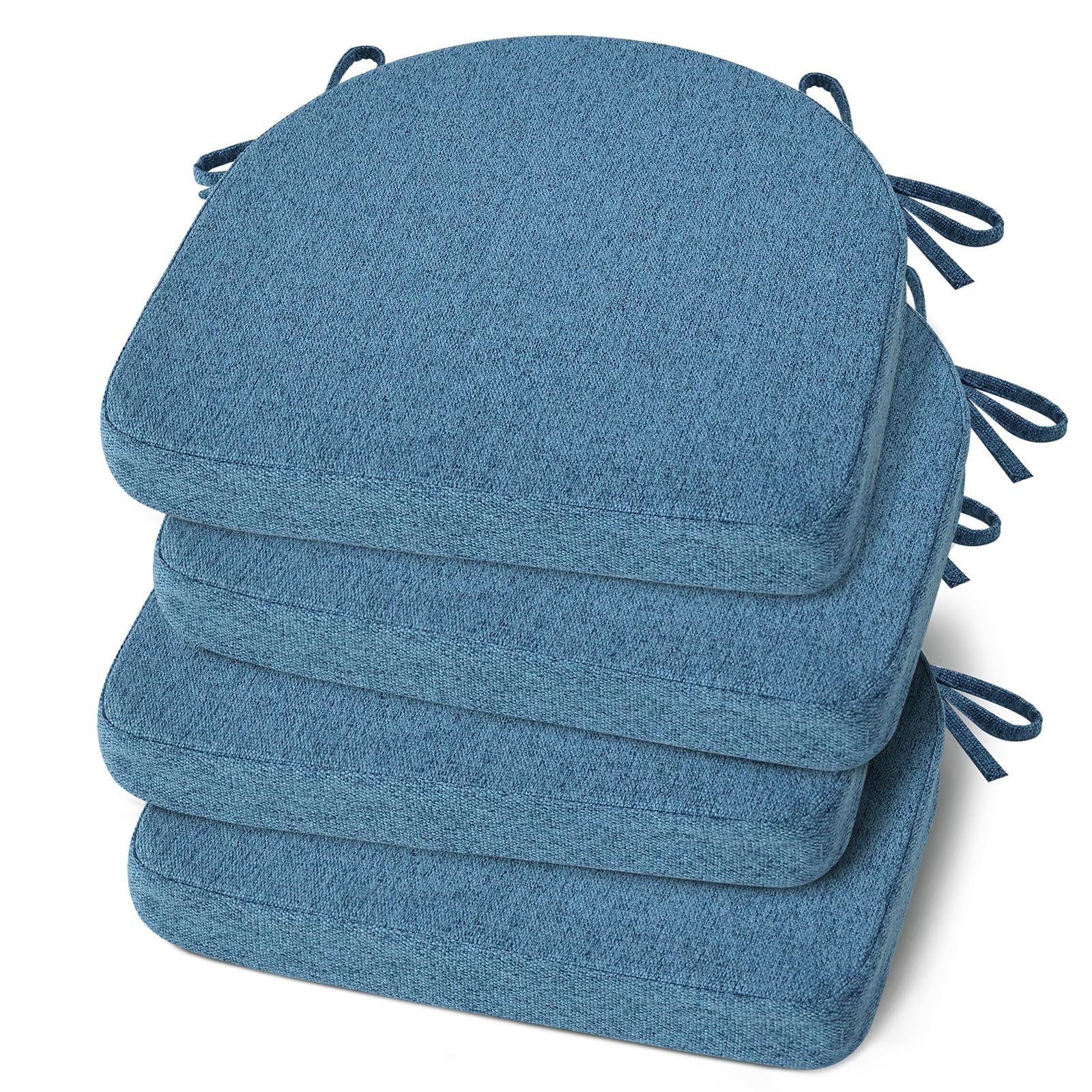
Who Should Buy Dining Chair Cushions?
Buy for the meals you repeat most often. The right cushion for a formal dining room differs from the right one for a busy kitchen table, even when the chairs look similar.
Hosts Who Love Long Dinners
You keep people at the table for courses, conversation and coffee, so comfort has to last well past the main dish. Choose a firmer cushion around 2 to 3 inches thick that supports your weight instead of letting you sink onto the wood. A squared shape suits a formal room, and a fabric that wipes clean protects you when sauce lands.
Families Eating Daily on Hard Wooden Chairs
Your chairs face homework, quick breakfasts and weeknight dinners, often with children climbing up and down. Choose cushions with strong ties at both back corners, because young diners pull themselves up by the seat edge. A darker print hides small marks between washes. Buy a matching set plus one spare, so a cushion in the laundry never leaves one chair bare.
Renters and Small Dining Rooms Needing a Fast Refresh
You cannot replace the chairs, and you may not want to repaint, so cushions carry the whole update. Choose a color that echoes your curtains or table linens to pull the room together for very little money. Slim cushions around 1.5 to 2 inches thick keep a small table feeling open, and reversible designs let you flip to a plainer side for guests.
Key Features to Compare
Narrow your list of best chair cushions dining choices by working through these factors in order, because fit comes before fabric and fastening comes before color. Most single cushions cost about $15 to $40, and sets of four or six usually cost less per seat.
Size, Shape and Thickness for Dining Chair Seats
Your cushion should cover the seat pan without hanging over the edges, because overhang curls down and wears out fast at the front corners. Common sizes run about 16 by 16 inches or 17 by 16 inches, while wider chairs may need about 18 by 18 inches. Shape matters as much as size, since many dining seats taper toward the back or curve at the front. Thickness runs from about 1.5 to 4 inches.
Fill, Firmness and Support for Long Sitting
Fill decides how a cushion feels after an hour, not just in the first minute. Dense foam holds its shape and spreads your weight across the seat, which eases pressure on your sit bones during long meals. Memory foam softens with body heat and molds to you, but it recovers slowly when guests swap seats. Loose fiber fill feels plush at first, yet it flattens sooner and needs frequent fluffing. For a deeper look at density choices, see our guide to the best foam for dining chair cushions.
Cover Fabric, Spills and Everyday Wear at the Table
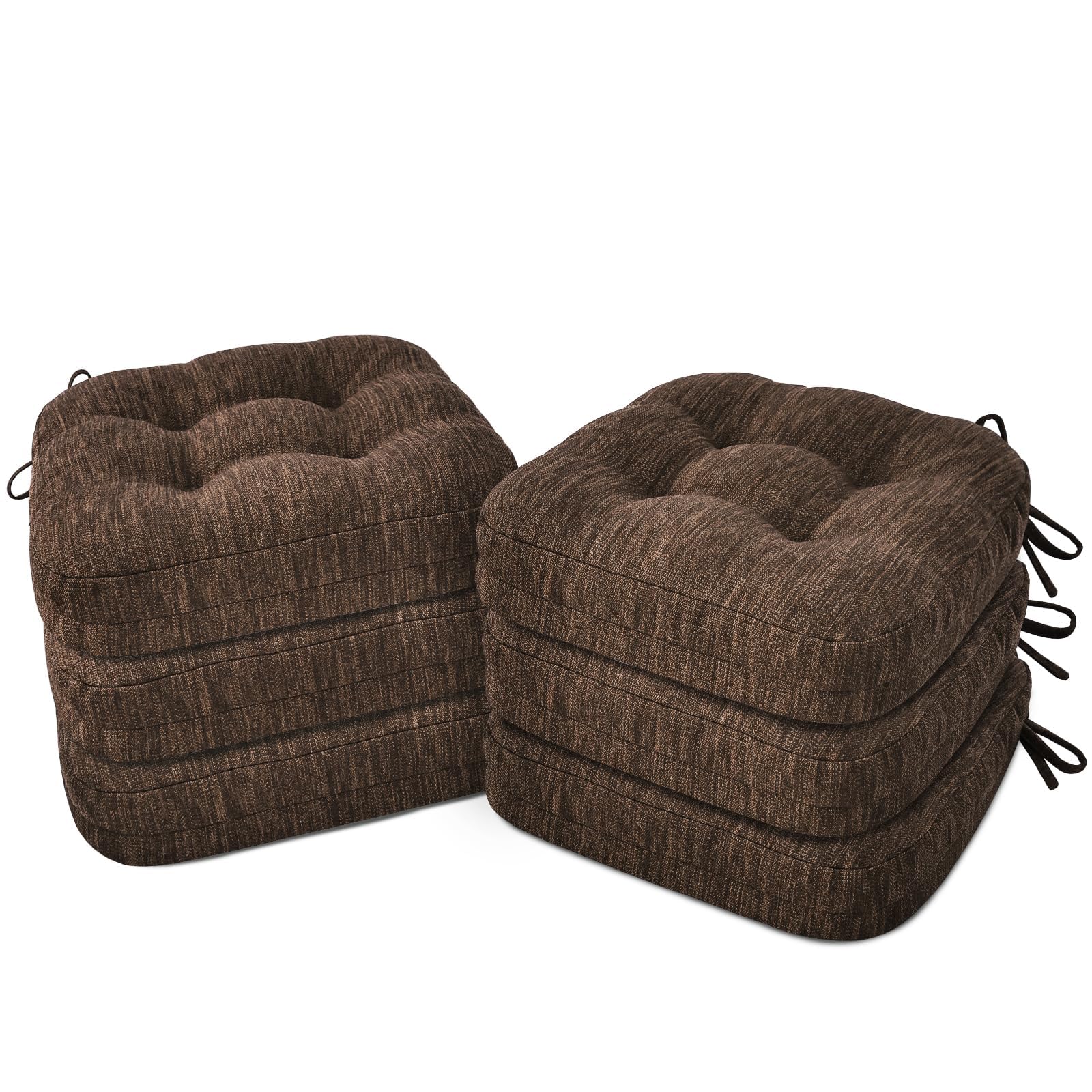
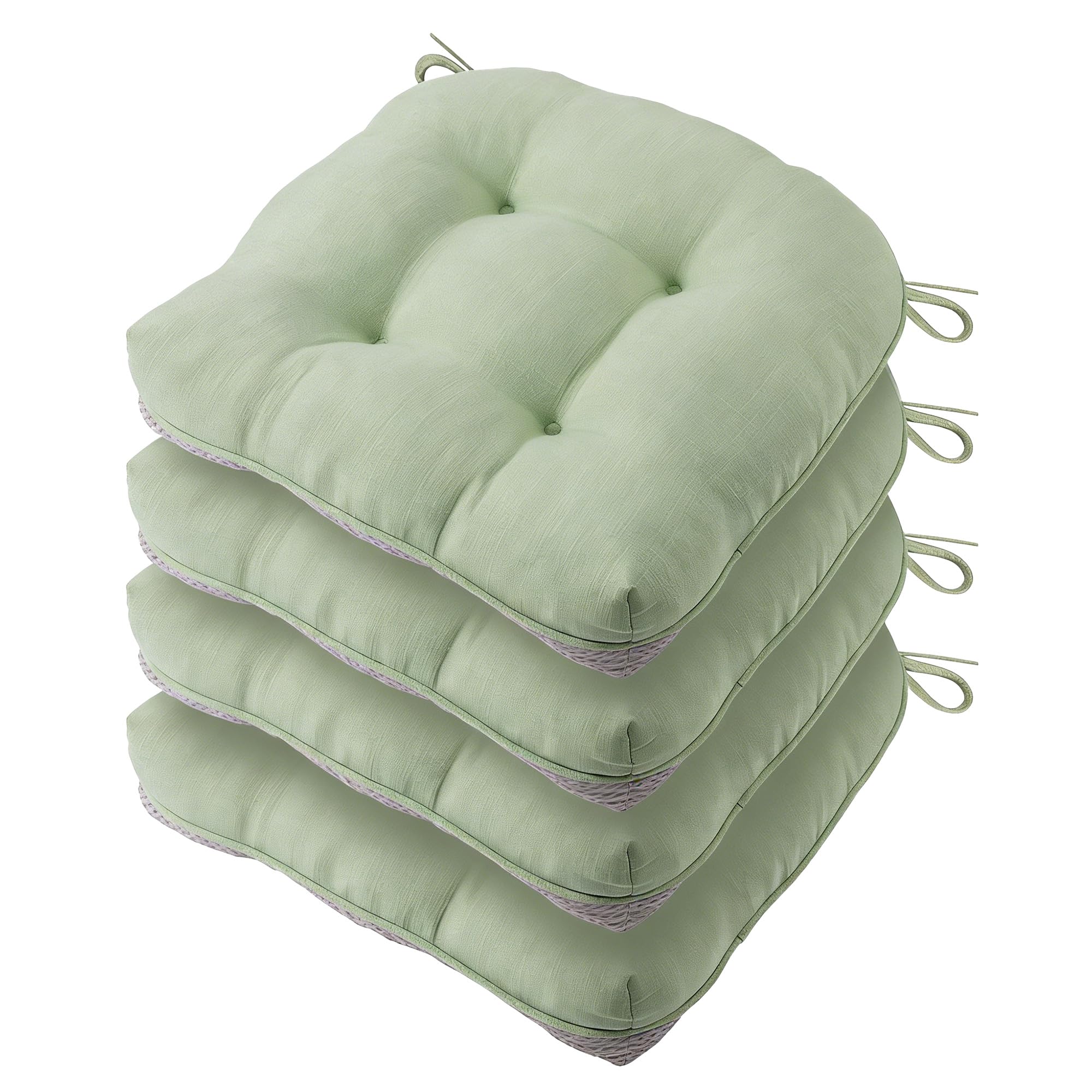
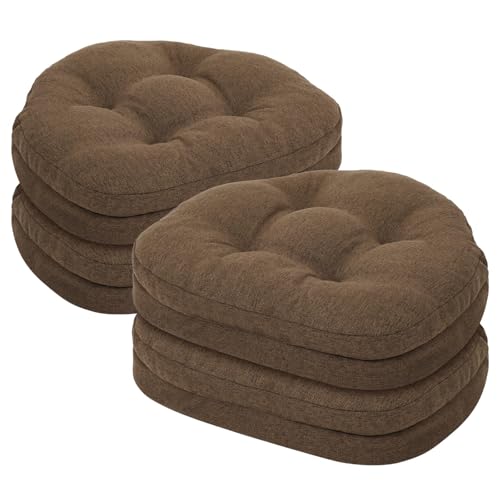
Dining cushions live where food lands, so fabric is a practical choice before it is a style one. Smooth polyester blends release crumbs and sauce with a quick wipe, while linen look fabrics grip the seat better but hold onto dried spills. Tufting stops fill from drifting into one corner, and piping protects the edge where cushion meets frame. Patterns hide minor marks far better than pale solids. To compare weave options, see our guide to the best fabric for dining chair cushions.
Ties, Straps and Nonslip Backing on Dining Cushions
A cushion that slides forward every time someone sits down quickly becomes a cushion nobody uses. Fabric ties at the back corners are the classic fix, and they work when you knot them snugly around the rear posts. Straps with hook and loop fasteners adjust faster and suit wide or oddly shaped posts. A nonslip backing grips smooth wood well for light use, but it can creep during long dinners, so busy households should prefer ties or straps.
Added Seat Height and Clearance Under the Dining Table
Every inch of cushion raises you an inch closer to the table, and that change cuts both ways. A higher seat can fix a table that once felt too tall. It also reduces the space between your thighs and the table apron, the wooden rail under the tabletop. Measure that gap before you buy thick cushions, and check chairs with arms too, since a raised seat may stop them sliding under the table.
How to Measure Your Dining Chairs for Cushions
Measuring takes five minutes and prevents the most common return. Measure the seat width at its widest point and the depth from the front edge to where the seat meets the back posts. Write both numbers down for every chair style you own.
Next, trace the seat shape on paper or thin cardboard, noting any taper, curve or cut corners near the back posts. Compare that outline with the cushion shape in the listing photos, since a square cushion on a tapered seat leaves bare wood at the back and bunches at the front. If your seat falls between sizes, choose the smaller one, because a squeezed cushion domes upward and feels unstable.
Finish by checking height. Stack books on the bare seat to the thickness you plan to buy, sit down, and confirm your thighs clear the table apron and your feet rest flat. For a wider survey of shapes, see our guide to the best dining room chair cushions, and compare ready made sizes in our guide to the best seat cushions for dining chairs.
Common Mistakes to Avoid
These errors are easy to make when you shop by color alone.
- Buying by chair style name instead of measured seat size leaves edges bare or fabric bunched into the back corners.
- Choosing the thickest cushion without checking table clearance traps your thighs against the apron every time you sit.
- Picking a pale solid fabric for daily family meals shows every sauce spot and forces constant washing.
- Tying cushions loosely to only one back corner lets the seat swing sideways and wear thin on one side.
- Mixing set sizes across matching chairs leaves one place setting short when guests arrive.
Care and Maintenance of Dining Chair Cushions
Blot spills at once with a clean cloth, working from the edge of the mark toward the center so the stain does not spread. For greasy spots, use a small amount of mild dish soap in cool water, then blot with a damp cloth until no soap remains. Let the cushion dry fully on its edge before tying it back on, because trapped moisture can leave a musty smell.
Once a month, untie your cushions and shake them outdoors to clear crumbs from the seams. Rotate cushions between the most used and least used chairs so wear spreads evenly across the set. If the cover unzips, wash it on a gentle cycle in cool water and air dry it, since dryer heat can shrink the cover. Store spares flat in a dry cupboard, so the fill keeps its loft.
FAQ
What features matter most in chair cushions for dining at home?
Fit, firm support and a washable cover matter most in chair cushions for dining at home. Start with a cushion that matches your measured seat shape, then choose a fill that stays supportive through your longest typical meal. One detail shoppers often miss is the underside color, because light fabric shows scuffs from chair rungs when cushions are stacked after a party.
How thick should dining chair cushions be for hard wooden seats?
Dining chair cushions for hard wooden seats should usually be about 2 to 3 inches thick. That range pads the wood without lifting you so high that your shoulders hunch toward the plate. Try the book stack test on your tallest and shortest diners, because a thickness that suits an adult can leave a child perched with feet dangling.
How do I wash dining chair cushions safely without shrinking the cover?
You wash dining chair cushions safely by removing the cover first and using cool water on a gentle cycle. Wash one cover alone first, and compare it with an unwashed cover before doing the rest. For cushions without a removable cover, test your cleaning solution on the underside first to check that the dye stays put.
How often should I replace dining chair cushions used every day?
Replace dining chair cushions used every day when they stay flat after a night of rest, often after about two to three years of daily use. Press the center with your palm and release it, since healthy foam springs back within a few seconds. Replace the whole set at once if you can, because one firm new cushion beside older flat ones feels uneven.
Do dining chair cushions stay in place without ties?
Yes, dining chair cushions can stay in place without ties if they have a full nonslip backing and a close fit to the seat. They suit calm adult meals on textured wood, where friction does most of the work. Where chairs slide in and out all day, add elastic bands under the seat as a backup.
The Bottom Line
Measure your seats, pick a firm fill that suits your longest meals, and choose a cover that forgives spills. Confirm your table clearance before you commit to a thick cushion, and fasten every cushion the same way so the set feels even. Then check sizes, set counts and prices in the product table above.
With those checks done, the best chair cushions dining sets offer is the one your guests forget about, because nobody is shifting, sliding or standing up early. Comfort that quiet keeps people at your table long after the plates are cleared.