Best Certified Organic Pillows (2026): Buying Guide
Disclosure: We may earn a commission when you buy through links on this page, at no extra cost to you. As an Amazon Associate I earn from qualifying purchases. Learn more

Shop the best certified organic pillows with confidence: read GOTS and GOLS labels, compare latex, wool and cotton fills, and match loft to your sleep position.
No single pillow suits every sleeper, and a certification logo alone does not guarantee comfort. The best certified organic pillows pair proof you can verify with a fill, loft and firmness that match your sleep position. This guide shows you how to read the labels, compare natural fills and use the product table with confidence.
Start with how you actually sleep. Side sleepers usually need more height and support, back sleepers need steady mid height, and stomach sleepers need a thin and soft surface. Then check which parts are certified, because that detail decides what you pay for.




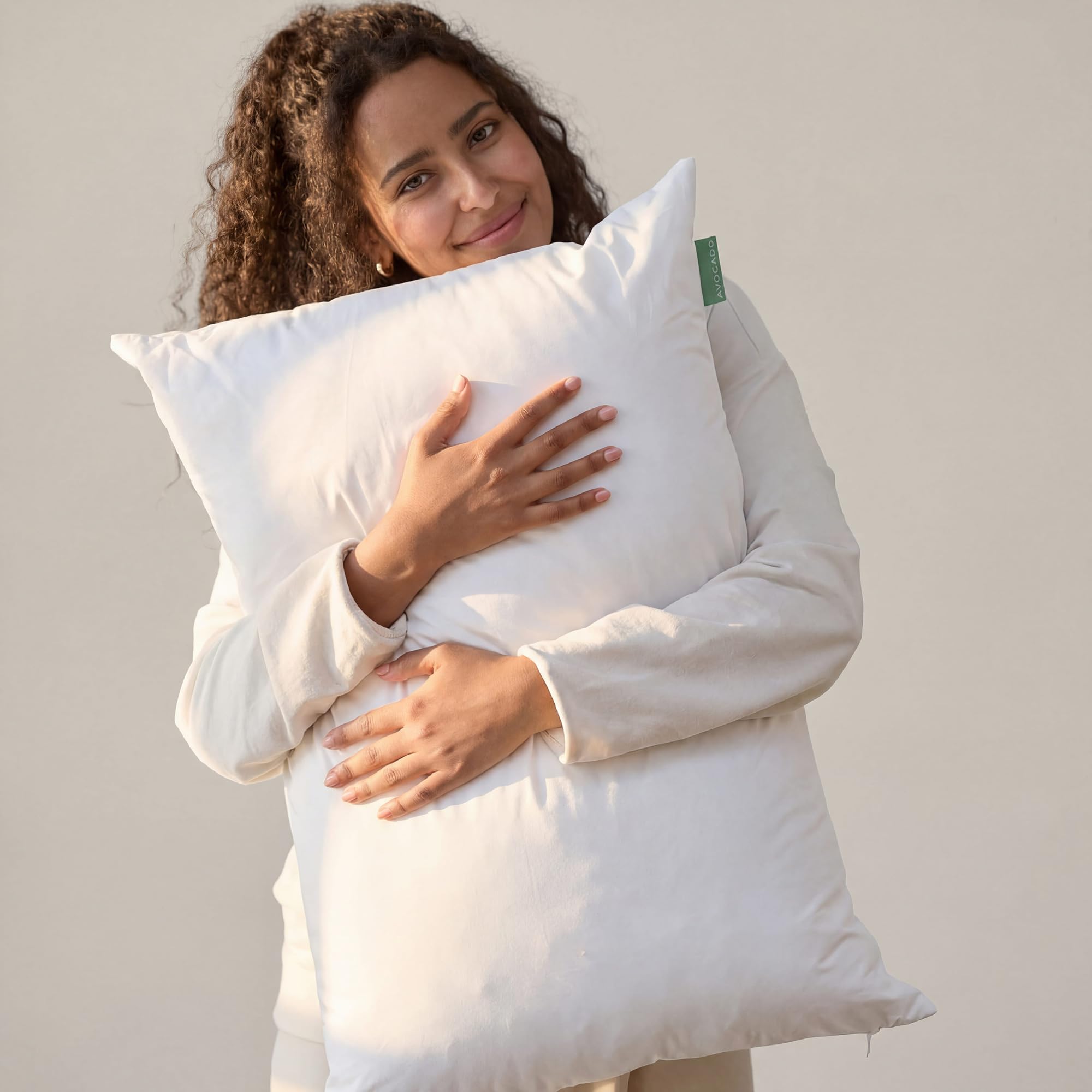

Who Should Buy Which Certified Organic Pillows?
Match the pillow to the job you need it to do each night. Your budget, your tolerance for natural scents and your willingness to adjust fill all point to a different type.
Value Seekers Who Want Proof Without the Premium
You want a lower price without giving up real certification. Look for a certified organic cotton cover and one clear fill claim, rather than paying for labels you will never feel. A simple solid shape costs less than an adjustable design and lasts well with daily fluffing. Expect about $50 to $90, and put the savings toward a good protector.
Performance Seekers Who Want Lasting Support
You care most about support that still feels right after a year of use. Solid organic latex holds its loft longer than most loose fills and springs back when you turn. Paying more makes sense for denser latex, a thicker certified cover and a longer sleep trial. Expect about $100 to $180.
Gift Shoppers Who Need a Safe and Simple Choice
You need a pillow that suits someone whose preferences you do not know. Choose a medium loft with adjustable fill, because the recipient can remove a little fill at home and settle the height in one evening. A plain certified organic cotton cover looks tidy and carries no strong scent. Add a note about the sleep trial and return window.
First Time Buyers Switching From Synthetic Pillows
You are new to natural fill and want an easy first step. Start with one pillow before you replace a whole set, because latex feels bouncy, wool feels dense and kapok feels light and firm. A zip opening that lets you adjust fill forgives an early mistake. Give yourself about a week to judge comfort.
Key Features to Compare
Compare these factors in order, starting with the certificate itself. A pillow can feel wonderful and still fail your goal if the claim covers only part of it.
Certification Proof and What Other Labels Mean
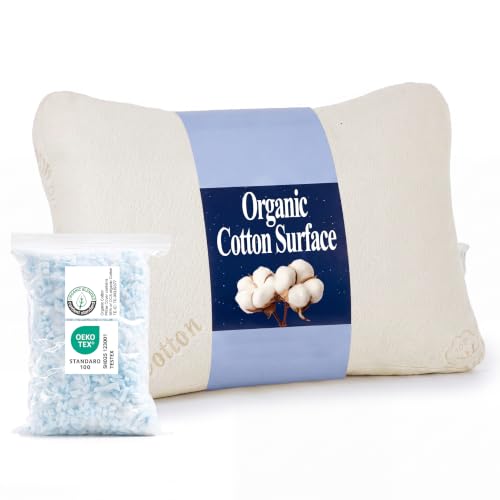
For textiles such as cotton and wool, look for GOTS, the Global Organic Textile Standard, and for latex look for GOLS, the Global Organic Latex Standard. The listing should name the certifier and show a license number you can check. By contrast, CertiPUR US covers foam emissions and content limits, and OEKO TEX covers screening for harmful substances. Neither one means organic, and ordinary memory foam cannot be certified organic.
Fill and Cover Materials in Certified Organic Pillows
Organic latex gives buoyant support and holds its shape, organic wool gives dense and moisture aware support, and organic cotton fill gives a soft and flatter feel that suits stomach sleepers. Kapok is light and firm but can feel uneven without fluffing. If you prefer a plush feel, read our guide to the best organic down pillows, and confirm whether the cover, the fill or both carry the certificate.
Size, Loft and Firmness for Your Sleep Position
Standard, Queen and King here describe pillow dimensions, not bed sizes. A common guide is about 20 by 26 inches for Standard and about 20 by 30 inches for Queen. Loft is the resting height, roughly 3 to 5 inches for back sleepers, 5 to 7 inches for side sleepers and under 3 inches for stomach sleepers. If you wake with worsening neck pain, numbness in an arm or morning headaches, stop guessing at loft and talk with your clinician about your personal needs.
Cooling and Breathability From Natural Fill
Natural cooling comes from airflow and moisture handling, not from gel layers. Solid latex with an open cell structure lets heat escape, shredded latex moves even more air, and wool absorbs and releases moisture through the night. If warm sleep is your main problem, compare our guide to the best organic wool pillows alongside breathable cotton covers. A thick protector can undo these gains, so choose a thin one.
Adjustability, Noise and Everyday Feel
An adjustable pillow uses a zip opening and extra loose fill, so you can add or remove handfuls until your head and neck feel level. Solid latex is quiet and steady, while shredded fill and kapok can rustle softly when you turn, which matters if a partner wakes easily. Wool can carry a faint natural scent at first. Air a new pillow in shade for a day before use.
How to Check a Certification Claim Before You Pay
Work through this checklist on the product page before you order. First, find which component is certified, cover, fill or the whole pillow. Second, note the standard and the certifier, then check that the license number looks complete rather than a lone logo image. Third, read what is not certified, because a certified cover over ordinary foam is a very different purchase.
When you shortlist best certified organic pillows, also confirm the terms that protect you if the feel is wrong. Look for a sleep trial of at least 30 nights where offered, a clear return route and a warranty that covers loss of loft. Keep screenshots of the certificate details on the day you order, because listings change.
The cover deserves its own check, since it touches your skin all night. A removable and washable certified organic cotton cover is easier to keep fresh than a fixed one, and a smooth weave feels cooler than a brushed one. If cover feel matters most, see our guide to the best organic cotton pillows.
Common Mistakes to Avoid
Most poor purchases come from trusting a logo instead of checking fit and proof together.
- Assuming every part is organic because one logo appears on the page leaves you paying a premium for a mostly conventional pillow.
- Choosing loft by habit rather than sleep position leaves your neck bent all night and your shoulders sore by morning.
- Ignoring a latex allergy warning can turn a well made pillow into one you cannot safely use.
- Washing a latex or wool fill like a cotton pillow can ruin its shape and void the warranty.
- Skipping the sleep trial terms leaves you stuck with a pillow that felt fine for five minutes in a store.
Care and Maintenance Tips for Certified Organic Pillows
Fluff your pillow by hand each morning to lift the fill and release trapped moisture, and air it in shade every few weeks. Use a breathable protector and wash it often, because keeping sweat and skin oils off the pillow itself extends its life. Keep latex and wool away from direct sun, since strong light and heat age natural fill.
Wash only what the label allows. Many certified organic cotton covers unzip and wash in cool water on a gentle cycle, while solid latex should never be soaked and wool fill usually needs spot cleaning only. Dry every washable part fully before you rebuild the pillow, because a damp core can develop a stale smell. Store a spare pillow flat in a cotton bag.
Certified Organic Pillows: Your Questions Answered
How often should I replace my certified organic pillow?
Replace your certified organic pillow when it no longer returns to its loft after fluffing or when you wake with new stiffness for a full week. Solid latex often lasts about three to four years, while cotton and kapok fills flatten sooner. Fold the pillow in half and release it. A healthy fill springs back at once, while a tired fill stays folded.
How do I wash certified organic pillows safely without harming the fill?
Wash only the parts the label marks as washable, which for most certified organic pillows means the removable cover alone. One point many owners miss is timing. Wash the cover in the morning on a dry day, because fill aired beside it needs hours to release moisture before bedtime. Never wring latex or wool, and let the cover dry fully before you zip it back on.
What firmness is best for a certified organic pillow if I wake with back pain?
Choose a medium firmness that keeps your head level with your spine in your main sleep position, then judge it over several nights. A useful extra check is to place a folded towel under your knees when you sleep on your back, because that change can show whether your pain follows your lower back position instead of your head height. Persistent or worsening pain needs a clinician, not a firmer purchase.
Does cover thread count matter for a certified organic pillow?
Cover thread count matters far less than the weave and the fiber itself on a certified organic pillow. A moderate count in a percale style weave feels crisp and breathable, while a sateen style weave feels smoother and slightly warmer. Very high counts can rely on thinner yarns that wear faster.
Are cooling certified organic pillows worth it for hot sleepers who want natural fill?
Yes, a cooling certified organic pillow can be worth it if the design uses breathable latex or wool rather than a synthetic cooling layer. Hot sleepers gain the most when they also lower room temperature and use light bedding, because the pillow handles only the heat at your head and neck. If you prefer a soft surface, compare our guide to the best soft organic pillows.
Our Verdict
Put proof first, fit second and feel third. Confirm which parts carry GOTS or GOLS certification, match loft and firmness to your sleep position, and then choose the fill whose bounce, density and care routine suit your nights. Use the product table above to compare those points before you order.
Chosen that way, best certified organic pillows stop being a label hunt and become a practical match for your bed. Pick the simplest certified design that fits your position and let the sleep trial confirm your choice.