Best Ceramic Electric Skillets (2026): Buying Guide
Disclosure: We may earn a commission when you buy through links on this page, at no extra cost to you. As an Amazon Associate I earn from qualifying purchases. Learn more
Pick the best ceramic electric skillet for your counter, family size and budget, with notes on size, depth, power, safety and care.
Sunday breakfast can crowd a small stove fast, with eggs, potatoes, and sausage all competing for burners. A plug in skillet on the counter gives you one wide, steady cooking surface and frees the stove for coffee or toast. If you want the best ceramic electric skillet for your home, the right choice depends on your counter space, how many people you cook for, and how often you will use it. Use the product table to compare current models.
Ceramic coatings appeal to cooks who want easy food release without a dark nonstick surface, but models differ in size, depth, and control quality. As you narrow your list, our broader guide to the best electric skillet shows how ceramic fits among other materials. Then use the checklist here to judge fit for your rooms, family size, and budget.



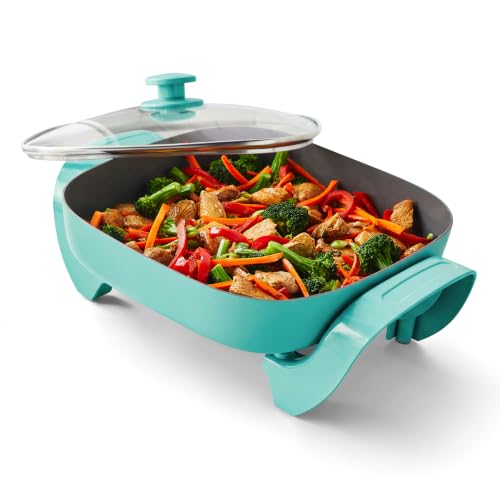


Quick Answer: Which Size Fits Which Home
For most homes, a mid size ceramic skillet in the 12 inch range covers daily eggs, grilled sandwiches, and weeknight stir fry meals without taking over the counter. Small households do better with a compact model that stores in one cabinet, while a larger and deeper type earns its space for batch frying. If you are new to the format, our guide on how to use an electric skillet explains probe settings and basic timing.
Before You Buy: A Quick Checklist for Choosing an Electric Skillet
Start with your room and your routine, not with a feature list. The points below cover size, material, controls, safety, and cost.
Size: Match It to Your Space
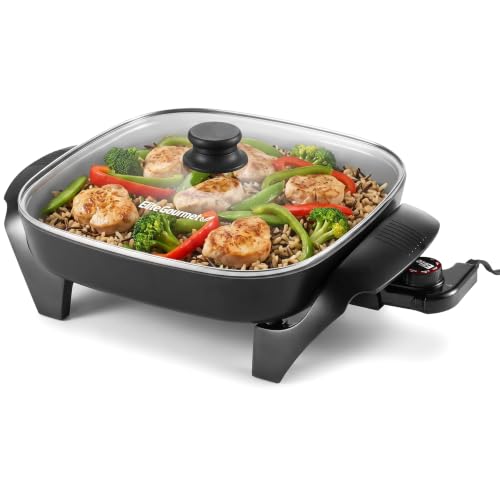
Diameter and shape decide how much food cooks in one batch. A 12 inch round or square pan suits two to four people and handles four pancakes or a pound of ground meat with room to stir. A 16 inch model feeds a larger family but needs wide counter and cabinet space. Deep models hold sauces and fried foods with less splatter, yet feel bulky for simple eggs. Count your usual servings first, then pick the smallest size that covers them.
Which Type Fits Your Routine
Ceramic surfaces release eggs and pancakes well and wipe clean with little effort, which suits cooks who make breakfast often. If you prefer metal utensils and strong browning, compare our guide to the best stainless steel electric skillet before you decide. Shoppers who want to avoid certain coatings can read our guide to the best non toxic electric skillet for material questions to ask. Cast iron holds heat for searing but weighs much more, while standard nonstick costs less with a different surface feel.
Features Worth Paying For and Ones to Skip
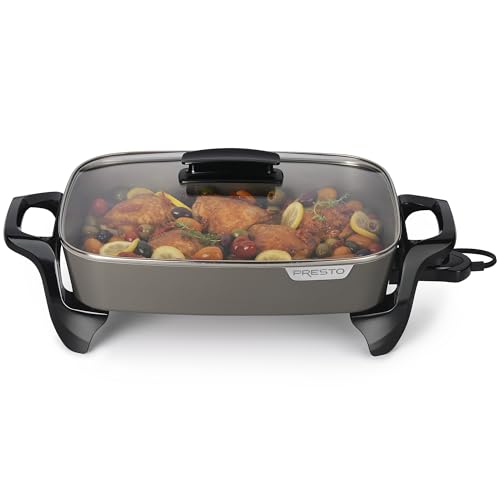
A glass lid is worth paying for because you can watch food cook, trap steam for rice or vegetables, and cut splatter during frying. High sides help when you simmer sauces or cook foods that release juice. A removable pan makes washing and serving simpler, and a pouring spout helps drain fat. Skip preset programs you will never touch, decorative finishes, and bundles with tools you already own. A clear temperature dial beats a long list of modes.
Wattage, Power and Energy Use
Most home models draw about 1200 to 1500 watts, and higher wattage mainly means faster heating and quicker recovery after you add cold food. Wattage alone does not promise even cooking, since pan thickness and probe accuracy matter just as much. Check that your circuit can handle the load, especially in older kitchens where a microwave may share it and trip the breaker.
Safety Features and Certifications
Look for a UL or ETL listing, which means the electrical design was reviewed against a recognized safety standard. Handles that stay cool, short cords, and feet that grip the counter all reduce risk during busy meals. The probe should fit firmly and shut the heat off when removed. Stop using the skillet and contact the maker if the cord frays or the probe sparks. Keep the cord away from the hot sides and never leave frying food alone.
Counter Space and Dimensions
Measure more than the cooking surface. The full footprint includes handles, the probe, and cord clearance behind the unit, and many skillets need about two extra inches once plugged in. Check cabinet height and depth too, since a wide pan with a domed lid may not slide into a shallow drawer. A model you can store easily is one you will reach for often.
Realistic Budget Ranges
Models under $50 usually cover basic frying and breakfast cooking with thinner pans and simpler probes. Spending about $50 to $100 often brings thicker construction, better temperature control, and a sturdier lid. Models at about $100 to $150 may add a removable pan, larger capacity, or a longer warranty. Weigh the gains against how often you cook, since a modest skillet used three times a week delivers more value than a costly one saved for holidays.
How to Choose by Home and Routine
Instead of chasing a single winner, match the type to your household. Each group below trades size, price, and storage in a different way.
Mid Size Ceramic Skillet for Most Homes
A mid size skillet around 12 inches wide is the balanced choice for couples and small families. It fits on most counters, heats evenly for eggs, quesadillas, and sauteed vegetables, and stores in a standard cabinet. Look for a glass lid, sides high enough for sauces, and a probe with clear markings in degrees. This type also works as a ceramic electric frying pan for weekend pancakes, then returns to weeknight stir fry duty. If one skillet must do a bit of everything, start here.
Compact Ceramic Skillet for Tight Budgets and Small Rooms
A compact model suits one or two people, dorm rooms, and small apartments where every cabinet counts. You give up batch capacity, so plan on cooking proteins in two rounds when guests visit. In return you pay less, store the unit easily, and heat a smaller surface that suits eggs, grilled cheese, and single pan meals. Choose simple controls and a lid you can replace if it breaks. This type covers the core job without paying for servings you rarely make.
Large Deep Ceramic Skillet for Big Families
A large deep model serves big families, meal prep cooks, and anyone who fries chicken or simmers one pan dinners for a group. The extra depth contains splatter and holds sauces without spilling when you stir. Because it takes real storage room, measure your cabinet before ordering, and review our guide to the best large electric skillet if capacity is your main concern. A thicker base and a solid warranty matter most at this size, since uneven heat wastes more food per batch.
How to Judge the Best Ceramic Electric Skillet
Judge any candidate by capacity, cooking performance, ease of use, cleaning effort, safety listings, and warranty terms. Manufacturer specifications and patterns in verified buyer reviews, such as repeated comments about probe accuracy or lid fit, give a fair picture. A type earns a place only when its strengths match a clear home situation, such as small counters, family batch cooking, or tight budgets.
Strengths and Weak Points of Ceramic Compared With Other Electric Skillets
Ceramic surfaces feel smooth, release delicate foods well, and often come in light colors that make browning easy to see. The surface also wipes clean after eggs or pancakes with only a soft sponge. On the downside, ceramic coatings can lose release over time, especially with high heat or rough utensils, and they rarely match the hard sear from stainless steel or cast iron. Light surfaces can show stains after tomato sauces or spices.
Compared with standard nonstick, ceramic tends to tolerate somewhat higher heat, but its slick feel may fade sooner with daily use. Stainless steel lasts for years and browns meat deeply, yet eggs stick without enough fat and practice. Cast iron holds heat well but demands more care to prevent rust. Your cooking style should drive the choice.
Common Buying Mistakes to Avoid
- Buying a 16 inch skillet for rare guest meals, which leaves you storing a bulky pan all year for a few large breakfasts.
- Ignoring outlet position and cord reach, which can force the skillet into an awkward corner far from your prep area.
- Choosing a removable pan without checking your sink, which makes washing hard when the pan is wider than the basin.
- Using metal utensils on the ceramic surface, which scratches the coating and shortens the life of the pan.
- Paying for many preset modes, which adds cost while the simple dial you already understand would cook the same meals.
Cost of Ownership and Care
Running costs stay modest, since a skillet draws power only while cooking and small meals avoid heating a full oven. The main ownership costs are replacement parts, such as a lid or a temperature probe, so check parts availability before you buy a less common model. Regular use spreads the purchase price across hundreds of meals over the life of the unit.
For storage, place a soft cloth between the pan and anything stacked on it, and store the probe in a drawer rather than loose inside the pan where its tip can scrape the surface. When grease builds up around the rim, our step by step guide on how to clean an electric skillet covers safe methods that protect the coating and the electrical parts.
Your Questions, Answered
What is the most reliable electric skillet brand?
Reliability depends less on the name on the box than on probe quality, parts support, and warranty handling. Brands that sell replacement probes and lids and publish clear warranty terms tend to serve owners better over time. Before buying, search recent owner comments for repeat complaints about the same failure, such as probes that stop holding temperature.
How do you clean an electric skillet?
Let the pan cool fully, remove the probe, and wash the cooking surface with warm water, mild soap, and a soft sponge. Never immerse the probe or the base unless the maker states that your exact design allows it, and keep water out of the probe socket. Dry the socket and rim before storage, since trapped moisture causes odors and can corrode contacts. For baked on residue, soak the cooled pan briefly rather than scrubbing with abrasive pads.
Is an electric skillet worth it?
It is worth it when your stove runs out of burners, when you cook in a dorm, RV, or small apartment, or when you want to serve food warm at the table. Holiday meals are a strong case, since the skillet can hold gravy at serving temperature while the oven handles the main dish. If you already own several pans and rarely cook for groups, the value drops. Count how often you would plug it in before deciding.
How long does an electric skillet last?
With regular home use, many skillets serve for about three to five years before the coating or probe shows real wear, though gentle care can extend that span. Retire the unit when the coating peels, the cord insulation cracks, or the temperature swings widely between settings, since each sign points to safety or food quality problems. Using moderate heat slows coating wear more than any cleaning product, and storing the probe separately prevents damage that often ends a skillet life early.
Are ceramic electric skillets worth it?
They are worth it for cooks who value easy release for eggs, fish, and pancakes and who prefer a light colored surface that shows browning clearly. Expect some limits, since strong spices and tomato based sauces can stain pale coatings, and the slick feel fades faster at high heat. If deep browning matters more than gentle release, another material may suit you better. For breakfast focused homes, the trade off usually feels fair.
Final Thoughts
Match size to your servings, depth to your recipes, and price to how often you cook, and the right type becomes clear. Mid size models fit most counters and families, compact types serve small rooms and tight budgets, and large deep types earn their space in busy group kitchens. Before you order, look back at the product table above and check your short list against the checklist. Chosen with care, the best ceramic electric skillet for your home fits your counter, your cabinet, and your weekly routine.