Best Ceramic Chef Knives: Pick by Size, Blade Care and Budget 2026
Disclosure: We may earn a commission when you buy through links on this page, at no extra cost to you. As an Amazon Associate I earn from qualifying purchases. Learn more

Compare the best ceramic chef knife by blade length, sheath, handle and care needs, with tips to avoid chips.
Picture a weeknight in a small family kitchen. Counter space is tight, dinner is for four, and the tomatoes keep sliding under a dull steel blade. A best ceramic chef knife promises clean slices with almost no effort, plus a blade that never rusts and feels light in your hand. The catch is that ceramic chips if you treat it like steel, so the right choice depends on your space and what you actually cook.
This guide helps you choose by kitchen size, number of users, and budget. You will learn which sizes suit small counters, which features protect a fragile edge, and what daily care costs in time and money. Start with the product table above, then use the checklist to narrow your pick.



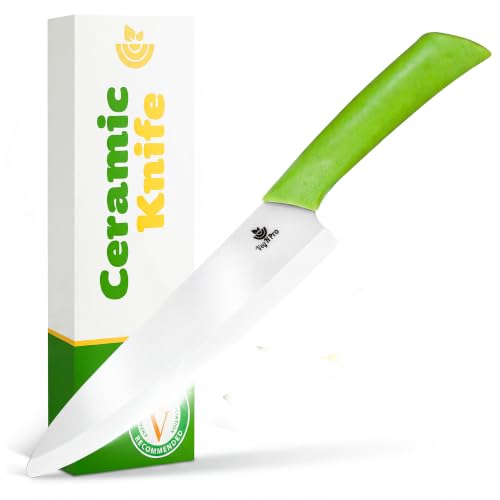
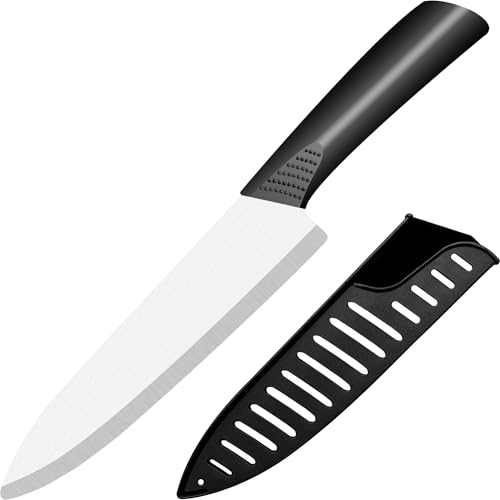

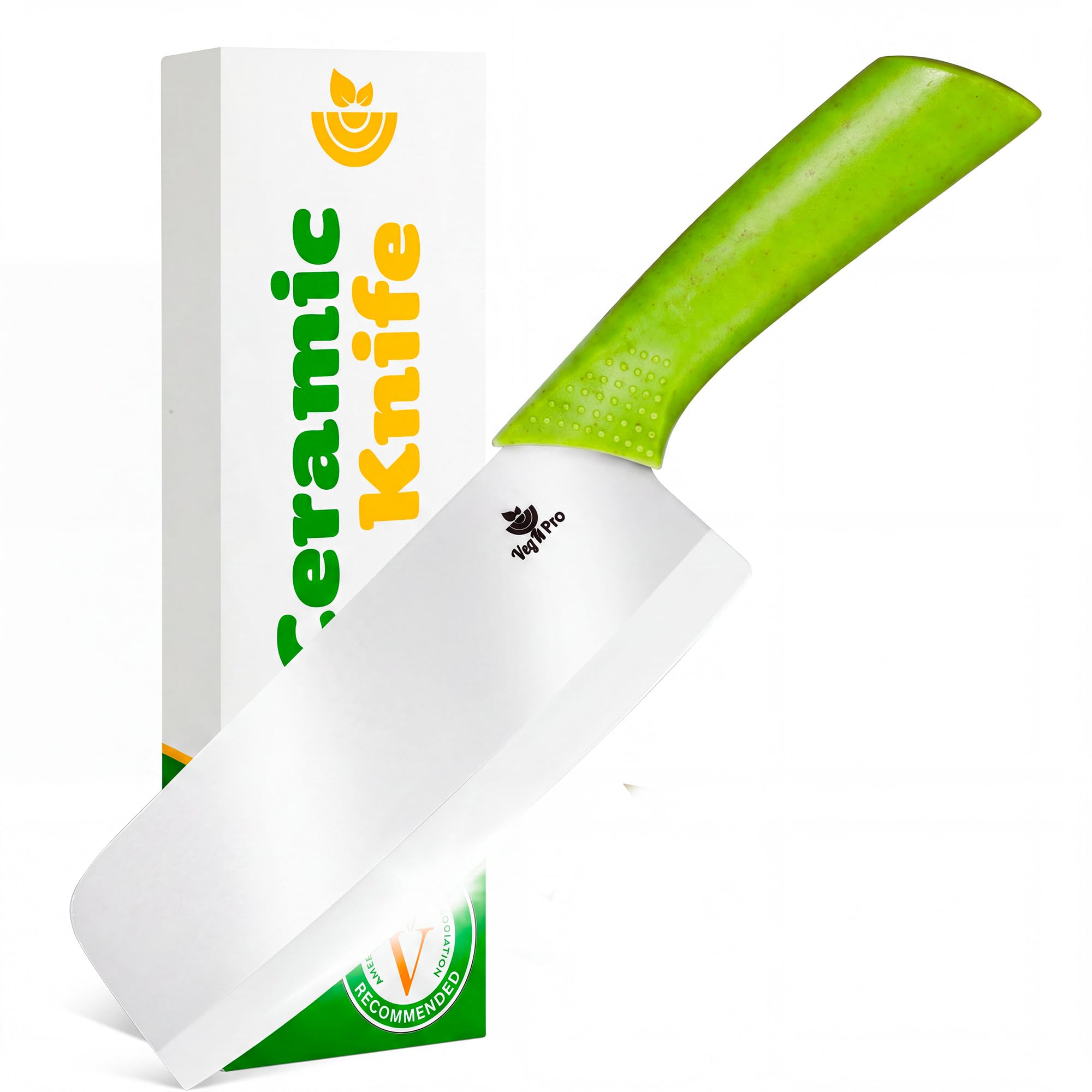
Quick Answer: How Ceramic Fits a Real Home
Ceramic suits homes that cut a lot of produce, boneless meat, and soft foods, and where one careful adult does most of the prep. It suits shared or rushed kitchens less well, because one drop or one twist on a hard squash can chip the edge. Think of it as a specialist beside a sturdy steel knife, not a full replacement for one.
- Compact homes: a single 6 or 7 inch knife with a sheath stores safely in a crowded drawer.
- Most family kitchens: a standard 8 inch knife covers daily produce and boneless proteins.
- Produce heavy homes: a small set pairing a chef knife with a short utility knife handles melons and garnish work.
If you are weighing ceramic against a do everything steel option, our guide to the best chef knife shows what a general purpose blade covers instead.
Before You Buy: A Quick Checklist for Choosing a Chef Knife
The best ceramic chef knife for your home is the one whose size, shape, and handle match your counters and your hands. Work through the points below in order. Size and storage come first, because a knife that cannot be stored safely will not stay sharp for long.
Size: Match It to Your Space
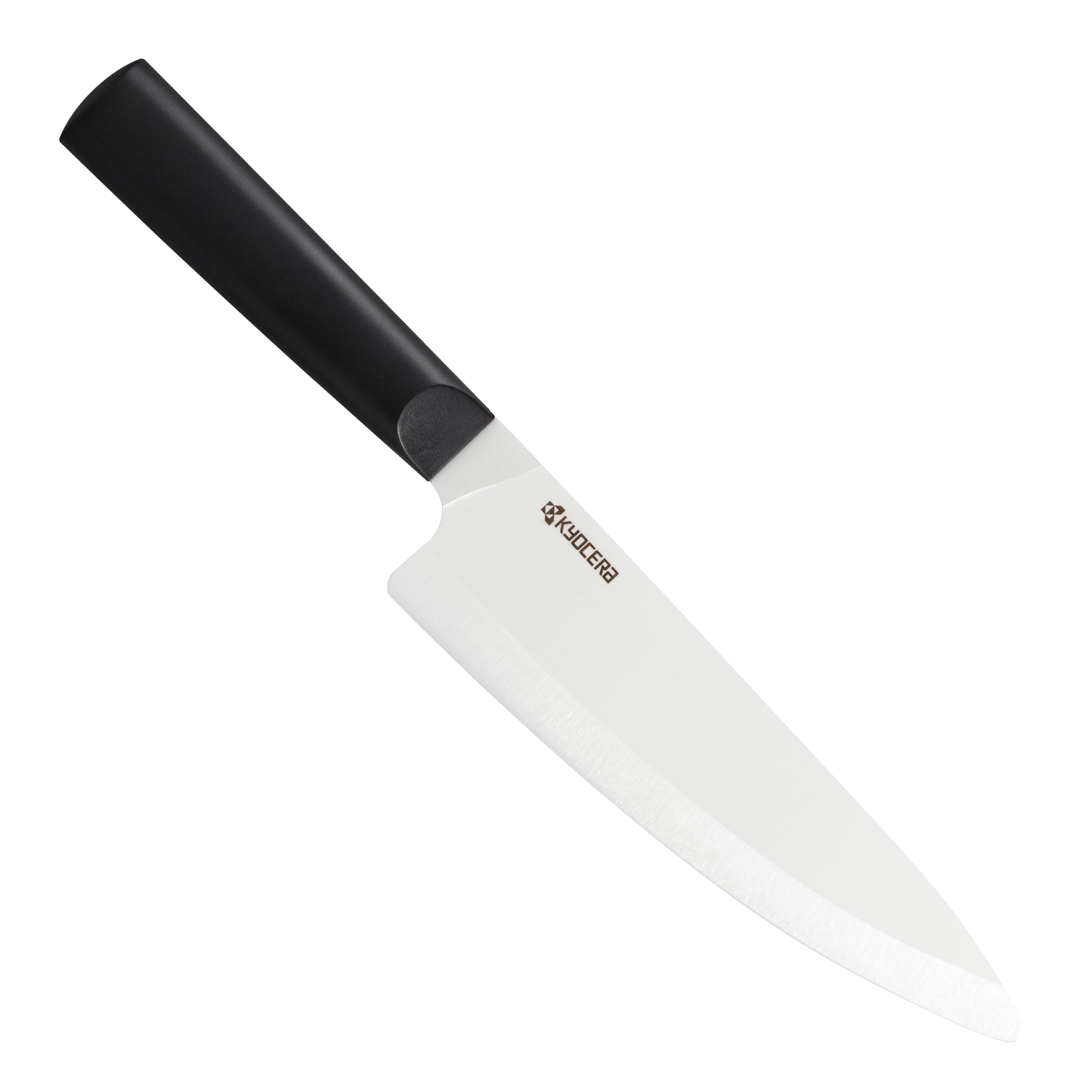
Most ceramic chef knives come in 6, 7, or 8 inch lengths, covering nearly every home. A 6 inch blade feels nimble in a galley kitchen and suits smaller boards, while an 8 inch blade moves through cabbage and melon with fewer strokes. Larger sizes are uncommon, and extra length adds leverage that makes a brittle tip easier to snap. Measure your board before you buy.
Which Type Fits Your Routine
The classic chef profile has a curved edge and a pointed tip, which suits slicing and gentle rocking on herbs. A santoku profile is flatter, with a tip that curves down, and it favors straight chopping of vegetables. If you are torn between the two shapes, our explainer on chef knife vs santoku walks through the motions each one rewards. Pick the shape matching the motion you already use, because ceramic punishes twisting.
Features Worth It (and Ones to Skip)
A fitted sheath is worth it every time, since ceramic must never rattle loose in a drawer against other utensils. Shallow dimples along the blade can help slices of potato or cucumber release instead of sticking, a modest but real gain. A wood handle adds warmth and weight, while molded handles cost less and shrug off water. Skip oversized sets filled with pieces you will rarely touch, and skip any bundle with a glass cutting board.
Blade Material and Hardness
Ceramic blades are made from zirconium oxide, a material far harder than steel. That hardness is why the edge stays keen through months of produce work with little attention. Hardness is not toughness, though. Steel bends slightly on impact and survives, while ceramic cannot flex, so a hard knock takes out a chip. Judge a blade by this trade off, not by hardness alone.
Blade Geometry and Edge Shape
Ceramic blades are ground thin, and that thin profile is why they glide through tomatoes and onions with so little pressure. A gently curved edge supports slicing strokes, while a flatter edge suits push cutting. The tip is the most delicate part, so avoid a long, needle fine point if your household is busy. Note that the edge cannot be honed on a standard steel rod, a point the care section explains.
Handle, Bolster and Balance
Because the blade weighs very little, the handle provides most of the heft and all of the control. Look for a handle long enough for a full grip, with a slight swell where your fingers close, because wet hands slip more on a light knife. Most ceramic models skip the heavy bolster found on forged steel knives, which keeps weight low but removes a finger guard. A handle heavy knife will tire your wrist during long prep.
Realistic Budget Ranges
Models under $30 usually buy a simple single knife with a basic sheath, a fair start if you want to test whether ceramic fits your habits. Picks at about $30 to $80 bring more comfortable handles and better fitting sheaths. Spending about $80 to $150 tends to buy a matched small set or finer blade finishing rather than a sharper edge. Above that you mostly pay for design and brand, so budget by storage and handle comfort, not price.
Ceramic Types Compared: What Each Style Does Best
Three broad types cover almost every household. Judge each by the factors above, and match it to the number of people cooking in your home.
A Single Standard Knife for Most Homes
One 7 or 8 inch knife with a sheath is the simplest setup and the easiest to store well. It covers the daily run of onions, peppers, boneless chicken, and fruit for a typical family, and it leaves drawer room for the steel knife you keep for heavy jobs. With only one edge to protect, it also has the lowest care burden. For most readers comparing options in the product table above, this is the type to beat.
A Simple Knife With a Sheath for Tight Budgets
A basic 6 inch knife sold with its own guard suits a first apartment or a second knife kept for fruit and salad work. The shorter blade is easier to control and cheaper to replace if a chip ends its life early. What you give up is reach on large produce and a little handle comfort. Treat it as an honest trial of ceramic rather than a lifetime purchase.
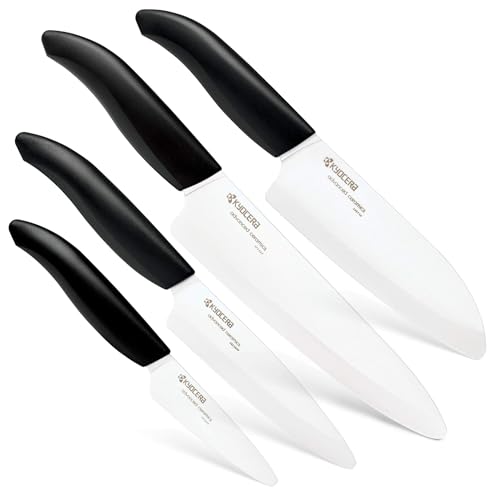
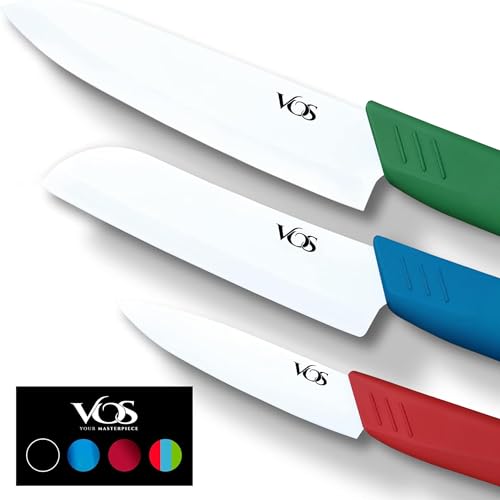
A Matched Small Set for a Long Term Setup
A set pairing a chef knife with a short utility knife suits homes that prep produce at almost every meal. Each blade stays in its own sheath or slot, which keeps edges apart and safer than a loose drawer. The shared handle design also helps when several adults cook. Our roundup of the best chef knife for home cooks covers similar household setups in steel.
What to Weigh in a Ceramic Chef Knife
The criteria that matter are edge retention on soft foods, balance and comfort in the hand, sharpness as delivered, ease of daily care, and value for the price band. This guide leans on maker specifications for blade material and dimensions, plus patterns in verified buyer reports about chipping, handle comfort, and sheath fit.
What We Like and What We Don't About Ceramic vs Other Chef Knives
Ceramic wins on lightness, rust free storage, and an edge that keeps slicing produce cleanly for a long stretch with no honing. It also never reacts with acidic foods, so onions and citrus leave no metallic taste. Those strengths explain why many home cooks reach for it on weeknights.
- Like: very light, so long prep sessions tire your arm less than a heavy forged knife.
- Like: the edge resists wear from soft foods, so it needs attention far less often than steel.
- Don't like: it chips or snaps on bones, frozen food, hard seeds, and twisting cuts.
- Don't like: sharpening needs a diamond abrasive or a mail in service, not the rod in your block.
- Don't like: it should never go in a dishwasher, where jostling can crack the edge.
Common Buying Mistakes to Avoid
- Buying ceramic as your only knife: you lose the ability to cut squash, bones, and frozen items safely, and one chip leaves you with no working knife.
- Choosing the longest blade for a small kitchen: a long brittle tip on a small board invites the prying that snaps it.
- Skipping the sheath to save money: loose drawer storage chips the edge faster than normal cutting will.
- Ignoring replacement cost: a chipped edge often means replacing the whole knife, so a very cheap model can cost more over time.
- Planning to use a glass or stone board: hard boards punish ceramic on every cut, so factor a wood or plastic board into the real price.
Cost of Ownership and Care
Daily care is simple. Wash the knife by hand in warm soapy water, dry it at once, and slide it back into its sheath or a block slot where the edge touches nothing hard. Cut on wood or plastic boards only, and use slicing strokes instead of prying. Learning sound basics from our guide on how to use a chef knife will protect this edge more than any accessory.
Ongoing costs are modest but real. Expect to pay for a diamond sharpener or a professional service every year or two, since ordinary stones and rods do not suit ceramic; our explainer on how to sharpen a chef knife covers abrasives and angles. A replacement sheath costs little, while a dropped knife can mean full replacement.
FAQ
Are ceramic chef knives worth it?
Yes, if most of your cutting is produce, fruit, and boneless protein, and if you already own a steel knife for heavy work. Ceramic earns its place by staying keen with almost no upkeep between sharpening services. It is not worth it as a sole knife in a busy shared kitchen, where drops and hard foods are common. A useful check: count how many recent meals needed a bone cut through.
How do you clean a ceramic chef knife?
Wash it by hand right after use with a soft sponge and mild detergent, then dry it fully before storing it in its sheath. A sink full of standing water is risky, because other dishes can settle against the edge unseen. For stains from turmeric or tomato, a paste of baking soda and water on a soft cloth usually lifts the color without scratching. Never soak it overnight or leave it loose in a wash basin.
How long does a ceramic chef knife last?
With careful use on the right boards, a ceramic chef knife can stay serviceable for several years, and its edge often outlasts a steel edge between sharpenings. Lifespan ends by accident more than by wear: one drop onto tile or one twist in a melon rind can chip it beyond easy repair. Small chips can sometimes be ground out by a professional service, restoring a working edge.
Can you sharpen a ceramic chef knife at home?
Yes, but only with a diamond abrasive, such as a diamond plate or a sharpener made for ceramic blades. Standard whetstones and honing rods will not restore the edge. Work slowly with light pressure, because pressing hard adds stress the blade cannot flex away. If your knife has a visible chip rather than simple dullness, a professional service is the safer first step.
What foods should you avoid cutting with a ceramic chef knife?
Avoid bones, frozen foods, hard cheese rinds, thick squash skin, and any cut where you would twist the blade to finish, such as prying apart a melon. Also skip scraping chopped food off the board with the edge, a habit that stresses the thinnest part of the blade. Use the spine of the knife or a bench scraper for moving food instead. Keep a sturdy steel knife within reach so switching tools is easy.
Final Thoughts
Choose your size by your board and counters, insist on a sheath, and accept ceramic for what it is: a light, keen specialist for soft foods that asks for gentle handling. A single standard knife suits most homes, a small sheathed knife suits tight budgets, and a matched set suits produce heavy families. Whichever type you pick from the product table above, the best ceramic chef knife is the one your household can store safely and use with care.