
Best Ceiling Fan for Large Rooms in 2026: Spans, Airflow and Lighting
Disclosure: We may earn a commission when you buy through links on this page, at no extra cost to you. As an Amazon Associate I earn from qualifying purchases. Learn more

Sizing the best ceiling fan for large rooms: blade span, airflow, mounting height, motor type, lighting and when two fans work better.
A standard fan that feels strong in a small bedroom can feel weak in a great room, a primary suite, or an open living area. The air has farther to travel, the ceiling is often higher, and one seating area may feel a breeze while another feels nothing. Choosing the best ceiling fan for large rooms means matching blade span, airflow, mounting height, and light output to the actual size of your space. The comparison table below sums up the main types so you can see the differences at a glance.
This guide walks you through sizing, motor choices, light quality, controls, and costs in plain terms. If you want broader background first, our guide to the best ceiling fan covers the basics that apply to rooms of every size.


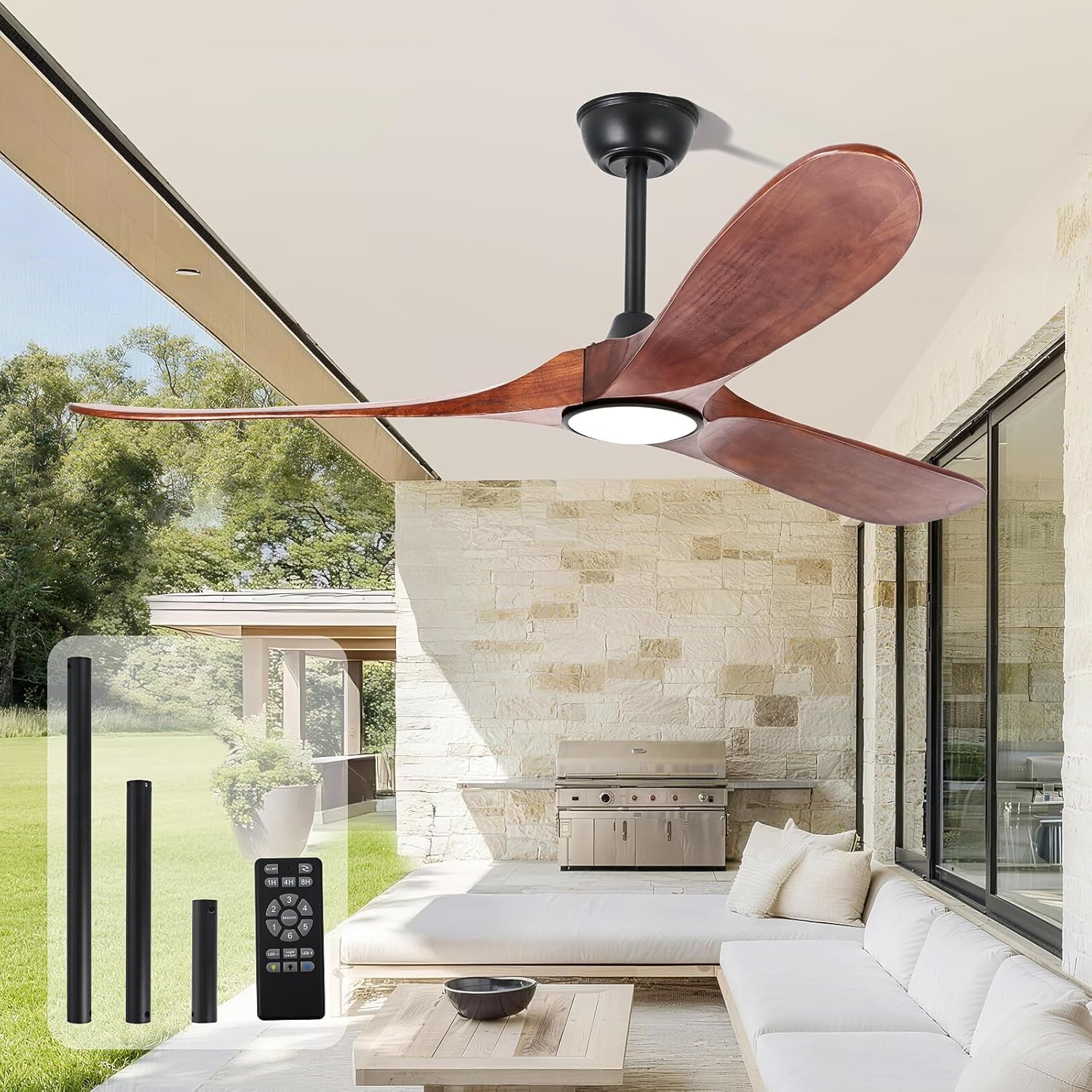

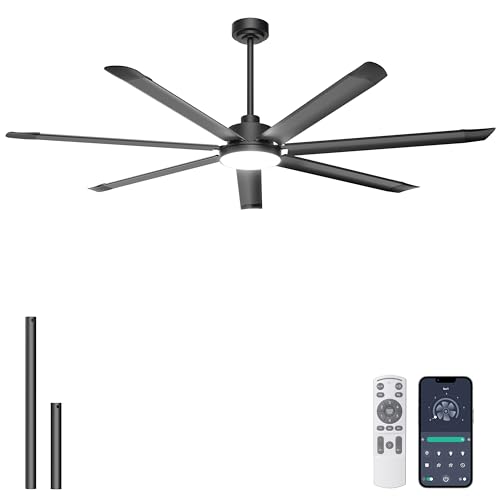
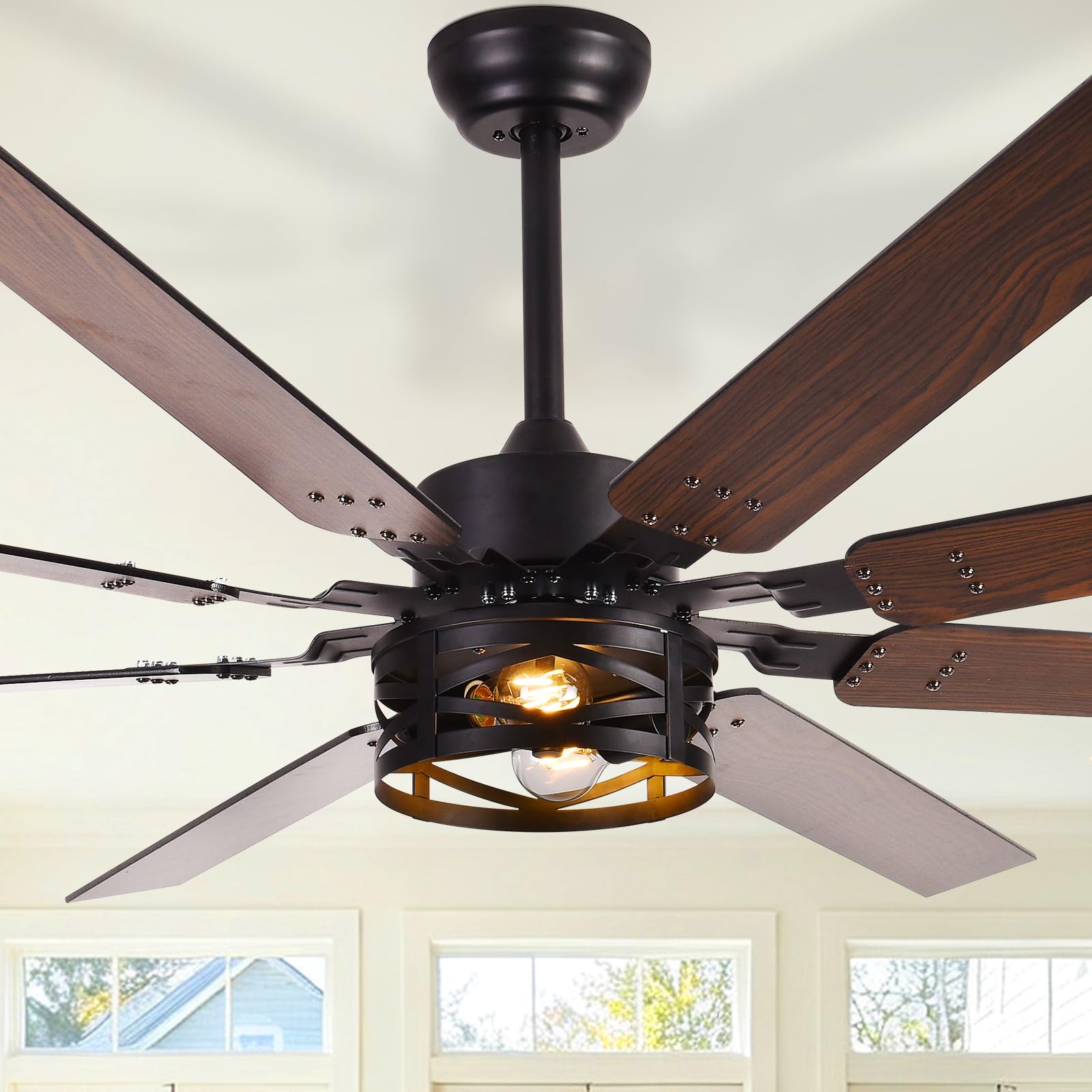

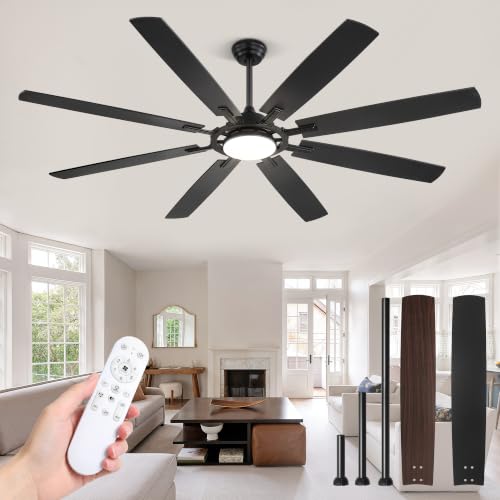
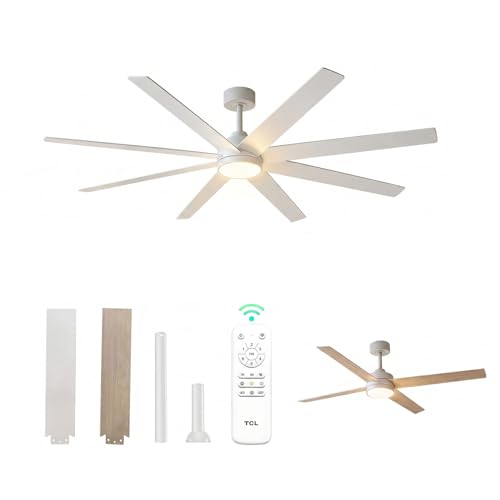
Types Compared at a Glance
Large rooms fall into three broad groups, and each group points to a different fan type. Rooms from about 225 to 400 square feet usually need a 60 inch fan with strong airflow. Rooms above 400 square feet often need a 72 inch fan or, in very open layouts, two fans spaced evenly. Rooms with high or sloped ceilings need the same large span plus a longer downrod so blades sit at the right height.
Three Fan Types That Work Well in Large Rooms
Large Diameter Standard Fans for Most Living Spaces
This is the most common choice for great rooms and large living rooms. A span of 60 inch to 72 inch, five or more blades, and a downrod mount give broad coverage without the visual weight of an industrial model. Look for airflow above about 5000 cubic feet per minute on the highest speed, a reversible motor for winter use, and a remote so you can adjust speed from the sofa.
Value Focused Large Fans for Tight Budgets
You can cover a large room without paying for smart controls or designer finishes. Value focused models keep the large span and a capable AC motor but use simpler blades, a basic light kit, and a standard remote or wall control. The main trade off is noise and finish choice. At low speed a value model may hum a bit more, and the light may offer fewer settings. For a family room or a rental property, those trade offs often matter less than getting the size right.
Premium Large Fans With DC Motors and Smart Controls
Premium models pair an extra large span with a DC motor, more speed settings, and app or voice control. The extra speeds help because you can run a gentle breeze during a movie and a stronger flow during a gathering. Integrated LED lights often let you change both brightness and color tone. Finishes also run broader here, from matte black to wood tones that suit modern and farmhouse rooms alike.
How We Chose the Types in This Guide
We grouped fans by the factors that change comfort most in a large space rather than by brand. Those factors are brightness in lumens and color temperature, style and finish, ease of installation, energy use, and overall value for the size covered. Specs come from maker listings and standard rating methods for airflow and light output. We leave live price and stock checks to the product pages linked from the table.
How to Choose the Right Ceiling Fan for Large Rooms
Sizing is the decision you cannot fix later with settings, so start there and then work through type, light, and controls. If you want a step by step framework for rooms of all sizes, see our notes on how to choose a ceiling fan alongside the large room specifics below.
Size and Form Factor
Blade span drives coverage more than any other spec. A 42 inch or 44 inch fan suits a small room, and a 52 inch fan suits a medium room up to about 225 square feet. For a large room you need at least 54 inch, and most buyers will be happiest with 60 inch or 72 inch. A fan that is too small has to run at full speed to be felt, which adds noise and still leaves the corners still. Match span to both floor area and ceiling height.
Type
Flush mount and low profile fans hug the ceiling and suit ceilings under 8 feet, but most large rooms have higher ceilings and do better with a downrod mount. Smart fans add app control and scheduling, which helps when the fan sits far from the switch. Outdoor rated fans belong on covered porches, not as a default for indoor rooms. Modern, farmhouse, industrial, caged, and boho styles change looks more than performance. Bladeless designs are uncommon at large spans, so check airflow with extra care if you consider one.
Features Worth Paying For
A remote is close to essential in a large room because the fan is rarely near your seat. An integrated LED light removes the need for a separate kit and keeps the profile clean. WiFi control and Alexa voice control earn their cost if you already use a smart home system or if the room has vaulted ceilings and hard to reach switches. Extra speeds, a timer, and a reversible direction switch also pay off. Decorative blade shapes and rare finishes raise price without adding comfort, so treat those as style choices only.
Lumens and Color Temperature
Light has to fill the same large footprint as the air, so a dim kit that works in a bedroom will look weak here. For a primary light source in a large living area, look for about 1600 lumens or more, and more if the ceiling is dark or very high. Color temperature shapes mood. Around 2700 to 3000 kelvin gives a warm glow for relaxing, around 4000 kelvin gives a neutral light for reading and tasks, and higher settings look cooler and brighter. Models that let you select the tone after install give you room to adjust.
Fixture Size and Placement
Place the fan at the center of the main seating or sleeping zone, not simply at the center of the ceiling if the room has an offset layout. Keep blades at least 7 feet above the floor and ideally 8 to 9 feet above the floor. Leave at least 18 inch of clear space from blade tips to walls and beams. In a long rectangular room, two fans spaced evenly often beat one oversized fan at one end.
Dimmable and Smart Options
Dimming matters more in a large multi use room because the same light serves movie nights, homework, and gatherings. Check that the LED module is listed as dimmable and that it works with the wall dimmer or remote you plan to use, since mixing parts can cause flicker or buzzing. Smart options add scheduling and group control when a room has two fans. If you skip smart control, a wall control with fan and light sliders is the next best option.
Installation
Large fans weigh more and pull harder on the ceiling box, so the box must be rated for fan support and braced to a joist or a rated brace. Turn off power at the breaker, confirm the wires are not live, and follow the maker guide for downrod length and blade clearance. Sloped ceilings need a compatible adapter and a longer downrod so blades clear the slope. Our guide on how to install a ceiling fan covers box ratings and wiring steps in detail. If wiring or bracing is beyond your comfort level, hire a licensed electrician.
How Much Should You Spend?
About under $100 usually buys a large span only in basic finishes with modest airflow, so read the airflow rating closely at this level. About $100 to $200 covers most standard large fans with a remote and an LED light. About $200 to $300 adds quieter motors, better light control, and broader finishes. About $300 to $500 buys premium DC motors, smart controls, and extra large spans for great rooms. Spending more mainly buys quieter operation, finer speed control, and looks, not a basic ability to move air.
What Matters Most in a Ceiling Fan for Large Rooms
Coverage comes first. A fan that reaches every seat lets you raise the thermostat setting a few degrees while staying comfortable, which is where the real saving appears. Motor type shapes that experience. If you are weighing motor options, our comparison of dc vs ac ceiling fan explains noise, speed range, and energy use without sales talk. DC motors tend to run quieter with more speeds and lower energy use, while AC motors cost less and have a long track record.
Room use matters too. Many large fans end up over a living area where people gather, read, and watch screens, so glare and hum matter as much as airflow. That is why shoppers often compare this guide with advice on the best ceiling fan for living room before they decide. A fan for a large bedroom adds one more need, very quiet low speed operation for sleep.
Compared with running air conditioning alone, a fan costs far less to run per hour and makes a room feel cooler without lowering the actual air temperature. It does not replace cooling on very hot days, but it reduces cooling load in summer when used with a thermostat set a bit higher.
FAQ
What is the best ceiling fan for large rooms?
There is no single model that fits every large room, because ceiling height, floor area, and light needs change the answer. For most rooms from 225 to 400 square feet, a 60 inch fan with airflow above about 5000 cubic feet per minute, a remote, and a bright dimmable LED light is the safest starting point. Rooms above 400 square feet usually need a 72 inch fan or two fans. Match the mount and downrod to your ceiling first, then compare motors and light.
What should I look for in a ceiling fan for large rooms?
Start with span and airflow, then check blade height, motor type, and light output. Also confirm the ceiling box rating, the downrod length in the box, and whether a slope adapter is included or sold apart. One point buyers miss is blade pitch. A steeper pitch can move more air at the same speed, but only if the motor is strong enough to turn those blades without strain or extra noise.
How long does a ceiling fan last?
A quality fan often lasts about 10 to 20 years with normal indoor use, and the motor usually outlasts the light module and the remote. Life shortens when a fan runs in damp air without a damp rating, when blades collect heavy dust that throws the fan off balance, or when the mount loosens and the fan wobbles for months. Checking mount screws once a year and fixing wobble early protects the motor bearings and extends service life.
Is a ceiling fan worth it for a large room?
Yes, if the size is right, because the comfort gain covers the whole seating area rather than one corner. A fan lets most people feel comfortable with a thermostat set about 4 degrees higher, which can trim cooling costs over a season. It is less worth it if you buy a span that is too small and run it at full speed all day for little effect. In winter, reversing direction at low speed pushes warm air down from a high ceiling without creating a draft.
How do you clean a ceiling fan in a large room?
Turn the fan off and let the blades stop fully. Stand on a sturdy ladder placed so you can reach without leaning, and slide a pillowcase over each blade, then pull it back slowly so dust falls inside the case instead of onto furniture below. Wipe the motor housing and light cover with a lightly damp cloth, never a soaked cloth near wiring. In a large room with high ceilings, a long handle duster helps for monthly touch ups between deeper cleanings.
Final Thoughts
Start with span, get the mounting height right, and then choose motor, light, and controls for how you use the room. When you compare options in the product table above, you will see that the best ceiling fan for large rooms is the one sized for your floor area and ceiling, not the one with the longest feature list.


