Best Cast Aluminum Patio Furniture: A Buying Guide
Disclosure: We may earn a commission when you buy through links on this page, at no extra cost to you. As an Amazon Associate we earn from qualifying purchases. Learn more

Picking new patio furniture is easy until you're standing in a showroom or scrolling through a dozen browser tabs, trying to figure out which set will actually hold up outside and still look right next to your house. Cast aluminum is one of the most popular materials for outdoor seating and dining, but "cast aluminum" covers everything from simple bistro sets to elaborate, decades-old dining collections. Finding the best cast aluminum patio furniture for your patio means thinking beyond the frame material itself, weighing style, set size, comfort, and how your climate will treat it over time. This guide walks through what to consider before you buy, the main types of sets you'll come across, and how cast aluminum stacks up against other popular outdoor materials.



How to Choose the Best Cast Aluminum Patio Furniture for Your Space
Picking the best cast aluminum patio furniture starts with knowing how you plan to use the space, not just what looks good in a listing photo. These five factors matter most once you start comparing sets.
Match the Style to Your Home and Patio
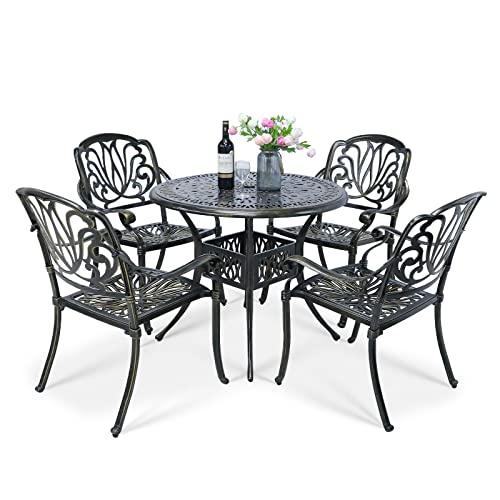
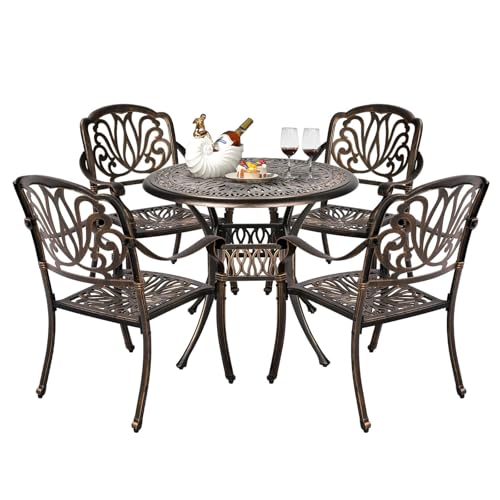
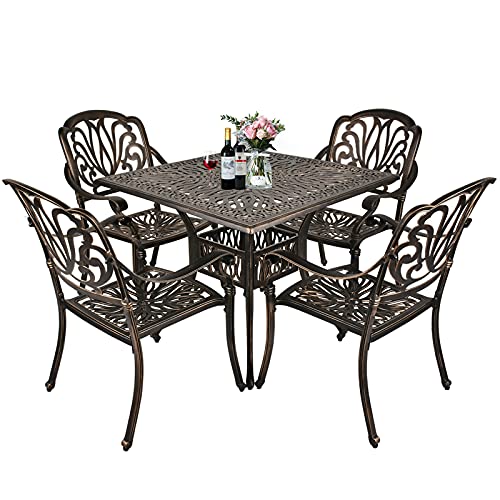
Cast aluminum comes in a wide range of design styles, from ornate scrollwork with curved legs to clean, geometric lines that suit a modern patio. Walk around your outdoor space and note the details already there, such as railing style, trim color, or nearby landscaping, since furniture that clashes with the setting tends to stand out for the wrong reasons. Finish colors also vary more than most shoppers expect, ranging from traditional bronze and black to lighter driftwood and white tones that work better in bright, sunny climates.
Plan Around Set Size and Piece Count
Measure your patio or deck before adding anything to your cart, including space to walk comfortably around chairs once they are pulled out from the table. Cast aluminum sets come in a wide range of configurations, from a compact bistro set for two to dining collections that seat eight or more. Leave at least three feet of clearance around a dining set so people can push back their chairs without bumping into railings, planters, or other furniture.
Consider Comfort Features, Not Just the Frame
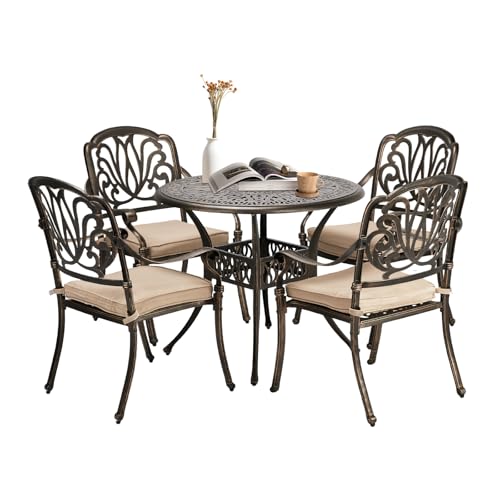
A cast aluminum frame is only half the comfort equation, so pay attention to seat depth, back angle, and armrest height before committing to a set. Deeper seats with a slight recline suit lounging, while a more upright seat pairs better with a dining table. Cushion thickness and shape vary between manufacturers even on similarly styled frames, so sitting in a floor model, or at least checking dimensions closely online, helps avoid a set that looks right but feels stiff or shallow in person.
Factor In Your Local Climate
Cast aluminum performs well in most climates since it resists rust, but the environment still affects how a set holds up over time. Coastal areas with salty air benefit from a marine-grade powder coat, while regions with intense sun exposure do better with lighter finish colors that stay cooler to the touch. In areas with big temperature swings between seasons, look for tightly sealed joints, since repeated expansion and contraction can eventually work hardware loose.
Check Warranty and Manufacturer Support
A longer warranty on the frame usually signals that a manufacturer trusts its own construction, so it is worth comparing coverage length before you buy, not just after something goes wrong. Cushion and fabric warranties are typically shorter than frame warranties, since fabric wears out faster regardless of build quality. If you want to compare how specific manufacturers and product lines stack up against each other, our guide to cast aluminum patio furniture brands breaks down what separates higher-end lines from budget options.
Types of Cast Aluminum Patio Furniture Sets
Cast aluminum shows up in nearly every category of outdoor furniture, and the right type depends more on how you will use your patio than which material you pick. Here is a rundown of the most common configurations.
Dining Sets
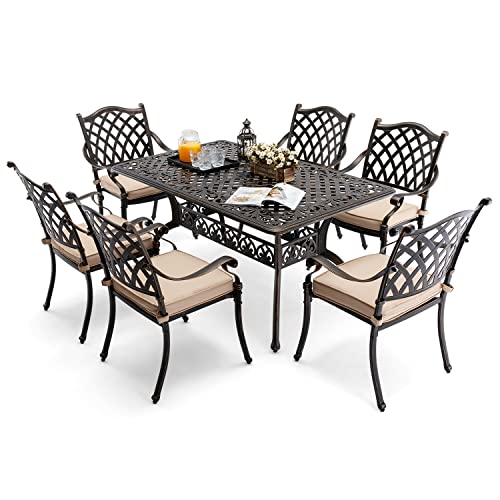
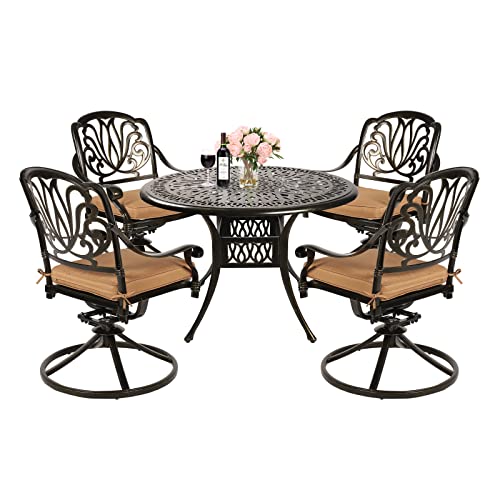
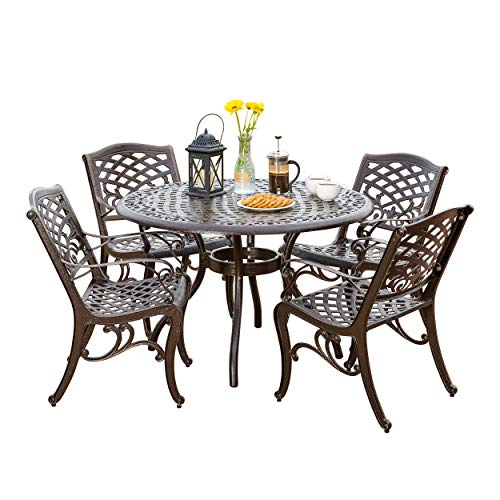
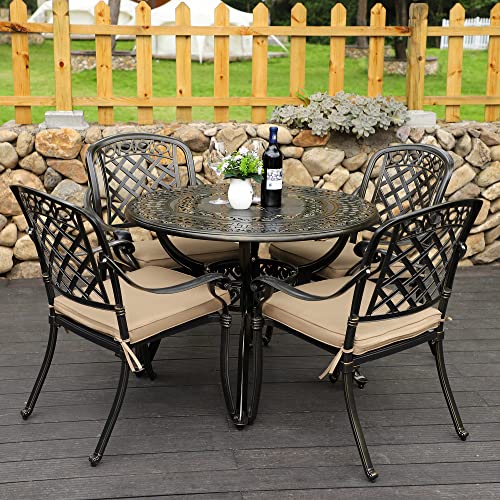
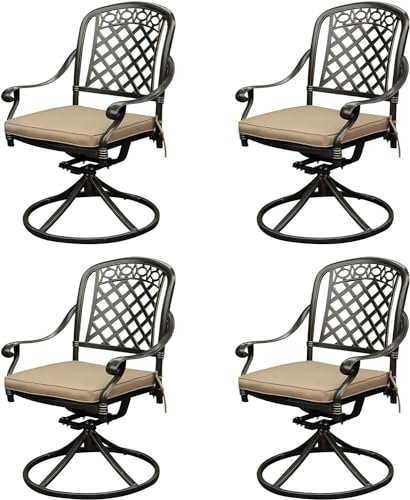
Dining sets pair a table with four to eight chairs and are built for meals, so seat height and table height need to line up correctly for comfortable use. Extension tables and modular leaf systems give you flexibility for smaller everyday meals and larger gatherings without needing two separate patio dining tables. Chairs in dining sets tend to sit more upright than lounge seating, which keeps posture comfortable through a full meal.
Deep Seating and Conversation Sets
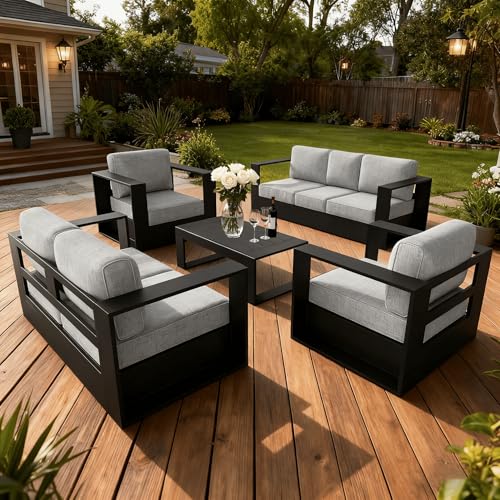
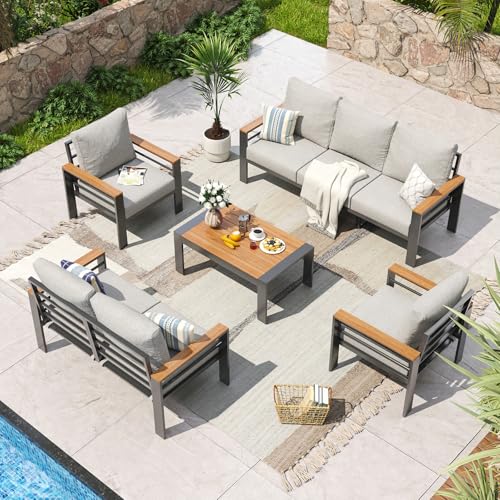
Deep seating sets swap dining chairs for wider, cushioned seats meant for lounging and conversation rather than eating. These sets usually include a sofa or loveseat, a couple of club chairs, and a coffee table, arranged to face each other for easy conversation. They work particularly well grouped around a fire feature, where chairs built for fire pit seating add extra spots without crowding the main set.
Sectional and Modular Seating
Modular cast aluminum pieces let you rearrange a seating area as your space or needs change, which is useful for patios that host anything from a quiet weekend to a larger get-together. Individual sections typically connect with clips or brackets, and many collections let you build out a full outdoor sectional sofa set if you want more flexibility down the road. Weight matters more here since sectional pieces get rearranged more often than fixed dining sets.
Bar Height and Counter Height Sets
Bar and counter height sets raise the seating and table surface for a more casual, standing-height gathering spot, often positioned near an outdoor kitchen or grilling area. These sets typically include stools rather than full chairs, which take up less floor space and tuck away more easily when not in use. Because the extra height puts more leverage on the frame, checking weight capacity matters more here than with standard-height seating.
Cast Aluminum vs. Other Patio Furniture Materials
Cast aluminum is not the only option for outdoor furniture, and knowing how it compares to other common materials helps confirm it is the right fit before you buy.
Cast Aluminum vs. Wicker and Rattan
Wicker and synthetic rattan often cost less upfront and bring a more casual, textured look than the smoother lines of cast aluminum. Cast aluminum generally holds up longer under direct sun since woven synthetic fibers can become brittle after years of UV exposure, while a quality powder coat keeps its finish intact for a long time with minimal upkeep. Wicker pieces are usually lighter and easier to move, which matters if you rearrange furniture often.
Cast Aluminum vs. Wood
Wood, particularly teak, brings a warmer and more natural look that some homeowners prefer over metal finishes. Cast aluminum requires far less seasonal maintenance since it never needs sanding, oiling, or resealing the way most wood species do over time. Wood tends to feel warmer to the touch in cooler weather, while cast aluminum can feel cold, or in direct summer sun, noticeably hot.
Cast Aluminum vs. Wrought Iron and Steel
Wrought iron and steel furniture are heavier and often more affordable upfront, which can make them tempting for windy locations where stability matters. Cast aluminum resists rust without ongoing maintenance, while iron and steel need a well-maintained protective coating to avoid corrosion over years outdoors. The tradeoff is weight: iron and steel frames stay put better in strong wind, while cast aluminum pieces are easier for one person to move or rearrange.
Common Mistakes to Avoid When Buying Cast Aluminum Patio Furniture
A few avoidable missteps can leave you with a set that does not fit your space or your expectations, even when the furniture itself is well made.
- Buying a dining set sized for the showroom floor instead of your actual patio dimensions.
- Mixing pieces from different collections that do not match in finish color or design style.
- Choosing a deep, plush cushion style without confirming the frame's seat depth works for your height.
- Overlooking table height and chair height pairing, which affects how comfortable a dining set feels.
- Skipping the warranty comparison and assuming all cast aluminum sets are backed the same way.
- Forgetting to plan for cushion storage, which shortens the lifespan of fabric more than the frame itself.
Frequently Asked Questions
Is cast aluminum patio furniture comfortable without cushions?
Bare cast aluminum seats can feel firm and cool to sit on, so most sets are designed with cushions in mind rather than as standalone seating. Some accent chairs and side tables work fine without cushions, but primary seating pieces are generally more comfortable with at least a thin cushion or pad.
Is cast aluminum patio furniture heavy to move around?
Cast aluminum is lighter than wrought iron or steel but heavier than resin wicker or tube-frame aluminum, so moving a full dining set usually takes two people. Individual chairs are typically light enough for one person to carry, which makes rearranging a seating area manageable.
Does cast aluminum patio furniture need assembly?
Most dining chairs and side tables ship fully or mostly assembled, while larger dining tables and sectional pieces often require attaching legs or connecting sections with included hardware. Assembly time is usually short since cast aluminum pieces have fewer parts than furniture built from multiple frame materials.
Can cast aluminum patio furniture be painted a different color?
Yes, though it requires stripping or sanding the existing powder coat and applying a paint rated for outdoor metal furniture, ideally with a fresh clear coat for protection. Professional refinishing tends to hold up better than a DIY paint job, especially for pieces that stay outside year round.
Is cast aluminum patio furniture worth the investment compared to other materials?
Cast aluminum tends to cost more upfront than resin wicker or basic steel furniture, but its resistance to rust and minimal upkeep often make it a better long-term value. For buyers who want furniture that stays outside year round without much maintenance, the higher initial cost usually pays off over time.
Does cast aluminum furniture get too hot to sit on in direct sun?
Cast aluminum can get warm in direct summer sun, though it typically cools down faster than steel or wrought iron once shaded. Lighter finish colors absorb less heat than dark bronze or black, and cushions add a layer of protection between the frame and bare skin.
Final Thoughts
The best cast aluminum patio furniture for your home comes down to matching style, size, and set type to how you actually use your outdoor space, not just picking the most attractive frame in a catalog. Comfort features like seat depth and cushion quality matter just as much as the metal itself, especially for pieces you will sit in regularly. Take the time to measure your space, compare warranties, and think through your climate before buying, and a well-chosen set should serve your patio well for many years to come.