Best Car Detailing Microfiber Towels for 2026: Every Type Explained Side by Side
Disclosure: We may earn a commission when you buy through links on this page, at no extra cost to you. As an Amazon Associate I earn from qualifying purchases. Learn more

Compare car detailing microfiber towel types by job, from drying and glass to paint and interior, with GSM, weave, pile, edges and set sizes explained.
A shelf of detailing towels can look like one product repeated at different prices, yet the towels in front of you were built for very different work. Choosing best car detailing microfiber towels therefore starts with the job, not with the softest looking bundle in the basket. A towel that drinks water from a roof panel will smear a windshield, and a towel that leaves glass clear will drag across fresh wax.
This guide compares each type side by side so you can build a set around the jobs you actually do each wash. The comparison table below lays out the main classes, their strengths, their limits, and what each class usually costs.




Types of Car Detailing Microfiber Towels Compared
A detailing towel is bought by the job, stated plainly. Drying, glass, interior, and paint classes are different towels, because each surface asks for a different weave, a different pile height, and a different tolerance for lint. Buying one towel type to cover all four jobs is the most common reason a wash ends with streaks, damp seams, or a finish that looks dull in direct sun.
Price bands in the table are for single towels unless a listing clearly sells the class as a matched set.
| Type | Best For | Pros | Cons | Typical Price |
|---|---|---|---|---|
| Drying towels | Body panels after rinsing | Very high water uptake, large coverage | Bulky to store and wash | about $12 to $25 |
| Glass towels | Windows and mirrors | Flat weave, very low lint, clear finish | Poor choice for heavy drying | about $6 to $14 |
| Interior towels | Dash, trim, leather, screens | Short pile, good grip on dust and spills | Too thin for paint finishing | about $5 to $12 |
| Paint towels | Wax, sealant, and coating removal | Soft face, gentle on clear coat | Need careful washing and sorting | about $8 to $20 |
Drying Towels and Large Panel Work
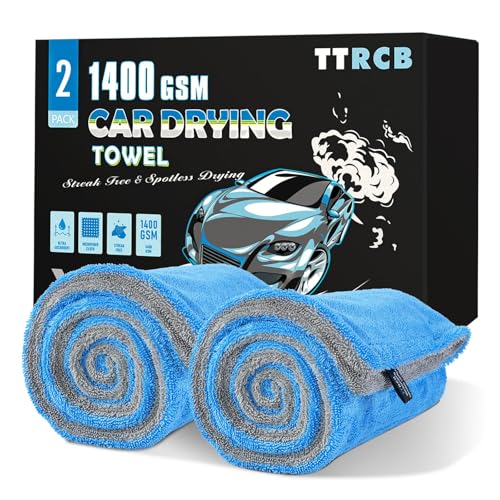
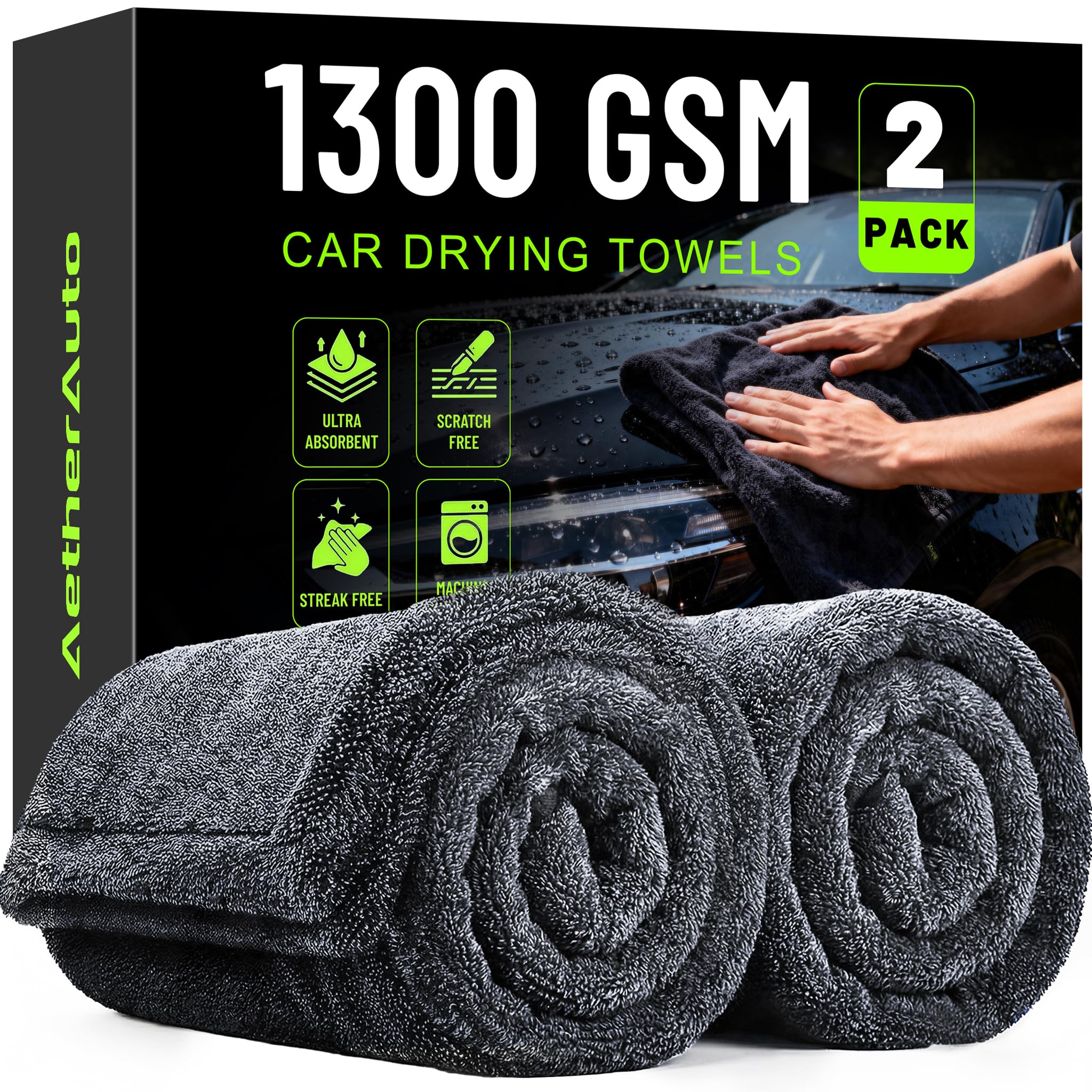
Drying towels are the largest class in the set, built to pull rinse water off roofs, doors, and hoods before spots form. Look for a deep looped weave or a waffle weave, a size that covers a full panel in two passes, and enough weight that the towel stays in contact as you draw it across the paint. A large towel you can fold into quarters gives you eight clean faces before it needs the laundry basket.
The trade off is bulk. Big drying towels take longer to wash and dry, and a saturated one grows heavy, so a second smaller towel helps around mirrors, grilles, and door shuts. Shoppers who want the drying class compared in more depth can read our guide to best microfiber towels for drying car alongside this overview.
Glass Towels and Tight Flat Weaves
Glass towels use a tight, flat weave with almost no pile, and that flatness is the whole point. Loose fibers left behind by a plush towel show up as lint and haze the moment sunlight hits a windshield, while a flat weave wipes cleaning solution away cleanly and leaves the surface looking empty. Keep glass towels small, because a compact towel folds neatly and reaches the lower corners where the dash meets the glass.
Never promote a glass towel to paint duty or demote a paint towel to glass duty. Once a towel picks up wax, dressing, or road film, it will smear glass no matter how well you wash it. Many detailers keep glass towels in a separate color, and that simple color rule prevents most cross use mistakes.
Interior Towels and Short Pile Control
Interior towels work on dashboards, door trim, leather, touch screens, and the textured plastics that collect dust and sunscreen. A short pile gives the towel grip, so it lifts crumbs and lint instead of pushing them across the surface, and it lets you feel knobs, seams, and vents through the cloth. This class tolerates light cleaning sprays well, and it is the right place to use towels that have aged out of paint work.
Keep interior towels away from strong dressings unless you dedicate a towel to that product alone, because silicone residue spreads to screens and glass on the next use. A modest stack of four to six interior towels is enough for a full cabin clean, with one reserved for glass free screen wiping.
Paint Towels and the Soft Face Rule
Paint towels handle wax removal, sealant buffing, quick detailer sprays, and the final wipe that a driver sees in low sun. A soft paint face can still be marked by a rough edge or a gritty towel, stated plainly. The edge class and the wash habit decide whether a plush towel protects the finish or scratches it, so look for soft bound edges, laser cut edges with no stitching, and tags that tear away without leaving a stub.
Short pile paint towels suit coating and sealant removal because they bite into residue without folding over, while longer pile towels suit final buffing because the fibers cradle loose product. Readers building a paint focused set can compare the naming variants in our guide to best microfiber detailing towels before settling on quantities.
Drying Towels vs Interior Towels: Which Class Deserves More of Your Budget?
These two classes sit at opposite ends of the set, and comparing them shows why budget follows the job. A drying towel earns its price through size and water uptake, because every extra pass over wet paint is another chance to drag grit across the finish. An interior towel earns almost nothing from extra size, since cabin surfaces are small, broken up by controls, and cleaned far more often than they are soaked.
On cost, drying towels run about $12 to $25 each while interior towels run about $5 to $12, and that gap reflects material volume rather than quality alone. On risk, a failed drying towel leaves water spots, while a failed interior towel leaves a smeared screen. Spend first on the drying class, keep the interior class simple and plentiful, and let the paint class take whatever budget remains.
How to Choose the Right Car Detailing Microfiber Towel
With the classes clear, choosing within a class comes down to four checks: the fiber blend, the weight and pile, the working performance on water, and the honesty of the label. The sections below take each check in turn.
Material and Construction
Microfiber is split synthetic fiber, most often a blend of polyester and polyamide, and the blend ratio shapes how a towel behaves. More polyamide generally means a softer face and better water uptake, while more polyester means a tougher, cheaper towel that suits interior and general work. Splitting quality matters just as much, because well split fibers present far more surface area to water and dust than poorly split ones.
Construction details to check are the weave pattern, the edge finish, and whether the towel keeps its shape after folding. For a wider look at naming and construction across the category, see our guide to best towels for car detailing and compare how each class describes its blend.
Pile, Weight, and GSM
GSM means grams per square meter, and it tells you how much fiber sits in a given area of towel. Low GSM towels, roughly 200 to 300, feel thin and flat, which suits glass and interior work where control matters more than cushion. Middle GSM towels, roughly 300 to 400, cover general paint wiping and product removal for most home users.
High GSM towels, roughly 400 to 600 and above, feel plush and heavy, which suits drying and final buffing but can fold over and drag during coating removal. Match the number to the class first, then compare within that class.
Performance on Water and Product
Absorbency is the headline performance measure for drying towels, and it depends on fiber split, loop length, and total size working together. A long looped drying towel can hold several times its own weight in water, yet technique still matters, because laying the towel flat and drawing it slowly picks up more than scrubbing back and forth. The drying focused companion guide to best drying towels for car detailing covers that panel by panel method in full.
For paint and interior classes, performance means something else: clean release of wax residue, even spreading of a detailer spray, and no lint left on a dark surface. Judge each class by its own measure rather than by absorbency alone. A towel that wins on water uptake and loses on lint is still the wrong towel for glass.
Reading Labels, Blends, and Care Claims
Labels in this category reward a careful reader. A stated blend ratio, a GSM figure, and a clear edge description are the three facts worth trusting, while vague claims about professional results tell you nothing measurable. Some towels carry textile safety certifications such as OEKO TEX, which speaks to substances used in the cloth.
Care claims deserve the same scrutiny, since a towel rated for many washes only reaches that life if the wash rules in the care section below are followed. Treat recycled fiber content and packaging claims as secondary points that break a tie between two otherwise equal towels.
Setup and Care Tips That Keep Every Class Working
Wash new towels before first use, because loose fibers and factory residue come off in that first wash and would otherwise land on glass and paint. Wash microfiber separately from cotton laundry, in warm water with a mild detergent, and skip fabric softener entirely, since softener coats the fibers and quietly destroys absorbency. Tumble dry low or hang the towels to dry, since bleach and high heat damage fibers quickly.
Rotation is the other half of care, and it needs stating plainly: one towel is never the purchase. A working set rotates, so several towels share each job and each towel rests between washes. And a dropped towel leaves paint duty, because grit picked up from the ground can hide deep in the pile even after washing.
Demote a dropped towel to wheels or jambs, keep paint towels stored in a closed container, and sort the wash load by class so glass towels never meet wax residue. The category overview in our guide to best microfiber towels for auto detailing shows how a full rotation set is usually organized.
Car Detailing Microfiber Towels: Your Questions Answered
How often should car detailing microfiber towels be replaced?
Replace a detailing towel when it stays stiff after washing, leaves lint it never left before, or feels rough against the inside of your wrist. Paint towels usually reach that point first, often after about 40 to 60 careful washes, while interior towels last far longer. Test each paint towel yearly on an old mirror, and demote any towel that drags or sheds.
What GSM is best for car detailing towels?
The best GSM depends on the class, with glass and interior towels working well at about 200 to 300 GSM and paint towels at about 300 to 400 GSM. Drying towels sit higher, often about 400 to 600 GSM, because water capacity is their whole job. One point the body sections only touch briefly: two thinner towels layered together often outperform one very thick towel on curved panels, because each layer conforms to the shape instead of bridging across it.
Are premium priced detailing towels worth it?
Premium detailing towels are worth it mainly in the paint and drying classes, where edge finish and fiber split show up directly in the result. Paying more for interior towels buys little, because dust and trim respond to a clean short pile towel at almost any price. If your budget is fixed, upgrade one paint towel and one drying towel first.
How do I keep detailing towels fresh for longer?
Shake each towel out before washing, rinse heavily soiled towels on the day of use, and store clean towels dry in a closed box away from garage dust. Sour smells usually trace back to towels left damp in a hamper, so hang used towels over a rail until wash day. A periodic wash with no detergent at all can also clear built up product from the fibers when absorbency starts to fade.
Can one towel type handle every detailing job?
No single towel type handles every detailing job well, because glass needs a flat lint free wipe while paint needs a cushioned soft face. A general purpose middle pile towel is a reasonable starter for interior and light paint work, but it will streak glass and saturate early on a wet roof. Starting with two classes, drying and interior, covers most home washes.
Final Thoughts
Build the set by job, check the blend and GSM within each class, and protect paint with soft edges and a strict dropped towel rule. The product table above gathers the classes in one place, so you can match each row to the panels and surfaces you clean most. Chosen that way, best car detailing microfiber towels stop being a confusing shelf of near identical bundles and become a small, clear kit where every towel has one job and does it well.