
Best Cantilever Patio Umbrellas in 2026: Types and Buying Guide
Disclosure: We may earn a commission when you buy through links on this page, at no extra cost to you. As an Amazon Associate I earn from qualifying purchases. Learn more

Compare the best cantilever patio umbrella types by canopy size, frame, fabric and base weight to match shade to your patio.
A center pole umbrella forces you to work around the pole, and it often leaves half the table in sun by late afternoon. A cantilever design moves the pole to the side and hangs the canopy over your seating, so you get open space below and shade you can swing into place. Finding the best cantilever patio umbrella comes down to canopy size, frame strength, fabric, and a base heavy enough to hold it steady.
This guide compares the main cantilever types on build materials and weather resistance, size and capacity, and ease of assembly. It also explains tilt, rotation, and anchoring in plain terms, so you can match a style to your patio before you buy. Start with the comparison table below, then use the sections that follow to narrow your choice.


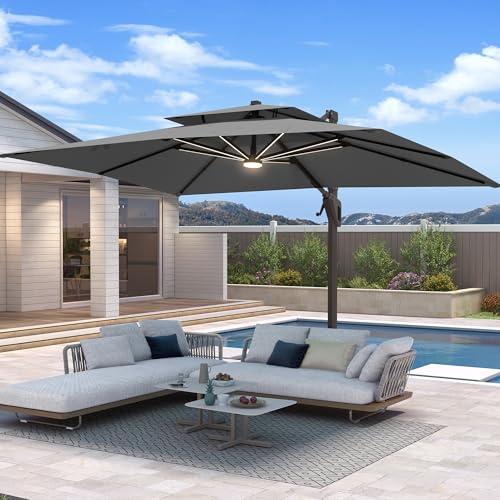


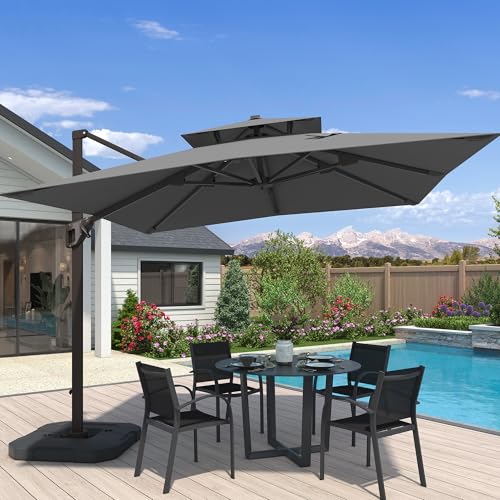
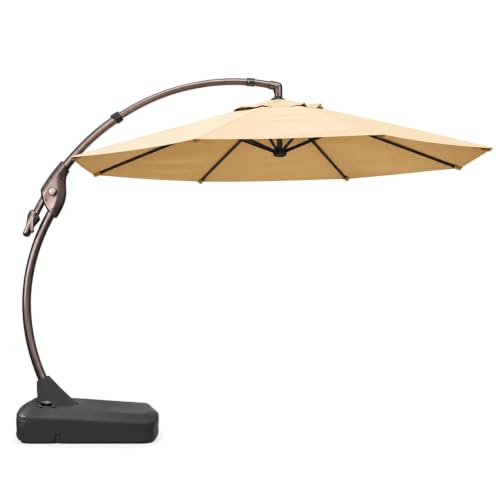
Cantilever Umbrella Types at a Glance
The product table above sorts cantilever umbrellas by the role they fill best. Round canopies suit most dining sets and conversation areas. Rectangular canopies cover long tables and rows of loungers with fewer gaps at the ends. Large canopies with a vented top suit wide decks and pool edges where heat builds up and gusts pass through.
Think of these as three types to compare, not three identical products at different prices. Size, shape, and venting change how each one feels in daily use more than small styling details do. Once you know the type you need, the frame, fabric, and base choices below become much easier.
Three Cantilever Types Compared
Round Canopy for Everyday Patios
A round canopy in the 9 ft to 11 ft range is the most versatile choice for a standard patio. It covers a four to six seat dining table or a pair of lounge chairs without crowding nearby walls or railings. The curved edge sheds light rain well and leaves room to walk around the seating area. Choose this type if your space is roughly square and you want simple, balanced coverage.
Rectangular Canopy for Long Tables and Loungers
A rectangular canopy stretches shade along a long dining table, an outdoor kitchen counter, or a row of pool loungers. It covers more length than a round canopy of similar width, so guests at the far ends stay shaded. The trade off is footprint. The canopy needs clear swing room when you rotate it, and the longer sides catch more wind. Measure the full rotation path before you choose this shape.
Large Vented Canopy for Wide and Warm Spaces
A large canopy of 11 ft to 13 ft with a second layer at the top suits wide decks and open pool areas. The vent lets hot air escape from under the canopy and gives gusts a path through, which reduces lifting force on the frame. That extra coverage comes with extra weight and a larger base. Choose this type only if you have the floor space for the base and the clearance the canopy needs overhead.
What to Weigh in a Cantilever Patio Umbrella
Five criteria shape daily use: build materials and weather resistance, size and capacity, ease of assembly, durability of the crank and tilt parts, and warranty cover for the frame and fabric. The comparison draws on maker specifications and patterns in verified buyer feedback about stability, fading, and parts that wear.
In practice, choosing the best cantilever patio umbrella for your home means weighting those criteria by your conditions. A calm, covered patio can favor fabric quality and smooth rotation. An open, breezy deck should favor frame strength, venting, and base weight above all else.
How to Choose the Right Patio Umbrella
Size and Form Factor
Canopy sizes run from about 7.5 ft for a small bistro corner to about 13 ft for a wide deck. As a working guide, the canopy should extend about 2 ft beyond the edge of the table or seating on each side. A 9 ft canopy suits a 42 inch to 54 inch table, while a 10 ft to 11 ft canopy suits larger sets. Rectangular shapes trade width for length, which helps long, narrow spaces.
Type
All cantilever umbrellas hang from a side post, but details vary. Some tilt at the pole, some tilt at the canopy joint, and many rotate a full circle on the base with a foot pedal. Solar models add small lights powered by a panel on top, and models with built in lights extend use into the evening. A double top design adds the vent described earlier. Pick tilt and rotation first, since those decide how much of the day the shade stays useful.
Features Worth Paying For
A smooth crank lift matters because you will raise and lower the canopy often, sometimes with one hand full. Infinite tilt or several locked tilt angles help you block low sun without moving the whole base. Full rotation is worth paying for if your seating faces different directions through the day. Lights are a pleasant extra, but they should rank below frame strength and base stability. A canopy strap and a cover included in the box also save a separate purchase.
Weather Resistant Materials
Look for a pole and ribs in powder coated aluminum or steel, with aluminum the lighter and more rust resistant of the two. For fabric, polyester costs least and suits covered patios. Olefin and solution dyed acrylic resist fading and mildew better in full sun and humid air. If your deck takes regular gusts, read our guide to the best patio umbrella for windy areas before you settle on a size, since wind changes which frame and vent you should favor.
Size for Your Space
Measure the seating area, then add the overhang guide above to get your canopy size. Next, check the base footprint on the floor and the space the pole needs behind your chairs. Finally, stand where the pole will sit and check the rotation path for walls, planters, and low branches. Shoppers covering a wide deck may also want to compare the best large patio umbrella options, since a single large canopy and two smaller ones solve the same problem in different ways.
Assembly and Anchoring
Most cantilever umbrellas arrive in two or three large pieces and go together with bolts at the pole and base. Plan on two adults for assembly, because the canopy frame is awkward to hold upright alone. The base is the critical part. A large canopy acts like a sail, so the base often needs about 150 to 200 pounds of sand or water fill to stay planted. Our guide to the best patio umbrella with base explains fill choices and cross base options in detail.
Care and Off Season Storage
Close the canopy when winds rise and always use the tie strap, since a closed canopy puts far less load on the ribs. Brush off leaves and pollen before they bake onto the fabric in the sun. In winter, store the canopy indoors or use a breathable cover, and keep the crank and pedal dry. Storing the base empty and dry also prevents cracked fill chambers in freezing weather.
How Much Should You Spend?
Expect to pay about $150 to $250 for a smaller cantilever with a polyester canopy and basic tilt. About $250 to $450 usually buys a stronger aluminum frame, better fabric, and full rotation. Above about $450, you are paying for larger sizes, solution dyed acrylic, and smoother hardware. Very low prices, under about $100, usually mean a small canopy and a light frame, so check the base cost too. The base is sometimes sold separately and can add a real share to the total.
Cantilever vs Other Patio Umbrellas: Pros and Cons
The main gain is clear space. With no pole through the table, you can use a solid top table, place chairs freely, and shade a hot tub or daybed that a center pole could never cover. Rotation and tilt let one umbrella serve morning coffee and evening dining spots without moving a heavy base each time. If you are still weighing the two styles, our breakdown of cantilever vs market umbrella walks through cost and footprint side by side.
The costs are size, weight, and price. A cantilever needs a much heavier base than a market umbrella, takes more floor space for the post, and costs more for the same canopy width. It also has more moving parts, so the crank, tilt joint, and rotation pedal need occasional checks. For a small balcony with a tiny table, a simple center pole model is often the more sensible fit. For broader context, see our overview of the best patio umbrella styles for every space.
FAQs
What is the best cantilever patio umbrella?
It depends on your table shape and space. Choose a round 10 ft canopy for a square patio and a standard dining set, and a rectangular canopy for a long table. Prioritize an aluminum frame, fade resistant fabric, and a base you can fill to the weight the maker specifies. The right match for your layout will serve you better than the largest canopy you can find.
Are cantilever patio umbrellas worth it?
Yes, if you will use the tilt and rotation often. The ability to follow the sun across a deck or pool edge means one shaded spot stays usable for hours longer each day. They also free the center of the table for serving dishes and conversation. If your seating never moves and the sun angle barely changes, the extra cost over a market umbrella buys you less.
How long does a patio umbrella last?
The frame often outlasts the canopy by several years. Many makers sell replacement canopies, so check that one is available for your size and shape before you buy. A canopy kept closed and covered when not in use can stay presentable far longer than one left open through storms. Replacing fabric alone costs much less than replacing the whole umbrella.
Is a patio umbrella worth it?
For most patios, yes, because movable shade is far cheaper and more flexible than a fixed roof or pergola. You can open it for lunch, close it for stargazing, and store it for winter. It also shields outdoor fabric and wood finishes from direct sun, which slows fading on the furniture below. Renters gain shade without any permanent change to the property.
How do you clean a patio umbrella?
Open the canopy and brush off loose dirt first. Wash it with lukewarm water and a small amount of mild soap, using a soft brush on stained spots, then rinse fully and air dry before closing. Our step by step guide on how to clean a patio umbrella covers mildew spots and frame washing. Never use bleach on colored fabric unless the care label allows it, since bleach weakens fibers and strips color.
What is the most reliable patio umbrella brand?
Reliability shows up less in a name than in support after the sale. Look for a maker that lists a clear frame and fabric warranty, sells spare ribs and replacement canopies, and publishes base weight guidance for each size. Brands that hide parts support tend to leave you replacing the whole umbrella when one rib bends. Keep your receipt and model details so ordering an exact fit part stays simple.
Final Thoughts
Start with your space, not with a sale price. Measure the seating, pick the canopy shape that covers it, then choose frame, fabric, and base weight that suit your wind and sun. The product table above pulls those choices together, so you can compare types at a glance. Chosen well, the best cantilever patio umbrella turns a patio that empties at noon into a room you use all day.


