
Best 7.5 ft Patio Umbrellas (2026): Sizes, Types and Prices
Disclosure: We may earn a commission when you buy through links on this page, at no extra cost to you. As an Amazon Associate I earn from qualifying purchases. Learn more

Choosing the best 7.5 ft patio umbrella? A 7.5 ft canopy shades a small patio table or balcony without crowding it.
A 7.5 ft canopy sounds simple to shop for, yet two umbrellas with the same stated size can shade very different areas and hold up very differently outdoors. The best 7.5 ft patio umbrella for your space depends on the pole position, the canopy shape, the frame material, and how you plan to anchor it. This guide compares the main types on build materials, weather resistance, coverage, and assembly so you can match one to your table, deck, or balcony.
Use the comparison table below for a quick side by side look at the types covered here, then read on for the sizing and material details that decide how much shade you actually get. If your seating area is larger than a small dining set, our broader guide to the best patio umbrella covers the bigger sizes worth considering instead.
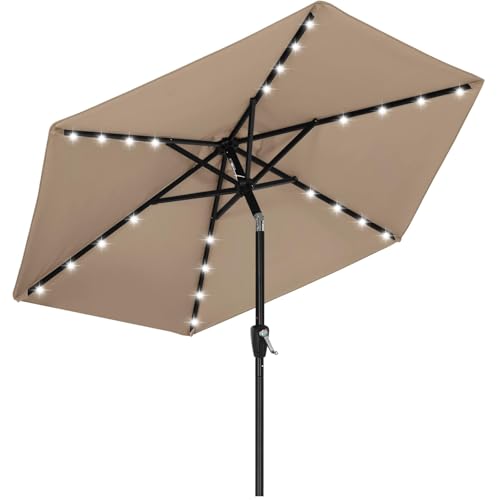

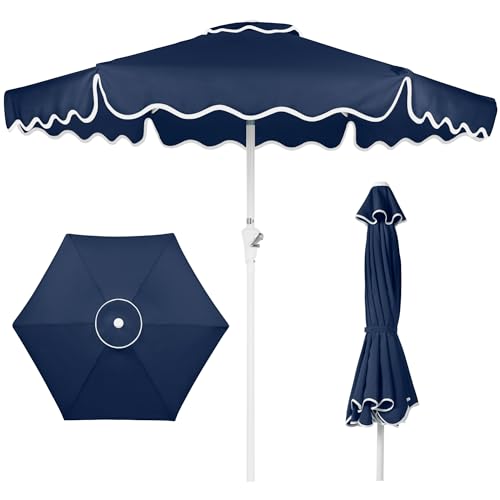
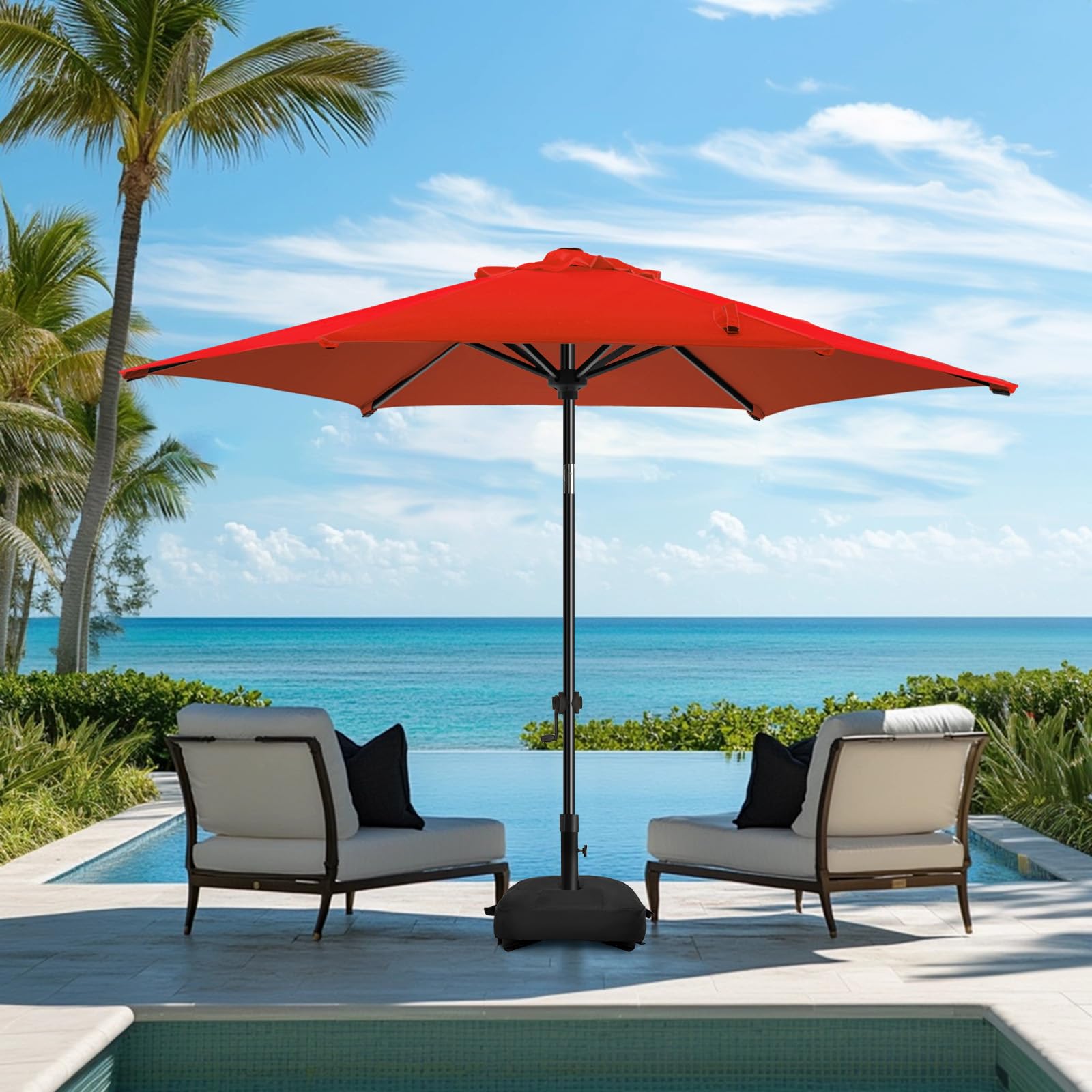


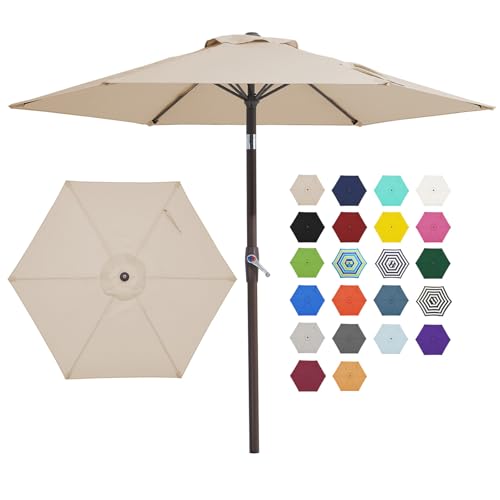


Types of 7.5 ft Patio Umbrellas Compared
Rather than naming individual models, it helps to compare the three styles sold in this size, since style decides where the pole sits and how the shade falls. Each style below suits a different layout, and the right one often becomes obvious once you look at your furniture.
Market Umbrellas With a Center Pole
The classic 7.5 ft market umbrella has a straight center pole that drops through a hole in your patio table or stands in a weighted base on open ground. It is the simplest and usually the lowest cost style in this size, and the centered shade suits round or square tables seating two to four people. Most open with a crank or a pulley and pin system. The limit is placement, since the pole occupies the middle of the shaded area.
Cantilever and Offset Umbrellas
A 7.5 ft cantilever umbrella hangs its canopy from an arm on a side pole, so the space underneath stays completely open for chairs, a daybed, or a conversation set. This style costs more and needs a much heavier base or ground mounting, because the hanging canopy acts like a sail in wind. Many models rotate so you can swing the shade as the sun moves. Our comparison of cantilever vs market umbrella layouts explains when the open floor space is worth the extra hardware.
Tilting Market Umbrellas
A tilting market umbrella keeps the center pole but adds a joint near the top of the frame, so you can angle the canopy toward low morning or late afternoon sun. Push button and collar tilt mechanisms are both common at this size. Tilt helps most on east or west facing patios where a straight canopy loses coverage early or late in the day. The joint is one more moving part to check for wobble, so look for metal hardware rather than plastic at that point.
How to Evaluate a 7.5 ft Patio Umbrella
Five factors separate a durable umbrella from one that fades or bends in its first season: build materials, weather resistance, true shade coverage, assembly effort, and warranty coverage. Read the stated canopy diameter with care, since some makers measure across the curve of the fabric rather than straight across the open canopy, which overstates the shade you get. Check the pole diameter too, because it must match your table hole and your base.
How to Choose the Right Patio Umbrella
Size and Form Factor
Canopy size is measured across the open canopy, and 7.5 ft sits at the compact end of the range that runs through 9 ft, 10 ft, 11 ft, and larger. Round canopies are the standard shape at this size, though rectangular and double sided designs exist for narrow or extra long tables. A 7.5 ft canopy shades a table of about 36 to 48 inches comfortably. Step up a size if your table is bigger, and treat this size as the sweet spot for balconies, small decks, and bistro sets where a 9 ft canopy would crowd the railing.
Type
Choose the type around how you will use the shade most days. A market style works best through a table, where the table itself adds stability and the pole position is already fixed. A cantilever style earns its cost where no table hole exists, such as over a hot tub surround or a pair of lounge chairs. Tilting models suit fixed seating that stays in one spot all day. For a deeper look at offset designs, see our guide to the best cantilever patio umbrella and note how much base weight those frames require.
Features Worth Paying For
A crank lift is worth paying for if you open and close the umbrella daily, since it removes the reaching and pin setting of a pulley system. A vent at the top of the canopy lets gusts pass through and reduces the pull on the frame, which matters on exposed decks. LED lights built into the ribs help only if you sit out after dark often, and they add a battery or solar panel to maintain. A tie strap that secures the closed canopy sounds minor, yet it prevents fabric flapping damage on windy nights.
Weather Resistant Materials
Canopy fabric does most of the weather work. Solution dyed acrylic resists fading the longest and handles rain well, while polyester costs less and still sheds water but fades sooner in strong sun, and olefin sits between the two on price and color life. For the frame, powder coated aluminum resists rust and stays light to move, fiberglass ribs flex in gusts instead of snapping, and steel adds strength at the cost of weight and rust risk if the coating chips. Wood poles look classic but need sealing to survive wet seasons.
Size for Your Space
Measure before you order. Note your table diameter, then add the overhang you want beyond the table edge for shade at seated head height. Check vertical clearance too, since most umbrellas in this class stand about 7 to 8 ft tall when open, which can clash with low eaves or a balcony ceiling above. Leave walking room around the open canopy edge so guests are not ducking under fabric.
Assembly and Anchoring
Most market umbrellas assemble in minutes, with the pole joining in two pieces and the canopy frame arriving ready to open. Cantilever models take longer, with a cross base, a rotating mechanism, and several bolts to align. Anchoring matters more than assembly speed, since an unsecured umbrella can lift out in a gust. Bases for this size often call for about 50 pounds of weight for table supported use and more for freestanding use, so read our guide to the best patio umbrella with base options before pairing parts. The step by step walkthrough in how to assemble a patio umbrella shows the usual order of parts.
Care and Storage
Close the umbrella when storms approach and whenever you will be away for days, since most frame damage happens while an open canopy catches sudden wind. Brush loose dirt off the fabric while it is dry, and let the canopy dry fully before closing it for storage to keep mildew from forming. Our full routine for how to clean a patio umbrella covers washing steps in detail. In winter, store the umbrella indoors or under a cover in a dry spot, and check rib joints and the crank cord for wear before the next season.
How Much Should You Spend?
Basic market umbrellas in this size start at around $50, usually with a polyester canopy and a steel or wood pole. Models at about $50 to $100 add thicker fabric, a crank lift, and a tilt joint. Spending about $100 to $200 brings solution dyed acrylic, fiberglass ribs, and stronger frame hardware, while cantilever designs in this size often run about $200 to $500 once you add the base they need. Pay for fabric and frame quality first, because those decide service life, and treat lights and other extras as optional.
Is a 7.5 ft Patio Umbrella the Right Size for You?
This size is right for you if your outdoor seating centers on a small table for two to four people, a compact deck corner, or a balcony where a larger canopy would hit walls or railings. It also works well beside a pool lounger or over a single reading chair, where the shade target is one defined spot rather than a whole seating group.
It is the wrong size if your table seats six or more, since guests at the ends will sit outside the shade even at midday. It also falls short over a sectional or a dining set with a bench, where the shaded footprint must cover furniture spread wider than the canopy. In those cases a 9 ft or 10 ft canopy, or a cantilever design you can rotate, will serve you better.
FAQ
What is the best 7.5 ft patio umbrella?
The best choice is the one whose pole diameter fits your table hole or base, whose fabric suits your sun exposure, and whose style matches your layout. Beyond the main buying factors, check whether replacement canopies are sold for the model you like, because fabric usually wears out before the frame does. An umbrella with an available replacement canopy can stay in service years longer than one you must discard when the fabric fades or tears.
What size patio umbrella do I need?
Start from your table size, then think about sun angle. A canopy that looks generous at noon can leave seats exposed at breakfast or dinner, because low sun throws shade sideways instead of straight down. If most of your outdoor meals happen in the early morning or late afternoon, a tilting model or one size up covers that sideways shade better than a fixed canopy of the same stated size. Renters should also confirm the open canopy clears any balcony wall before buying.
How long does a patio umbrella last?
A well kept umbrella in this size often lasts about 3 to 5 seasons, and premium fabrics can go longer. Salt air near the coast shortens that span, since it attacks metal joints and crank parts even when the frame coating looks intact, so a freshwater rinse now and then helps in coastal areas. The crank cord and the tilt joint tend to show wear first, and both are worth inspecting each spring before you rely on the umbrella daily.
Is a patio umbrella worth it?
For most small patios, yes. Shade makes a sun exposed table usable through the middle of the day instead of only in the morning and evening, and it also shields the table finish and chair cushions from fading. If your patio already sits in building shade for much of the day, or you rarely sit outside in summer, the money may serve you better elsewhere. Occasional users can start with a basic market style and upgrade later if the habit sticks.
How do you clean a patio umbrella?
Open the umbrella and brush off loose dirt first, then wash the canopy with lukewarm water and a small amount of mild soap, working one panel at a time with a soft brush. Rinse until the water runs clear, because soap residue left in the fabric attracts fresh dirt. Let the canopy air dry fully while open before you close it. Never use a pressure washer on the fabric, since the force can strip water resistant coatings and force water into the rib pockets.
What is the most reliable patio umbrella brand?
No single brand is the most reliable pick for everyone, and reliability in this category tracks materials and parts support more than a name. Look for a maker that sells spare ribs, crank parts, and replacement canopies for its current models, and that publishes clear warranty terms for both frame and fabric. A company that stocks parts for older models signals that it expects its umbrellas to stay in use, which says more about long term reliability than any award label.
Final Thoughts
A 7.5 ft canopy is a focused size that rewards careful matching to your table, your sun pattern, and your storage space. Compare the product table above once more, weigh fabric and frame quality ahead of extras, and the best 7.5 ft patio umbrella for your patio should be an easy call. Choose the style that fits your layout first, and anchor it well.


