Best Canopy Bed Frames in 2026: Types, Sizing and Buying Guide
Disclosure: We may earn a commission when you buy through links on this page, at no extra cost to you. As an Amazon Associate I earn from qualifying purchases. Learn more
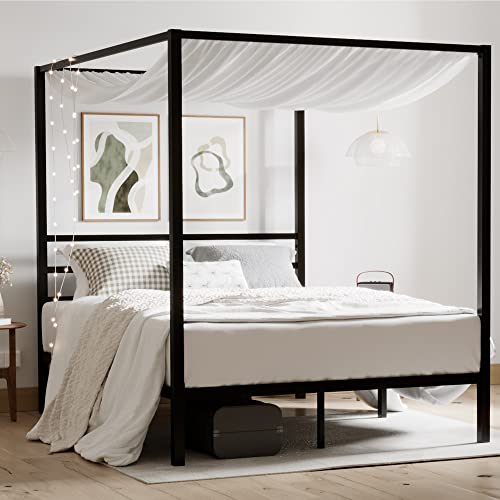
Compare the best canopy bed frame types by build quality, materials, sizing and value, with tips on ceiling height and mattress support.
A canopy frame changes how a bedroom feels, but a tall frame that wobbles, crowds a low ceiling, or fights your mattress height will annoy you every night. Choosing well means matching post height, rail strength, and slat support to your room and your mattress. This guide helps you find the best canopy bed frame for your space by comparing frame types on build quality, materials, and value, and the comparison table below sums up the main options.
Canopy frames cost more than plain frames because you are paying for four tall posts and the rails that join them at the top. That extra structure only earns its price if the joints stay tight and the proportions suit your room. The sections below walk through types, sizing, and the details that separate a sturdy frame from a shaky one. If you want a broader view first, see our guide to the best bed frame for standard styles.





Types of Canopy Bed Frames Compared
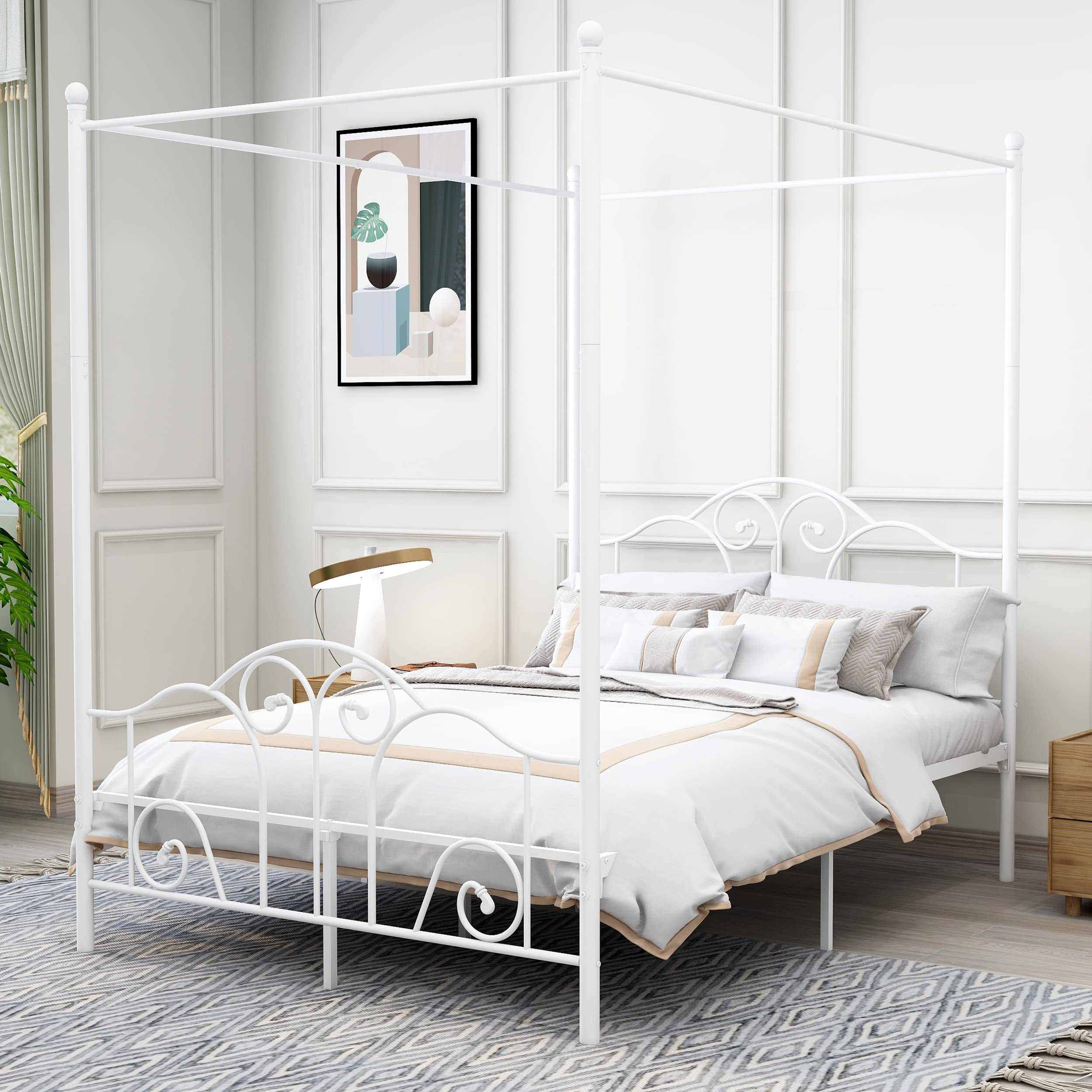
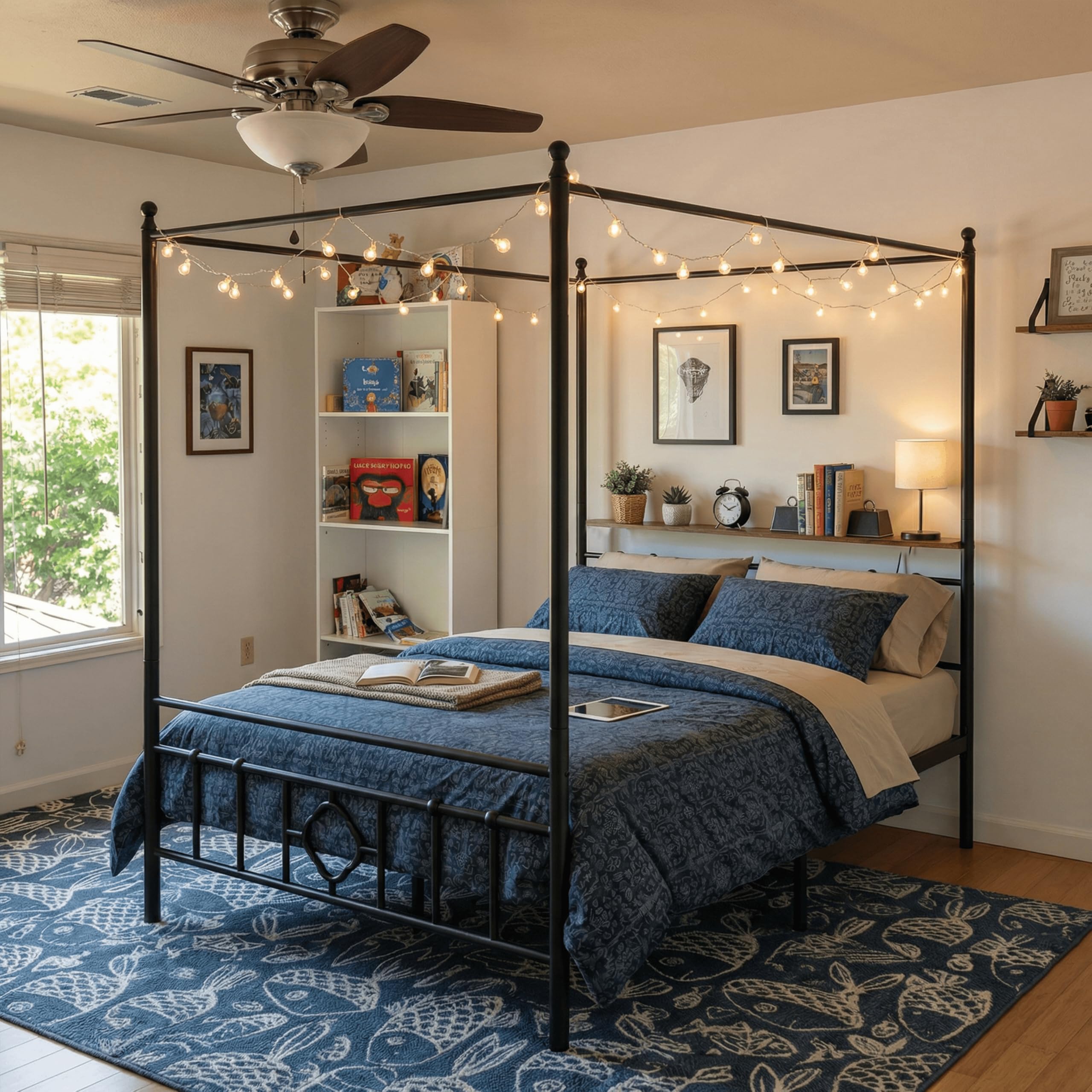
Instead of naming specific models, it helps to compare the three main canopy types, because material and construction drive price, weight, and how the frame ages. All three share the same basic layout of posts, side rails, and top rails, but they suit different rooms and budgets.
Slim Metal Canopy Frames
Metal canopy frames use thin steel or iron posts and rails, so the look stays light and airy even in a smaller room. They are usually the most affordable type and the easiest to move, since the parts weigh less and break down into shorter pieces. The trade off is that thin tubing can flex or rattle if the joint hardware is weak, so look for welded corners or bolts that pass through both pieces at each post. A powder coated finish resists scratches better than thin paint.
Solid Wood Canopy Frames
Wood canopy frames feel substantial and warm, with thicker posts that can carry carved detail or a simple square profile. Hardwood versions resist dents and hold fasteners tightly over many years, while softwood versions cost less but mark more easily where the rails meet the posts. Wood frames weigh a lot, so plan on two people for assembly and for any later move. In a large room with high ceilings, the visual weight of wood often looks balanced rather than heavy.
Upholstered Canopy Frames
Upholstered canopy frames wrap the headboard, and sometimes the rails, in fabric and padding while keeping exposed posts in wood or metal. The padded headboard is comfortable for reading in bed and softens the look of the tall frame. Fabric needs more care than bare wood or metal, since dust settles on it and spills need prompt blotting. Choose tightly woven fabric in a mid tone if the bed sits near a sunny window, because pale fabric shows dust and fading sooner.
What to Weigh When Comparing Canopy Bed Frames
Canopy frames are best compared on five points: ergonomics and adjustability, build quality and materials, size and weight capacity, assembly, and warranty. Ergonomics here means comfortable entry height and a headboard angle that supports sitting up, while adjustability covers removable canopy rails and compatibility with an adjustable base. The comparison relies on manufacturer specifications and patterns in verified buyer feedback about wobble, noise, and hardware quality, rather than on any single review.
How to Choose the Right Bed Frame
Size and Form Factor
Start with mattress size, then check the frame footprint, because canopy posts add length and width beyond the mattress itself. Queen is the most common canopy size and suits most main bedrooms, and our guide to the best queen bed frame covers standard queen dimensions. King frames need a room that leaves walking space on both sides, as explained in the best king bed frame guide. Also measure ceiling height and leave at least a few inches above the posts, and check the path from your door to the bedroom for tight turns.
Type
Most canopy frames sold today are platform designs, with slats that support a mattress without a box spring. That keeps the sleeping surface lower, which helps balance the tall posts above. Our guide to the best platform bed frame explains slat spacing and center support in depth. Some canopy frames instead use side rails designed for a box spring, which raises the mattress and can make the bed feel very tall. Confirm which support system a frame uses before you order, and confirm whether the top canopy rails can be left off if you later want a plain four poster look.
Features Worth Paying For
A padded or tall headboard is the feature most buyers use daily, since it supports pillows for reading and keeps them from slipping behind the mattress. Under bed clearance matters if you store bins below the frame, so check the rail height rather than assuming space. Small extras such as felt pads on the feet protect floors and quiet small movements. Skip paying extra for decorative finials or built in lighting you will rarely use, because that money does more work in thicker posts, better slats, and stronger joint hardware.
Body Size and Weight Capacity
Weight capacity should cover the mattress, all sleepers, and the extra load when someone sits on the edge or a child bounces. Foam and hybrid mattresses weigh more than many buyers expect, so add their weight first. Look for a stated capacity with margin above your total, plus a center rail with support legs on queen and king sizes. Closely spaced slats spread load evenly and stop the mattress sagging between gaps, which also protects the mattress warranty on many brands.
Adjustability
True adjustability is limited on canopy frames, but a few choices matter. Some frames offer two heights for the side rails, which changes entry height and under bed space. Others state compatibility with an adjustable base that sits inside the frame, though the base replaces the slats and adds major weight. Removable top rails are the most useful adjustment of all, because they let you use the canopy with curtains, use it bare, or remove it entirely if you move to a room with a lower ceiling.
Materials and Durability
Post thickness and joint design matter more than material name alone. Thick hardwood posts and steel posts with reinforced corners both hold up well, while thin hollow posts dent and loosen. The comparison in our metal vs wood bed frame guide walks through noise, upkeep, and repair for each material. Check how the top rails connect, since those long spans carry any curtains you hang. Avoid frames that rely on small decorative screws at the post tops, because those joints loosen first.
Assembly and Warranty
Canopy frames have more parts than standard frames, and the tall posts make solo assembly awkward, so plan on a helper and about an hour or more. Lay out every bolt before you start and tighten the frame fully only after it sits square. Our walkthrough on how to assemble a bed frame covers the general order of steps. For warranty, look for coverage on welds, joints, and finish defects, and keep the hardware list so you can order a replacement bolt later.
How Much Should You Spend?
Basic metal canopy frames often cost about $150 to $300, with thinner posts and simpler hardware. Mid range wood and metal frames at about $300 to $700 usually add thicker posts, better slats, and quieter joints. Premium hardwood or upholstered frames can run about $700 to $1,500 or more, paying for materials and finish rather than extra function. Set your budget after measuring your room, because the best value is the frame that fits your ceiling and mattress and stays silent, not the tallest or heaviest option.
Canopy vs Other Bed Frames: Pros and Cons
A canopy frame gives a bedroom a clear focal point and lets you hang light curtains for privacy or a softer feel. The posts also define the sleeping area in a large or open room. On the down side, the top rails collect dust, the tall posts complicate moving, and the frame can overwhelm a small room or block light from a nearby window.
Compared with a standard platform frame, a canopy costs more and takes longer to assemble, while offering the same mattress support underneath. Compared with a plain four poster, the joined top rails add rigidity and the option of curtains, but remove the open feel above the bed. Choose a canopy when the look and the option to drape fabric matter to you, and choose a simpler frame when low cost, easy moving, or a low ceiling matters more.
FAQ
What is the best canopy bed frame?
The right choice depends on your room and mattress rather than on a single model. For most buyers, a platform canopy in queen size with thick posts, closely spaced slats, and removable top rails covers the widest range of needs. Small rooms usually suit slim metal frames, while large rooms with high ceilings suit wood. Match the stated weight capacity to your mattress and sleepers, and confirm the support type before ordering.
Are canopy bed frames worth it?
They are worth it if you value the look and will use the structure, for example by hanging light curtains or using the posts as a visual anchor in a big room. The support under your mattress is no better than a good platform frame, so you are paying for height and style. If your budget is tight, spending the same money on a stronger standard frame and a better mattress usually improves sleep more.
How long does a bed frame last?
A well built canopy frame often lasts about 10 to 15 years, and hardwood frames can last longer if the joints stay tight. Lifespan drops when bolts loosen and go unchecked, because movement wears the joint holes wider over time. Recheck fasteners about twice a year, and after every move. Fading finish or worn fabric usually signals age long before the structure fails, and those are cosmetic issues you can live with or refresh.
Is a bed frame worth it?
Yes, because a proper frame lifts the mattress off the floor, allows air flow beneath it, and supports the mattress evenly so it wears as designed. Many mattress warranties require suitable support, including a center rail for larger sizes. A frame also sets a comfortable entry height, which matters if getting in and out of a low bed strains your knees or back. Even a simple frame beats placing a mattress directly on the floor.
How do you clean a bed frame?
Dust the top rails and post tops first, since those high surfaces collect the most dust and are easy to forget. Wipe metal and finished wood with a lightly damp cloth, then dry it, and vacuum upholstered panels with a soft brush attachment. Tighten any loose bolt you notice while you work around the frame. Avoid soaking wood joints or fabric, because trapped moisture can weaken glue and leave marks on padding.
What is the most reliable bed frame brand?
No single brand is most reliable across every canopy style, and reliability tracks construction more than a name. Look for clear weight capacity figures, named materials rather than vague descriptions, spare hardware availability, and a warranty that covers joints and welds. Consistent buyer feedback about quiet, stable frames over several years is a better signal than a famous label. A brand that publishes full dimensions and slat spacing is also easier to trust.
Final Thoughts
Measure your ceiling, confirm your mattress size and support type, and put your budget toward thick posts, strong joints, and good slats. Do that, and the best canopy bed frame for your room will stay quiet and steady for years. Before you order, compare your shortlist against the product table above and double check the frame footprint against your doorway and stairs.