
Best Camping Pillows in 2026: Which One Fits the Way You Use It?
Disclosure: We may earn a commission when you buy through links on this page, at no extra cost to you. As an Amazon Associate I earn from qualifying purchases. Learn more

Compare the best camping pillows by fill, packed size and height, from inflatable to compressible foam, for car camping and backpacking.
There is no single pillow that suits every camper, because the trip decides what the pillow has to be. Start with best camping pillows thinking in the right order: packed size and weight come first, since a pillow left behind helps nobody. A plush pillow that stays in the closet because it eats half your pack has failed at its only job.
After pack size comes fit: the height your head needs in your usual sleep position, and the fill that holds that height until morning. This guide walks through both in that order, from car camping trips where weight is free to backpacking trips where grams count. The comparison table below lines the main fill types up side by side.

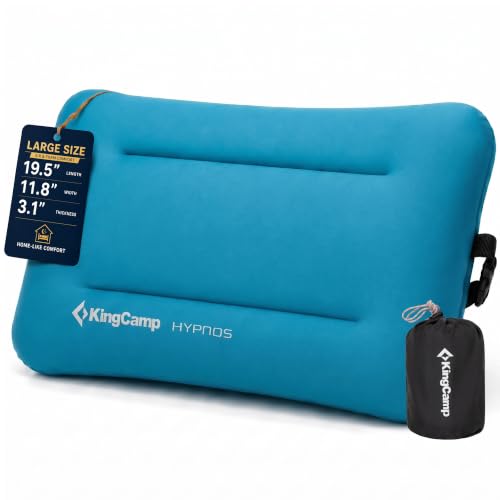
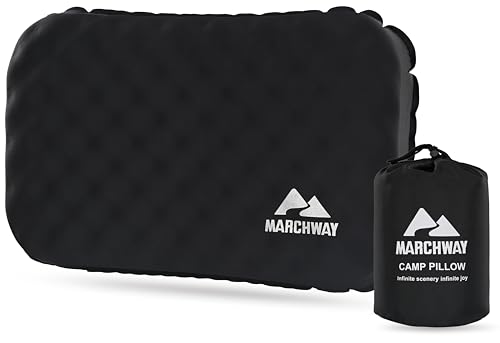

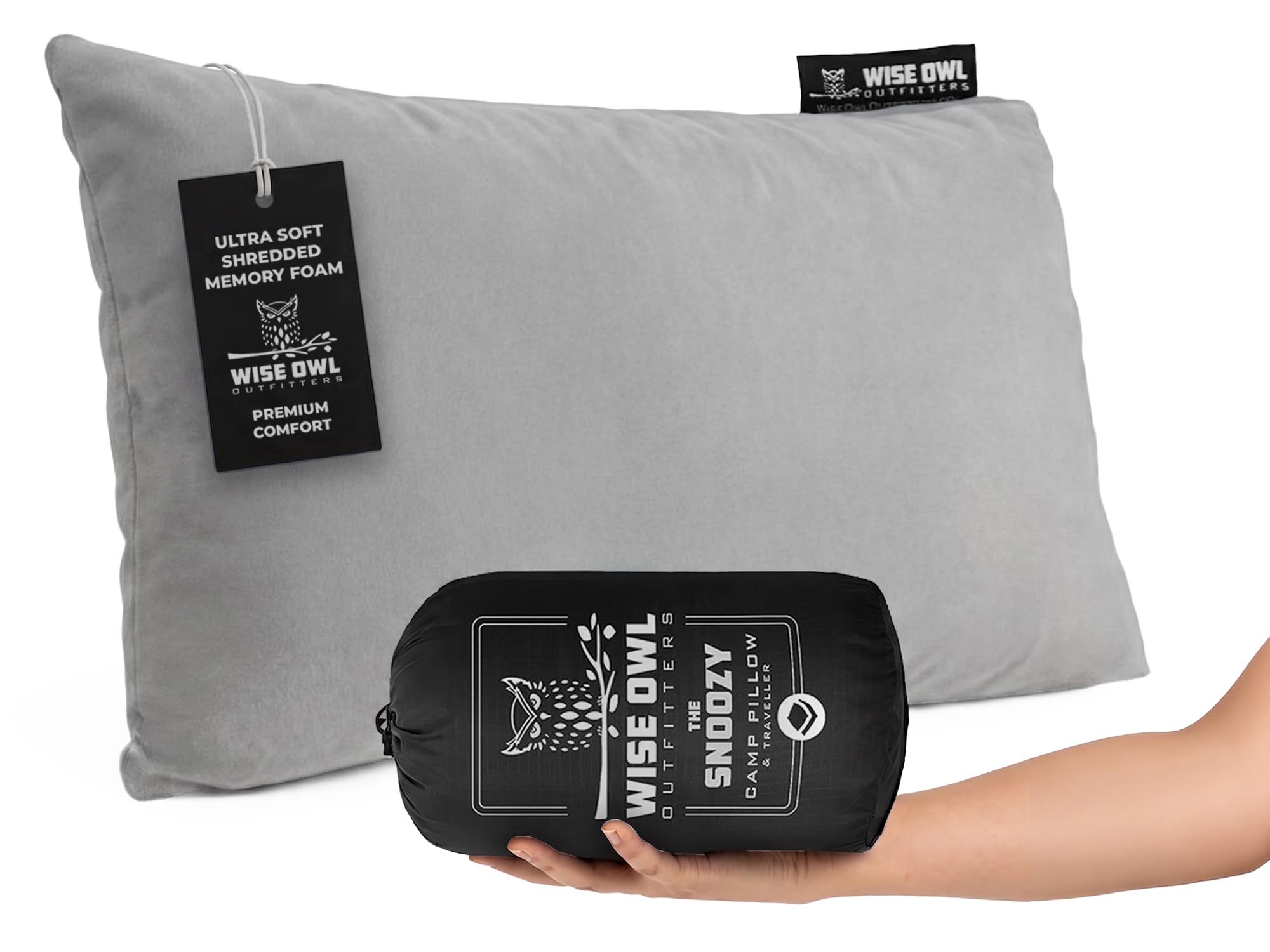


Who Should Buy Which Camping Pillows?
For Car Campers Who Sleep Like at Home
Car campers carry their gear a few steps from the trunk, so weight and packed size barely matter. That freedom points you toward compressible foam or fiber filled pillows that feel closest to a bed pillow and never need inflating at dusk. Choose the largest size your tent floor allows, because comfort is the whole point when the car does the carrying.
Value hides in durability here rather than in shaving ounces. A pillow with a washable cover and fill that survives being stuffed in a gear bin season after season beats a cheaper one that flattens by the third trip. If two people share the tent, matching heights for both sleepers matters more than matching brands.
For Backpackers Counting Every Gram
Backpackers make the opposite trade: every gram and every liter of pack space is spoken for. Inflatable pillows dominate this group because they pack to the size of a soda can and weigh a few ounces, yet still lift the head to a real sleeping height. The performance that matters is a valve that holds air all night and a shape that stays put on the pad.
Paying more here buys lighter fabrics and quieter, softer face materials rather than extra height. A premium inflatable also tends to pack smaller at the same loft, which is the upgrade backpackers actually feel. If you sleep in a hammock instead of on a pad, a smaller and softer pillow usually works better, since the hammock already cradles your head.
For First Time Campers
First time campers should buy simple and forgiving. A hybrid pillow, with an inflatable core inside a thin layer of foam or fiber, feels familiar to anyone used to a bed pillow and forgives imperfect inflation. It works for car camping now and stays useful if your trips later get lighter and longer.
Skip the very cheapest inflatables for a first trip, because a pillow that feels like a beach ball can sour someone on camping altogether. Borrow or buy one decent pillow, test it on the living room floor with your actual sleeping pad, and adjust the air pressure there. One rehearsal at home teaches more about your height needs than any spec sheet.
Camping Pillows for Specific Needs
Best Camping Pillows for Neck
Shoppers looking for neck support are really asking about height and shape. A pillow that fills the gap between your head and the pad, without pushing your chin toward your chest, feels supportive in the ordinary comfort sense. Contoured shapes and adjustable air pressure help you dial in that height, and a slightly firmer fill holds it through the night.
Be clear about the limits, though: a camping pillow is comfort gear chosen for fit and pack size, and it is not a treatment for neck pain. Readers comparing best pillows for sore neck products or best pillows for neck problems should know those are home bedding categories with different aims. If neck pain keeps returning or gets worse, that belongs with a clinician, not with a gear upgrade.
Best Small Camping Pillows: What to Prioritize
With best small camping pillows, the packed size is the headline, but two details decide whether the pillow works. First, check the inflated height, because some tiny pillows inflate thin and suit back sleepers only. Second, check the valve: a flat, well sealed valve is what stands between you and a pillow that slowly deflates onto the pad by 3 a.m.
Weight differences at this size are small, often under an ounce between rival models, so prioritize the face fabric and shape over the last gram. A soft, slightly textured top also grips the pad better, which matters when the pillow is small enough to wander. For bikepacking and fast packing trips, this class is usually the only realistic option.
Key Features to Compare
The fill inside a camping pillow decides its packed size, its feel, and how much fuss it needs at camp. Use the product table above for prices, and read the three fill classes below as the real fork in the road.
| Fill Type | Packed Size | Weight | Feel | Typical Price |
|---|---|---|---|---|
| Inflatable air core | about the size of a soda can | about 2 to 4 ounces | Firm and adjustable, can feel floaty | about $20 to $50 |
| Hybrid air and foam | about the size of a loaf of bread | about 6 to 10 ounces | Soft top over an adjustable core | about $30 to $60 |
| Compressible foam or fiber | about the size of a small shoebox | about 10 to 16 ounces | Closest to a bed pillow | about $15 to $40 |
Fill Types: Air, Foam, and Compressible
Inflatable pillows are air chambers with a fabric shell, and their comfort depends on one trick: inflate them fully, lie down, then let out a little air until your head settles. Buyers comparing best inflatable camping pillows should look for shaped chambers that cradle the head rather than a single balloon chamber. Pure air models pack smallest and weigh least, and they are the easiest to rinse clean.
Compressible pillows use foam chunks, shredded foam, or synthetic fiber that squashes into a stuff sack and expands at camp. They feel the most like home and never puncture, but they pack several times larger than inflatables. Hybrids split the difference with an air core for height and a soft layer for feel. Memory foam camping pillows exist too, yet solid foam blocks pack large and suit car campers only.
Packed Size and Weight
Packed size decides whether the pillow earns its place, so compare the rolled or stuffed dimensions rather than the inflated ones on the box. An inflatable that packs to soda can size disappears into a pack corner, while a compressible pillow can claim the space of a spare jacket. Weigh the pillow with its stuff sack, since makers sometimes quote the pillow alone.
Match the class to the trip honestly. A weekend car camper gains nothing from a two ounce pillow that sleeps worse, and a backpacker gains nothing from a plush pillow that pushes food or layers out of the pack. When in doubt, pack your bag fully with the pillow inside before the trip, because the true test is the closed pack, not the store shelf.
Height and Sleep Position
Height, sometimes called loft, is the fit measurement that matters most. Side sleepers need more height to keep the head level with the spine, since the shoulder lifts the body off the pad. Back sleepers need less, and stomach sleepers need the least of all, often just a thin cushion or a folded layer under the forehead.
Guides to best camping pillows for side sleepers focus on this height question, and the practical answer is adjustability. An inflatable you can fine tune, or a compressible pillow you can fold for extra height, adapts when you change position at night. Test your choice on your own pad at home, because pad thickness changes the height your head actually needs.
Fabric Feel and Noise
The fabric against your face shapes how the pillow feels all night. Soft brushed polyester or stretch knit tops feel close to a pillowcase, while slick nylon shells can feel clammy and slide around. An underrated detail is noise: stiff inflatable shells crinkle every time you shift, which bothers light sleepers and tent partners alike.
A thin pillowcase or a buff pulled over the pillow fixes most feel problems and keeps the surface cleaner. Some campers also prefer a slightly textured underside, which grips the sleeping pad and slows the pillow down. If you run warm, a smooth and cool feeling fabric face is worth more than any cooling claim printed on a box, since camp pillows do not hold much heat either way.
Durability and Care at Camp
Camp is rough on soft gear, so look for welded seams on inflatables and a valve that sits flush where it cannot snag. Keep the valve and fabric away from sparks and embers around the fire, since a single ember melts a hole that ends the pillow's trip. Carry the small patch kit many inflatables include, and know that a slow leak can often be found by listening in a quiet tent.
Care is simple but easy to skip. Air an inflatable out with the valve open before packing up, and store any camping pillow uncompressed at home so foam and fiber keep their loft. Wash removable covers after sweaty summer trips, and let foam pillows dry fully before storage, because a pillow stored damp comes out smelling like the trip in the worst way.
Common Mistakes to Avoid When Buying Camping Pillows
Shoppers often start from rankings, and while reading a roundup of best ranked pillows can show which features are common, star ratings cannot tell you whether a pillow's packed size fits your bag or its height fits your shoulder. Treat ratings as a starting list, then judge the measurements yourself. The mistakes below cost campers more sleep than any brand choice:
- Buying by inflated size alone and discovering the packed pillow eats a quarter of the backpack.
- Choosing the lightest inflatable for a first trip, then hating the floaty feel and sleeping on folded clothes instead.
- Ignoring sleep position, so a side sleeper ends up on a thin pillow made for back sleepers.
- Testing a pillow on a bed at home rather than on the actual sleeping pad, where the height math changes.
- Skipping the warranty and return terms on a pillow class you have never slept on before.
How to Make Your Camping Pillow Last Longer
Inflate inflatable pillows by mouth or pump sack and then store them at home with the valve open and the pillow loosely rolled, which keeps the internal coating from sticking to itself. Keep foam and fiber pillows uncompressed in a closet rather than crushed in their stuff sacks, since long compression flattens the fill. Wash covers on a gentle cycle and air dry everything fully before it goes away.
At camp, lay a layer of clothing or a case between your head and the pillow to keep oils off the fabric, and keep the pillow inside the tent rather than on the groundsheet edge near grit. Patch pinhole leaks as soon as you find them instead of reinflating nightly, because each flat night grinds dirt into the shell. Treated this way, a decent camping pillow lasts for many seasons of trips.
FAQs
How do I wash a camping pillow safely?
Most camping pillows wash safely by hand in lukewarm water with a little mild soap. Inflatable models need the valve closed before washing and a full air dry before storage, since trapped moisture can mildew the inner coating. Foam and fiber pillows with removable covers are easiest: wash the cover by machine on gentle, and spot clean the fill. Never use bleach or a hot dryer, because heat breaks down the fabrics and foams these pillows rely on.
Are inflatable camping pillows comfortable enough for a full night?
Yes, once you learn the pressure trick: inflate the pillow fully, lie down, and release small bursts of air until your head sinks to a level position. Fully inflated, an air pillow feels hard and pushes your head forward, which is why many campers wrongly judge them on the first try. Shaped chambers that cradle the head also help. If you still dislike the feel, a hybrid with a foam top layer is the usual fix.
How often should I replace my camping pillow?
Replace a camping pillow when it stops holding its height through the night, not on a fixed schedule. For inflatables, that means a leak you cannot patch or a valve that no longer seals. For foam and fiber models, it means the fill stays flat after a day uncompressed at home. With normal care, either type usually lasts several seasons, so a pillow that dies in its first year is a warranty conversation rather than a replacement budget.
Can I use a stuff sack of clothes instead of a camping pillow?
You can, and many backpackers do on short trips, but the result is uneven and shifts during the night. A sack of clothes also tends to be too low for side sleepers and too lumpy for anyone. A dedicated pillow packs nearly as small and holds a steady height, which is why most campers who try both end up carrying the pillow. The clothes trick remains a fair backup if your pillow ever fails mid trip.
Does a firmer camping pillow help with back pain?
No, a camping pillow is comfort gear and firmer does not mean better for a sore back. Choose firmness the way you would choose a shoe: by how it feels under your head in your usual sleep position on your own pad. Firmness that suits a side sleeper often feels like a brick to a back sleeper. Back pain that persists beyond a trip, or pain that keeps coming back, should be discussed with a clinician rather than treated with camp gear.
Final Thoughts
The short version: choose best camping pillows by packed size first, height second, and fill feel third. Backpackers usually land on an inflatable or a small hybrid, car campers are happiest with a compressible pillow that feels like home, and first timers do best with a forgiving hybrid they have rehearsed on the living room floor.
Check your shortlist against the product table above, then test the winner on your own sleeping pad before the trip. A pillow that fits your pack and your sleep position will quietly earn its place on every trip after that.


