
Best Camping Cookers: Stoves Compared for 2026
Disclosure: We may earn a commission when you buy through links on this page, at no extra cost to you. As an Amazon Associate I earn from qualifying purchases. Learn more

Compare canister, two burner and liquid fuel stoves to choose the best camping cookers for your group, fuel supply and trips.
A camp cooker decides how easy your meals are for the whole trip: how quickly water boils, whether you can simmer rice without scorching it and how much space the kit takes in the car or pack. The best camping cookers match your group size, your fuel supply and the way you travel. This guide compares the main types, explains the features that matter and covers the safety rules for cooking outdoors.
Use the comparison table below to see the types side by side, then read on for the details. Backpackers, car campers and large groups each need a different kind of cooker.



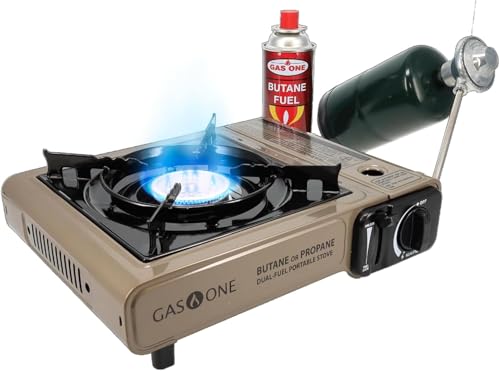
Types of Camping Cookers Compared
Canister Stoves for Backpacking
Small stoves that screw onto a gas canister are light, simple and quick to boil water. Some pack into a pot, and many have a piezo igniter. They suit solo hikers and pairs who mostly boil water for freeze dried meals, coffee and soup. Their weakness is wind and stability: a tall narrow stove under a big pot can tip, and cold weather lowers the output of some canister mixes.
Integrated Cooking Systems
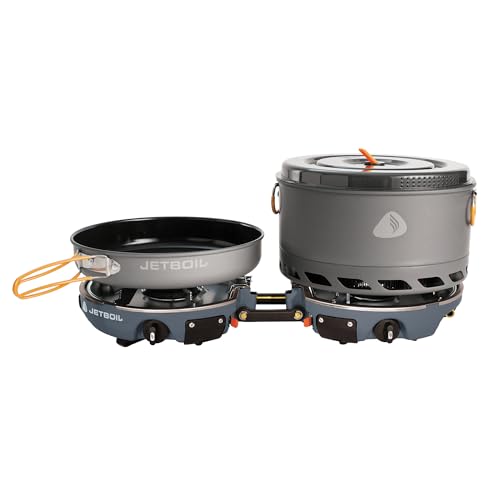
An integrated system joins the burner and an insulated pot in one unit. It boils water fast and uses less fuel in wind, which is why it is popular with hikers who eat mostly boil in the bag meals. It is less flexible for frying or simmering, because the pot is built for boiling. Check what the pot holds, since solo sizes cannot feed two people in one go.
Two Burner Camp Stoves
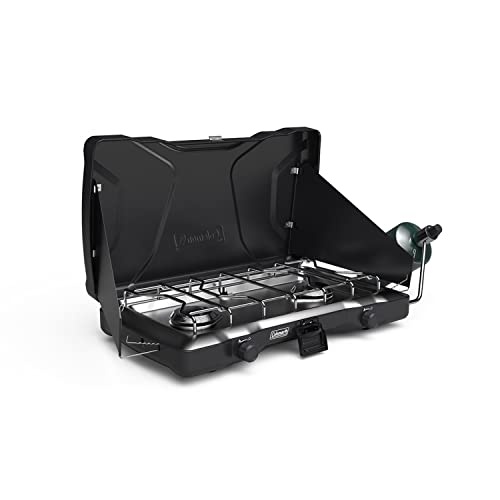
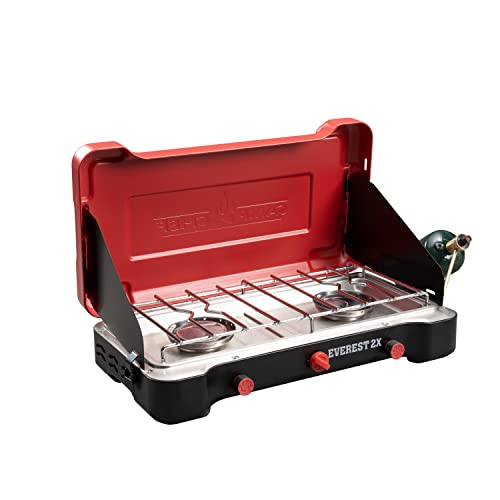
A two burner propane stove works like a small kitchen range: one burner for the pot, one for the pan, with a wind screen around the cooking area. It suits car campers and families who cook full meals. It is heavier and bigger than a canister stove, and it needs a propane bottle or an adapter hose for a larger tank, but it is the most comfortable type for cooking for four or more.
Liquid Fuel and Wood Burning Stoves
Liquid fuel stoves burn white gas or similar fuel and work well in cold weather and at altitude. They take more skill to prime and maintain. Small wood burning stoves use twigs and need no fuel to carry, which appeals to some hikers, but they are slower, leave soot on pots and are not allowed in some areas during fire restrictions.
Features That Matter
Fuel Type and Availability
Choose the fuel you can reliably buy where you camp. Propane canisters are sold almost everywhere and refillable bottles lower the cost per meal. Liquid fuel is best for long trips away from shops. Wood stoves cost nothing to run but depend on dry fuel and on fire rules.
Wind Performance
Wind is the main thief of fuel at a campsite. A stove with a built in wind screen or a heat exchanger pot boils faster and uses less gas than an open burner. If your stove has no screen, use a folding windshield, but keep it clear of the fuel canister so the canister does not overheat.
Simmer Control
A valve that holds a low flame lets you cook rice, sauces and eggs instead of just boiling water. Cheap stoves often jump from off to roaring flame. If you cook real meals, look for a stove with a fine adjustment valve and a burner that stays lit on low.
Stability for Larger Pots
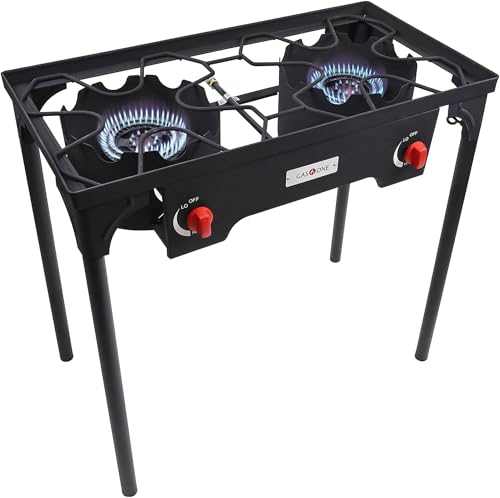
A wide base and wide pot supports matter when you cook for a group, since a full pot is heavy and the stove sits on uneven ground. Two burner stoves and stoves with wide legs are better here than tall single burners.
Weight and Packed Size
Backpackers count grams and should look at the stove, pot and fuel together. Car campers can accept a heavier stove but should still measure the packed size against their storage space.
Safety Rules for Cooking Outdoors
Never use a camping cooker inside a tent, a vehicle or an enclosed shelter, and never use it as a heater. Burning fuel makes carbon monoxide, a gas you cannot see or smell. Set the stove on flat, stable ground away from tent walls and dry grass, check hoses and connections for cracks before each trip and keep fuel away from the flame. Follow the fire rules of the campground, since stove rules can change with the weather. Let the stove and fuel canister cool before packing them away.
Care and Storage
Wipe the burner and wind screen after each trip, clear the jets of crumbs and soot and check the O ring where the stove meets the canister. Store the stove dry, with canisters kept upright in a cool place. For liquid fuel stoves, follow the maker's maintenance schedule. A cooker cared for this way can last for many seasons.
Common Mistakes to Avoid
- Buying a lightweight stove for a family trip, then cooking in several slow rounds.
- Ignoring wind, so water takes twice as long to boil and the fuel runs out early.
- Using a large pot on a small stove, which makes it unstable.
- Forgetting a spare canister or a way to light the stove if the igniter fails.
- Skipping a trial run at home, so the first setup happens in the dark.
Frequently Asked Questions
What is the best fuel for a camping cooker?
Propane suits most campers: it is easy to find, easy to use and gives steady heat in mild weather. Liquid fuel works better in deep cold and at altitude. Wood needs no carried fuel but depends on dry wood and on fire rules.
How many burners do I need?
One burner is enough for solo hikers and for simple meals. Two burners let you cook a main dish and a side at the same time, which is much easier for groups of three or more.
Can I cook inside a tent vestibule?
No. Cooking in or near a tent entrance risks fire and carbon monoxide build up. Cook in the open, well away from the tent, and keep the stove stable and out of foot traffic.
How long does a canister of fuel last?
It depends on the stove, the wind and the temperature. A small canister may boil water for several meals for one person, while a family cooking full meals can use a larger canister in a weekend. Carry a spare, and weigh a canister to estimate what is left.
How do I clean a camping stove?
Let it cool, wipe food and grease off the burner and grates, clear blocked burner holes with a soft brush or pin and dry everything before storing it. Check the hose and connections for wear each season.
Final Thoughts
Choose the type that fits how you travel, then check fuel supply, wind performance and simmer control. The product table above helps you compare current options, and the best camping cookers for your trips are the ones that light every time, cook your usual meals and pack into the space you have.


