Best Bunion Cushions for 2026: How to Choose Padding That Fits Your Shoes
Disclosure: We may earn a commission when you buy through links on this page, at no extra cost to you. As an Amazon Associate I earn from qualifying purchases. Learn more
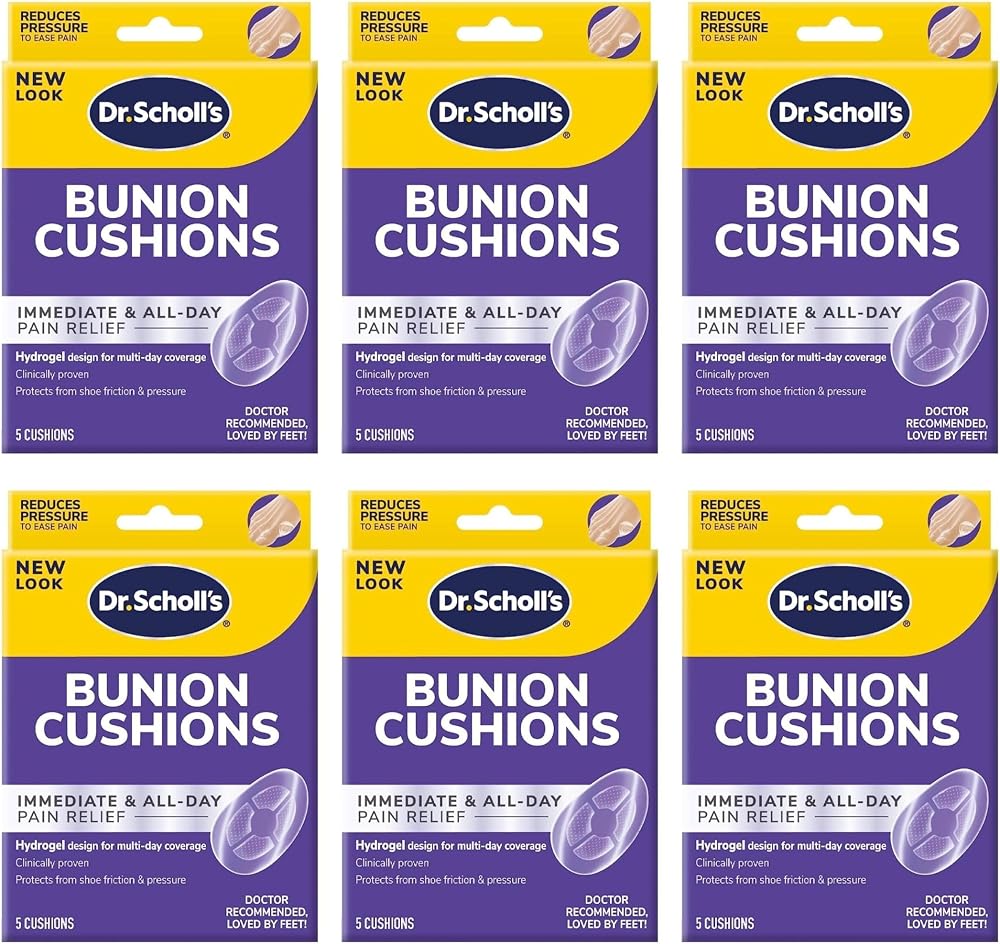
Find bunion cushions that ease rubbing inside your shoes, with guidance on material, thickness, fit, staying power, care and mistakes to avoid.
A bunion makes the joint at the base of your big toe press against the inside of your shoe, and that rubbing can turn a normal morning into a sore afternoon. The best bunion cushions place a soft barrier between that joint and the shoe wall, so pressure spreads over a wider area. This guide explains material, thickness, fit and staying power so you can use the comparison table below with confidence.
Start with your tightest pair of shoes, not your roomiest one. A cushion that feels fine in a trainer may crowd a dress shoe and trade one sore spot for another. The sections below match styles to daily routines and cover the mistakes that waste money.



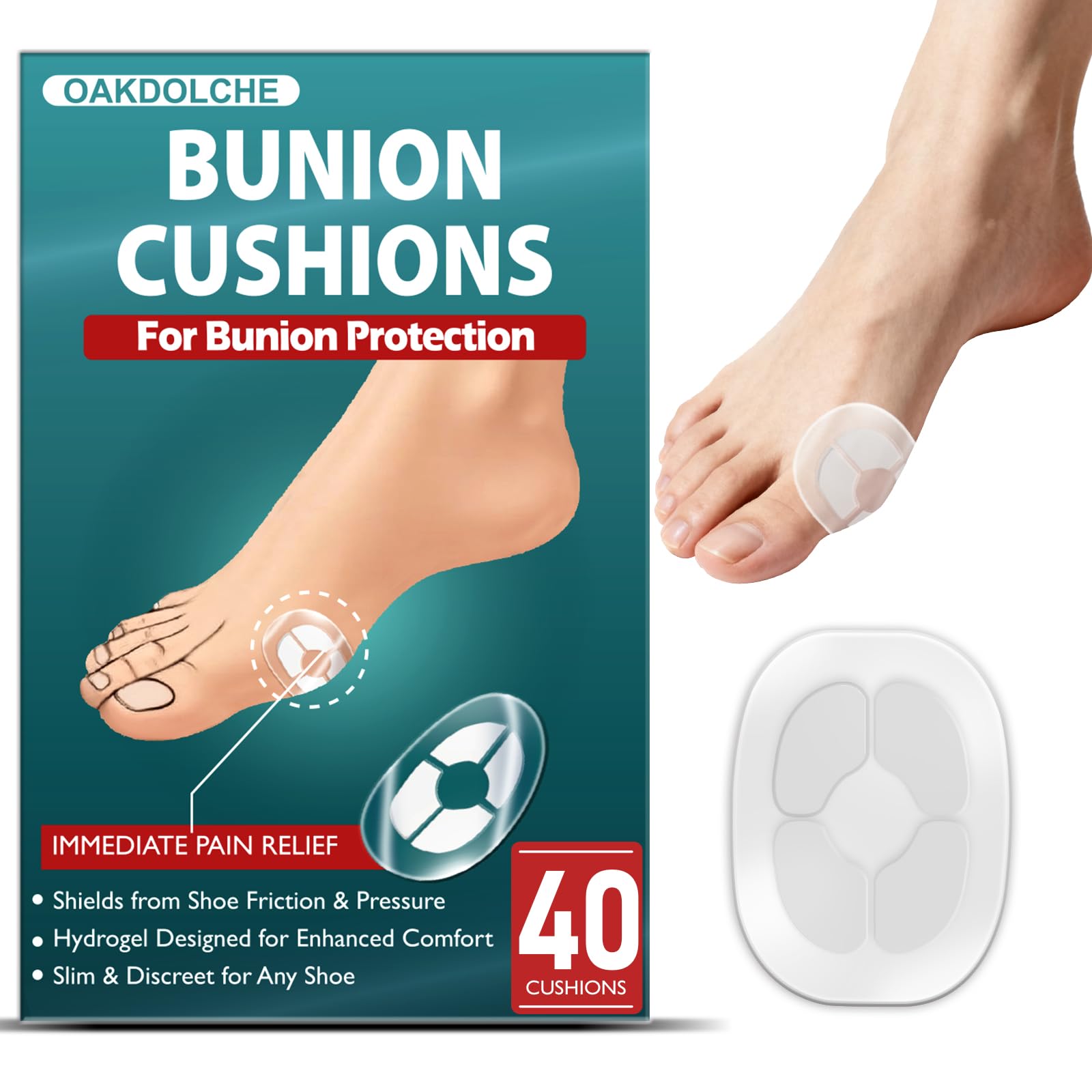


Who Should Buy Bunion Cushions?
Bunion cushions help most when rubbing and pressure are your main complaints. They do not change the shape of the joint and are not a treatment for the bunion itself.
People Who Spend Long Shifts on Their Feet
Nurses, retail staff, teachers and servers walk and stand for hours. You need a cushion that stays put through a full shift and adds little bulk. A sleeve or a loop style suits you best, since both resist sliding as feet warm up and swell. Choose a washable format for daily wear.
Walkers and Runners With Shoe Rubbing
If soreness shows up after a set distance, friction inside the shoe is likely part of the problem. A gel pad softens the spot where the shoe wall flexes at push off. Test a new shape on a short route first, because a folded edge creates a fresh pressure point.
People With Mild Soreness and Sensitive Skin
If your skin marks easily, the surface against your skin matters as much as the padding. Smooth silicone and soft fabric sleeves usually feel gentler than adhesive pads. Start with short periods, then check your skin when you take the cushion off.
Some warning signs need medical care rather than better padding. Pain that keeps growing, redness, warmth, swelling, broken skin or a sore that heals slowly should be checked promptly. If you have diabetes, poor circulation or reduced feeling in your feet, talk with your clinician about personal needs first, since a poor fit can harm skin you cannot feel well.
Key Features to Compare
When you shop for the best bunion cushions, five factors separate a pair you wear daily from a pair that ends up in a drawer. Fit and shoe room rule out more styles than material ever will.
Material and Skin Feel
Silicone and gel pads feel smooth, hold their shape and rinse clean in seconds. Foam feels softest at first touch, but it flattens faster and absorbs sweat, so it suits shorter wear. Fabric sleeves handle moisture better on active days. Choose gel for a thin, durable barrier, foam for short outings, and fabric if sweat and sliding are your main problems.
Thickness and Shoe Room
Most bunion pads are about 2 to 4 mm thick, and that small range changes fit a lot. Thin pads belong in dress shoes and snug walking shoes, while thicker gel suits roomier trainers and boots. Your toes should still lie flat, with no new pressure on the nail. Test the fit standing, because a pad that feels fine while sitting can crowd the shoe once your weight loads it.
Shape and Coverage of the Joint
The pad should cover the bony bump plus a small margin of normal skin on every side. An oval pad works for a bump on the side of the joint, while a crescent wraps further around the front. A pad that is too small concentrates pressure along its edge, and one that is too large wrinkles. Center the pad over the widest point of the bump.
How a Bunion Cushion Stays in Place
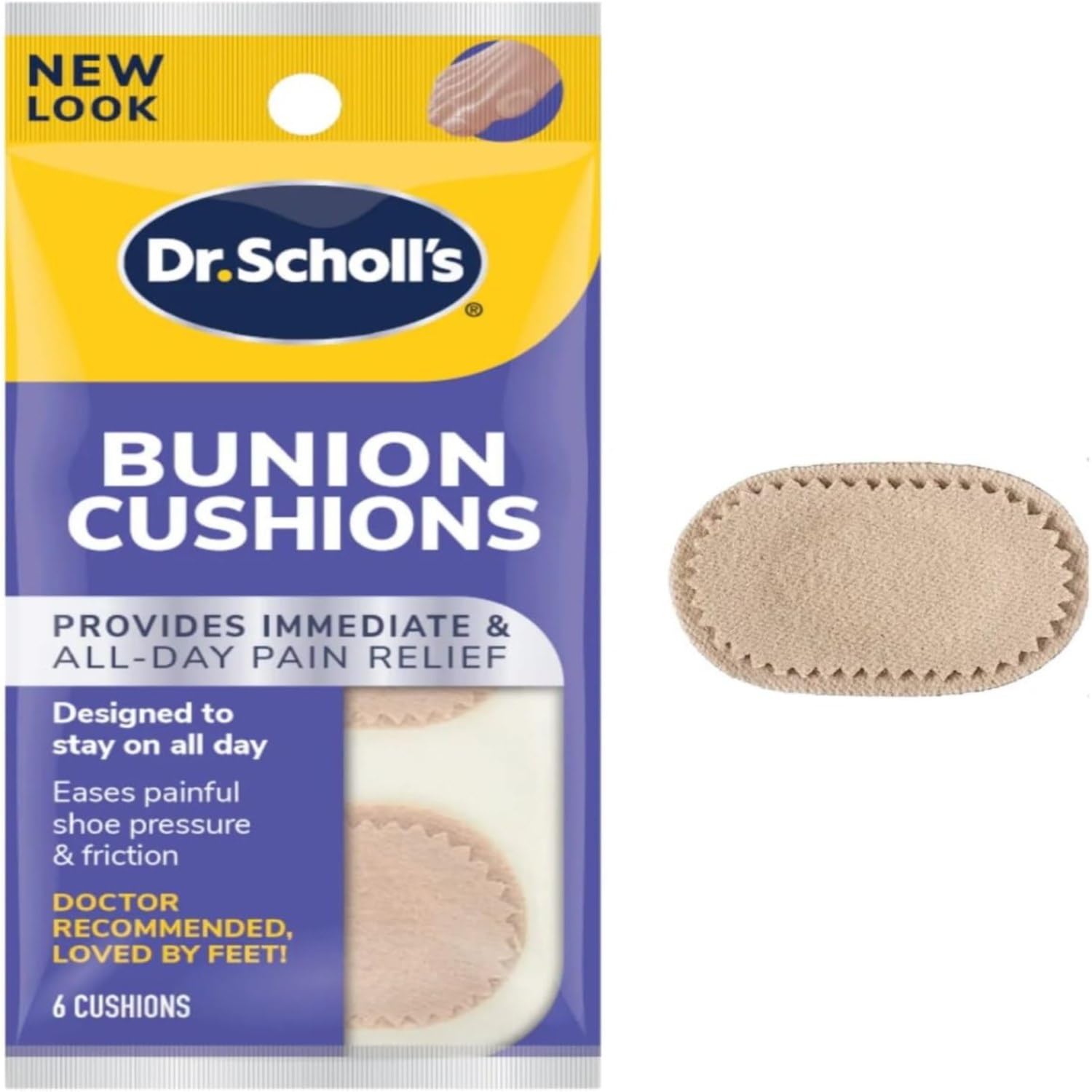
A toe loop is simple and adds almost no bulk, but it can annoy the gap between your first two toes. A full sleeve holds the pad firmly, yet adds a layer over more of your foot. An adjustable strap suits feet that swell during the day. Adhesive backing suits a single event, but it loses grip after washing and can tug tender skin.
Size and Fit on Each Foot
Many cushions come in one size, while others are sized or made for each foot. Buy for the larger bunion first, because a roomy pad on a smaller bump beats a tight pad on a bigger one. The cushion should sit snug without squeezing your toes together or leaving a gap that lets it drift. After a short walk, the edges should still lie flat.
Types of Bunion Cushions Compared
Bunion cushions come in three main formats, and the format matters more than small differences in softness. Most pairs cost about $10 to $25, so budget rarely forces a compromise.
Gel Pads With a Toe Loop
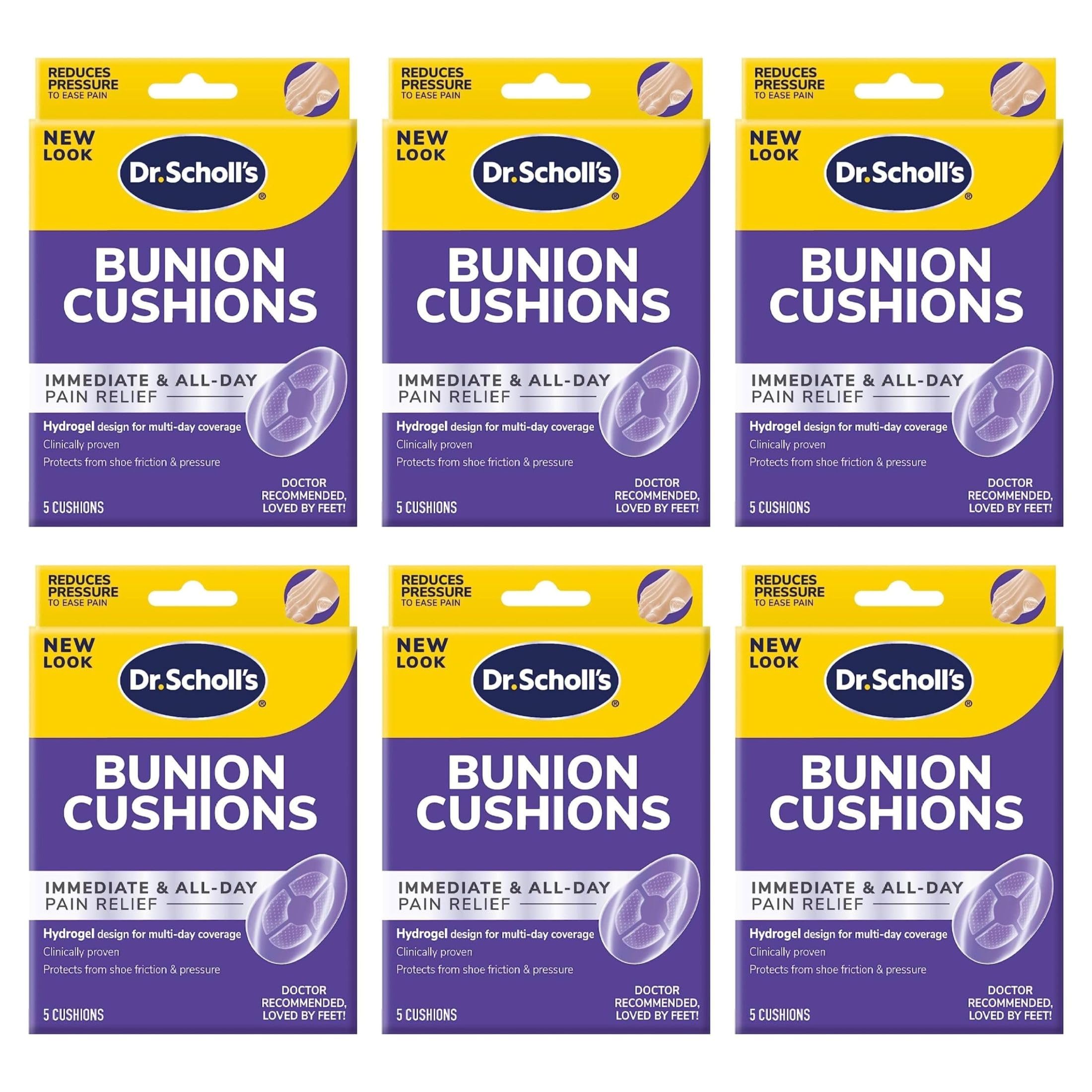
A loop pad is a small gel oval held by a ring that slips over your big toe or second toe. It is the thinnest format, so it fits the widest range of shoes and suits mild soreness. The loop can rub on long walks, so skip it for full shifts.
Fabric Sleeves With a Padded Panel
A sleeve pulls on like the front half of a sock, with a gel or foam panel placed over the joint. The fabric spreads the hold across your foot, so the panel stays centered better than a loose pad. Sleeves suit daily wear, but they add the most fabric inside the shoe.
Toe Spacers With a Bunion Shield
This format pairs a soft separator between your big toe and second toe with a pad over the joint. It helps when your toes rub each other as well as the shoe, but it takes the most room, so save it for trainers and wide shoes. If your toes feel forced apart, the spacer is too thick.
A cushion cannot fix a shoe that is too narrow at the front. If every format crowds your toes, the shoe is the real problem, so see our guide to the best shoes for bunions for footwear with a wider, softer front. Changing the shoe often helps more than a thicker pad.
Keep other cushion searches separate. For support while sitting, see our guide to the best seat cushions. For padding around the home, see our guide to the best quality cushions. Neither type is shaped to protect a toe joint.
Common Mistakes to Avoid
- Buying the thickest pad for narrow shoes crowds your toes and moves the soreness instead of easing it.
- Placing the pad beside the bony bump leaves the sore spot bare and lets the edge dig in.
- Wearing a new cushion for a full day at once can leave skin raw before you notice a poor fit.
- Keeping a flattened or torn cushion in use lets pressure return to one small spot.
- Relying on padding while pain keeps growing can delay care for a joint problem that needs assessment.
Washing and Storing Your Cushions Between Wears
Rinse sweat and dust off your cushions after wear and let them dry fully before the next use. Storing a damp sleeve in a closed bag traps odor, so air pairs on a shelf instead.
Inspect the pad weekly for cracks, tears and thin spots, and press it to check that it springs back. Rotating two pairs lets each dry between wears, and storing pads flat stops a set crease from becoming a pressure line.
Frequently Asked Questions
Do bunion cushions correct the shape of a bunion?
No, bunion cushions do not correct the shape of a bunion. They only pad the joint and reduce rubbing, while the angle of the toe stays the same. A dated photo every few months gives you a simple record of any change. A clear change in shape is a reason to ask a clinician to review the joint.
How long can bunion cushions be worn each day?
Most people can wear bunion cushions all day once their skin is used to them. Build up from an hour or two, checking the skin at midday during the first week. Take cushions off at night so skin recovers and the material airs out. If a spot stays red long after removal, shorten the next wear.
Can bunion cushions fit inside narrow dress shoes?
Yes, thin loop pads fit inside most narrow dress shoes. A sleeve adds more bulk and can show at the edge of a low cut upper, so a loop style is the safer pick. Heel height matters too, because a higher heel pushes weight forward onto the joint. A lower heel plus a thin pad beats a thick pad alone.
How do I wash reusable bunion cushions safely?
Wash reusable bunion cushions by hand in lukewarm water with a drop of mild soap. Rinse well, press out the water with a towel and air dry away from heat and direct sun. Keep a spare pair if you wear cushions daily, because a damp sleeve raises friction against skin. Skip bleach, which can crack gel and weaken elastic.
How often should bunion cushions be replaced?
Replace bunion cushions when the pad stays flat after a night of rest, turns cloudy or sticky, tears, or starts slipping during normal wear. Foam often reaches that point within weeks of daily use, while solid gel lasts longer. A change of shoes is also a good moment to reassess fit.
Can people with diabetes wear bunion cushions?
People with diabetes should wear bunion cushions only with clinician guidance. Check the skin under the pad daily, and never place a cushion over an open sore or blister. Stop using the pad and seek care quickly if you find a break in the skin that you did not feel happening.
Wrapping Up
Match the cushion to your tightest shoes first, then pick a material your skin tolerates and a fastening that stays put. Thin gel suits narrow shoes, sleeves suit long active days, and spacer shields suit toes that rub together. Use the product table above to compare format, thickness and price.
With fit, coverage and staying power checked, the best bunion cushions for you are the pair you forget you are wearing by midday. Start with one pair and test it on a normal day before you stock up.