
Best Built Kitchen Faucets: A First Time Buyer's Guide for 2026
Disclosure: We may earn a commission when you buy through links on this page, at no extra cost to you. As an Amazon Associate I earn from qualifying purchases. Learn more

Shopping for the best built kitchen faucets for the first time? Learn the terms, compare options, and avoid rookie mistakes with this easy guide.
Buying a kitchen faucet for the first time can feel surprisingly complicated. A single product page throws around terms like spout reach, cartridge type, and flow rate, and every finish seems to promise a lifetime of shine. This guide slows all of that down and explains each idea in plain language.
By the end, you will know what separates best built kitchen faucets from flimsy ones, which specs actually matter for your sink, and which details you can safely ignore. Start with the basics below, then use the comparison table below to see how common styles and price tiers line up side by side.





Built Kitchen Faucets 101: The Basics
A kitchen faucet does one job: it delivers hot and cold water to your sink in a controlled stream. Inside the body, a valve cartridge mixes the two supplies and regulates flow when you lift or turn the handle. The spout then directs that water over the basin, and an aerator at the tip blends in air so the stream feels full without wasting water.
Most modern faucets mount in one of two ways. Some sit on the sink deck itself, while others mount on the countertop behind the sink through drilled holes. The number of holes matters, because a single hole faucet can cover extra holes with a deck plate, but a faucet made for three holes will not suit a single hole sink without extra parts.
You will also see the term lead free on many listings. That simply means the internal waterways use materials that meet strict limits on lead content, which is the standard you want for water you drink and cook with. When a faucet pairs lead free construction with solid metal parts and a proven cartridge, it is already ahead of bargain models built mostly from thin plated plastic.
Key Specs Explained in Plain English
Spec sheets look intimidating, but only a handful of numbers decide whether a faucet fits your kitchen and lasts. Work through the five areas below and you will understand nearly everything on a typical listing.
Faucet Style (Pull Down, Pull Out, Touchless, Commercial)
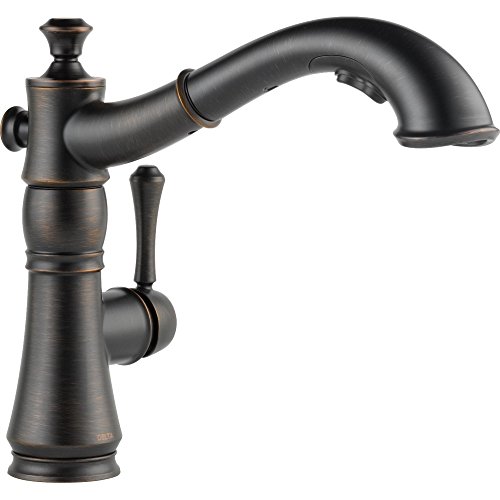
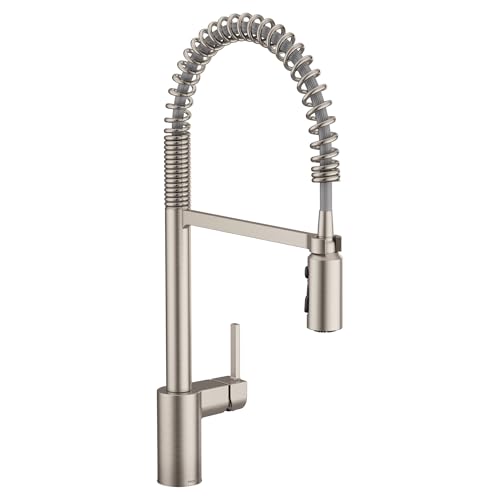
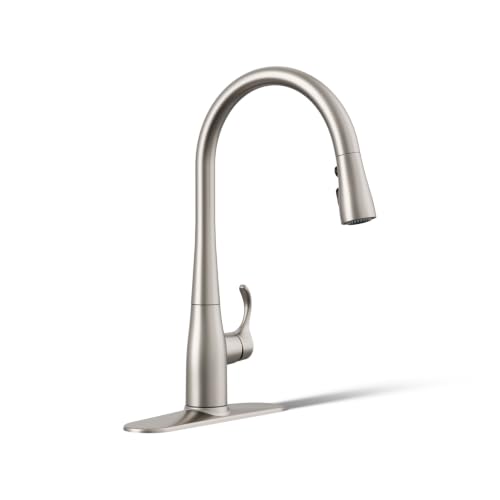
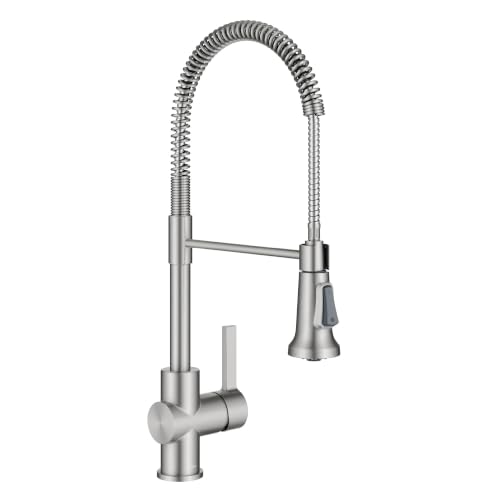
Style decides how the sprayer behaves. A pull down faucet has a tall arched spout and a spray head that pulls straight down into the sink, which suits deep basins and big pots. A pull out model has a lower profile and a longer hose that reaches across the counter, handy for filling a kettle beside the sink. Touchless designs use a sensor so you can start the water with messy hands, while commercial style faucets copy the coiled spring look of restaurant kitchens and give very flexible reach. Match the style to your sink depth and your daily habits first, because you will use that sprayer many times a day.
Warranty
The warranty tells you how much confidence the maker has in its own parts. Many quality faucets carry a lifetime limited warranty that covers leaks, drips, and finish defects for the original owner in a home setting. Read what the warranty actually includes, because some cover the cartridge for life but the finish for only a few years. Also check how a claim works: a good maker ships a replacement cartridge free and without demanding you mail the old one back first. Keep your receipt and the model number somewhere safe, since you will need both if you ever file a claim years from now.
Reach, Height, and Clearance
Spout reach is the horizontal distance from the center of the faucet body to the center of the water stream. A reach of about 8 to 10 inches suits most standard sinks, while very deep or wide sinks may need more. Height matters just as much: a tall arc gives room for stockpots, but it can splash more in a shallow basin and may collide with a low window sill or shelf above the sink. Measure from the counter to any obstruction before you buy, and picture your tallest pot under the spout. If the numbers are close, a slightly lower arc usually feels calmer and splashes less in daily use.
Valve Cartridge and Durability
The cartridge is the moving part you will rely on thousands of times, so it deserves real attention. A ceramic disc cartridge uses two hard polished discs that slide against each other to control water, and because ceramic resists wear and mineral buildup, this design is known for smooth handle action and a long service life. Cheaper faucets may use plastic or rubber washer designs that stiffen and drip sooner. You can sense cartridge quality in a showroom: the handle should move smoothly with no grinding or looseness. Solid brass or stainless steel construction around that cartridge adds weight you can feel, and that heft usually signals a faucet built to stay tight and drip free.
Spray Modes and Flow Rate (GPM)
Flow rate is measured in gallons per minute, written as GPM. Most kitchen faucets deliver about 1.5 to 1.8 GPM, which fills pots at a good pace while respecting water rules. California and other water conscious regions cap kitchen faucets at the lower end of that range, and WaterSense labeled models meet strict efficiency and performance criteria. Spray modes matter more than raw flow for daily tasks: a steady aerated stream fills containers without splashing, while a wider spray rinses dishes and produce faster. Look for a spray head that switches modes with a positive click and returns to stream mode on its own after you release the button.
Rookie Mistakes to Avoid
- Skipping the hole count. Counting the holes in your sink or counter takes one minute and prevents the most common return of all.
- Choosing height by looks alone. A dramatic tall arc over a shallow sink creates constant splashing that no photo warns you about.
- Ignoring the cartridge. Finish sells faucets, but the cartridge decides whether the handle still feels smooth in five years.
- Forgetting supply lines and clearance below. Tight cabinets, garbage disposals, and filtration units can crowd the space where hoses and weights need to move.
- Buying the cheapest finish for a hard water home. Mineral spots show quickly, and some finishes hide them far better than others.
If you are weighing a full sink and faucet refresh together, our guide to the best kitchen sinks and faucets explains how basin depth and faucet reach work as a pair.
Getting Started: Setup and First Use
Once your faucet is installed, a few small habits protect your investment from day one. Run the water for a minute before first use to flush any debris from the lines, and check every connection under the sink with a dry hand after the first few uses. A slow drip at a supply fitting usually needs only a small extra turn, caught early before it soaks the cabinet floor.
For upkeep, clean the aerator every few months by unscrewing it, rinsing out grit, and soaking it in vinegar if mineral crust has built up. Wipe finishes with mild soap and a soft cloth, and skip abrasive pads and harsh sprays that can dull the coating. If your budget is the main constraint, the guide to the best inexpensive kitchen faucets shows where lower priced models cut corners and where they hold up well. Shoppers who love a warm metal look can also explore the best gold kitchen faucets for finish care tips specific to that tone.
FAQs
Are touchless faucets worth it?
Touchless faucets are worth it if you cook often with messy hands and hate wiping the handle after handling raw chicken or dough. The sensor also helps kids and older family members who struggle to grip a lever. Keep in mind that sensors need batteries or a plug in power adapter, and a very bright or reflective backsplash can occasionally confuse cheaper sensors. If your kitchen sees light use, a smooth single handle design may give you most of the convenience for less money.
What finish is easiest to keep clean?
Brushed and matte finishes hide water spots and fingerprints far better than polished chrome, which shows every drop. Many makers now offer spot resistant coatings that let minerals wipe away with a damp cloth instead of setting into a crust. Dark finishes look striking but can show pale mineral deposits more clearly in hard water areas. Whatever you choose, drying the faucet with a soft towel after heavy use is the simplest habit for keeping any finish looking new.
Can I install a kitchen faucet myself?
Yes, many first time owners install a kitchen faucet in about an hour with basic tools. The hardest part is usually removing the old faucet, since corroded mounting nuts under a cramped sink can resist every wrench. Shut off both supply valves first and open the old faucet to drain pressure. If your shutoff valves leak or the supply lines look corroded, that is a good moment to call a plumber instead of forcing parts that could flood the cabinet.
How long do kitchen faucets last?
A well built kitchen faucet typically lasts about 15 to 20 years, and the cartridge is usually the first part to wear. Hard water shortens that span because minerals grind against seals and clog aerators, while gentle use and regular cleaning extend it. Finish wear often decides when owners replace a faucet that still works, which is why a strong finish warranty matters. When drips return soon after a cartridge swap, the valve seats inside the body may be worn, and replacement becomes the smarter spend.
Wrapping Up
For a first purchase, focus on three things: a ceramic disc cartridge inside a solid metal body, dimensions that truly fit your sink and the space above it, and a warranty that covers both leaks and finish. Style and finish should serve those basics, not replace them. If you want a cleaner, more current look once the basics are covered, the guide to the best contemporary kitchen faucets is a helpful next read, and the overview of the best recommended kitchen faucets pulls the main criteria together in one place.
Compare your shortlist against the product table above, and choose the best built kitchen faucets that match your sink, your water, and your daily routine. A careful first choice like that usually means you will not think about your faucet again for many years, which is exactly the point.


