
Best Brass Kitchen Faucets (2026): Styles, Certifications and Buying Tips
Disclosure: We may earn a commission when you buy through links on this page, at no extra cost to you. As an Amazon Associate I earn from qualifying purchases. Learn more

A brass finish is not always a brass body. Here is how to pick the best brass kitchen faucet by style, fit and certification.
Picture a weekday morning at a crowded sink. Someone rinses oatmeal bowls, someone fills a kettle, and a lunch box still needs washing before the school run. The faucet gets used through all of it, so its weight, handle feel, and spray control matter far more than its catalog photo. Choosing the best brass kitchen faucet starts with how your household actually cooks, cleans, and shares that sink.
This guide helps you match a brass model to your counter space, the number of people using it, and your budget. You will find the comparison table below, and our broader guide to the best kitchen faucet covers other materials if you are still deciding whether brass is right for you.


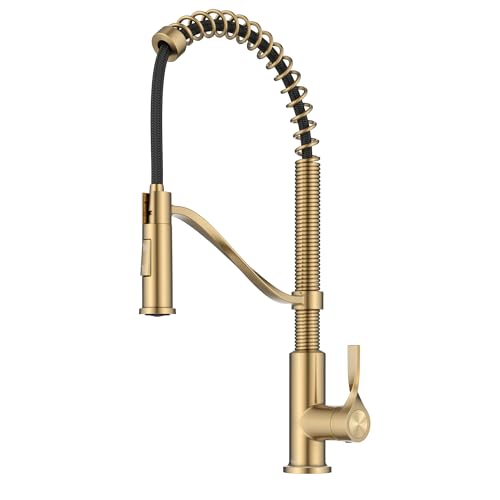

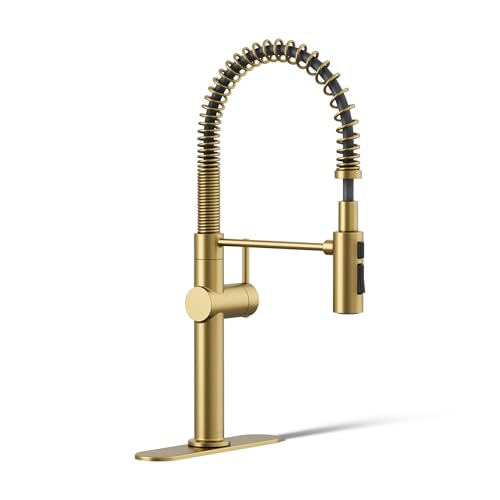
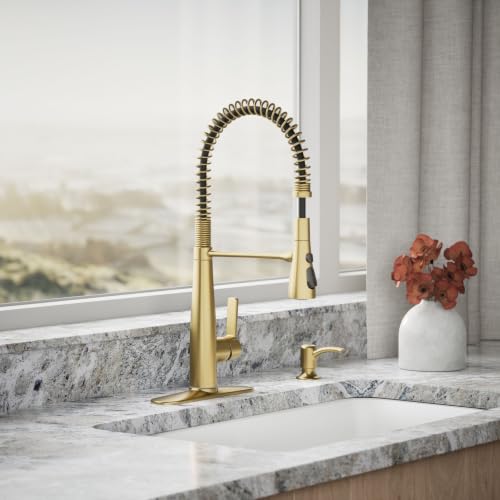


Quick Answer: Which Brass Style Fits Your Home
Start with the body style that fits your routine, then confirm that the core is truly brass. Busy family kitchens usually suit a pull down model with a ceramic disc valve and a finish that hides water spots. Smaller sinks suit a compact single handle model with modest spout reach. Traditional kitchens suit a bridge model, if you accept slower temperature adjustment with two handles.
- For most homes: a pull down design in solid brass, with magnetic docking and two spray modes.
- For small sinks: a single handle design with a shorter reach, so water lands near the drain.
- For a classic look: a bridge design in unlacquered or brushed brass, with room for two handle holes.
Before You Buy: A Quick Checklist for Choosing a Kitchen Faucet
Brass is a material, not a full specification. Two faucets can share a brass colored finish while using very different metals underneath, so read the product details closely. The checks below move from routine to fit, safety marks, fitting costs, and price.
Which Type Fits Your Routine
Pull down models send the spray head down into the sink, which suits deep pots and sheet pans. Pull out models extend toward you and help at shallow sinks. Our guide to the best pull down kitchen faucet explains hose length and docking in more detail. Touchless models start flow with a sensor, which helps when your hands carry raw food residue, and the best touchless kitchen faucet options show that route. Bridge and wall mount models free counter space but need more planning.
Features Worth Paying For, and Ones to Skip
A sprayer earns its cost if you rinse produce, wash baking trays, or fill buckets in the sink. Look for a steady stream plus a wider spray, a hose that retracts fully, and docking that holds the head without sagging. Our roundup of the best kitchen faucet with sprayer shows the main layouts. A soap dispenser is worth it only if you want one less bottle on the counter. Skip extra spray modes you will rarely use, and skip a side sprayer when a pull down head already covers the sink.
Measurements and Compatibility With Your Setup
Count the holes in your sink or counter first, and note whether a deck plate can cover unused holes. Measure from the faucet center to the backsplash, since a tall arc needs room to lean back and a lever handle needs room to swing. Check spout reach against sink depth, because water should land well inside the bowl, not near the front rim. Confirm deck thickness, supply line connections, and that your shutoff valves still turn freely.
Certifications to Look For
Brass is an alloy that can contain lead, so certification matters more here than with most materials. Look for compliance with NSF/ANSI 61 for drinking water contact and NSF/ANSI 372 for low lead content, and buy only models sold as lead free for the US market. A WaterSense label means flow is about 1.5 gallons per minute or less. Lever handles that meet ADA guidance are easier to use with wet hands or limited grip strength.
DIY or Professional Installation Cost
Fitting a standard replacement yourself is realistic if the shutoff valves work, the old mounting nuts are reachable, and the new model matches your existing holes. Our step by step guide on how to install a kitchen faucet walks through the full sequence. A plumber typically costs about $150 to $350 for a straightforward swap, with extra charges if valves need replacing or new holes need drilling into stone.
Realistic Budget Ranges
Price tells you a lot about what sits under the finish, so read each tier with that in mind.
- Under $100: usually a brass colored finish over a lighter core. Check the stated core material with care.
- About $100 to $200: some solid brass bodies appear here, often with simpler spray functions.
- About $200 to $300: the most balanced tier for many homes, with ceramic disc valves and better docking.
- About $300 to $500: heavier castings, richer finish options such as unlacquered brass, and longer parts support.
- Over $500: mostly design led models. You pay for proportions and finish craft, not stronger water delivery.
Brass Faucet Types Compared: Three Routes That Fit Real Homes
Compare the three routes below against your sink and routine. The differences come down to hose movement, handle layout, and how much counter room the body takes up.
Pull Down Models for Busy Family Kitchens
A pull down brass body gives one lever for temperature and flow, plus a spray head that reaches every corner of a large bowl. That suits homes washing roasting pans, stockpots, and produce in the same evening. A brushed finish hides the fingerprints that come with many hands. The trade off is cabinet space, since the hose and its weight hang below the sink and can catch on stored bottles.
Bridge and Two Handle Models for Traditional Kitchens
Bridge models mount the spout on a bar between two separate valves, a layout that suits farmhouse sinks and classic cabinetry. Unlacquered brass slowly deepens in color where hands touch it, which many owners enjoy. You gain precise control of hot and cold water on each side. You lose speed, though, since adjusting temperature takes two hands, and the exposed pipework adds joints that need wiping and checks for drips.
Compact Single Handle Models for Small Spaces
A compact single handle model suits apartments and RV kitchens where the sink is shallow and counter depth is tight. Choose a modest spout height and a reach that keeps water over the drain, and a side mounted lever if space behind the faucet is scarce. Solid brass still helps here, since a small body gets knocked by pans often in a tight workspace. The trade off is rinsing power and room under the arc, so measure your tallest pot first.
How to Judge a Brass Faucet Before You Order
Start with the material wording. Solid brass or brass body means the main casting is brass, while brass finish only describes the surface color. Next, look for a ceramic disc cartridge, which resists drips better than older compression washers. Check the finish warranty separately from the mechanical warranty, since the two often differ. Finally, confirm that replacement cartridges and spray heads are easy to order for that model.
Brass Compared With Other Kitchen Faucet Materials
Stainless steel bodies resist surface corrosion well and keep a consistent color, but they usually cost more at similar quality. Zinc alloy bodies cost less and appear under many brass colored finishes, yet they are lighter and can corrode from inside over time. Plastic cores sit at the lowest prices and suit temporary use only.
Solid brass sits between those options in a useful way. It is heavy, durable, and well suited to threaded connections that plumbers can service for years. Its downsides are real, though. It costs more than alloy bodies, polished finishes show water spots quickly, and unlacquered surfaces change color unevenly near the handle. If you want a finish that looks identical for a decade, choose a coated or steel option instead.
Common Buying Mistakes to Avoid
- Trusting the finish name alone, so you pay brass prices for a zinc body with a brass colored surface.
- Ignoring the space behind the sink, so the lever handle hits the backsplash before the water runs fully hot.
- Choosing a tall arc for a shallow sink, so rinsing sprays water onto the counter and floor.
- Forgetting the cabinet below, so a pull down hose snags on cleaning bottles and stops retracting smoothly.
- Skipping the certification marks, so you cannot confirm the low lead claims made for a brass body.
- Buying extra features before fit, so a soap dispenser hole or side sprayer has nowhere to go in your counter.
Cost of Ownership and Care
Running costs stay low for most brass models, since a standard faucet uses no power and a WaterSense rated flow trims water bills. Budget for a replacement cartridge at about $20 to $60 if a drip starts years later, and for new supply lines when you swap the faucet, since reusing old lines risks slow leaks. Touchless models add battery changes, so count that upkeep before choosing a sensor model.
Daily care is simple. Wipe the body with a soft cloth, and clean it with mild soap and water rather than abrasive pads that can cut through lacquer. Dry polished brass after washing up if water spots bother you, or let unlacquered brass develop its patina. Keep the makers care notes for your finish, because coated and living finishes react differently to vinegar based cleaners.
Your Questions, Answered
How do you clean a kitchen faucet aerator?
Unscrew the small round screen at the tip of the spout, turning it with your fingers or with pliers padded by a cloth. Note the order of the mesh and washers as they come out, then rinse loose grit under running water. Soak the parts in white vinegar for about an hour if mineral crust remains, rinse, and rebuild in the same order. This restores an even stream when splashing comes from buildup.
Are brass kitchen faucets worth the higher price?
They can be, if the body is solid brass and you plan to stay in the home for years. Brass resists the internal corrosion that shortens the life of cheaper alloy bodies, and its threaded parts are easy for a plumber to service. The value case weakens for a short tenancy or a rarely used sink, where a coated alloy model does the same job for less money. Decide by years of expected use, not by finish color.
Can you fit a brass kitchen faucet on a three hole sink?
Yes, in most cases, but the method depends on the model. Many single handle models include a deck plate that covers the two outer holes, as long as the plate is wider than the hole spacing. Bridge models need the holes to match their valve spacing, which is often 8 inches, so measure center to center before ordering. If neither fits, sink hole covers in a matching finish close spare holes neatly.
What should you do first when a brass kitchen faucet starts dripping?
Note where the water escapes before you touch any tools. A drip from the spout tip usually points to a worn cartridge seal, while water at the handle base points to a loose or worn seal near the lever. Close both shutoff valves under the sink and open the tap to drain pressure. Our guide on how to fix a leaking kitchen faucet covers cartridge removal and seal checks, and it also explains when a cracked body means replacement instead of repair.
Does unlacquered brass need more care than a coated brass finish?
It needs different care rather than constant work. Unlacquered brass darkens where water and hands touch it, and fingerprints show early on, so owners either polish it back to bright or let the patina build evenly. A coated finish resists that change and only needs gentle wiping, but once the coating chips, the patch cannot be blended at home. Choose based on whether gradual color change feels like character or wear.
Final Thoughts
Brass rewards buyers who check what sits under the finish. Confirm a solid brass body, the right hole pattern, certified low lead construction, and a cartridge you can replace years from now. Match the style to your routine, keep the product table above in mind as you compare, and the best brass kitchen faucet for your home becomes a clear, calm choice rather than a guess based on color alone.


