
Best Bubble Gun: Every Type Explained Side by Side for 2026
Disclosure: We may earn a commission when you buy through links on this page, at no extra cost to you. As an Amazon Associate I earn from qualifying purchases. Learn more

Confused by all the options? We compare every type of bubble gun side by side so you can choose the best bubble gun for your space and budget.
Finding the best bubble gun for your family starts with understanding why models that look alike perform so differently. Some are tiny blasters made for small hands, while others use wide rotating rings and strong fans to pour out hundreds of bubbles in seconds. Tank size, battery style, output, and build quality all change how much fun you get and how often you stop to refill.
This guide compares each type side by side, explains the specs that actually matter, and walks through safety, cost, and care. The comparison table below gathers the key options in one place, so you can match a type to your yard, your party plans, and your budget before you buy.
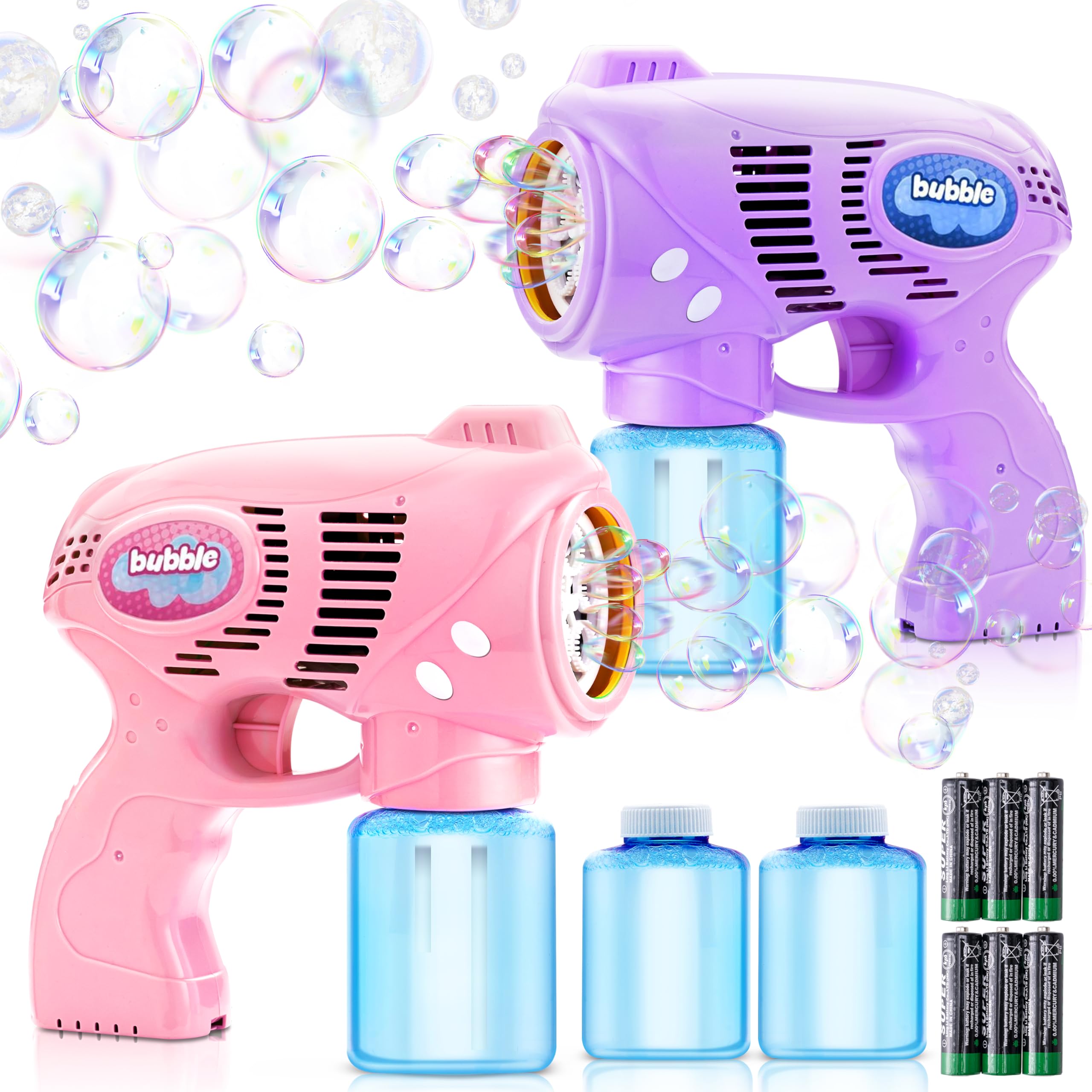
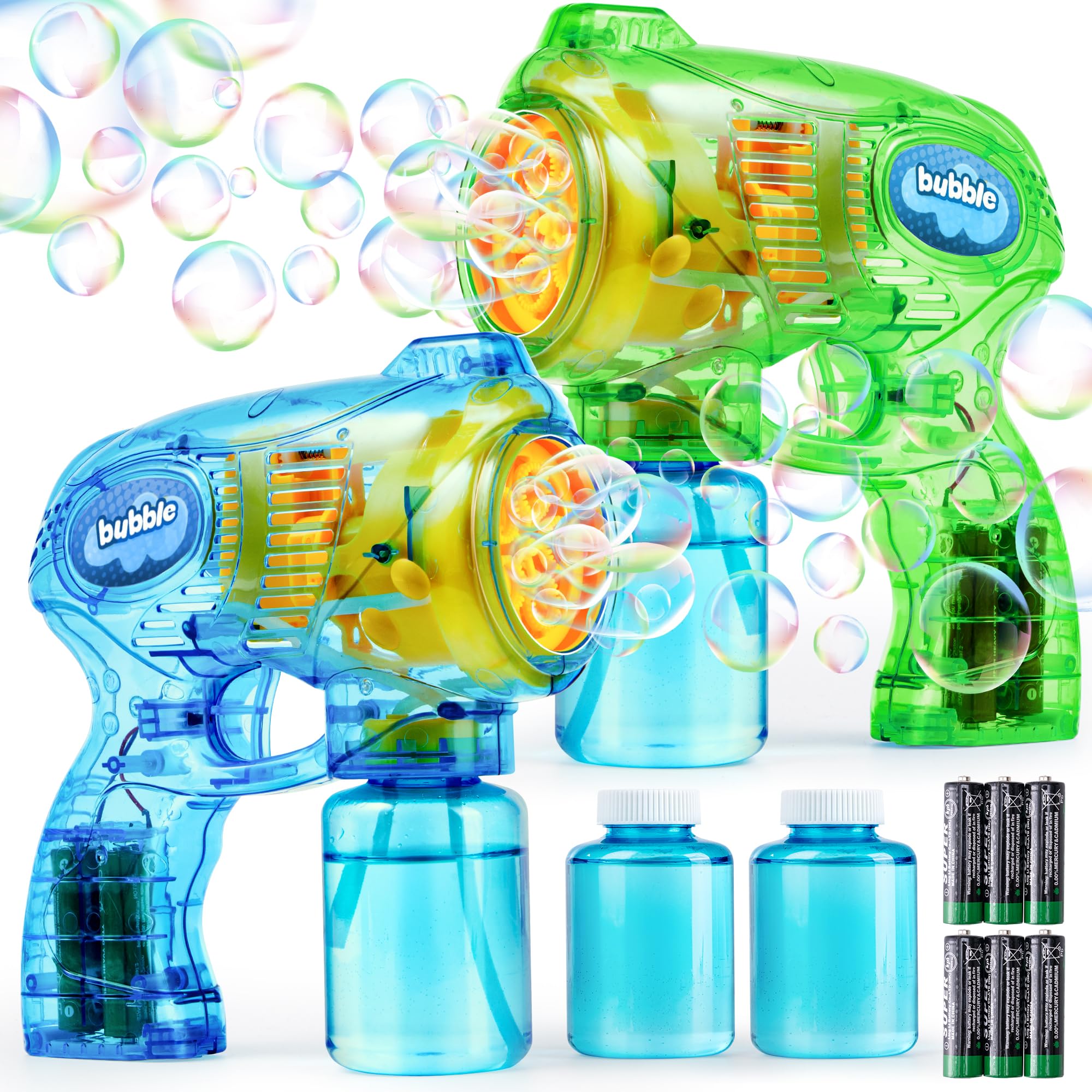


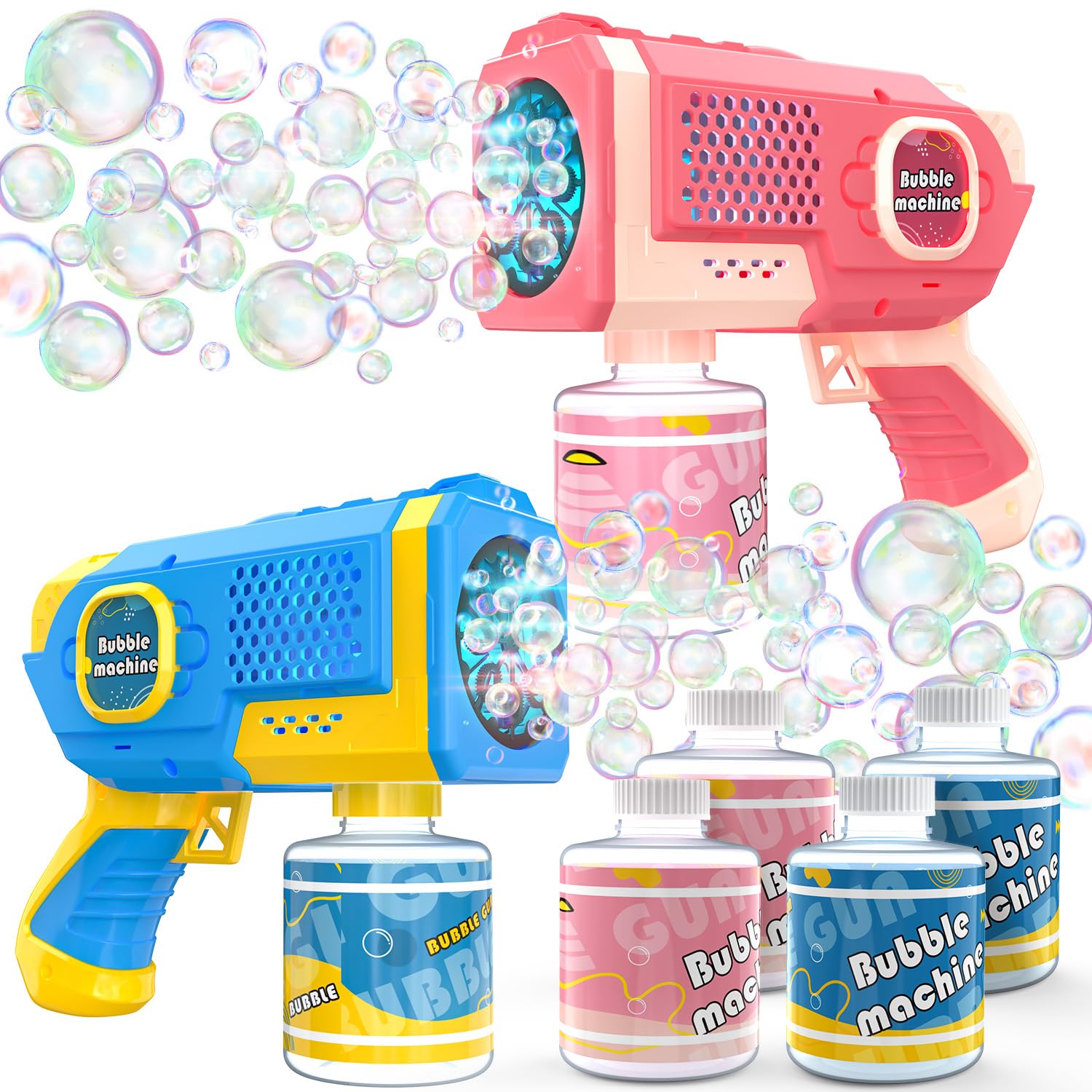
Types of Bubble Guns Compared
Bubble guns all do the same basic job. A fan pushes air across a film of solution held in a ring or wand, and that air stretches the film into floating bubbles. The differences come from how many rings the gun has, how strong the fan is, and how much solution it carries.
As you compare the types in the product table above, think in terms of output and effort. Low output models reward slow, playful use and cost little to run. High output models fill a yard fast but drink solution quickly and cost more to keep supplied through a long party.
Compact Options
Compact bubble guns are the smallest type, usually built around a single ring or a small cluster of rings at the front. A small motor runs a modest fan, and a little bottle or built in tank holds a limited amount of solution. Pull the trigger and a gentle stream of bubbles floats out.
The strengths of this type are control and portability. It fits easily in a tote bag or picnic kit, and young children can hold it without tiring their arms. Output stays modest, so bubbles drift rather than flood, which suits calm play in a small yard or on a patio where a huge cloud would blow straight into the food.
The trade off is frequent refilling. A small tank may need topping up several times during a long session, and a weak fan produces fewer bubbles when the solution gets thin or foamy. Choose this type if you value light weight and easy storage over sheer volume.
Budget Options
Budget bubble guns strip the design down to the essentials. Most use a simple motor, a basic plastic body, and disposable batteries, and many rely on a dipping tray or a small screw on bottle. Prices often sit under $25, which makes them popular for party favors and classroom rewards.
What you give up is refinement. Seals may leak a little, triggers can feel stiff, and the plastic may crack if the gun drops on concrete. Motors on the cheapest models also tend to wear sooner, so treat a budget gun as a fun extra rather than the main event at a big celebration.
Choose a budget option when you need several guns at once and each one will see light use. Buying extras in the same pack covers you if one leaks mid party. For a child who plays weekly, spending a little more on the next type usually pays off in durability.
Mid Range Options
Mid range bubble guns add stronger motors, larger tanks, and better sealing around the solution path. Many use a ring of several wands that rotate through solution as the fan runs, so output stays steady without dipping. Prices commonly start at about $25 and stay under $50, and rechargeable batteries appear often in this tier.
This type suits most families because it balances volume, run time, and cost. A fuller tank means fewer refill stops, and a stronger fan keeps bubbles coming even as the solution warms up in the sun. Lights and sound effects show up on some models, and you can usually switch the sound off.
Build quality is the main reason to step up from budget models. Thicker plastic, tighter seams, and motors rated for longer sessions hold up better to drops and weekly use. If you host outdoor birthdays or have a child who asks for bubbles daily, study this tier first in the comparison table above.
Compact Options vs Budget Options: Which Should You Choose?
Compact and budget guns overlap in price, so the choice comes down to how you play. Compact models win on handling. They are lighter, balance better in a small hand, and usually seal their solution inside a tank, so they spill less in a bag or car. Budget models win on quantity, since the same money buys several guns for a group.
Running cost differs more than sticker price. A leaking budget gun can waste a surprising amount of solution in an afternoon, while a sealed compact gun uses only what it turns into bubbles.
Pick the compact type for one or two children, travel, and tidy play on a porch or patio. Pick budget multipacks for party favors and events where guns may get lost. If you want the fullest stream of bubbles, look again at the mid range type above.
How to Choose the Right Bubble Gun
With the types clear, a few buying factors decide whether a specific model fits your home. Work through safety first, then output and power, then the costs that continue after checkout. That order keeps your best bubble gun search focused on fit rather than flashy extras, and it helps you read the product table above with fresh eyes.
Safety and Certifications
Look for a clear age grading on the box and buy for the youngest child who will use the gun. Models made for ages three and up should have no small detachable parts, and the battery cover should close with a screw so little fingers cannot reach loose batteries.
Check that the solution is labeled nontoxic and that the toy carries a recognized safety mark for the US market, such as ASTM F963 compliance. Remind children never to aim bubbles at eyes or faces and never to drink the solution. If a child shows skin irritation, unusual coughing, or eye pain that does not settle after rinsing, stop play and talk with your clinician or pediatrician.
Key Performance Specs
Output is the headline spec, usually described as the number of bubbles per minute. Treat maker claims as rough guides and weigh tank size just as heavily, because a fast gun with a tiny tank stops often. A larger tank, roughly 100 ml or more, keeps play going longer between refills.
Power style shapes convenience. Disposable batteries are simple and ready instantly, while rechargeable designs cost less to run over a season. Also check how the gun loads solution, since dip tray designs spill easily, while sealed tanks stay cleaner in small hands. For a gentle alternative on windy days, many families also keep the tools from our guide to the best bubble wand on hand, because a manual wand still works when batteries run flat.
Warranty and Customer Support
Toy warranties are short, so read what is actually covered before you buy. A useful warranty covers motor failure and trigger defects for at least several months, and the maker should offer a clear contact route for help. Keep your receipt, since proof of purchase speeds up any claim.
Support quality shows in small ways. Clear manuals, a working support email, and spare bottles or rings sold separately all signal a brand that expects the toy to last. If a listing offers no brand name and no contact details, treat the gun as disposable and pay a disposable price for it.
Intended Use and Who Should Buy One
Start with the setting. For a small patio, a compact gun keeps bubbles near your space instead of drifting over the neighbors. For a big yard party, step up in output, and if you need a wall of bubbles across a whole lawn, compare your plan with the larger coverage in our guide to the best bubble machine before you settle on a handheld toy.
Think about who holds the trigger. Toddlers need light weight and a trigger that fires with a short, easy pull, while older kids enjoy higher output. If your party plan mixes bubble play with active running games, our guide to the best nerf guns covers soft dart options that pair well with bubbles for backyard rotations.
Maintenance and Long Term Costs
Solution is the main ongoing cost. A high output gun can use a full bottle during one party, so weigh running cost rather than sticker price alone. Larger refill bottles lower the cost per ounce, and our guide to the best bubble solution explains which formulas make strong bubbles without heavy residue on patio stones.
Batteries add up too. Rechargeable models shift the cost to a charging cable and a little home electricity, while disposable battery models need fresh sets through the season. Add the price of one spare tank if your design uses a special shape, because a lost cap can sideline a healthy gun.
Tips to Get the Most From Your Bubble Gun
Read the manual before first use, because loading order and priming steps differ between brands. Some guns need a few seconds of trigger time to draw solution up to the rings, and judging that pause as a fault leads many buyers to return working toys. Prime patiently and let the first weak stream build.
- Use fresh solution and pour slowly to avoid foam, since foam in the tank makes thin bubbles that pop at the ring.
- Play in light wind or still air, because strong gusts tear bubbles apart before children can chase them.
- Wipe the rings and nozzle after play so dried solution does not glue moving parts together overnight.
- Rest the motor during long sessions with short pauses, which keeps small fans from overheating.
Clean and inspect the gun regularly. Rinse removable tanks with warm water, check the trigger and battery contacts for sticky residue, and look for cracks around the tank neck. Store the gun in a dry place with the tank empty and the batteries removed if you use disposables.
Bubble Guns: Your Questions Answered
How long does a bubble gun last?
A bubble gun typically lasts one to three seasons of regular play. The motor and fan usually outlast the tank seals and trigger, which take the most stress from sticky solution and drops. Guns stored dry with empty tanks reach the longer end of that range, while guns left full in a hot garage often fail sooner.
How much should I spend on a bubble gun?
Most families spend about $15 at the low end and up to about $50 at the high end for a bubble gun. Simple party favor models sit at the low end, stronger motors and sealed tanks fill the middle, and rechargeable power sits at the top. Spend toward the top only if your child plays weekly, because light users rarely notice the difference.
Are expensive bubble guns worth the extra cost?
Expensive bubble guns are worth the extra cost when output and run time matter to you. Higher priced models usually seal better, leak less, and keep a steady stream going through a whole party. One detail many buyers miss is that premium models often include a larger starter bottle of solution, which offsets part of the price gap.
How do I maintain a bubble gun?
You maintain a bubble gun by rinsing the tank and rings with warm water after play and drying the gun before storage. Run plain water through the solution path if the stream weakens, since dried solution narrows the feed lines. Check battery contacts monthly for buildup and replace any battery that looks swollen.
What features matter most when buying a bubble gun?
The features that matter most in a bubble gun are tank size, output, power style, and sealing. Together they decide how long play lasts and how much mess follows. One feature listings rarely highlight is trigger effort, because a stiff trigger tires small hands fast and ends play sessions early.
Wrapping Up
Choosing well comes down to three things. Match the type to your setting, weigh tank size and output together rather than chasing one big number, and count the ongoing cost of solution and batteries. Compact models suit small spaces and small hands, budget multipacks suit parties, and mid range models suit families who play often.
Use the product table above to compare the types against those priorities one more time. When you find the best bubble gun for your yard, your crew, and your budget, order a spare bottle of solution with it, and your first bubble session can start the moment the box opens.


