
Best Bubble Blower for 2026: A Practical Buying Guide
Disclosure: We may earn a commission when you buy through links on this page, at no extra cost to you. As an Amazon Associate I earn from qualifying purchases. Learn more

Learn how to choose the best bubble blower for parties, play and photos. Compare output, tank size, power, noise and safety features before you buy.
A best bubble blower can turn an ordinary backyard afternoon into a lively play session, a birthday party highlight, or a fun photo backdrop. The right choice depends less on flashy looks and more on how many bubbles it makes, how long it runs, and how easy it is to fill, clean, and store. This guide explains those differences in plain terms, so you can match the tool to your space, your guests, and your budget. The comparison table below summarizes the main types side by side.
Before you buy, think about where you will use it most. A small wand blower suits one or two children, while a larger machine suits a party or photo shoot. Also consider mess, noise, and who will handle it. With those answers in mind, the sections below will help you narrow the field quickly.




Who Should Buy Which Bubble Blower
Parents Planning Backyard Play
Parents usually want a light, simple blower that a child can hold with help and that does not soak the yard in solution. A wand blower or small tabletop machine works well here, because output stays manageable and refills are small. Look for a sturdy handle, a spill resistant tank, and parts that rinse clean quickly. Check the maker age guidance, and plan to supervise young children.
Party Hosts and Event Planners
Party hosts need steady, high output over a longer period, often for an hour or more. A larger machine with a bigger tank and a continuous mode fits this group better than a small wand, because it keeps bubbles flowing while the host greets guests. Place the machine where wind carries bubbles across the party area, not into faces or food. Keep spare solution nearby.
Photographers and Content Creators
Photographers and content creators care about bubble size, density, and direction more than raw output alone. A machine with adjustable output lets you create a light drift for portraits or a dense cloud for playful shots. A quieter model also helps when recording video, since fan noise can spoil audio. Test the setup outdoors first, and plan for wind and a clean background.
Types of Bubble Blowers Compared
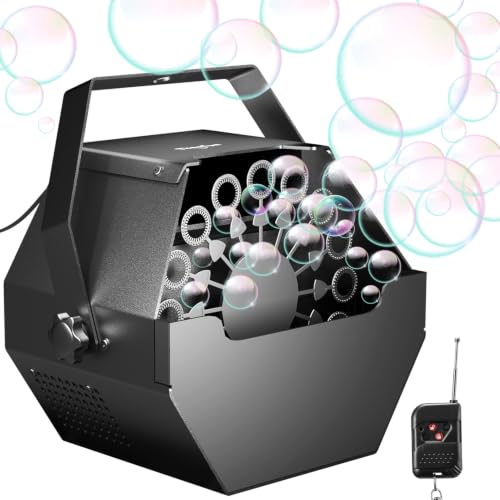
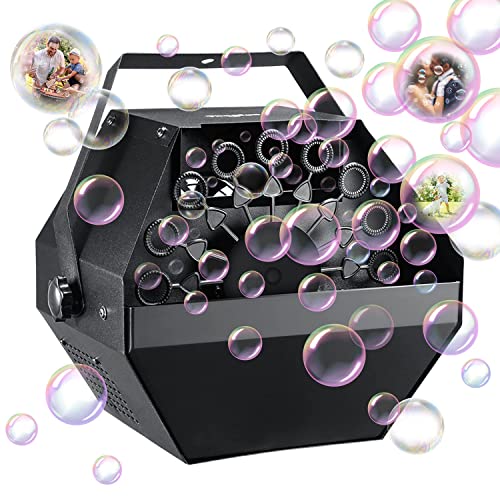
The market breaks down into three broad types. Handheld wand blowers are small, cheap, and easy to carry, but they make fewer bubbles and need frequent refilling. Battery powered bubble machines sit on a table or the ground and produce a steady stream with little effort, which suits parties. Large party machines make the most bubbles and cover a wide area, but they use more solution and need more cleanup time.
| Type | Best For | Output | Refill Needs |
|---|---|---|---|
| Handheld wand blower | One or two children, short play | Low to moderate | Frequent |
| Battery bubble machine | Parties, classrooms, photo shoots | Steady and moderate | Occasional |
| Large party machine | Big events, wide yards | High | Regular during long events |
Handheld Wand Blowers
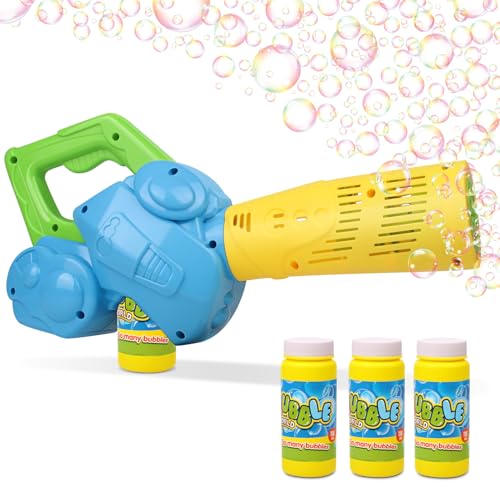
A handheld wand blower is the simplest option and often the best first choice for young children. For a trigger style handheld alternative, see our guide to the best bubble gun.
It usually runs on batteries, weighs little, and costs the least of the three types. The trade off is output: bubbles come in bursts, and small tanks need refilling often. Choose a comfortable grip, and keep solution away from eyes and mouths.
Battery Bubble Machines
A battery bubble machine does the work for you once you fill the tank and switch it on. If you want a dedicated tabletop model, see our guide to the best bubble machine.
It suits parties because it runs hands free and produces a steady stream while guests play nearby. Check run time on one charge, tank size, and whether it can also run while plugged in. More than one speed setting helps control bubble density and mess.
Large Party Machines
Large party machines are built for big spaces and long sessions. They often use a rotating wand ring or several wands at once to push out a dense cloud of bubbles. That output also means faster solution use and more slippery ground nearby. Place the machine on a flat surface, keep cords out of walkways, and plan for cleanup after the event.
Key Features to Compare
Bubble Output and Bubble Size
Output tells you how many bubbles a blower makes and how far they travel, while size affects how they look and last in the air. Small, dense bubbles suit photos and close play, while larger bubbles drift further. Wind matters a great deal: even a strong machine struggles in gusty weather, and a gentle breeze often works better than still air. For outdoor parties, favor adjustable output so you can match conditions on the day.
Solution Tank Size and Refill Ease
Tank size decides how long play lasts before you stop to refill. A small tank suits short sessions, but a party machine with a tiny tank becomes a chore to run.
Look for a wide opening that pours without spilling and a lid that stays secure during use. Keep extra solution on hand, and store leftover solution upright and out of reach of young children. Our guide to the best bubble solution explains how mixes affect bubble size and life.
Power Source and Run Time
Most bubble blowers run on batteries, a plug in cord, or both. Battery models offer freedom of placement, but run time varies widely, so check the maker stated run time and whether spare batteries are easy to swap. Corded models run as long as you need them, yet they tie you to an outlet and create a trip hazard. For long parties, a machine with both options gives the most flexibility.
Portability and Build Quality
Portability matters if you carry the blower to parks, schools, or friends houses. A light machine with a handle travels well, while a heavy party machine may need two people to move safely. Build quality shows in the wand mechanism, the tank seal, and the housing: thin plastic cracks more easily after drops, and a loose tank leaks solution. Rinse and dry the machine before packing it away.
Noise Level
Noise is easy to overlook until a machine runs for an hour near conversation or video recording. Small wand blowers are usually quiet, while larger fan driven machines hum noticeably. If you plan indoor use or video work, favor a quieter model and test it in the actual room first. Outdoors, neighbors may still notice a loud machine running for a long time.
Cleaning and Maintenance
Solution leaves a sticky film on wands, tanks, and nearby surfaces if you skip cleaning. After each use, empty the tank, rinse the wand area with clean water, and wipe the outside dry. Check for dried solution in moving parts before the next session, since buildup can slow the wand ring. Store the machine dry, upright, and away from direct sun.
Spending Levels: What Each Budget Gets You
At a lower price, expect a simple wand blower or a small machine with basic output and a small tank. These models suit occasional play and cost about $10 to $30, but they may lack speed settings and use thinner plastic. In the middle range, about $30 to $80, you get steadier output, larger tanks, and better build quality for regular parties. Above that range, larger machines offer high output and sturdier construction for frequent events, but they use more solution and need more storage space.
Setup and Care Tips
- Set up on a flat surface away from food, electronics, and walkways, so spills and slippery spots stay out of traffic.
- Fill the tank outdoors or over a tray, and wipe drips right away to keep floors and decks from getting slick.
- Start on a low output setting, then raise it slowly until bubbles drift well without soaking nearby surfaces.
- Empty and rinse the tank after each use, and let parts dry fully before storage to prevent sticky buildup.
- Keep solution bottles upright, capped, and out of reach of young children, and follow the maker age guidance.
- Supervise young children during play, and keep small parts and loose wands away from toddlers.
Frequently Asked Questions
Can a battery bubble blower handle a whole party?
Yes, a battery bubble machine can handle a party if its tank and run time match the event length. For a party under an hour, a mid size machine usually runs with only one refill. For longer events, choose a larger tank and keep spare batteries or a cord option ready. A small wand blower alone will struggle at a big party, since it needs constant attention and frequent refills.
Can I use a bubble blower indoors?
You can use a bubble blower indoors, but only where wet floors and sticky residue are acceptable. Choose a low output setting, place the machine on a tray or towel, and keep it away from electronics, books, and food. For most homes, a short indoor session works best, while longer play suits a yard or patio.
How long does bubble solution last during play?
Solution use depends on output setting, machine size, and wind, so exact times vary. A small wand blower may use a small bottle over several short sessions, while a large party machine can empty a tank in under an hour at full output. Lower settings stretch solution further. Buy extra solution for parties, and store open bottles upright and capped.
What age is a bubble blower suitable for?
Suitability depends on the model, so always follow the maker age guidance on the package. Wand blowers suit younger children with adult supervision, while larger machines suit older children and adults. Keep small parts, loose wands, and solution bottles away from toddlers, and never let a child drink solution. If solution contacts eyes, rinse with clean water and seek advice if irritation persists.
Why do my bubbles pop right away in wind?
Strong wind stretches bubble film and pops bubbles faster, while very dry air also shortens bubble life. A gentle breeze usually gives the best drift, so try moving the machine to a sheltered spot or lowering output on gusty days. Fresh solution also helps, since old or diluted solution makes weaker bubbles. For photos, shoot in calm moments between gusts.
Final Thoughts
The best choice balances output, tank size, power, and cleanup effort for your setting. Small wand blowers suit short play, battery machines suit parties and photos, and large machines suit big events. Before ordering, check the maker age guidance, plan for supervision and cleanup, and compare tank size and run time against your event length. Review the product table above, and pick the best bubble blower that fits how you will actually use it.


