Best Breville Smart Oven Air Fryer: A Buying Guide
Disclosure: We may earn a commission when you buy through links on this page, at no extra cost to you. As an Amazon Associate we earn from qualifying purchases. Learn more
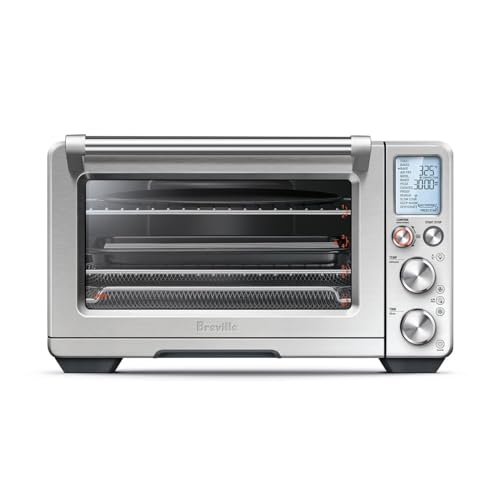
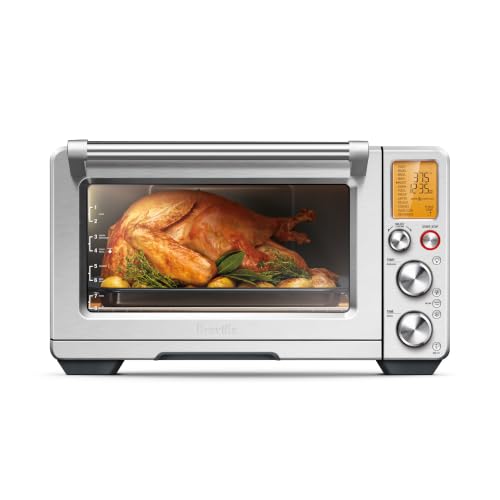


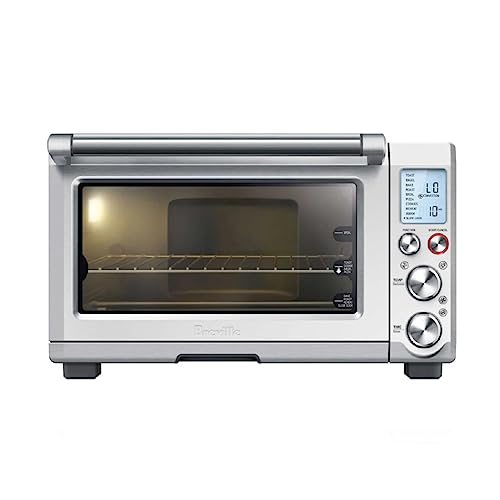
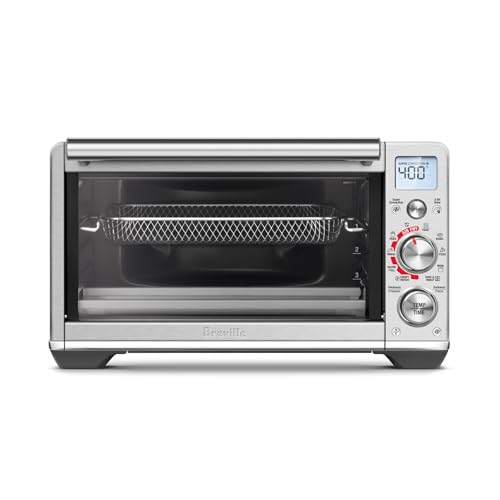


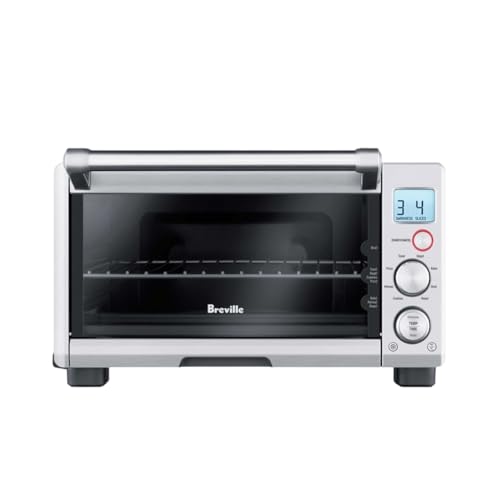


Counter space is precious, and a Breville Smart Oven Air Fryer promises to handle toasting, roasting, baking, and air frying in one footprint. The catch is that the lineup covers a few different capacities, heating setups, and control layouts, so finding the best Breville Smart Oven Air Fryer for your household means knowing which specs actually change your day to day cooking rather than judging by the box art alone. This guide walks through capacity, Element IQ heating, cooking presets, and control style, then covers sizing, placement, and upkeep so you can match a unit to how you actually cook.
What Actually Changes Across the Breville Smart Oven Air Fryer Lineup
Every model in this lineup shares the same basic idea: a convection fan working alongside quartz heating elements inside one cavity, so toasting, roasting, and air frying happen without a separate pull-out basket. The details below are what separate a unit you will use daily from one that ends up shoved to the back of a cabinet.
Interior Capacity and Countertop Footprint
Interior capacity is usually listed in cubic feet, and it decides whether you can fit a whole chicken and a sheet pan at once or just a couple of slices of toast. Measure the width, depth, and vertical clearance under your cabinets before deciding how large a cavity you need, and add a few extra inches on every side for venting. If your kitchen genuinely has no room to spare, it is worth comparing this lineup against smaller toaster ovens built for tight counters before committing to a larger unit.
On the other end, if air frying is your main use case and you regularly cook for a crowd, a dedicated countertop unit from our large-capacity air fryer roundup might handle bigger batches more efficiently than a combo oven's basket-free system.
Element IQ Heating Technology
Breville's Element IQ system uses several independent quartz heating elements that shift power to wherever it is needed most, above or below the food, instead of heating the entire cavity evenly no matter what is inside. A small batch of toast gets concentrated heat from the top elements, while a roast pulls more balanced heat throughout the cavity. This kind of smart element management is the main reason these ovens toast, roast, and air fry with less babysitting than a basic convection oven, and it is worth understanding before you compare presets, since the sensor and element combination is what makes those presets work well in practice.
Number of Cooking Presets
Entry-tier models in the lineup cover the essentials, toast, bake, broil, roast, and air fry, while higher-capacity models add extras like bagel, pizza, proof, slow cook, dehydrate, and cookie settings. More presets add convenience, but each one is really a saved combination of temperature, fan speed, and element balance, so a shorter preset list does not mean a lesser oven if you only ever use the core functions.
Manual Dials vs. Digital Display Controls
Control style is a bigger daily-use factor than people expect. Dial-based controls let you set temperature and time with a twist and are easy to operate with greasy or wet hands, but they offer less precision for exact presets. Digital LCD controls show the selected function, remaining time, and temperature at a glance and usually store more presets, though they take a little longer to learn. Neither style is objectively better, so think about how you actually cook, quick reheats versus precise baking, before choosing one over the other.
Matching a Size to Your Kitchen and Cooking Habits
Once you know which specs matter to you, picking the best Breville Smart Oven Air Fryer size comes down to matching capacity to how your household actually cooks day to day. The lineup roughly splits into three size tiers, and picking the right one has more to do with your household than your counter alone. A compact-size model suits a household of one or two people who mainly toast, reheat, and air fry small portions, and it takes up noticeably less space if your kitchen is on the smaller side. A mid-size model handles a whole chicken, a standard sheet pan, or a 9-inch cake without crowding the cavity, which covers most everyday cooking for a small family.
The largest-capacity models in the lineup are built for entertaining or a bigger household, with enough room for a full-size holiday bird or several trays at once without cooking in batches. If you frequently cook for more than four people, sizing up is usually worth the extra counter space. If you mostly cook solo or for a couple, the largest option tends to sit half-empty and wastes both energy and preheat time. Getting this match right is really the whole exercise in choosing the best Breville Smart Oven Air Fryer for your specific household, more than any single spec on its own.
Placement, Clearance, and Everyday Upkeep
These ovens run hot and vent from the back and sides, so give them real clearance, not just a spot that looks big enough. Keep at least a few inches of open space behind and beside the unit, away from cabinets, curtains, or anything that traps heat, and never set it directly under upper cabinets without checking the manufacturer's minimum clearance.
Basket and drip tray upkeep matters more than most buyers expect going in. Oil that collects on the tray during air frying will smoke on the next high-heat cycle if it is not wiped out between uses, and a buildup of crumbs on the lower element can scorch and affect flavor over time. A quick wipe-down after each air fry session and a deeper clean of the crumb tray weekly keeps performance consistent and cuts down on smoke and odd smells. Always let the unit cool and unplug it before cleaning inside the cavity.
Cost and Value Expectations Across the Lineup
Price generally tracks capacity and preset count together. The smallest, simplest models sit at the budget end of the countertop combo oven category, while units with the largest interior and the fullest preset list cost noticeably more. Extras like a slow-cook or dehydrate setting are convenient if you will genuinely use them, but they are not worth paying up for if your cooking habits do not call for them.
If your budget is the deciding factor more than capacity, it helps to see how this category compares to other options at a lower price point. Our guide to the best air fryer ovens under a set budget is a useful reference point before you decide whether the added cost of a larger Breville model is worth it for your kitchen.
Frequently Asked Questions
What's the real difference between the basic model and the higher-end version in this lineup?
The higher-end version typically adds a larger interior, a couple of extra cooking presets like proof or dehydrate, and sometimes a wider temperature range. The core Element IQ heating and air fry function work the same way across tiers, so the choice usually comes down to capacity and how many presets you will actually use.
Can a Breville Smart Oven Air Fryer replace a full-size oven?
For most everyday cooking, yes, especially in a smaller household. It handles roasting, baking, and reheating well, but a full-size range oven still wins for large batch baking or multiple trays at once, so many households keep both.
What size do I need for a family of four?
A mid-size or larger model is usually the better fit, since it needs to comfortably hold a whole chicken, a full sheet pan, or a 9x13 pan without crowding. Smaller compact models tend to feel undersized once you are regularly cooking for more than two people.
Is the air fryer function hard to clean compared to a dedicated air fryer?
It takes a bit more attention than a simple pull-out basket unit, mainly because oil can collect on the tray beneath the rack. Wiping it out after each use prevents smoke and keeps cleanup manageable, but if low-maintenance cleaning is your top priority, a dedicated basket-style air fryer may still be simpler.
Why does my oven seem to bake unevenly on one side?
This is usually a rack position or rotation issue rather than a defect. Rotating trays halfway through a bake and keeping food centered on the rack, away from the side walls, evens out browning in most cases.
How much clearance does it need on the counter?
Plan for a few inches of open space on the back and both sides at minimum, plus enough vertical clearance above the unit that heat is not trapped against your cabinets. Tighter clearance than that can affect performance and is a safety concern over time.
Making Your Decision
The right choice in this lineup comes down to matching capacity and preset count to how you actually cook, not choosing the biggest or most feature-packed option available. Measure your counter space, be honest about how many people you cook for, and prioritize the presets you will use weekly over the ones that sound nice on paper.