
Best Boucle Sofa: Styles, Sizes and Fabric Care (2026)
Disclosure: We may earn a commission when you buy through links on this page, at no extra cost to you. As an Amazon Associate I earn from qualifying purchases. Learn more

Best boucle sofa guide to loveseat, three seater and modular styles, seat depth, frames and how to care for the fabric.
Boucle looks soft and sculptural in photos, yet two sofas with the same fabric name can feel completely different once you sit down. Loop size, cushion fill, seat depth, and frame build all change comfort and care. Finding the best boucle sofa means matching those details to your space, your household, and how you actually sit, rather than choosing on texture alone.
This guide compares the three main boucle sofa styles, then walks through the sizes, materials, and features that matter before you order. The product table sums up the main options at a glance, so you can shortlist a shape first.
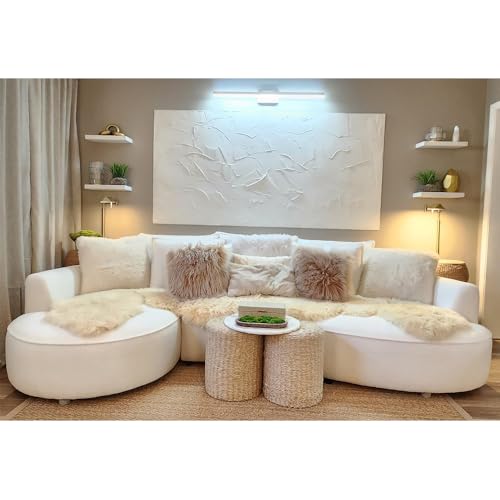
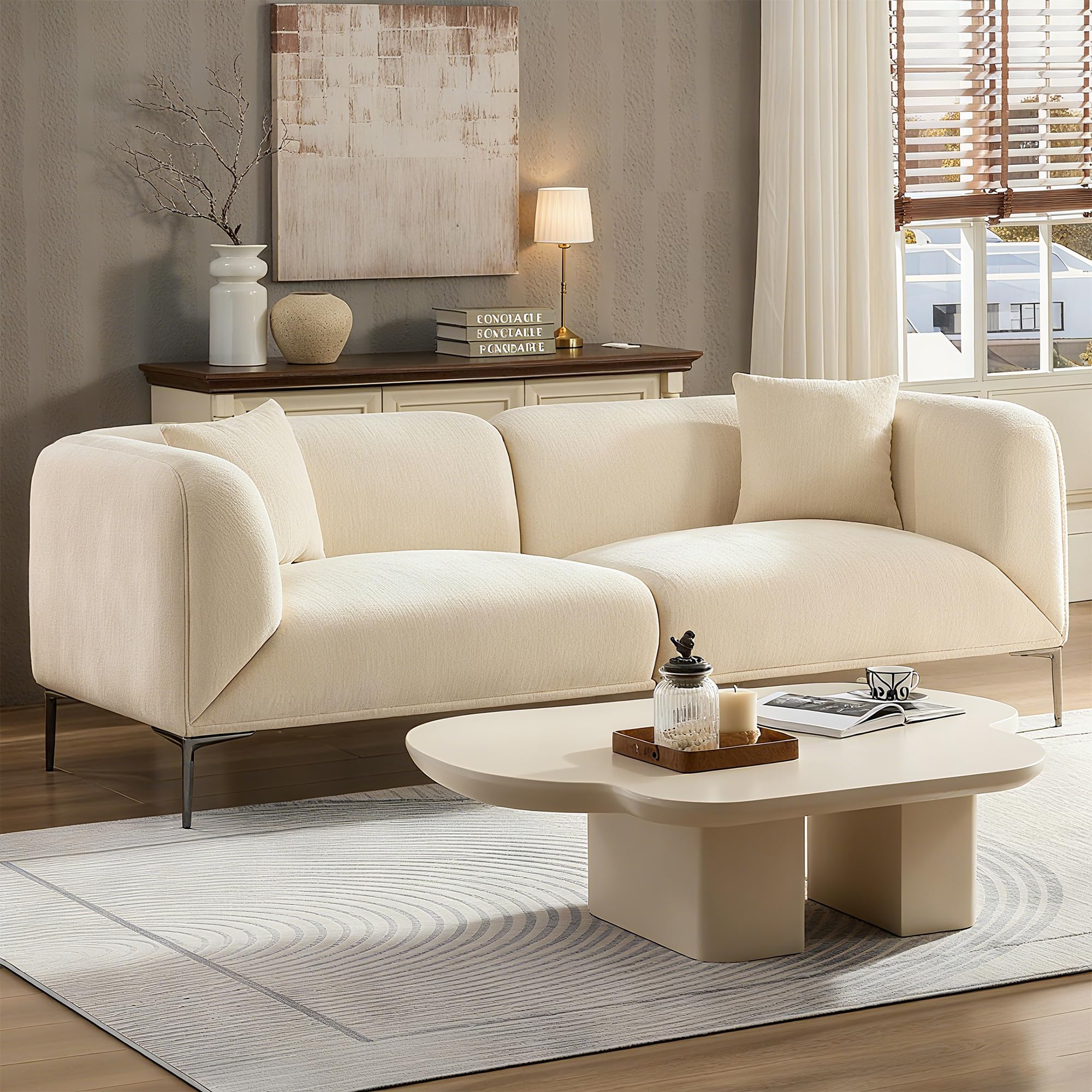


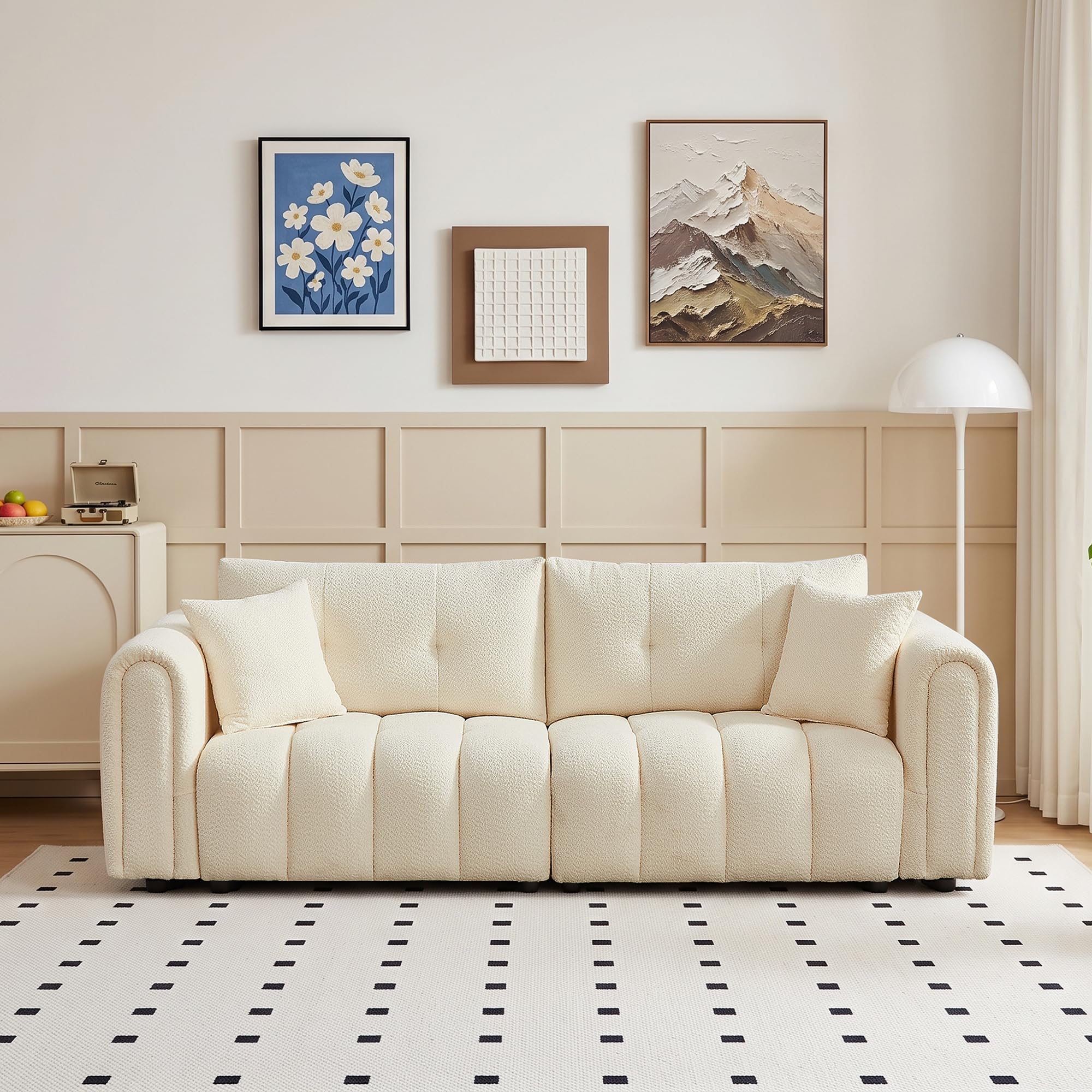
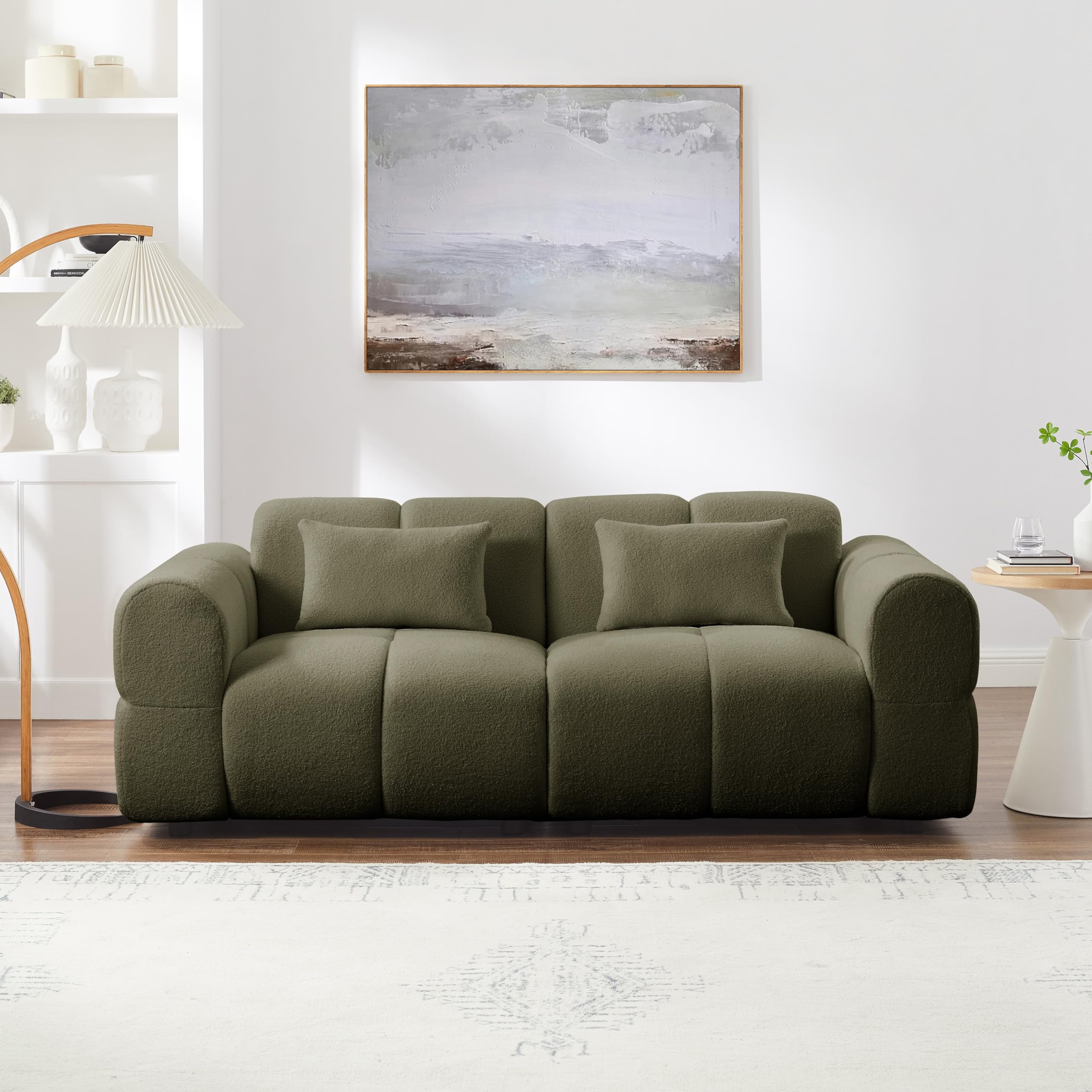

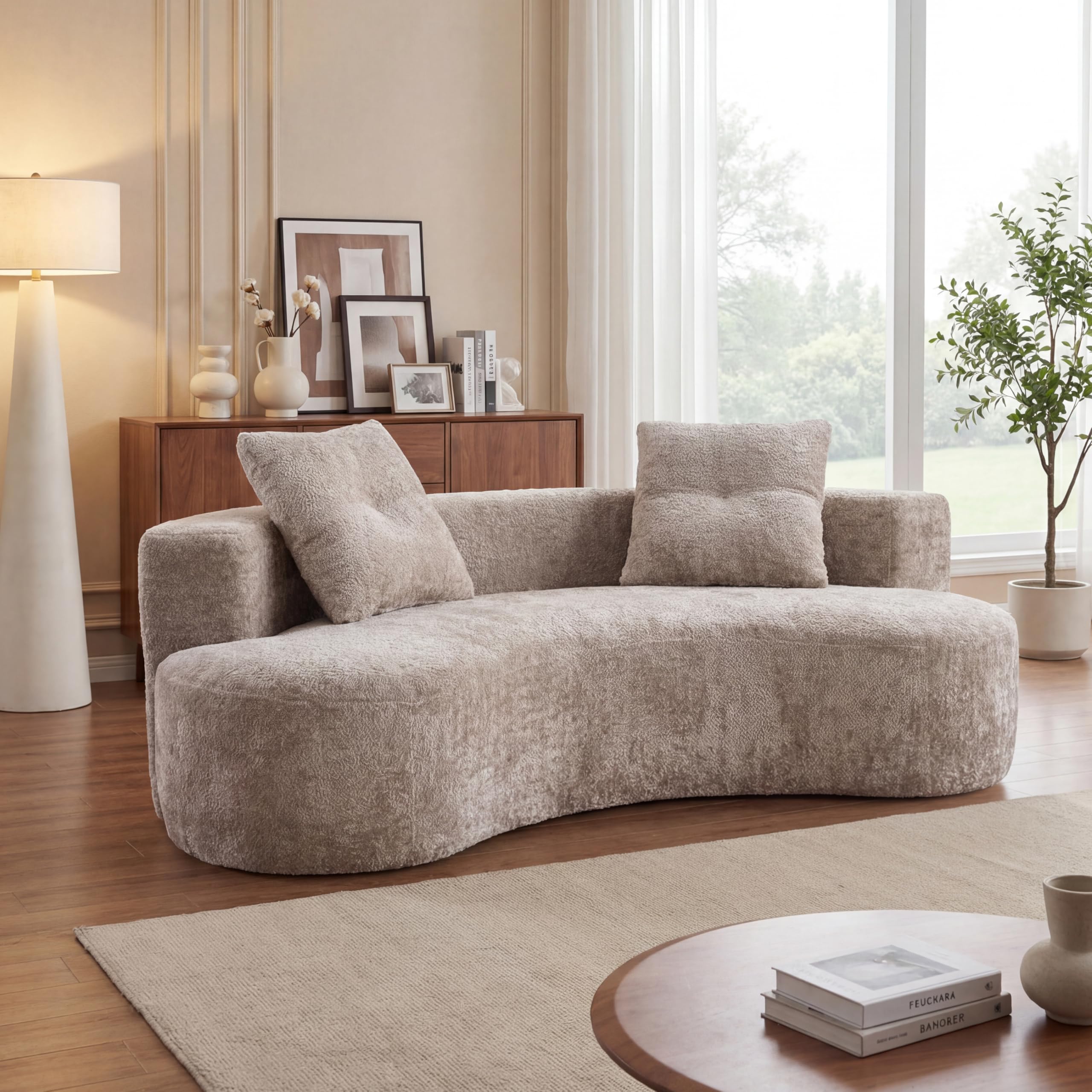
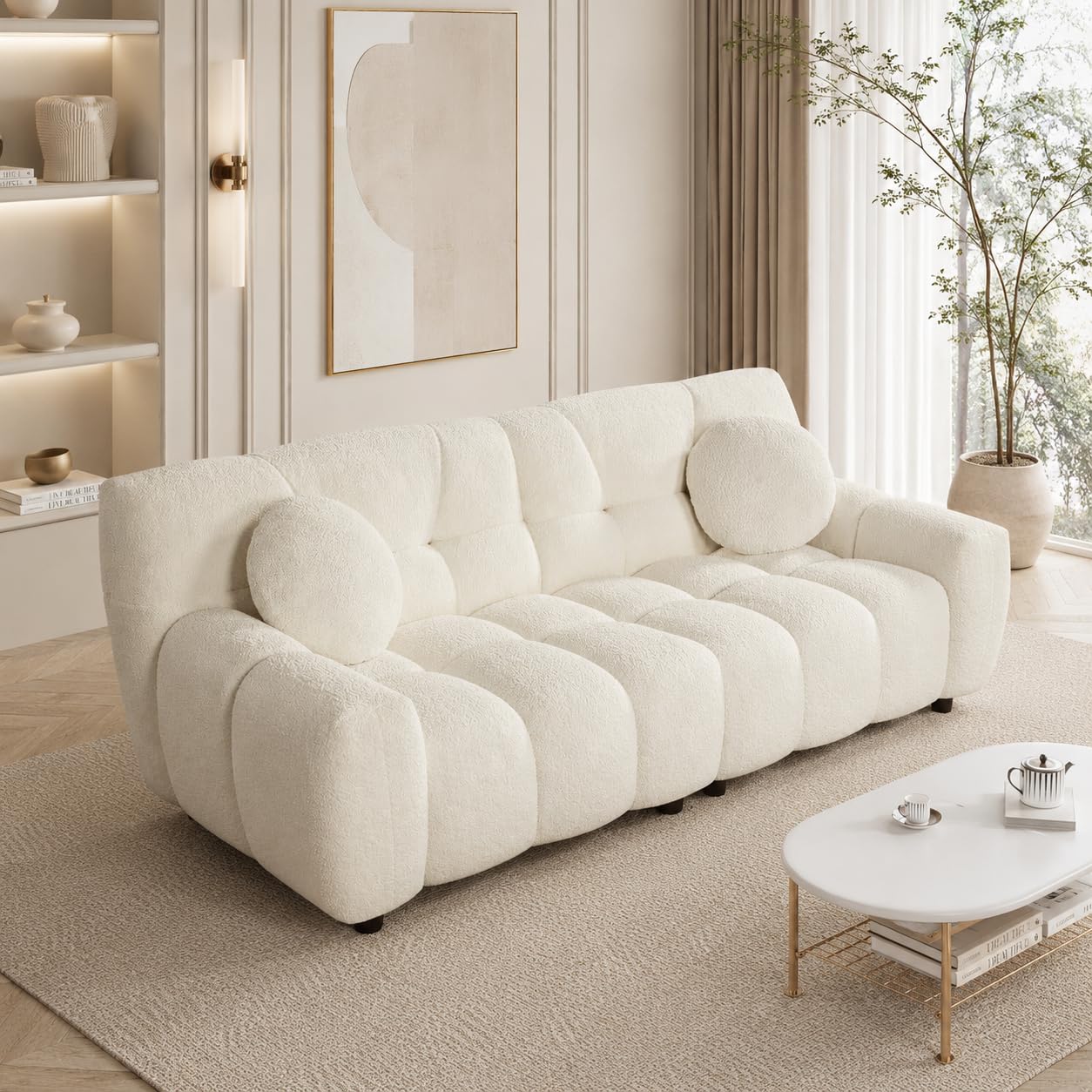
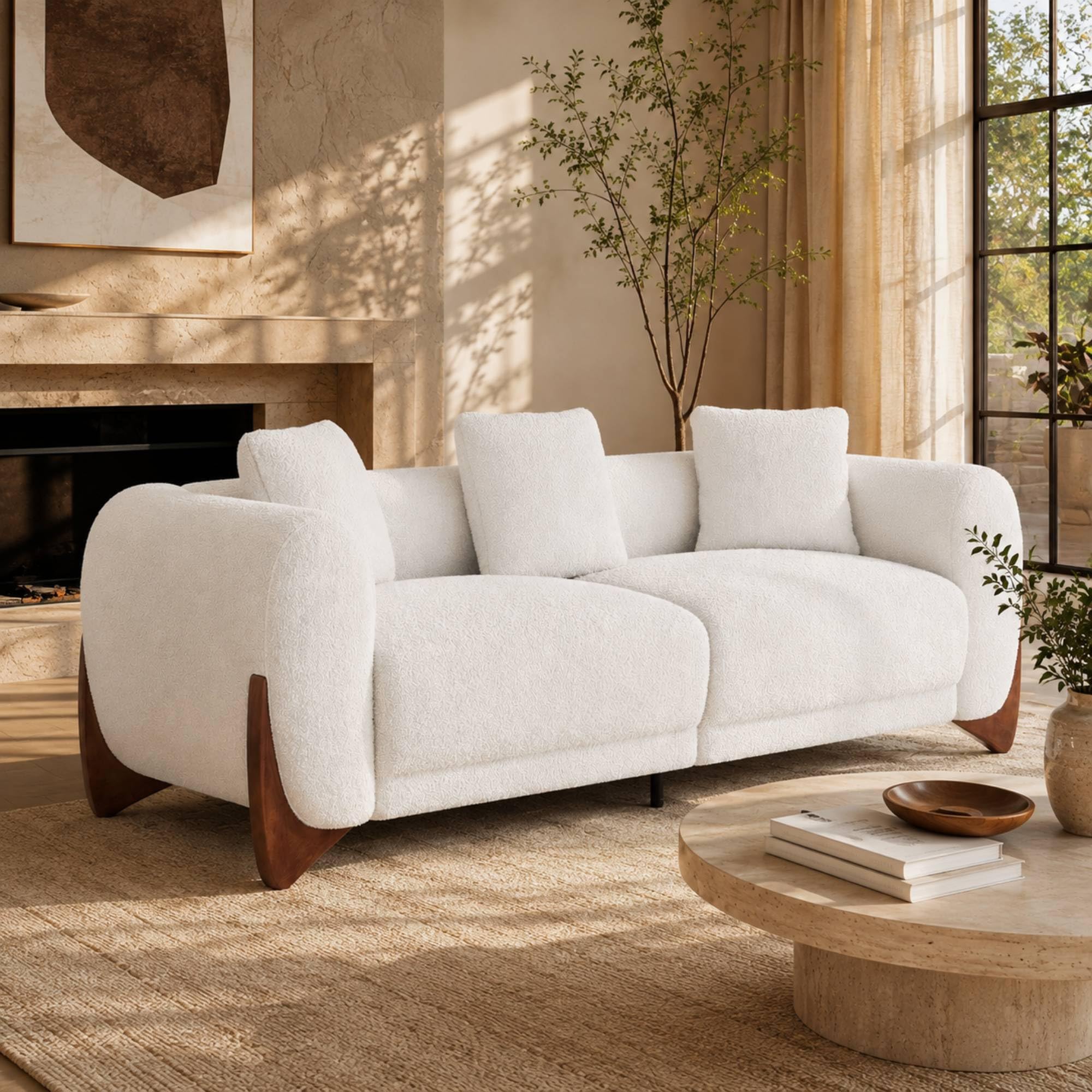
Boucle Sofa Types at a Glance
Boucle sofas fall into three broad styles. Compact loveseats suit small rooms, standard three seaters anchor most living rooms, and modular designs with a chaise stretch out for lounging and guests. All three use looped yarn upholstery, so the differences that count are footprint, seat depth, and how cushions and frame are built under that surface.
- Compact loveseat: about 55 to 70 inches wide, shallower seats, best for apartments.
- Standard three seater: about 78 to 90 inches wide, balanced depth for sitting and naps.
- Modular with chaise: rearrangeable sections, deepest seats, best for open plan rooms.
Best Boucle Sofa Styles Compared
None of these styles is better in every home. Your room size and sitting habits should decide which one earns a place on your shortlist.
Compact Loveseat Style for Small Rooms
A compact boucle loveseat gives you the textured look without crowding a small room. Seats tend to run about 20 to 21 inches deep, which suits upright sitting and conversation better than sprawling. Raised legs make the piece feel lighter in a tight footprint. The trade off is capacity, since two adults fit comfortably but a third person will feel squeezed.
Standard Three Seater Style for Everyday Living
The standard three seater is the safest all round choice for a main living room sofa. Widths of about 78 to 90 inches leave real elbow room for three people, and seat depths of about 21 to 23 inches work for both upright sitting and curling up sideways. If you host often and want one sofa that handles daily use without dominating the room, start your search here and narrow by fabric blend and frame build.
Modular Style with a Chaise for Lounging
Modular boucle sofas use separate sections that clip or sit together, so you can add a chaise, move an armless seat, or split the layout when you move home. That flexibility is the main draw, and our guide to the best modular sofa explains layout planning in more depth. Deep seats around 23 to 25 inches favor lounging over perching. Check that each section is finished on all sides, since a raw edge limits how freely you can rearrange pieces later.
How to Choose the Right Sofa
Work through the points below in order. Size and fit come first, because the most comfortable sofa is still the wrong buy if it overwhelms your room. If you want a broader starting point, the best sofa guide covers the full fabric range.
Size and Form Factor
Measure your wall length, then leave breathing room at each end instead of filling every inch. A sofa that takes up about two thirds of the wall usually looks balanced and leaves space for side tables. Seat height of about 17 to 19 inches suits most adults, while lower seats feel relaxed but can be harder to rise from. Before choosing between a single long sofa and an L shaped layout, read our sofa vs sectional comparison, since traffic flow often settles that choice faster than looks do.
Type and Silhouette
Boucle pairs naturally with curved backs, rounded arms, and low profile frames. A curved back looks striking but can waste corner space, while straight arms give you a flat surface for a book or a tray. Mid century style tapered legs raise the body and suit smaller rooms, and plinth bases read calmer in large spaces. Pick the silhouette after you fix the size, because shape changes usable seat width inside the same footprint.
Features Worth Paying For
Removable cushion covers are the feature most boucle owners value, since the textured fabric shows crumbs and dust more than a flat weave does. A reversible cushion extends wear by spreading pressure across both faces. If easy washing matters more than texture, compare the best slipcovered sofa options, where every cover comes off for the wash. Built in USB ports and storage arms add cost and can date quickly, so treat them as bonuses.
Body Size and Weight Capacity
Check the stated weight capacity and read it per seat, not just as a total for the whole sofa. A sturdy three seater often supports about 250 to 300 pounds per seat, while light flat pack frames may allow far less. Taller readers should favor deeper seats so knees stay supported, and shorter readers should check whether their feet rest flat at a seat height near 17 inches. Larger body types benefit most from steel springs paired with a hardwood frame, since that base resists bottoming out.
Adjustability in Arms, Back, and Legs
Most boucle sofas are fixed designs, so adjustability shows up in smaller ways. Some models offer movable bolster cushions that change lumbar support, loose back pillows you can plump or remove for naps, and legs that swap between heights. Headrests are rare here because they interrupt the soft curved lines. If you need real recline, a reclining model in flat performance fabric will serve you better. Within boucle, prioritize loose cushions you can rotate.
Materials and Durability
Boucle is a looped yarn fabric, and the fiber blend decides how it ages. Wool rich blends feel warm and resilient but cost more and can pill in the first months, while polyester and acrylic blends resist stains and fading at a lower price. Tighter, smaller loops snag less than large plush loops. Under the fabric, look for a kiln dried hardwood frame, corner blocks, and foam of about 1.8 pounds per cubic foot or denser. For routine stain care steps, see how to clean a couch, and always try any cleaner on a hidden patch first.
Assembly and Warranty
Many boucle sofas ship with legs and backs detached, so confirm what assembly involves and whether tools come in the box. Two people should plan on about 30 to 60 minutes for a standard model, and modular sections take longer to align. Warranty terms tell you how the maker rates its own frame, so favor at least five years on the frame and one year on fabric. Our explainer on how long should a couch last helps you judge whether a short warranty is a warning sign.
How Much Should You Spend?
Listings in the product table run from about $230 for a basic three seater to about $1,700 for a large curved model, with many between $300 and $900. Lower prices usually mean engineered wood frames, thinner foam, and more acrylic in the blend, while higher prices buy hardwood frames, denser cushions, and wool content. Delivery can add a fee, so include it when you compare totals. Spending more mainly pays off in frame and fill, which you cannot upgrade later.
Boucle and Other Sofas: Pros and Cons
Boucle earns its popularity through texture. The looped surface adds visual warmth to plain rooms, hides minor shading differences from daily use, and feels cozy in cooler months. It also works well in neutral shades like ivory and oatmeal.
The downsides are practical. Loops trap dust and pet hair at the base of the pile, pale colors show spills quickly, and rough items like bag straps or pet claws can pull a loop loose. Flat woven performance fabrics wipe clean faster, and leather ages with a patina instead of fading. Busier households should weigh the cleaning effort honestly before ordering.
Common Mistakes to Avoid
- Ordering by photo color alone: boucle shading shifts with light, so a sofa that looks warm white online may read gray at home if you skip a swatch.
- Ignoring seat depth: deep seats look inviting, but shorter readers end up perched on the edge with no back support.
- Choosing pale fabric with toddlers or muddy dogs: spills soak into the loop base fast, and pale boucle shows each mark.
- Skipping the frame check: soft fabric hides weak joinery at first, then creaks announce the problem once returns are hard.
- Forgetting cushion rotation: pile flattens where people sit most, and cushions that never rotate develop shiny patches there.
Care and Maintenance
Vacuum weekly with an upholstery brush on low suction, moving with the loop direction so you lift dust without pulling fibers. Blot spills at once with a clean cloth and plain water, working from the edge inward, and never rub, since rubbing pushes liquid deeper into the pile. Keep the sofa out of constant direct sun to slow fading. Professional cleaning once a year suits wool rich blends.
FAQ
Are boucle sofas worth the extra cost?
Yes, if texture is doing real design work in your room, because boucle can make a simple shaped sofa look finished without extra cushions or throws. The value case weakens in busy family rooms, where a cheaper performance fabric will look better after two years of spills. Judge the price against frame warranty and cushion density rather than the fabric name, since those parts decide how the sofa feels once the novelty fades.
Does boucle fabric pill or snag over time?
Some pilling is normal in the first months, especially with wool blends, as loose fibers work free under friction from clothing and throws. You can judge durability before buying by asking for the fabric rub count, since upholstery rated at about 25,000 double rubs or higher handles daily use well. Snags usually come from sharp edges like buckles, zippers, and pet claws catching a loop. A pulled loop should be eased back with a needle rather than cut, because cutting can start a run.
Is a boucle sofa a good choice with pets?
It can work with calm indoor pets, but it is rarely the easiest option. Hair settles at the base of the loops and needs a vacuum with an upholstery tool rather than a quick wipe, and cats that knead or scratch will catch the pile. If your heart is set on boucle, choose a mid tone synthetic blend, keep a washable throw over the favorite sleeping spot, and keep claws trimmed. Darker flecked weaves hide hair and marks far better than solid ivory.
How can you make a boucle sofa feel firmer?
Start with the cushions, since seat feel comes mostly from fill. Adding a firmer foam insert inside the cushion cover, or replacing tired foam entirely, gives the biggest change for the least money. A thin board under the cushions is a short term fix that spreads weight, but it can stress the frame and voids some warranties, so check the terms first. If the base webbing or springs have stretched, a repair shop can renew them and restore support.
Will a boucle sofa fit through a standard doorway?
Most will, but measure before ordering rather than assuming. Compare sofa depth and back height against your doorway width, often about 30 to 36 inches, and remember that many models arrive with legs and backs removed, which shrinks the profile a lot. Curved designs can be harder to angle through halls than straight ones. If your entry has a tight turn, choose a modular style or a model listed as fitting through a 30 inch door.
Final Thoughts
Start with your room measurements, pick the style that fits your sitting habits, and then compare fiber blend, frame build, and cushion density within that style. The product table above pulls those details together so you can check them side by side. Chosen in that order, the best boucle sofa is the one whose size, support, and care demands match how your household lives.


