Best Boots for Lawn Care: Everything to Know Before Your First Purchase 2026
Disclosure: We may earn a commission when you buy through links on this page, at no extra cost to you. As an Amazon Associate I earn from qualifying purchases. Learn more

A first purchase guide to the best boots for lawn care: wet work, spray label classes, fit, traction, and what each price band buys a new buyer.
Buying your first pair of boots for yard work can feel like guessing. Wet grass, soft soil, and spray days all punish the wrong choice. This guide walks you through best boots for lawn care, starting with what the job actually does to a boot and ending with how the price bands differ. The product table gathers boot options in one place.
You do not need trade experience to buy well here. You need to know how wet your work runs, how long you stay on your feet, and whether any label on your spray shelf asks for covered, protective footwear.



Boots 101: The Basics
Plainly stated, lawn work is a wet and chemical class of work. Morning grass holds dew, beds hold irrigation water, and spray days add product to the mix. A lawn boot is therefore read by its wash and membrane classes first: how well it keeps water out, and how completely it rinses clean afterward, against grass, spray, and soil classes. A boot that shines on dry pavement can still fail in one wet morning.
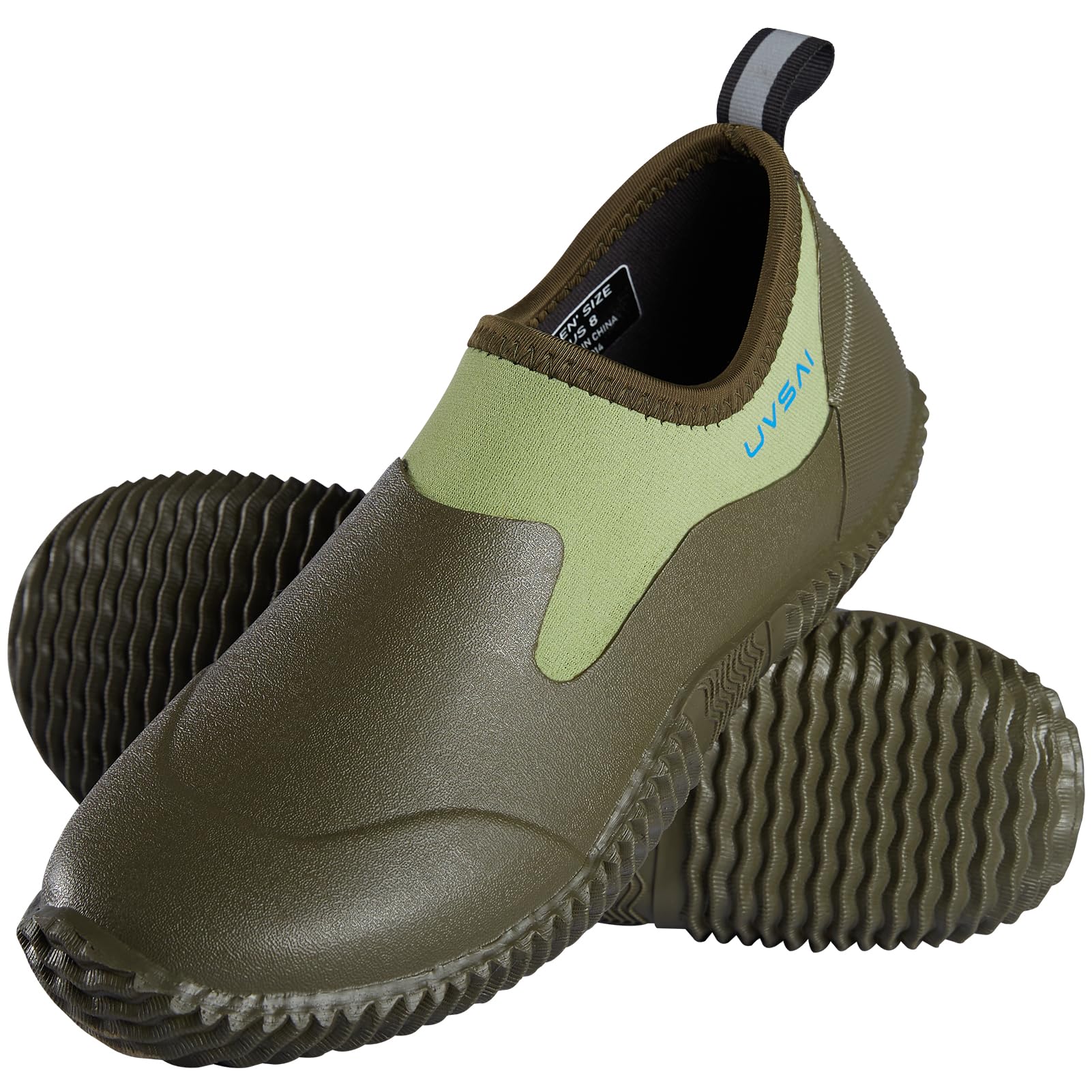
A few terms carry the whole category. The shaft is the part that wraps your ankle and lower leg, and its height decides how much soil and clippings reach your socks. The outsole is the treaded bottom that grips the ground. The membrane is a waterproof layer built into the upper, and the toe cap is a reinforced section at the front.
Key Specs Explained in Plain English
Features That Matter for Lawn Care
Chemical contact is read from the product label, not from habit. Labels on fertilizers, weed sprays, and pest products state their own protective footwear classes, so read the label before any boot claim, and match the boot to it. After any chemical class of work, the boot gets washed the same day, because residue breaks down leather and fabric alike. Mower and trimmer work adds hazard classes of its own, from thrown stones to a blade passing near a toe, and where a job rates a toe class, the certified class decides.
Fit, Sizing, and Toe Box
Measure your feet late in the day, when they sit at their largest, and size for the thicker socks you actually work in. Your toes should clear the front of the toe box while standing, with room to spread when you crouch over a bed. A boot that pinches in the shop only argues harder by the third hour. If you fall between sizes, the larger size plus a thicker insole usually serves lawn work better than a tight fit.
Arch Support and Foot Type
Lawn work is standing and walking work on soft, uneven ground, so your arch carries load for hours. Flat feet tend to roll inward and tire sooner on slopes, while high arches push pressure onto the heel and the ball of the foot. Removable insoles matter here, because you can swap the factory insole for a support class that matches your foot. Judge support by how your feet feel after a full session, not by the first ten steps.
Outsole Traction and Terrain
The outsole is where a lawn boot earns its keep. Deep lugs bite into soil and shed mud as you walk, while shallow tread skates on wet grass and smooth stone. Wet slopes are the honest check: a tread that holds on a damp bank gives you confidence everywhere else. Look for lugs spaced wide enough to clear clippings instead of packing solid, because a clogged sole loses grip exactly when the ground turns soft.
Upper Materials and Breathability
Uppers come in three broad classes. Full leather shrugs off abrasion and rinses clean, but it breathes less and weighs more. Fabric and mesh classes run cooler and lighter on hot afternoons, yet they soak through faster and hold stains longer.
Rubber and coated classes are the wash and wear answer for the wettest work. Match the upper to your wettest regular task rather than your driest one, and the boot will suit most days you work.
Durability and Expected Lifespan
A lawn boot usually lasts by seasons, not by a fixed count of outings. Stitching at the flex point, sole bonding, and how the upper handles repeated wet and dry cycles decide the real lifespan. Expect a working pair to give several seasons of regular use, and plan replacement when the lugs wear smooth or the membrane starts leaking at the bend of the foot.
Who Should Buy the Best Boots for Lawn Care?
Homeowners on Wet Morning Lawns
If your mowing happens before the dew lifts, put membrane class and easy rinsing first. A mid height shaft keeps clippings out without the bulk of a tall boot. Most homeowners land in the middle price band and never miss the heavier duty classes.
Side Job and Weekend Crew Workers
Readers stepping up to paid routes ask more of a boot: longer days and faster wear. The sibling guide to best work boots for lawn care weighs the duty classes built for daily rounds like those. If full boots feel heavy across many short stops, some crews cross shop best shoes for lawn care professionals, a lower class that trades ankle coverage for speed.
Spray and Treatment Applicators
Anyone applying fertilizer or weed and pest products should start from the label, then choose the boot. Coated or rubber uppers rinse cleanest after spray days, and taller shafts keep drift off socks and skin. Change out of work boots before going indoors. Your exposure class, not your comfort class, is the first filter for this group.
What Each Price Band Buys
Entry pairs at about $50 to $90 cover light home use, with basic water resistance and simpler soles. The middle band, about $90 to $150, is where most first time buyers should shop, since it brings real membranes, better lug patterns, and sturdier stitching. Premium pairs at about $150 to $250 add tougher leather and construction that survives daily routes. Spend for the wettest and longest work you actually do, not for the hardest job you can imagine.
Where Boots Sit in the Whole Lawn Kit
Boots are the worn class of the lawn kit, the one item the work reaches through your own feet. The machines and tools around them belong to other classes entirely. The guide to best spreaders for lawn care covers the wheeled equipment class that meters seed and fertilizer across a lawn.
The cutting machines sit in a different class again, covered by best mowers for lawn care business, where engine and deck classes set the work rate. Water delivery is its own equipment class too, found under best lawn hoses, where length and fitting classes matter more than any boot fact.
Rookie Mistakes to Avoid
- Buying for dry weather and then meeting dew: a water resistant spray finish is not a membrane, and your socks learn the difference in one morning.
- Skipping the label check before a spray day: the product label sets the footwear class, and guessing can leave you underprotected.
- Choosing smooth fashion tread: shallow soles pack with mud and skate on wet grass, which turns slopes into a fall risk.
- Wearing the same soaked pair two days running: a boot that never dries rots its lining and loses support fast.
- Sizing in thin socks in the morning: feet swell during work, so a snug morning fit becomes a painful afternoon fit.
Getting Started: Setup and First Use
Wear a new pair around the house and on one short session before trusting it with a full day. Check for heel lift and any seam that rubs, while a return is still easy. After each session, knock off the soil, rinse when the day involved chemicals, and dry the pair away from direct heat, which cracks leather and warps soles.
Boots: Your Questions Answered
What features matter most in lawn care boots?
The membrane and wash classes matter most, because wet grass and spray residue reach the boot on nearly every job. After those, look at lug depth for soft ground and shaft height for keeping clippings out. One detail many buyers miss is the gusseted tongue, stitched to the upper on both sides. It blocks soil and seeds at the laces, the one gap a membrane cannot cover.
How often should lawn care boots be replaced?
Replace lawn care boots when the lugs wear smooth, the membrane leaks at the flex point, or the midsole feels flat and dead under your heel. For most homeowners that point arrives after several seasons of regular use. Daily crews reach it sooner, sometimes within a single heavy season. A pair that leaves your feet tired on easy ground is giving you its answer early.
How should lawn care boots fit around the ankle?
Lawn care boots should hold the ankle firmly without biting into it when you crouch or climb a slope. A small amount of heel movement in a new pair is normal and settles as the boot breaks in. Lace tension does most of the work here: snug across the midfoot, slightly easier at the top hooks. If the shaft rubs your calf raw on a short walk, that shaft height is wrong for your leg.
Are expensive lawn care boots worth the money?
Expensive lawn care boots earn their price when your work is long, wet, and frequent, because better membranes and stitching survive more wet and dry cycles. Casual users mowing one lawn a week rarely recover the cost. One premium advantage is repairability: stitched sole classes can often be resoled, stretching the price across more seasons. Buy the band that matches your hours, not your ambitions.
Can lawn care boots be worn for other outdoor jobs?
Lawn care boots handle general yard work and muddy chores well, since the same wash and grip classes apply. They are not the right class for deep snow, ice, or rated job site hazards, where insulation or certified toe classes are required. Salt from winter sidewalks also attacks leather that was never treated for it. Treat the pair as a three season tool and it will serve you honestly.
Final Thoughts
For a first pair, let the wet work decide. Choose the membrane and wash classes that match your wettest task, confirm the toe class your jobs rate, and let fit settle the rest. Chosen that way, the best boots for lawn care stop being a guess and become a simple match between your yard and a boot class. Compare the options in the product table above before you order.