
Best Bookshelf Speakers Under $200 for 2026
Disclosure: We may earn a commission when you buy through links on this page, at no extra cost to you. As an Amazon Associate I earn from qualifying purchases. Learn more
Since not everyone has the space, the money and the opportunity to buy and install huge floor standing speakers at home, smaller-sized bookshelf speakers have been popular and are still among the most popular type of speakers being offered on the market. These more compact speakers are designed to...
You don't need a four-figure home theater setup to get sound that actually fills a room. The right pair of bookshelf speakers under $200 can outperform far more expensive TV soundbars or desktop speakers, whether you're building a budget stereo system, a computer setup, or the start of a home theater.
Here's what actually separates a genuinely good budget bookshelf speaker from a disappointing one, followed by three standout picks and a full lineup of other strong options to compare.


What to Look for in Bookshelf Speakers Under $200
Active versus passive is the first and most important decision. Active (powered) speakers have a built-in amplifier and can plug straight into a laptop, TV, or turntable with no extra gear, while passive speakers need a separate amplifier or AV receiver to power them, which adds cost but is standard for home theater setups.
Driver configuration affects how full the sound feels. A 2-way design with a woofer and tweeter covers most needs well at this price point, while 3-way designs add a dedicated midrange driver for more detailed vocals, though they're less common under $200.
Connectivity should match what you're actually plugging in. Bluetooth is convenient for streaming from a phone, RCA and 3.5mm inputs cover turntables and computers, and optical or coaxial inputs are worth having if you plan to connect a TV directly.
Cabinet material and build matter more than people expect for sound quality, not just looks. Dense MDF wood cabinets resist unwanted vibration and resonance far better than thin plastic enclosures, which can add a boomy or hollow coloration to the sound.
Wattage and driver size give a rough sense of how much room a speaker can fill. A 4 to 5.25-inch woofer with 20 to 50 watts per channel is plenty for a bedroom or office, while larger rooms benefit from bigger drivers and more power headroom.
Amp requirements for passive speakers are worth planning for before you buy, since a budget AV receiver or stereo amplifier adds to the real total cost. If you don't already own one, factoring that into your budget avoids an unpleasant surprise after the speakers arrive.
Placement has a bigger impact on sound quality than most budget shoppers expect. Angling speakers slightly toward your listening position and keeping them a few inches away from a back wall reduces boomy bass buildup and gives a noticeably clearer, more balanced sound than pushing them flush against a shelf.
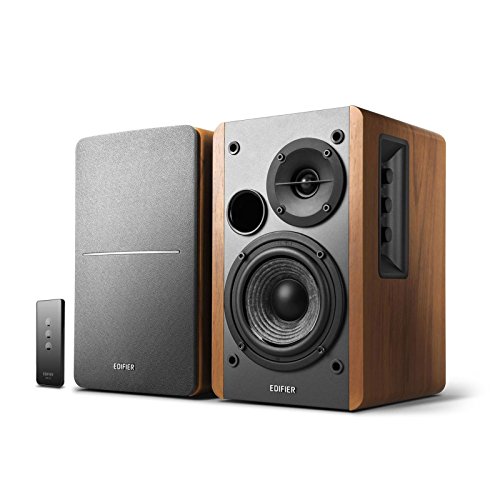
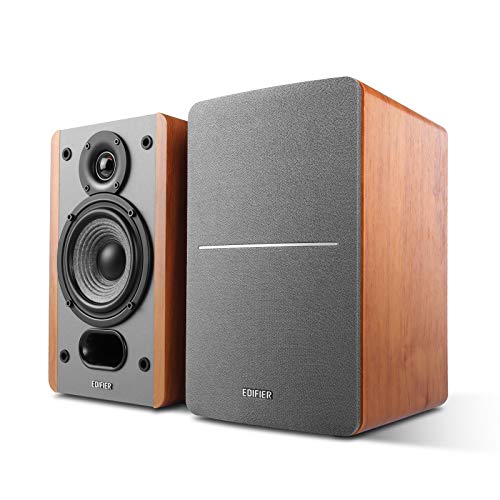
Best Overall: Edifier R1280T Powered Bookshelf Speakers
Few products in this category have earned as much trust as this Edifier pair, and the reason is simple: a 13mm silk dome tweeter and 4-inch driver deliver genuinely balanced sound, and the built-in amp means you can plug it directly into almost any source. It's become the default recommendation for anyone shopping for bookshelf speakers under $200 for the first time.
- Type: Active (powered), no amp required
- Drivers: 13mm silk dome tweeter, 4-inch woofer
- Best for: Desktop, TV, or turntable setups without an existing amp
Pros:
- Side panel bass and treble controls let you tune the sound to your room
- Dual AUX inputs let you connect two sources without switching cables
- MDF wood cabinet with a classic wood-effect finish
Cons:
- No Bluetooth on this base model
- Remote control adjusts volume only, not full EQ
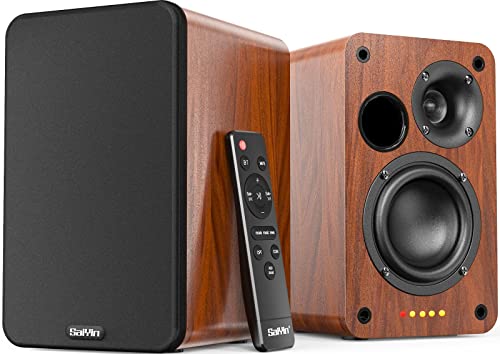
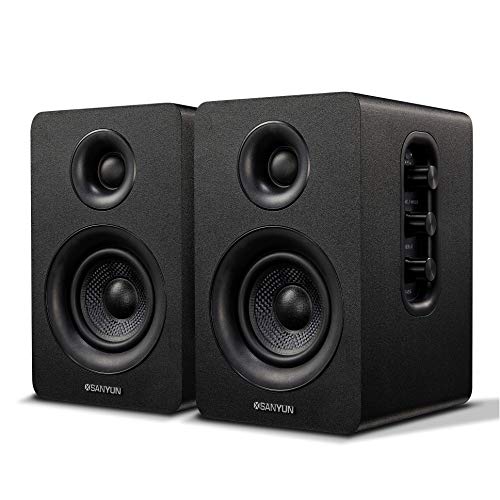
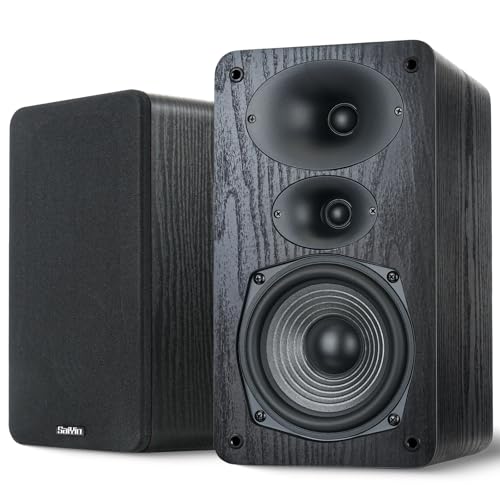
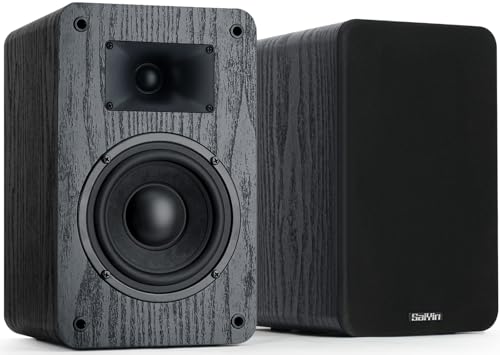
Best Budget: Saiyin Powered Bluetooth Bookshelf Speakers
Under $60, this pair still manages Bluetooth 5.3, optical and coaxial inputs, and a remote for switching between sources, which is a genuinely wide feature set for the price. No amplifier or receiver is required, making it an easy first stereo setup.
- Type: Active (powered) with Bluetooth 5.3
- Drivers: 0.5-inch silk dome tweeter, 3.75-inch woofer
- Best for: Budget-conscious buyers who still want wireless streaming
Pros:
- Wide input selection including optical and coaxial for TVs
- Remote control included, with lifetime replacement support
- Genuinely low price for an active, Bluetooth-equipped pair
Cons:
- Smaller 3.75-inch woofer means less low-end than larger models
- Turntable use requires checking your specific Bluetooth output compatibility
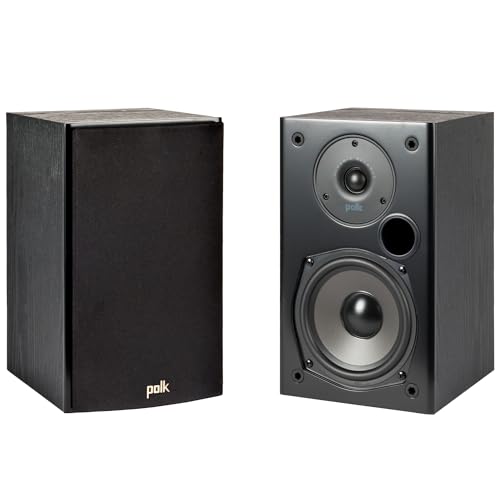
Best for Home Theater: Polk Audio T15 Bookshelf Speakers
These are passive speakers, so you'll need an AV receiver to power them, but that's exactly what makes them a smart pick for a real home theater setup. Polk's Dynamic Balance driver technology delivers clear vocals and surprisingly deep bass for a compact bookshelf design, and they're built to expand into a full 5.1 system later.
- Type: Passive, requires an AV receiver or amplifier
- Drivers: 0.75-inch tweeter, 5.25-inch Dynamic Balance woofer
- Best for: Home theater setups that already have or plan to add a receiver
Pros:
- Can be used as front, rear, or surround channels in a larger system
- Trusted 50-year-old brand with widely available support
- Wall-mountable for flexible home theater placement
Cons:
- Requires a separate receiver or amplifier to work at all
- No Bluetooth or built-in inputs, since it's a passive design
Active vs. Passive Speakers: Which Setup Makes Sense for You?
Active speakers are the simpler starting point for most people, since the amplifier is already built in and you can go from unboxing to listening in minutes with almost any source. This makes them the natural choice for a desktop, small apartment, or first-time stereo setup.
Passive speakers require more upfront investment in a receiver or amplifier, but they offer more flexibility for expanding into a full surround system later and let you upgrade the amp separately from the speakers as your needs grow.
If you're not sure which route to take, an active pair is the lower-risk choice for a single room, while passive speakers make more sense if a home theater or multi-speaker system is already part of the plan.
Cost also plays out differently over time between the two. An active pair is usually the cheaper total purchase since everything is included, while a passive setup can end up costing more once a receiver is factored in, but that receiver then becomes reusable if you add more speakers or a subwoofer down the line.
Frequently Asked Questions
Do I need a receiver or amplifier for bookshelf speakers?
Only if you choose passive speakers, which have no built-in amplification and rely entirely on an external receiver or amp. Active, or powered, speakers have the amplifier built into one of the two speakers and can be used without any additional equipment.
Can bookshelf speakers work as computer or TV speakers?
Yes, active bookshelf speakers with an AUX, USB, or Bluetooth input work well as a major upgrade over a laptop's built-in speakers or a basic TV soundbar. Just check that the speaker's inputs match your computer's or TV's available outputs.
Does Bluetooth make bookshelf speakers sound worse than a wired connection?
Modern Bluetooth codecs have closed most of the quality gap with wired connections for casual listening, though a wired RCA or optical connection still edges out Bluetooth for critical listening. For everyday use, the convenience of Bluetooth is a fair tradeoff for most listeners.
Conclusion
The Edifier R1280T is the best all-around pick for most people, delivering balanced, genuinely good sound with no amplifier required. If you're on a tighter budget but still want wireless streaming, the Saiyin pair proves you don't need to spend much to get Bluetooth and solid inputs. And for anyone building toward a full home theater, the Polk Audio T15 is worth pairing with a receiver. Whichever route you take, good bookshelf speakers under $200 are one of the best value upgrades in home audio.


