Best Boning Knives for Chicken (2026): Blade Types, Steel and Buying Tips
Disclosure: We may earn a commission when you buy through links on this page, at no extra cost to you. As an Amazon Associate I earn from qualifying purchases. Learn more
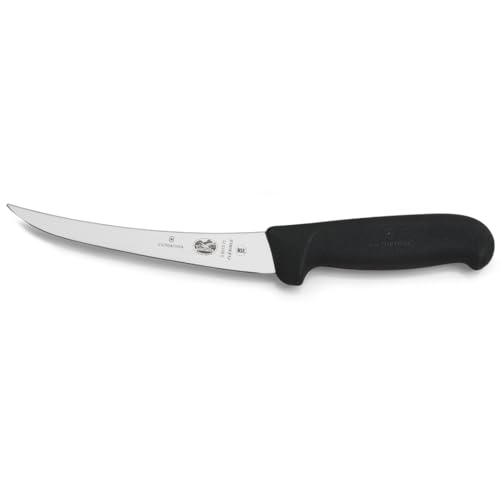
Narrow, flexible blades follow bone and joints. Here is how to choose the best boning knife for chicken for your board and your hands.
A whole chicken on the board looks simple until you try to part it with a wide chef knife. The blade catches on the breastbone, skips past the joints, and leaves good meat behind on the carcass. The best boning knife for chicken solves that one job with a narrow blade that follows bone and slips into tight joints without tearing the meat.
This guide helps you choose by household size, how often you break down birds, and how much storage and upkeep you want. Start with the comparison table below, then use the checklist that follows. If you want the broader category view first, our guide to the best boning knife covers uses beyond poultry.



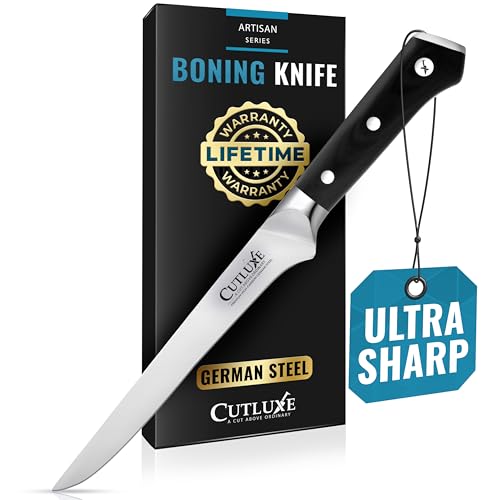
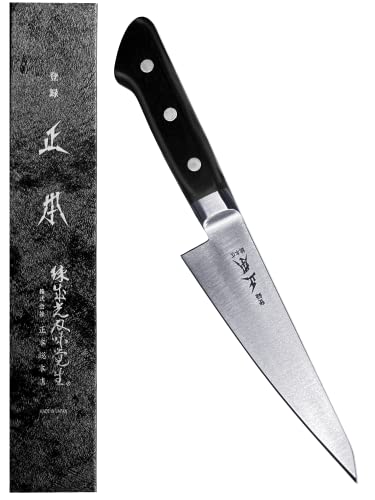

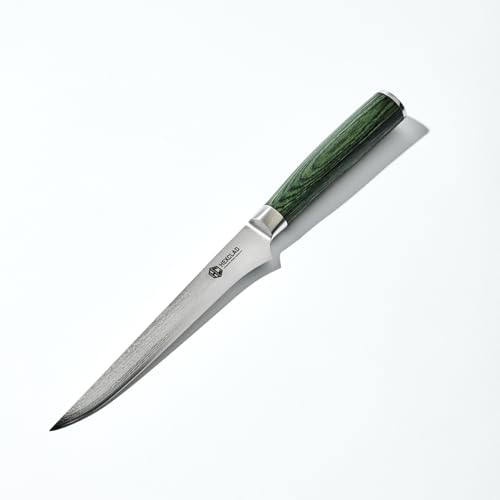
Quick Answer: The Three Types That Cover Most Homes
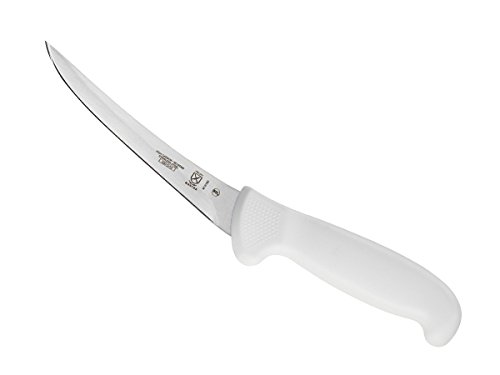
For most families, the search for the best boning knife for chicken ends with one of three types. A flexible curved blade in the 6 inch size handles whole birds, breasts, and thighs with the most control for the widest range of cooks. A stiff straight blade suits people who portion many birds at once and prefer firm pressure through skin and cartilage.
The third type is the Japanese honesuki, a triangular poultry knife with a stiff blade and a pointed tip built only for breaking down birds. It rewards practiced hands and frequent use, while casual cooks usually find the curved flexible type easier to steer.
Before You Buy: A Quick Checklist for Choosing a Boning Knife for Chicken
Chicken work is specific. The bird is small, the bones are light, and the joints sit close together, so precision matters more than brute strength. Judge every option against the size of your board, your grip, and your routine, not against knives meant for large roasts or heavy game.
Size: Match It to Your Space
Length shapes control more than any other spec. A 5 inch blade feels nimble around wings and small birds, though it can feel short on a large roasting chicken. A 6 inch blade is the balance point for most homes, long enough for the breastbone yet short enough to turn inside a joint. Readers who want that size in depth can see our roundup of the best 6 inch boning knife options. A 7 inch blade suits big birds and long strokes, but it needs a larger board and more drawer or block space.
Which Type Fits Your Routine
Flexible blades bend slightly as they ride along ribs and the wishbone, which helps you keep meat on the breast instead of the frame. Stiff blades hold a straight line and push through skin with less deflection, a trait fans of batch prep value. Curved blades lift the tip into joints and make the rocking motion around the thigh bone feel natural. Straight blades track cleanly along the backbone. Pick flex and shape by the cuts you repeat most, not by what looks most professional in a photo.
Steel Type and Hardness
Most boning knives use stainless steel, which resists rust from the moisture and acidity of raw poultry and needs little fuss after washing. Hardness is listed as HRC on the Rockwell scale. Softer steel around 56 to 58 HRC dulls sooner but restores fast on a honing rod and tolerates a knock against bone. Harder steel holds a finer edge through many birds, yet it can chip if you twist it inside a joint, so technique matters more as hardness rises.
Blade Geometry: German Versus Japanese
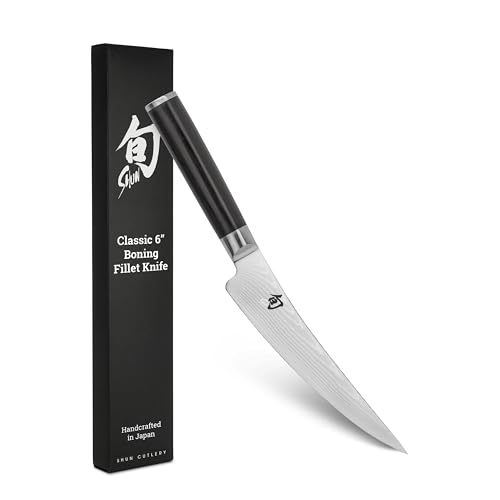
German style blades are thicker, ground at a wider angle, and built to shrug off contact with bone and board. They feel forgiving when you are learning joint locations. Japanese style blades are thinner and ground finer, so they glide through breast meat with less drag and leave a cleaner surface. That thinness asks for care around the keel bone. If this contrast appeals to you, our guide to the best japanese boning knife explains the poultry specific honesuki shape in full.
Handle, Bolster, and Balance
Your hand gets wet and slick during chicken work, so handle texture matters as much as blade steel. Molded synthetic handles with a grippy surface stay secure and rinse clean, while smooth wood looks warm but can feel slippery and needs drying. A small or absent bolster lets you grip close to the blade for tip work around wings. Balance should sit near the bolster area, so the tip feels light and the knife changes direction without wrist strain during a long prep session.
Realistic Budget Ranges
Spending under $20 usually gets you a serviceable stamped blade with a molded handle, fine for a bird or two each month. Spending about $20 to $50 adds forged or better finished steel, a more shaped handle, and edges that hone back with less effort. Spending about $50 to $100 buys harder steel, finer fit, and handles that stay comfortable through weekly batch prep. Above that range you mostly pay for craft and materials, not for extra chicken specific function.
Types Compared: What Each Style Does Best in a Home Kitchen
Think of the three main types as answers to three routines. The flexible curved type is the generalist. It follows the rib cage, frees the oyster meat near the backbone, and trims tenders without a second knife. For a household that buys whole chickens to save money and cooks for two to six people, this type covers nearly every cut.
The stiff straight type is the volume choice. If you portion a case of birds for the freezer, firm steel keeps the blade from wandering as you repeat the same cuts. It also handles skinning and trimming large batches of thighs where a bending blade would slow you down.
The honesuki is the specialist. Its thick spine, low heel, and sharp point were shaped for poultry alone, and it separates joints with very little sawing. The trade off is a learning period, plus a blade that does little else in the kitchen. Choose it when chicken is a weekly staple and you enjoy focused tools. If your prep also includes large game, note that deer work calls for a different size and flex, as covered in our guide to the best boning knife for deer.
Our Selection Process for Choosing Well
We judge boning knives for chicken on five factors only: steel and how long the edge lasts in poultry work, balance and grip comfort with wet hands, sharpness and tip precision as sold, upkeep demands, and value for a home budget. We rely on maker specifications and patterns in verified buyer feedback rather than claims of lab testing. When you shop, copy that order. Specs first, grip second, and brand name last, because a famous logo on the wrong shape still gives you the wrong knife.
Living With It: What Really Matters Day to Day
The daily win shows up in yield and speed. A narrow blade leaves less meat on the frame, so a whole bird gives you fuller breasts and cleaner thighs, and the carcass goes to stock with less waste. Most cooks feel comfortable after three or four birds, once the joint locations become familiar. If you are new to the task, our walkthrough on how to use a boning knife maps each joint before your first try.
Space also shapes satisfaction. A boning knife stores in a slim slot, a drawer guard, or on a magnetic strip, and it replaces the awkward habit of using a chef knife and a paring knife in turns. Households that cook chicken twice a week gain the most, since the knife earns its slot quickly. Occasional users still benefit, but a flexible 6 inch type is the only version they need.
Common Buying Mistakes to Avoid
- Buying a 7 inch blade for a small board, which leaves no room to angle the tip and leads to ragged cuts.
- Choosing a stiff blade for delicate breast work, which makes the edge skip off ribs and wastes meat.
- Ignoring handle grip, which lets a wet hand slide forward toward the edge during joint work.
- Paying for hard premium steel before learning joint locations, which raises the risk of a chipped tip.
- Storing the knife loose in a drawer, which dulls the fine edge against other tools within weeks.
Cost of Ownership and Care
Ongoing cost stays low. A honing rod and an occasional session on a whetstone or with a sharpening service cover upkeep for years, and a simple blade guard costs only a few dollars. Our guide on how to sharpen a boning knife explains angles and stone grits when the edge stops biting into tomato skin or chicken skin cleanly.
Wash the knife by hand in warm soapy water, dry it at once, and store it covered or slotted. Dishwasher heat and jostling can crack handles and roll the edge, and damp storage invites spots even on stainless steel. Hone lightly every few birds to keep the edge aligned, and sharpen only when honing no longer restores the bite. Treated this way, a mid priced knife serves a home kitchen for many years.
Your Questions, Answered
Is a boning knife worth it for breaking down whole chickens?
Yes, if you buy whole birds with any regularity. Whole chickens often cost far less per pound than parts, and a boning knife recovers more of that saving by leaving less meat on the frame. You also gain the carcass for stock and the freedom to portion breasts and thighs to your own sizes. If you only buy boneless cuts, the knife adds little, and the money is better spent on a tool you use weekly.
How do you clean a boning knife after raw chicken?
Wash it promptly in hot soapy water, scrubbing the area where blade meets handle, since that seam traps residue. Keep the knife separate from ready to eat foods during prep, and wash the board and your hands after the bird is portioned. Dry the blade right away with a clean towel, moving from spine to edge with care. Prompt washing and full drying also stop odors from settling into textured handles.
Can a boning knife cut through chicken bone?
No, and it should not try. Boning knives are built to find the soft joint between bones and sever the connecting tissue, not to cleave bone itself. Forcing the blade through a thigh bone or breastbone can roll or chip the edge and risks a slip. If you need to split a breastbone or cut a backbone out for spatchcocking, sturdy kitchen shears do that job safely and with far less effort.
How long does a boning knife for chicken last?
A cared for knife lasts many years, often a decade or more in home use, because chicken bones and meat are gentle compared with dense game or frozen foods. Lifespan shortens when the blade is twisted in joints, washed in a dishwasher, or stored loose. Watch for a tip that no longer enters joints cleanly and an edge that needs sharpening after every bird. Those signs point to heavy wear rather than a simple honing need.
What should I look for in a boning knife for a small kitchen?
Prioritize one versatile knife over a set. A flexible curved 6 inch blade in a blade guard handles whole birds, breasts, and trimming, then slides into a drawer without a block eating counter space. Skip specialty shapes until storage and routine justify them. Also check overall length before ordering, since some handles run long and crowd shallow drawers. One knife, stored safely and kept sharp, beats three shapes fighting for room.
Final Thoughts
Start with your routine. Weekly whole bird cooks do best with a flexible curved 6 inch blade, batch preppers with a stiff one, and poultry devotees with a honesuki. Whichever type you choose, the best boning knife for chicken is the one whose size, steel, and grip match your board and your hands. Compare your shortlist against the product table above, and pick the shape you will reach for every time a whole chicken lands on the counter.