
Best Blenders and Food Processors for 2026: Which One Fits the Way You Use It?
Disclosure: We may earn a commission when you buy through links on this page, at no extra cost to you. As an Amazon Associate I earn from qualifying purchases. Learn more

Match the best blenders and food processors to how you cook: two jobs, three classes, and the capacity, power, and cleaning facts that decide fit.
There is no single machine that suits every kitchen, because blending and processing are two jobs. Blending moves liquid until it turns smooth, while processing cuts, shreds, and kneads things that barely flow. The best blenders and food processors for your counter are the ones whose class matches the meals you actually make each week, not the ones with the longest feature list.
This guide starts with use, then hardware. Decide whether your week is built on smoothies and soups, on chopping and dough, or on both, and the right class will be obvious. Then use the comparison table below to check capacity, footprint, and power inside that class before you spend anything.


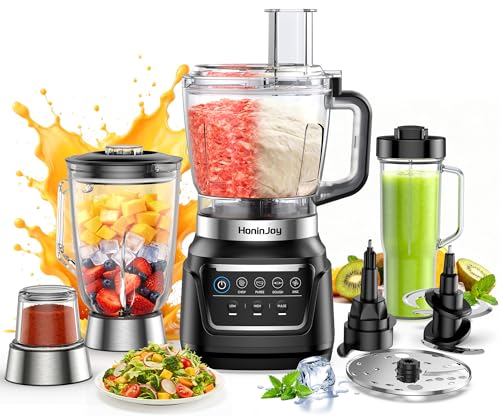
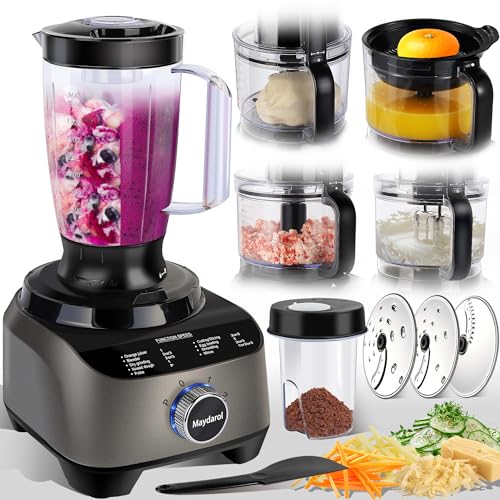

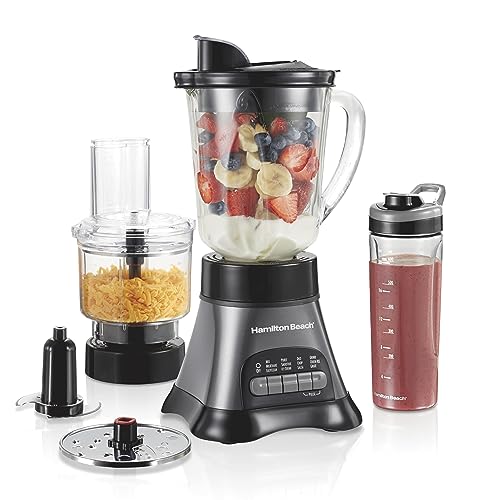


Who Should Buy Which Blenders and Food Processors?
For Occasional Users on a Budget
If you blend a smoothie twice a week and chop an onion now and then, a basic machine covers your real needs. Look for a simple blender with a jar of about 48 ounces, a pulse setting, and parts that rinse clean without a fight. In this group, the honest pick is often a blender first, because drinks forgive weak motors more than dough does. A compact processor can wait until a recipe actually demands one, and buying in that order keeps a lightly used kitchen from paying for power it will never call on.
For Serious Home Cooks
Serious home cooks need control more than they need presets. A processor with a wide feed tube, a dough blade, and discs for slicing and shredding turns prep work into minutes, while variable speed on the blender gives texture control for sauces and purees. Materials matter at this level: heavier bases stay put, metal drive parts outlast plastic ones, and a bowl that locks with a solid click signals careful build. If you cook from scratch most days, budget for both machines or for a strong combo, because you will use the full range of each.
For Busy Families Cooking Every Day
Families cook in volume and clean in a hurry, so capacity and washing decide this group. A full size blender jar of about 64 ounces handles soup for five, and a processor bowl of about 12 to 14 cups takes a double batch of dough or a mountain of cabbage. Wide openings, few loose parts, and dishwasher safe pieces save more time across a year than any speed setting. Noise counts too in open plan homes at breakfast, so a machine that works quickly at a lower pitch earns its counter space.
Best Blenders and Food Processors for Specific Needs
Beyond the three main groups, one narrower need deserves its own look, because it changes the size and shape of the machine entirely.
Personal Blenders and Food Processors
The personal class is built around one serving and one person. A compact base drives a blending cup that doubles as a travel cup, so a morning smoothie goes from counter to car with no extra washing. The trade is batch size: these machines handle drinks, dressings, and small sauce amounts, and they stall on thick dough or large frozen loads. Choose this class when most of your blending is single serve, and treat stated capacity as the cup size rather than a family figure, since the working fill is always lower than the brim.
Key Features to Compare
Two Jobs, Two Machines, One Decision
Blending and processing are two jobs, stated plainly. A blender class moves liquid: tall jars and fast blades pull ingredients down into a vortex, which is why blenders excel at smoothies, soups, and crushed ice drinks. A processor class cuts and kneads: a wide bowl and flat blades chop evenly, discs slice and shred, and a dough blade folds heavy mixtures a blender would strain against. Trying to force one machine through the other job is the most common buying regret, so name your main job first and let it lead the purchase.
Capacity and Jar and Bowl Size
Container size is a batch size fact. Blender jars run from about 20 ounce personal cups to about 72 ounce family pitchers, and the useful fill is roughly two thirds of the stated size once a vortex forms. Processor bowls run from about 3 cups for small prep to about 14 cups for dough and big salads.
Buy for your largest regular batch, not your largest imaginable one, because an oversized bowl chops small amounts badly, tossing a single onion around instead of cutting it. Households that cook both ways often do best with a full size unit of the main class and a compact unit of the other.
Combos and Shared Bases
A combo class trades both jobs on one base: the base is shared and the jars are the system. That saves counter space and money, and it suits kitchens that blend often and process sometimes.
The honest limits are real. A shared motor is tuned as a compromise, attachments add storage clutter, and one broken base idles both tools at once. The dedicated sibling guide to best blenders food processor combo units walks through those trade offs in detail. If processing is your daily work rather than an occasional task, separate machines usually serve you better.
Footprint, Storage, and Cord Length
Measure the space under your cabinets before you fall for a tall pitcher, because standard counter to cabinet clearance is about 17 to 18 inches and many full size blenders stand taller. Processors store wider than they look once discs and blades need a home, so count the attachments in your storage plan. Cord length decides whether the machine reaches an outlet without crossing the sink, and cord storage in the base keeps the counter tidy. A machine that must be dragged out of a deep cupboard for every use will slowly stop being used at all.
Motor Power and Wattage
Wattage is a ceiling, not a promise. Blender motors range from about 300 watts in personal models to about 1,500 watts in heavy duty countertop models, and ice crushing depends as much on blade shape and jar design as on the number. Processors do slower, harder work, so torque matters more than raw watts: a mid range motor with strong gearing kneads dough that stalls a faster, weaker unit. Treat the watt figure as a class marker, compare it inside the class you chose, and give more weight to capacity, controls, and build when two machines sit close.
Blades, Bowls, and Build
The blade and the bowl decide the result class. In a blender, a dull edged blade that pulls food down beats a sharp one that flings it outward, and a jar with ribs or a tapered base keeps the vortex moving. In a processor, the cutting blade should sit close to the bowl floor so small amounts still chop, and the feed tube width decides whether you pre cut everything. Across both classes, look for solid locking, a base that does not walk across the counter, and replacement parts that the maker sells openly, since a cracked jar should not end a good machine.
Ease of Cleaning
Cleaning decides whether a machine earns daily use. Blenders clean fastest with warm water and a drop of soap run for thirty seconds, though blades and gaskets still need a hand wash now and then. Processor bowls have more corners, and food packs under blades and inside feed tubes, so designs with smooth interiors and dishwasher safe parts save real effort.
Sealed controls that wipe clean beat raised buttons that trap grease. Whatever class you choose, price in the cleaning honestly: five extra minutes per use is a cost you pay every single day.
Related Guides Worth a Look
Readers narrowing the field often branch into sibling topics. The word order sibling, best food blenders, covers the same counter from the blender side, while best quality food processors focuses on build and materials in the processor class. Smaller kitchens should look at best compact food processors, where bowl size and storage lead the decision. Tight budgets have their own sibling in best inexpensive food processors, which weighs which features can be given up safely and which cannot.
Common Mistakes to Avoid When Buying Blenders and Food Processors
- Buying on wattage alone, then finding the jar or bowl shape wastes the power.
- Choosing capacity for a holiday crowd instead of the weekly batch, so small jobs chop badly.
- Forcing one machine through the other job, then blaming the motor for a class mismatch.
- Ignoring cabinet height, so the new blender lives in a cupboard and stops being used.
- Skipping the warranty and parts check, so one cracked jar retires a sound machine.
Tips to Get the Most From Your Blender and Food Processor
Load a blender in order: liquids first, then soft ingredients, then frozen items and ice on top, so the vortex forms quickly and the motor strains less. Never fill past the max line, because hot liquids expand and can force the lid. In a processor, cut food to even sizes before pulsing, and use short pulses for chopping so pieces stay distinct instead of turning to paste. Clean both machines right away with warm water and a drop of soap, dry blades fully before storage, and keep processor discs in a case or wrapped, since their edges dull and cut fingers when loose in a drawer.
Frequently Asked Questions
How do I clean a blender and food processor quickly?
Rinse both machines right after use, before food dries and hardens. A blender cleans itself with warm water and a drop of soap run for about thirty seconds, then a quick rinse and air dry. A processor needs the bowl, blade, and lid washed by hand or in the dishwasher if the maker allows it. One extra habit helps: dry blades fully before putting them away, because trapped moisture dulls edges and breeds odors in seals and gaskets over time.
What is the difference between a blender and a food processor?
A blender is built for liquids, and a food processor is built for solids. The tall jar and fast blades of a blender pull soups and smoothies into a smooth vortex, while the wide bowl of a processor chops, slices, shreds, and kneads with interchangeable blades and discs. Dry ingredients show the gap clearly: nuts become butter in a processor long before a blender manages it, and a processor cannot pour a silky soup the way a blender can.
Is a more expensive blender and food processor worth it?
A more expensive blender and food processor is worth it when you cook often enough to use the build quality. Higher prices buy stronger motors, metal drive parts, better jars and bowls, and longer warranties, which show up as years of daily service. Occasional users rarely feel the difference beyond the first month. A fair measure is uses per week: at five or more, pay for build; at one or two, the middle of the range serves just as well and leaves money for ingredients.
How many watts does a good blender and food processor need?
A good blender needs about 600 to 1,000 watts for daily drinks and soups, and about 1,200 watts or more for heavy ice and frozen fruit work. A food processor does well with about 400 to 700 watts, since torque and gearing matter more than speed for chopping and dough. Personal blenders run lower, at about 300 to 500 watts, which suits single servings. Read watts as a class marker only, because blade and container design decide how much of that power reaches the food.
Can a blender and food processor crush ice?
A blender can crush ice when the motor and jar are built for it, and a food processor generally should not be asked to. Ice needs a strong motor, a blade that pulls cubes down, and liquid in the jar to move the pieces, so dry ice in a light blender stalls or overheats it. Processors chop ice unevenly and can damage bowls. If frozen drinks are a weekly habit, choose a blender class that lists ice work openly and add ice gradually rather than all at once.
Final Thoughts
Start with the job, not the brand shelf. Name whether your week runs on liquid or on prep work, size the container to your regular batch, and then compare power and cleaning inside that class using the product table above. Chosen that way, the best blenders and food processors stop being a guessing game and become a simple fit: the right tool for the way you use it, at a price that leaves room in the budget for the food itself.


