Best Blankets That Don't Attract Dog Hair: Buying Guide for 2026
Disclosure: We may earn a commission when you buy through links on this page, at no extra cost to you. As an Amazon Associate I earn from qualifying purchases. Learn more

Smooth weaves and easy washing keep the best blankets that don't attract dog hair clean on your bed or couch.
No blanket is truly immune to dog hair, and anyone who promises you one is selling a slogan. What the right blanket can do is refuse to trap hair: loose fur sits on the surface, shakes off outside, and leaves in the wash instead of weaving itself into the fabric. The best blankets that don't attract dog hair depend on your dog, your furniture, and how honestly often you will launder them.
A double coated shepherd shedding on your bed is a different problem from a short haired terrier napping on the couch. This guide sorts buyers by routine first, then covers weave, fabric, sizing, and care. Check the comparison table below for sizes and prices, and read on to learn which surfaces release hair and which ones quietly collect it. Pet specific blankets in the table are chosen for smooth, washable surfaces.


Who Should Buy Which Blanket?
For First Time Buyers
Start with a smooth, tightly woven cotton or microfiber blanket in a mid tone color that matches your dog, sized for the exact spot your dog uses most. You do not need specialty treatments or premium fibers to see a dramatic improvement over a fleece throw, because weave smoothness does most of the work. Live with one blanket for a month, notice how it behaves in your washer and dryer, and then expand. Our broader guide to the best blankets for dog hair covers the wider category once you know your routine.
For People Who Want the Best Performance
Performance here means hair release under real conditions: a heavy shedder, daily couch time, and weekly washing. Prioritize the smoothest faces you can find, such as tight microfiber weaves or cotton percale, with bound edges that survive constant laundering. A dedicated dog layer over your good bedding outperforms any single miracle blanket, because the sacrificial top layer takes the hair, the claws, and the muddy paw prints. If the blanket is for the dog itself rather than your bed, the purpose built options in our guide to the best dog blankets that don't collect hair fit better.
For Value Seekers
Value in this category is cost per year, not the lowest tag. A simply made microfiber or cotton blanket around $20 to $40 that survives two years of weekly washing beats a plush bargain that mats after a month and becomes a hair magnet itself. Buy two in rotation so one is always clean, choose colors that forgive a few stray hairs between washes, and skip delicate fabrics whose care costs, in time or dry cleaning, quietly erase the savings.
Key Features to Compare
Five checks separate a blanket that sheds dog hair from one that stores it. Run through them in order and you will understand why the best blankets that don't attract dog hair are usually the plainest looking options on the shelf: smooth, dense, washable, and free of texture that gives fur a place to anchor.
Weave Smoothness and Hair Release
This is the deciding feature. Hair clings to raised, fuzzy, or loosely looped surfaces such as fleece, chenille, sherpa, and chunky knits, because each fiber acts like a hook. Hair releases from flat, dense surfaces: percale cotton, smooth microfiber, linen, and tightly woven quilts.
A practical check at home: rub the fabric briskly with a wool sock or your dog brush, then shake it once outdoors. On a good hair resistant surface, nearly everything falls away with that single shake.
Size and Fit
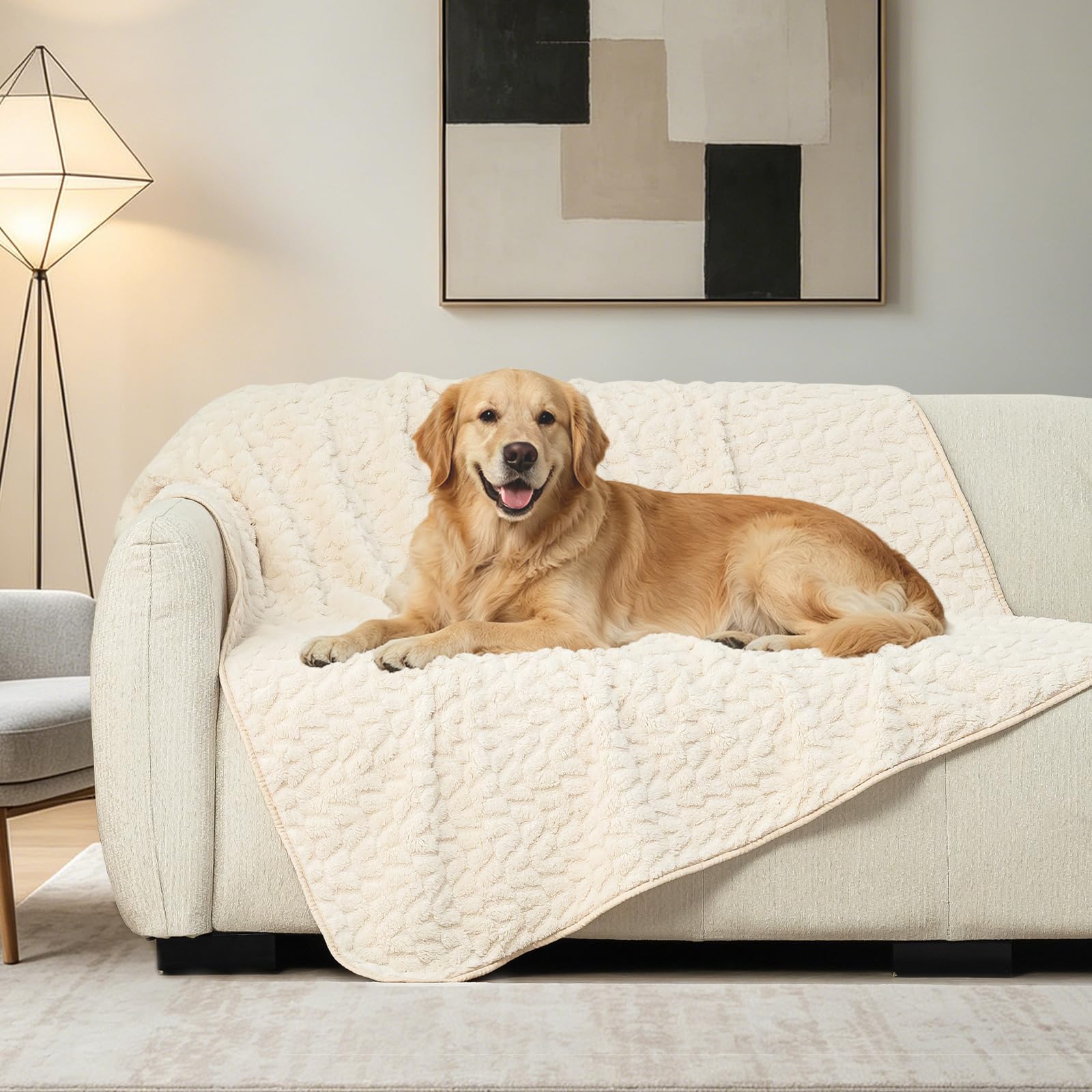
Size the blanket to the territory, not the dog. A couch layer should cover the cushions your dog actually occupies plus a margin for burrowing, usually a large throw around 50 by 60 inches or bigger. A bed layer should span the full sleeping surface with drape, because hair migrates to wherever the blanket ends and your good sheets begin. For dogs that dig and circle before settling, extra length also means the blanket stays in place instead of bunching into a hair collecting nest.
Material and Fill
Smooth microfiber leads for pure hair release and low price, though it can build static in dry winter air, and static briefly attracts hair until you shake it out. Cotton percale breathes better and feels familiar, linen runs coolest and releases hair well once softened, and both tolerate the hot washes that pet bedding needs. Avoid fill entirely unless you need warmth, because quilted channels trap hair along stitch lines. Whatever you choose, confirm the blanket itself resists linting, a point our guide to the best blankets that don't shed explains in detail.
Weight and Drape for Shared Beds
Loft and firmness matter little here, but weight and drape matter a great deal when a dog shares your bed. A medium weight blanket lies flat and stays layered, so hair remains on the washable surface rather than working down into the sheets each time the dog repositions. Very light blankets bunch and expose bedding; very heavy ones are a burden to wash weekly. Aim for the heaviest blanket your machine handles comfortably in a normal load, no heavier.
Common Mistakes to Avoid
- Choosing fleece, sherpa, or chunky knits for softness, even though their raised fibers are the strongest hair traps sold.
- Ignoring washability, then discovering the blanket needs gentle cold care while pet bedding demands frequent warm washing.
- Buying black to hide hair from a light dog, or white to hide hair from a dark dog, and making every stray strand more visible instead.
- Skipping the fiber content check, so mystery fabrics arrive with finishes that grab hair and static.
- Covering only part of the bed or couch, which simply moves the hair problem to the uncovered bedding beside it.
Care and Maintenance Tips
Routine beats fabric technology. Shake the blanket outdoors before every wash, because hair removed outside never reaches your drain or your other laundry. Wash pet layers weekly in warm water, dry them fully, and clean the lint filter every single cycle, since a clogged filter redeposits hair across everything in the drum.
Keep a washable top layer as the dog zone and launder your main bedding less often. If anyone in the home has pet allergies or asthma, talk with their clinician about bedding routines and whether the dog should stay off the bed entirely.
Frequently Asked Questions
How do I wash these blankets safely?
Shake the blanket outside first, wash it warm with a mild detergent, and add an extra rinse if your machine offers one, because the rinse is what carries loosened hair away. One step many owners miss: wipe the empty drum with a damp cloth after unloading, since a film of wet hair left behind will redeposit onto the next load, including clothes you were trying to keep clean.
How often should I replace them?
Replace the blanket when its surface roughens, pills, or frays, because texture is exactly what traps hair, and a worn blanket slowly becomes the problem it was bought to solve. With weekly washing, expect roughly one to two years from budget microfiber and longer from good cotton or linen. A quick monthly check helps: if hair that once shook off now needs picking, the surface has changed and the blanket is nearing the end.
Final Thoughts
Smooth weave first, honest washability second, and territory sized coverage third: those three choices decide your results far more than price or branding. Build the laundry routine to match, and the dog can keep the couch. Compare your finalists in the product table above and choose the best blankets that don't attract dog hair for your breed, your furniture, and your real washing habits.