
Best Black Kitchen Sinks (2026): Materials, Sizes and Care
Disclosure: We may earn a commission when you buy through links on this page, at no extra cost to you. As an Amazon Associate I earn from qualifying purchases. Learn more

How to choose the best black kitchen sink: compare granite composite, coated steel and fireclay, match the cabinet, and keep the finish looking dark.
Picture a weeknight in a busy home kitchen. Pasta water is boiling, a sheet pan needs soaking, and two people are rinsing produce and stacking plates in the same small space. A black sink can anchor that scene beautifully, but only if its size, material, and mounting style match your counters, your cabinet, and how many people you cook for. This guide to the best black kitchen sink helps you choose by layout, household size, and budget, and the product table below lets you compare real options side by side.
Black is not one single finish. It can mean granite composite with color through the whole body, coated metal, glazed fireclay, or enameled cast iron, and each ages differently.



Quick Answer: The Main Types in 30 Seconds
Granite composite suits most homes because the color runs through the material and minor marks show far less. Coated stainless steel costs less and feels familiar, but the dark layer can wear at the drain and grid contact points. Fireclay and enameled cast iron give a glossy look for traditional rooms, though both are heavy and need strong cabinet support. Pick your material first, then mounting style and bowl layout.
Before You Buy: A Quick Checklist for Choosing a Kitchen Sink
Size: Match It to Your Space
Start with the cabinet, not the catalog photo. A 30 inch sink usually needs a cabinet at least 33 inches wide, a 33 inch sink needs about 36 inches, and a 36 inch sink needs about 39 inches, though you should always confirm the maker cutout guide. Single bowl models fit sheet pans and stockpots lying flat. Double bowl models let one side soak while the other stays free for rinsing. Bowls around 9 to 10 inches deep hold tall pots well, but you bend further to reach the bottom.
Which Type Fits Your Routine
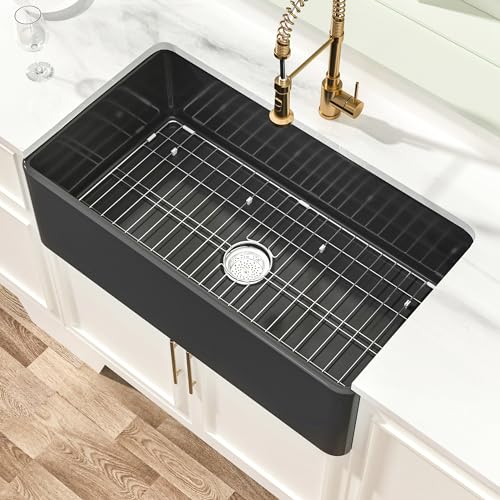
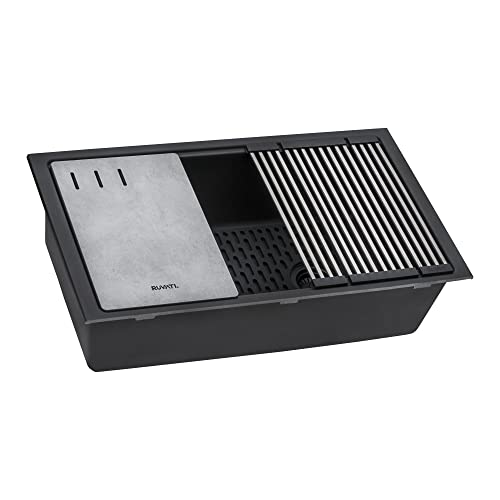
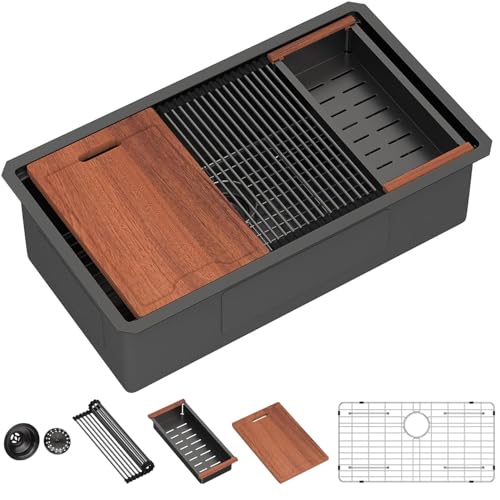
Undermount sinks sit below the counter so you can sweep crumbs straight into the bowl, and they need a solid surface counter such as stone or quartz. Drop in models rest on a rim, forgive minor cutout errors, and work with laminate counters. If you love an exposed front, browse the best farmhouse kitchen sink styles, since black apron front models make a strong focal point. A workstation layout adds a ledge inside the bowl that holds boards and racks at counter height, a design our guide to the best workstation kitchen sink models explains in detail.
Features Worth It (and Ones to Skip)
A bottom grid earns its cost because it lifts dishes off the surface and reduces the sliding and scratching that dull a dark finish. A fitted cutting board and a colander that sit on a workstation ledge genuinely save counter space in a small kitchen. Rear offset drains free up room below for bins and bottles, and they let water escape even when a large pan covers the bowl floor. Skip bundled soap dispensers in finishes that almost match, extra strainers you will never swap, and decorative drain covers that slow drainage and trap residue.
Measurements and Compatibility With Your Setup
Measure the counter cutout, the cabinet interior width, and the depth from the counter surface to the plumbing below before you order. Count the faucet holes on drop in models and match them to your faucet, sprayer, soap dispenser, and any filtration tap you plan to keep. Check garbage disposal clearance too, since deep bowls plus a disposal can crowd the trap and the dishwasher hose. If you are torn between mounting styles, our explainer on undermount vs drop in sink choices walks through counter materials and sealing.
Certifications to Look For
Look for sinks and fittings that meet recognized plumbing fixture standards, and choose faucets and connectors certified for low lead content in parts that touch drinking water. Certification does not judge finish durability, so treat it as a safety baseline, then judge color quality from the material type and warranty terms.
Do It Yourself or Professional Installation Cost
A drop in swap into an existing cutout is a realistic weekend job if you are comfortable disconnecting supply lines and a disposal, and your only costs are sealant, clips, and plumber putty. Undermount and farmhouse installs are less forgiving, since the sink must sit level while adhesive cures and the counter may need cutting. Professional installation commonly runs about $200 to $500 depending on region and counter work, and stone cutting adds more.
Realistic Budget Ranges
Under about $150 you will mostly find coated steel and smaller single bowls with thinner sound treatment, fine for a rental refresh or a laundry room. Between about $150 and $300, granite composite and sturdier steel models appear with better grids and deeper bowls. From about $300 to $500 you gain larger workstation layouts, thicker material, and longer finish warranties. Above about $500, expect oversized farmhouse fronts, premium composite, and enameled cast iron.
Types Compared: Materials and Mounting Styles
Since the right answer depends on material more than on any single model, compare the three main black sink families below against your routine, your water, and how much upkeep you accept.
Granite Composite and Quartz Composite
These sinks mix stone particles with resin, and the black color runs through the entire body instead of sitting on top. That is why small chips and knife marks stay dark instead of flashing bright metal, and why the surface handles heat from hot pans better than most coatings. The matte texture hides water spots reasonably well and feels quiet when dishes land in the bowl. Choose composite if you want the most forgiving daily finish.
Coated Stainless Steel
Black stainless models start as a steel bowl and add a dark coating or vapor deposited finish over the surface. They are lighter, often cheaper, and they pair naturally if you already like the feel of steel, especially in thicker gauges with pads under the bowl. Shoppers comparing gauges should also read our roundup of the best stainless steel kitchen sink options. The trade off is wear. Dragging cast iron across the bottom or scrubbing with abrasive pads can thin the dark layer, and once bright steel shows through, the patch is hard to hide. Use a bottom grid from day one.
Fireclay and Enameled Cast Iron
Fireclay is ceramic fired at high heat with a glazed surface, while enameled cast iron puts a colored glass layer over an iron core. Both give black a deep, glossy richness that composite cannot match, and both resist staining from tomato sauce, turmeric, and coffee because the glaze is nonporous. Both are also very heavy, so cabinets may need bracing, and a dropped skillet can chip the glaze and expose the lighter body beneath. Choose these materials for a traditional or farmhouse look where heavy pans are handled with care.
How to Judge a Black Sink
Judge black sinks on installation and compatibility first, because a sink that fights your cabinet or counter never feels like a bargain. Next comes build quality and finish, meaning material type, body composition, and how the color is applied. Then weigh features such as ledges, grids, and drain position, check certifications, and read the warranty to see whether the finish itself is covered or only the structure. Maker specifications and verified buyer reports about chipping, staining, and fading are the best guide to how a finish holds up.
Pros and Cons of Black Sinks
Black hides the gray scuffs and faint stains that stand out on a white bowl, it pairs with both light and dark cabinets, and it lets a steel or brass faucet become the accent instead of the sink itself.
The compromises are just as real. Mineral scale and soap film read as pale streaks on a dark surface, so homes with hard water will wipe the bowl more often than owners of steel sinks do. Coated finishes also limit your scrubbing choices for life, while through color materials cost more up front.
Common Buying Mistakes to Avoid
- Ordering from the countertop photo instead of the cabinet width, so the sink arrives too wide for the box below.
- Scrubbing a coated finish with steel wool, which strips the dark layer and leaves bright marks that cannot be blended back.
- Forgetting the disposal flange and strainer finish, so bright steel rings sit in the middle of your black bowl.
- Buying a deep farmhouse model without bracing the cabinet, which lets the frame sag under the sink plus a full bowl of water.
- Ignoring your water quality, because very hard water leaves constant pale scale on black and turns care into a daily chore.
Cost of Ownership and Care
Owning a black sink costs little beyond the purchase if you care for the surface correctly. Expect to replace a bottom grid every few years at about $40 to $90, and budget for a matching strainer or disposal flange if the finish wears. Rinse away food acids after meals, wash with a soft sponge and mild dish soap, and dry the bowl with a cloth when you can, since standing droplets leave mineral rings. Our guide on how to clean a kitchen sink covers stain removal for each material. Avoid steel wool on coated and enameled surfaces, and lift heavy pans into the bowl instead of sliding them.
Your Questions, Answered
What is the most reliable kitchen sink brand?
Reliability tracks material and construction more than the badge on the box. A through color composite bowl from any established maker will outlast a thin coated bowl from a famous name, because there is no surface layer to wear away. Judge each brand by its warranty length on the finish itself, the availability of matching replacement strainers and grids, and whether local installers know the product.
How do you clean a black kitchen sink without fading it?
Use a soft sponge, warm water, and a drop of mild dish soap for daily cleaning, then rinse and towel dry to stop mineral film from forming. For dull patches, rub gently with a baking soda paste and rinse well. Skip chlorine bleach soaks, steel wool, and gritty powders, since they cloud glazes and thin coated finishes.
Is a black kitchen sink worth it for a small kitchen?
Yes, if you pick the right scale. A compact single bowl in black can make a small room feel deliberate, and the dark base visually recedes under light counters, which keeps the space from feeling busy. Choose a 25 to 28 inch model with a rear drain so the cabinet below still fits bins, and skip the workstation ledge if counter space is tight, since the accessories need somewhere to rest.
How long does a black kitchen sink last?
The bowl structure often lasts 15 to 30 years, but the black appearance has its own timeline. Through color composite and quality glaze can look good for most of that span with gentle care. Coated steel may show wear at high contact points within 5 to 10 years in a busy household, long before the bowl itself fails.
Are black kitchen sinks hard to keep looking clean?
They are different rather than simply harder. Dark surfaces hide stains, scuffs, and the gray marks that pots leave, which is a genuine daily win. What they show instead is pale mineral scale, salt, and dried soap foam, all of which wipe away in seconds with a damp cloth. If your home has a water softener, even that chore mostly disappears.
Final Thoughts
Start with your cabinet width and counter material, compare broadly with our guide to the best kitchen sink styles if black is not yet settled, pick the material family that fits your water and your scrubbing habits, and then spend on the grid and fittings that protect the finish. For most homes, granite composite offers the calmest ownership, coated steel keeps the budget low, and glazed fireclay or enamel delivers the richest look. Use the product table near the top to compare options before you order. Chosen with care, the best black kitchen sink still looks intentional after thousands of ordinary weeknight dinners.


