
Best Birding Binoculars Cornell of 2026: Complete Buying Guide
Disclosure: We may earn a commission when you buy through links on this page, at no extra cost to you. As an Amazon Associate I earn from qualifying purchases. Learn more

Compare magnification, field of view, close focus and eye relief to choose the best birding binoculars cornell for dawn walks, woods and open water.
A warbler can cross a branch, pause for two seconds, and vanish into leaves. The pair in your hands decides whether you catch the wing bars and bill shape in that moment or lose the bird entirely. Readers who search for the best birding binoculars cornell usually want the clear, field based criteria that Cornell Lab of Ornithology guidance is known for, namely optics judged by how well they help you find and identify birds.
This guide follows that approach. It explains which magnification, field of view, close focus, and eye relief suit different birding styles, compares the three main size formats, and flags the mistakes that waste money. Use the comparison table below to match formats to your budget.


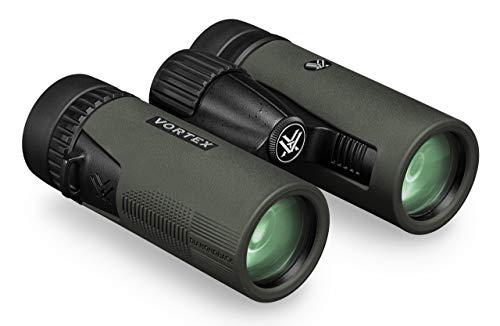


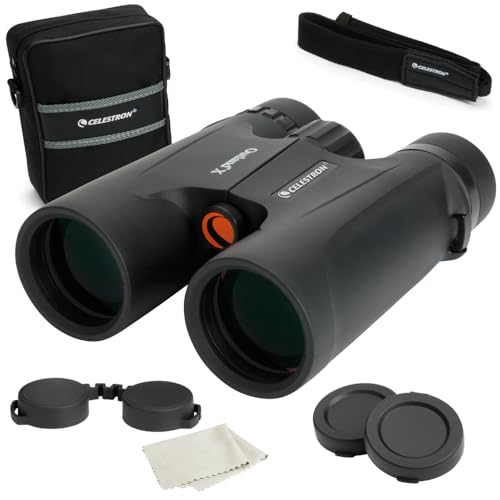
Who Should Buy Birding Binoculars Matched to Cornell Style Field Criteria
New Birders Building Identification Skills
If you are learning to separate similar sparrows or warblers, a steady 8x image and a wide view matter more than maximum reach. You will find birds faster, hold the view still longer, and notice the field marks that build identification skill. Start with our guide to the best birding binoculars for beginners if you want a simpler shortlist first.
Woodland and Garden Birders Who Track Fast Movement
Birds in trees rarely sit still, and they often move through shade and cluttered branches. You need a wide field of view to relocate a bird after a short flight, close focus for feeders and hedges, and a focus wheel that turns smoothly with one finger. A full size 8x42 pair suits this style better than a stronger but narrower 10x view.
Shore and Open Country Birders Who Scan at Distance
On lakes, mudflats, and open fields, birds sit farther away. A 10x42 pair brings distant ducks and shorebirds closer, which helps you read bill length and leg color. The trade off is a narrower view and more visible hand shake, so practice bracing your elbows against your body or a car roof.
Key Features to Compare
Judge the best birding binoculars cornell options by identification tasks. Can you find the bird quickly, hold it steady, and read small marks in poor light? If you want a broader view of the category first, see our guide to the best binoculars birding, then use the six factors below to narrow your choice.
Magnification and Objective Lens Size
The two numbers in a name such as 8x42 tell you the magnification and the diameter of the front lenses in millimeters. An 8x view is steadier and wider, while 10x shows more detail at distance but magnifies hand movement. A 42 mm front lens gathers enough light for dawn and woodland shade without making the pair heavy. Most birders wanting one all purpose pair land on the format in our guide to the best 8x42 binoculars for birding.
Field of View for Following Birds in Motion
Field of view tells you how wide a scene you see at a set distance, often listed in feet at 1,000 yards. A wider view makes it easier to point the binoculars and land on a moving bird, because the bird stays in frame longer as it hops or flies. Around 330 feet or more at 1,000 yards feels generous for woodland work.
Close Focus for Nearby Birds
Close focus is the shortest distance at which the image stays sharp. Feeders, nest boxes, and hedge rows can put birds only a few yards away, and a pair that cannot focus under about 8 feet will blur exactly when a hummingbird or wren comes close. Check this number before you buy, because it never appears in the product name. A short close focus also helps with butterflies and dragonflies between bird sightings.
Eye Relief and Eyecups for Glasses Wearers
Eye relief is the distance your eye can sit from the rear lens while still seeing the whole view. If you wear glasses, look for about 17 mm or more, and twist the eyecups down so your glasses sit at the right distance. Without enough relief, the edges of the view turn black and you lose the wide field you paid for. Sunglasses count too, so test relief with the eyewear you actually bird in.
Glass Quality, Coatings, and Low Light Brightness
Extra low dispersion glass, often shortened to ED glass, reduces the colored fringes that can appear around a backlit bird against a bright sky. Good lens coatings pass more light through each glass surface, which keeps colors true and the image bright at dawn and dusk, when many birds are most active. Judge clarity at the edges as well as the center, because a bird rarely lands in the middle.
Weather Sealing, Weight, and Grip
Birding happens in drizzle, cold mornings, and humid marsh air. A sealed, nitrogen purged pair resists internal fogging when you move between a warm car and cold air, and it shrugs off light rain that would end an outing for an unsealed pair. Weight matters on long walks, and most full size pairs fall around 20 to 30 ounces.
Birding Binocular Types Compared
Full Size Binoculars for Main Birding Use
Full size pairs, usually 8x42 or 10x42, offer the brightest view and the most comfortable handling for long sessions. They are the right default if birding is your main reason for owning binoculars and you mostly walk moderate distances. The cost is bulk on long walks and in a small day pack.
Mid Size Binoculars for Walking and Travel
Mid size pairs, often 8x32 or 10x32, trim weight and bulk while keeping a usable view in daylight. They suit hikers, travelers, and smaller hands on long climbs where every ounce counts. Their smaller front lenses collect less light, so dawn choruses and deep shade look dimmer than through a 42 mm pair.
Compact Binoculars as a Second Pair
Compact pairs with front lenses around 25 mm slip into a jacket pocket and work well as a spare for casual outings, concerts, or a glove box. Our guide to the best small binoculars for birding covers the strongest options in this class. Their narrow, dimmer view makes them a poor main pair, but a compact you carry beats a better pair left at home.
Common Mistakes to Avoid
- Choosing 10x magnification for woodland birding, so the narrow view and hand shake make fast birds harder to follow.
- Ignoring close focus, so feeder birds a few yards away never come sharp no matter how you turn the wheel.
- Buying without checking eye relief while wearing glasses, so the outer view stays blacked out in normal use.
- Judging brightness in a bright store, so a pair that looks fine indoors fails you at dawn in the field.
- Skipping weather sealing, so one damp morning fogs the inside lenses and ends the outing early.
- Carrying a heavy pair on a thin strap all day, so neck ache makes you leave the binoculars behind on later walks.
Care and Maintenance of Birding Binoculars
Clean lenses only when they need it. Blow or brush loose grit away first, because wiping dry dust across the coating can scratch it, then use a clean microfiber cloth with a drop of lens fluid for smudges. Keep the rain guard and objective covers on while walking through brush. Store the pair in a dry, padded case at home, away from car heat, and check the strap and hinge tension a few times a season.
FAQ
What does 8x42 or 10x42 mean on birding binoculars?
The first number is magnification and the second is the front lens diameter in millimeters, so 8x42 makes a bird look eight times closer through 42 mm lenses. Exit pupil size, found by dividing lens size by magnification, is about 5.25 mm on an 8x42 pair, which suits dim light well.
How much should a first pair of birding binoculars cost?
A first pair should cost about $100 to $250 for most new birders, a range where glass quality and sealing become genuinely usable. Below that range, dim glass and stiff focus wheels slow down learning. Our guide to the best budget binoculars for birding shows where the value sits.
How do you set the diopter on birding binoculars?
You set the diopter once to balance the pair for your two eyes. Focus on a still, detailed target with the center wheel while covering the right lens, then cover the left lens and turn the diopter ring, usually on the right eyepiece, until the same target is sharp. After that, use only the center wheel in the field, and recheck the setting if someone else uses your pair.
Can compact birding binoculars replace a full size pair?
Compact binoculars can replace a full size pair only for casual, mostly daylight birding. Their small lenses limit dawn and shade performance, and their narrow view slows down bird finding. They shine as a loaner pair, letting a friend share a sighting without giving up your main pair. For regular identification work, treat compacts as a backup rather than the primary tool.
How do you hold birding binoculars steady on a long watch?
You hold birding binoculars steadier by shortening the strap so the pair rests high on your chest, tucking your elbows against your ribs, and leaning against a tree, fence, or car when one is nearby. Short, braced looks beat one long, shaky stare.
The Bottom Line
Start with format, then judge glass. Pick 8x42 for woodland and all purpose birding or 10x42 for open country distance, confirm the field of view, close focus, and eye relief fit your style, and insist on sealed construction. When the best birding binoculars cornell criteria are applied in that order, the shortlist shrinks fast. Compare your finalists in the product table above and choose the pair you will happily carry on every walk.


