Best Binoculars in the Hunter Call of the Wild 2026: Every Type Explained Side by Side
Disclosure: We may earn a commission when you buy through links on this page, at no extra cost to you. As an Amazon Associate I earn from qualifying purchases. Learn more
Compare the best binoculars in the hunter call of the wild by type, magnification, field of view and rangefinding, for open ground, forest and night hunts.
You scan ground, spot an animal, judge the distance, and only then decide whether to move or shoot. Real glass has to support that same order, and the best binoculars in the hunter call of the wild style of hunting are the ones that make spotting fast and distance honest. This guide compares each type side by side.
Confusion is normal because the types overlap. A standard pair only magnifies, a separate rangefinder only measures, and a combined pair does both jobs in one tool. Night vision adds a fourth choice for dark hours. Your ground and your usual distance decide which type earns its place.
Who Should Buy Which Binoculars for This Style of Hunting?
Buy for the hunt you repeat most often. Open plains, thick forest, and night sessions reward very different optics.
New Players Learning to Spot Animals First
You are still building the habit of stopping, scanning, and reading sign before you walk. Choose a standard full size pair at 8 by 42, because the view is wide, steady, and bright for most daylight work. Skip rangefinding for now and learn distance by landmarks and map markers.
Open Country Hunters Who Shoot at Longer Distances
You glass across open ground, and a wrong distance guess ruins a careful approach. Choose combined rangefinder binoculars at 7 by 42 or 10 by 42, so the distance appears while the animal is still in view. That removes the tool swap that costs seconds at the worst moment.
Forest and Night Hunters Who Work at Shorter Range
You hunt in timber, brush, and fading light, where animals appear close and vanish behind cover. Choose a compact 8 by 32 for daylight forest work, or a night vision pair at 8 by 50 if lawful night sessions are your main outing. In cover, a wide view matters more than maximum magnification.
Types of Binoculars for Call of the Wild Style Hunting Compared
The game offers a simple binocular, a rangefinder on its own, a combination of the two, and a night vision combination. That split is what makes choosing the best binoculars in the hunter call of the wild a type decision first and a price decision second.
Full Size Standard Binoculars
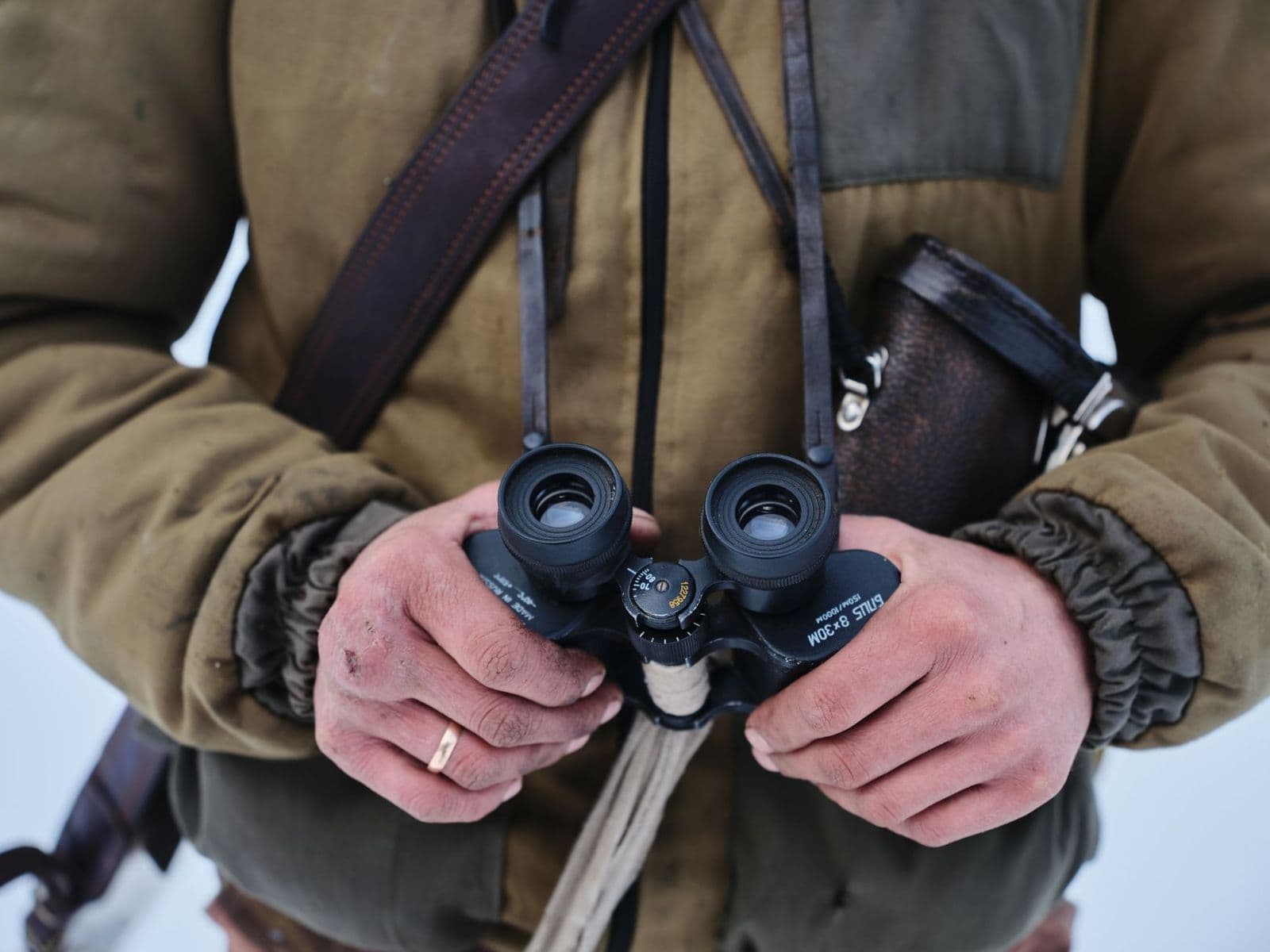
A full size standard pair only magnifies, at 8 by 42 or 10 by 42. Larger front lenses gather more light, and there is no battery or display to manage. Choose it for daylight hunting where you judge distance by terrain. Expect about $100 to $300.
Compact Binoculars
Compact pairs shrink the front lenses to about 25 to 32 millimeters, so the pair fits a jacket pocket. The trade is brightness and width, since smaller lenses pass less light at dawn and dusk and give a narrower view. Choose a compact as a forest pair. Prices often run about $50 to $180.
Combined Rangefinder Binoculars
This type builds a laser rangefinder into the binocular, so one button press shows the distance inside the view. The combined tool ends the swap between glass and a separate unit, which is often the moment animals step behind cover. It costs more, runs its ranging display on a small battery, and prices often run about $250 to $600.
Night Vision Rangefinder Binoculars
Night vision pairs amplify faint light or use infrared help, so shapes and contrast stay visible after dark, and some models add rangefinding in the same housing. A large 50 millimeter front lens suits this work. Night gear rules vary by place, so check local rules before you buy. Prices often run about $150 to $450.
Key Features to Compare
Compare these factors in the same order each time. Spotting comes first, distance second, and comfort over a full session third.
Magnification, Objective Lens Size, and Brightness
The first number states magnification and the second states front lens width in millimeters, so 8 by 42 makes a scene look eight times closer. More magnification shows detail, but it also makes hand shake more visible. Brightness follows exit pupil, found by dividing lens width by magnification, so 8 by 42 gives about 5.3 millimeters and looks brighter at dusk than 10 by 42 at about 4.2 millimeters.
Field of View for Scanning a Reserve
Field of view is the width you can see at a set distance, and makers list it in feet at 1000 yards, so compare that figure between pairs. A wide view lets you sweep a meadow edge in fewer passes, and it helps you keep a moving herd in frame. If you scan more than you stare, favor width.
Rangefinding Accuracy and Readout
A built in rangefinder should show a clear readout in yards or meters, update fast, and reach past your longest honest shot distance. Readings through brush can strike a branch in front of the animal, so aim the readout at the ground beside the animal. Take two readings that agree before you trust the number.
Weatherproof Build, Weight, and Carry
Look for sealed construction that keeps rain out and stops internal fog in changing temperatures. Rubber armor adds grip with gloves. Full size pairs often weigh about 24 to 30 ounces and compacts about 10 to 16 ounces, while combined pairs weigh a little more. Carry the pair on a chest harness instead of a swinging neck strap.
Focus Wheel, Eye Relief, and Ease of Use
The center focus wheel should turn smoothly and hold its setting, since you refocus each time distance changes. Eye relief is the gap your eye can keep from the rear lens and still see the whole picture, and glasses wearers should look for about 15 millimeters or more. Twist up eyecups help you set that gap.
Separate Rangefinder or Combined Binoculars: Which Setup Should You Choose?
The separate setup pairs standard binoculars with a small rangefinder of its own. It costs less to start, and either tool can be replaced alone. Its weakness is time, since you spot with one tool, lower it, and raise the other, and each swap adds movement that nearby game can catch.
The combined setup costs more but keeps your eyes on the animal from first spot to final distance check. Choose separate tools for close hunting, and combined glass for open ground and brief still moments. For broader context, see our guides to the best binoculars brands in the world, the best binoculars made in usa, and the best binoculars in the world.
Common Mistakes to Avoid
These errors follow players from the game onto real ground.
- Choosing the highest magnification narrows your view, so you miss animals at the edge of a clearing.
- Trusting one range reading taken through brush gives you the distance to a branch, so your shot lands high or low.
- Buying night vision for daylight hunting adds cost, weight, and battery care, so the pair stays home.
- Using a compact pair at dusk gives you a dim picture, so you cannot judge body size or headgear in time.
- Carrying loose glass with no caps or case lets lenses gather grit, so the image dulls season after season.
- Spending your whole budget on glass and nothing on a harness leaves the pair swinging, so you raise it less often.
Setup and Care Tips for Hunting Binoculars
Set the barrel spacing to your eyes once, note your diopter setting so you can restore it after a knock. Clean lenses only with a soft lens cloth, never with your shirt. Blow loose dust off first, then wipe in small circles from the center outward.
Carry a spare battery if your pair ranges or sees at night. Store the pair in a dry, padded bag with the caps on. After rain, dry the outside and leave the bag open indoors. If the two images no longer merge into one, the pair needs professional service.
Frequently Asked Questions
What does 8 by 42 or 10 by 42 mean on hunting binoculars?
On hunting binoculars, 8 by 42 means eight times magnification through 42 millimeter front lenses, and 10 by 42 means ten times magnification through the same lens size. The numbers are stamped near the focus wheel on most pairs. A store test on a wall sign shows how much shake each power adds.
Is a smartphone enough instead of binoculars for spotting game?
No, a smartphone is not enough instead of binoculars for spotting game at hunting distances. Phone zoom beyond its optical range is digital cropping, so fur, antler points, and edges soften just when you need detail. Keep the phone for maps and wind checks, and let dedicated glass do the distance work.
Which hunting binoculars are better for low light at dawn and dusk?
Full size hunting binoculars with a wide exit pupil are better for low light at dawn and dusk than compact or high power pairs. Lens coatings are the detail many buyers skip here, because better coatings pass more faint light instead of scattering it. Try a pair facing a shaded tree line in the evening.
How much should you spend on your first pair of hunting binoculars?
Plan on about $100 to $250 for a first pair of hunting binoculars that will stay clear and sealed through real seasons in rain, cold, and dust. Put leftover money toward a chest harness and a padded case first, because protected carry means the glass is in your hands at first light.
What specs matter most for beginners choosing hunting binoculars?
For beginners choosing hunting binoculars, a steady 8 power view, a 42 millimeter front lens, and a wide field of view matter most. Avoid zoom binoculars as a first pair, because moving zoom parts can dim the image and narrow the view. A fixed power pair is simpler and usually brighter for the price.
The Bottom Line
Match the type to your ground first, then check magnification and rangefinding.
When you judge best binoculars in the hunter call of the wild by the job in front of you, the right type becomes clear. Buy the simplest pair that spots cleanly, measures honestly, and stays in your hands all session.