Best Binoculars for Low Light Conditions for 2026: Types Compared and How to Choose
Disclosure: We may earn a commission when you buy through links on this page, at no extra cost to you. As an Amazon Associate I earn from qualifying purchases. Learn more

Choose the best binoculars for low light conditions by comparing full size, mid size and compact types, exit pupil, lens coatings and field of view.
Choosing binoculars for dawn, dusk, and shaded woods is confusing because the numbers that shine on a bright showroom shelf are not the numbers that keep an image bright when light fades. The best binoculars for low light conditions gather more light, pass it through clean glass, and deliver it at a size your pupils can use.
This guide compares the main types by size, explains the specs that control brightness, and shows you how to check a pair before you buy. Use the comparison table below to narrow your shortlist.





Who Should Buy Binoculars for Dim Light?
Each use below weights size, magnification, and field of view differently.
Birdwatchers Who Start at Dawn and Finish at Dusk
You need a wide field of view to pick up movement along a tree line, close focus for birds in nearby brush, and enough brightness to separate brown, gray, and olive plumage in flat early light. A full size 8x42 pair suits most birdwatchers because the view stays steady and bright as the sun drops. Choose a focus wheel you can turn with one finger while wearing gloves.
Hunters Watching Edges in the First and Last Minutes
Your hardest viewing happens when animals move and light is thin, so brightness and a steady image matter more than reach. Many hunters favor 10x42 for open ground and 8x42 for timber, where a wider view helps track movement. If that window is your priority, see our guide to the best low light binoculars for hunting.
Boaters, Anglers, and Shore Watchers in Early Hours
On water, you scan for channel markers, buoys, and other boats before the sun is fully up, often while the deck moves under you. Lower magnification around 7x or 8x is easier to hold steady on a rocking boat, and a wide field keeps landmarks in view. Weather sealing matters most for this group, since spray and fog are routine.
Types of Binoculars for Low Light Use Compared
Size is the first real decision, because objective lens diameter drives both brightness and bulk.
Full Size Binoculars With 42 mm or Larger Lenses
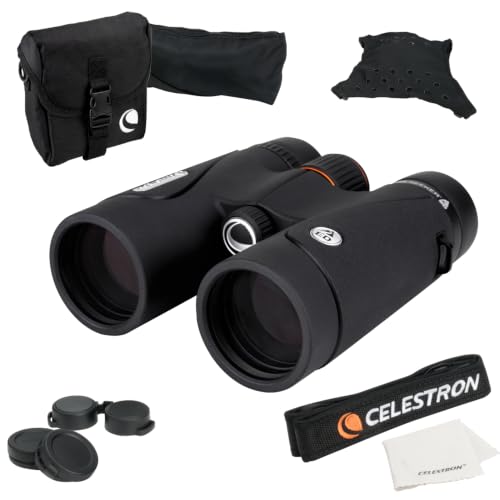
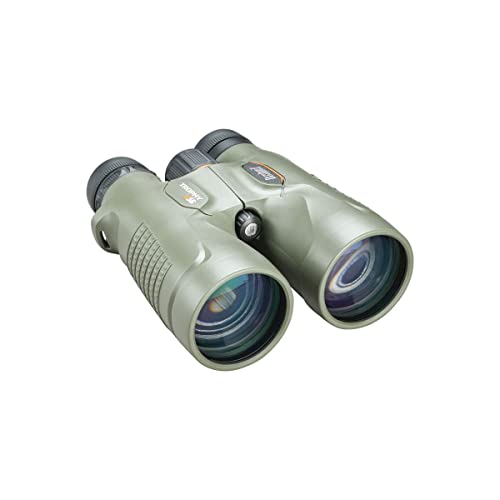
Full size models carry objective lenses of about 42 to 56 mm, and that large front glass pulls in enough light for dawn and dusk viewing. In 8x42 and 10x42 form they deliver an exit pupil of about 4.2 to 5.25 mm, which suits adult eyes in dim light well. Their weight damps small hand movements, but most weigh about 24 to 32 ounces and need a harness or a wide strap.
Mid Size Binoculars With 32 mm Lenses
Mid size models use objective lenses of about 30 to 32 mm and weigh noticeably less, so they travel well in a jacket pocket or a small day pack. In 8x32 form the exit pupil is 4 mm, which is fine for overcast days, shaded trails, and the brighter ends of dawn and dusk. They give up some brightness in the final minutes of light, and detail in deep shadow is harder to judge.
Compact Binoculars With Lenses Under 30 mm
Compacts use objective lenses of about 25 to 28 mm, and their exit pupil shrinks to roughly 2.5 to 3.5 mm. That is their main limit, because your pupil opens wider than that in dim light and the image looks darker. They still serve for stadium events and travel, but treat them as a convenience choice rather than a true low light tool.
Full size is the safest starting point, and readers comparing close alternatives can also see our guide to the best binoculars for low light. Put simply, the best binoculars for low light conditions are usually the largest pair you will still carry every time.
Key Features to Compare
These factors decide how bright a pair feels after sunset, and the first two set limits that no coating can undo.
Lens Diameter and the Exit Pupil in Dim Light
The objective lens is the front lens, and its diameter in millimeters is the second number in a spec like 8x42. Exit pupil is that diameter divided by magnification, so an 8x42 pair gives 5.25 mm and a 10x42 pair gives 4.2 mm. Your pupil opens to about 5 to 7 mm in darkness, and less as you age, so an exit pupil near 5 mm feeds your eye fully at dusk.
Magnification and a Steady Image
Magnification makes subjects look closer, but each step up narrows the field of view, shrinks the exit pupil at the same lens size, and magnifies hand shake. That is why 8x often looks brighter and calmer than 10x through the same 42 mm lenses. Choose 10x for open fields or water where you can brace your elbows, and 8x for woods, moving subjects, and boats.
Lens Coatings, Glass, and Prisms
Uncoated glass reflects light away at every surface, and a binocular has many surfaces, so coatings decide how much gathered light reaches your eyes. Look for fully multi coated lenses, which keep transmission high, and ED glass for less color fringing around edges such as a bird against a bright sky. Prisms matter too, since BaK 4 glass passes light more cleanly than BK 7.
Field of View and Eye Relief
Field of view is the width you can see at 1,000 yards, and a wider view makes it far easier to find and follow a moving animal in poor light. Around 330 feet or more at 1,000 yards feels generous in an 8x42 pair. Eye relief is the distance your eye can sit behind the eyepiece and still see the full view, and glasses wearers should look for about 16 mm or more.
Weather Sealing, Fog Resistance, and Weight
Dawn and dusk are when temperature swings fog cold glass, so look for a body purged with nitrogen or a similar dry gas and sealed against internal fogging. Waterproof seals also keep out drizzle and heavy dew. Weight ties the choice together, since a bright 32 ounce pair left at home loses to a lighter pair on your chest, so judge weight after ten minutes of holding, not ten seconds.
How to Choose the Right Pair for Dim Light
Check the exit pupil on any model you consider, using the simple division above, and treat about 5 mm as your target for serious dusk use. Then look through the pair in the dimmest corner of the shop and judge shadow detail rather than headline brightness. Weak optics soften and darken first at the edges of the view.
Entry pairs at about $100 to $250 can be fully multi coated and serviceable, while about $250 to $500 usually brings better coatings, ED glass, and stronger sealing. If your ceiling is firm, see our guide to the best low light binoculars under $200. Spend first on lens size and coatings.
Common Mistakes to Avoid
- Choosing 12x or higher magnification for dusk use, which shrinks the exit pupil and leaves the view darker and shakier.
- Buying compact 25 mm lenses for dawn hunting, so shadow detail vanishes in the minutes that matter most.
- Judging brightness under bright shop lights, which hides weak coatings that only show up in dim light.
- Ignoring eye relief when you wear glasses, so you lose the edges of the view.
- Paying for huge 56 mm lenses without a harness, so the pair stays home instead of going out.
- Skipping weather sealing for boat use, so the first fogged morning ends the outing early.
Care and Maintenance for Binoculars Used in Low Light
Clean the lenses with a blower first and then a soft lens cloth, and never wipe dry grit across coated glass with a shirt, because fine scratches scatter light and dim every view afterward. Use the lens caps whenever the pair is not at your eyes, since dew and dust settle fastest in the still air of early morning.
Store the pair in a dry, padded bag, and let a wet binocular air dry fully before sealing it away, since trapped moisture invites fogging over time. Check the strap, hinge tension, and eyecups each season. If the two sides show a doubled image after a hard knock, send the pair for professional collimation.
Frequently Asked Questions
What features matter most in binoculars for low light conditions at dawn and dusk?
Exit pupil near 5 mm, fully multi coated lenses, and a 42 mm or larger objective lens matter most for dawn and dusk use. One point many buyers miss is alignment, since holding the pair slightly off center cuts brightness fast. Practice raising the binoculars to your eyes in one smooth motion at home.
What does 8x42 or 10x42 mean on binoculars used in dim light?
The first number is magnification and the second is objective lens size in millimeters, so 8x42 magnifies eight times through 42 mm front lenses. In dim light, 8x42 gives a wider view and a larger exit pupil, while 10x42 reaches farther but demands a steadier hold. A well balanced 8x42 pair also reduces fatigue during long glassing sessions with a heavy pack.
Which binocular size suits older eyes for evening viewing?
An 8x42 pair suits most older eyes well for evening viewing, because pupils tend to open less with age and an exit pupil around 5 mm matches that change without wasted size. A lighter mid size 8x32 can be kinder over a long evening when brightness demands are modest. Large, easy to grip focus wheels also help, especially with gloves or stiff fingers.
Can binoculars for low light conditions also work for stargazing?
Yes, binoculars bought for low light use can double for casual stargazing, and the same large lenses that help at dusk gather starlight well. A 10x50 pair is a classic starting point, showing the Moon, bright clusters, and the moons of Jupiter on clear nights. For longer sessions, rest your elbows or use a tripod adapter.
Wrapping Up
Brightness in dim light comes from a short list done right together: lenses of 42 mm or more, an exit pupil near 5 mm, honest coatings, and a size you will carry without complaint. Match magnification to your ground, with 8x for woods and boats and 10x for open country. Compare your shortlist against the product table above and choose the best binoculars for low light conditions for your hours outside.