10 Best Bike Trailers for Kids in 2026
Disclosure: We may earn a commission when you buy through links on this page, at no extra cost to you. As an Amazon Associate I earn from qualifying purchases. Learn more
Can you imagine just how easier, faster, and cheaper it will be to take the kids to school, go grocery shopping, or run errands in your busy town with a bike rather than a car? With a good quality, safe bicycle trailer, you can do all of this easily and safely. Bike Trailer We have compared a number...
A family bike ride shouldn't stop just because one rider isn't old enough for their own bike yet. A good bike trailer lets younger kids tag along safely, whether that's a quick trip to the park or a longer ride down a bike path, without anyone getting left behind.
Here's what actually separates a genuinely safe, comfortable trailer from a flimsy one, followed by three standout picks and a full lineup of other strong options to compare.


What to Look for in a Bike Trailer
Weight capacity and seating should match your family size with some room to grow. Single-seat trailers are lighter and more maneuverable, while double-seat models, typically rated for a combined 80 to 100 pounds, work better for two kids or one growing child over several years.
Safety features are non-negotiable. Look for a genuine 5-point harness on every seat, a sturdy frame, and a hitch with both a rotating ball joint and a backup safety strap, which keeps the trailer attached even if the primary hitch ever fails.
Weather protection covers more than just rain. A quality canopy includes both a bug screen for warm weather and a clear weather shield for wind or light rain, so the trailer stays usable across more conditions and seasons.
Wheels and suspension affect ride comfort more than people expect. Larger pneumatic (air-filled) tires, typically 16 to 20 inches, absorb bumps far better than small solid wheels, and some premium models add actual suspension for an even smoother ride on rougher paths.
Convertibility adds real value if you'll use the trailer beyond just biking. Many models convert into a jogging stroller or standard stroller with an add-on kit, which can replace a separate stroller purchase entirely for active families.
Folding and storage matter for anyone without a garage to dedicate to a bulky trailer. Look for a folding frame and quick-release wheels that make the trailer compact enough to fit in a closet or car trunk between uses.
Visibility and reflective elements deserve a closer look than most buyers give them, since a trailer sits low and close to the ground where drivers may not expect to see one. A tall safety flag, reflective fabric on the canopy, and a rear light all make a real difference for road visibility, especially at dusk or on shaded paths.
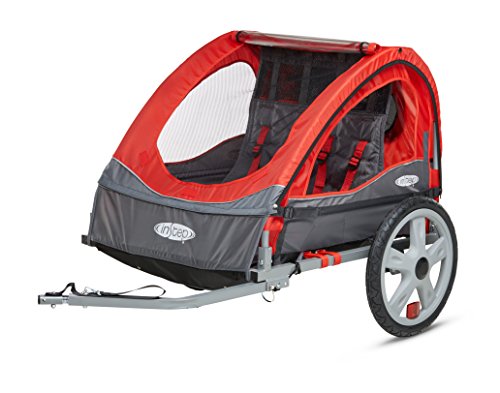
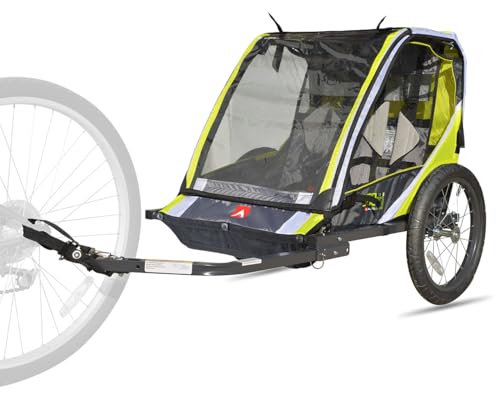
Best Overall: InStep Take 2 Double Seat Bike Trailer
This bike trailer hits the sweet spot of capacity, safety, and price for most families. It accommodates two children up to a combined 80 pounds on a sturdy steel frame, with 16-inch pneumatic tires that smooth out bumps and a 2-in-1 canopy that handles both bugs and weather.
- Capacity: 2 children, 80 lbs combined
- Safety: 5-point harness on each seat, safety flag included
- Best for: Families with two kids or one child who'll grow into it
Pros:
- Universal coupler attaches to almost any bike
- 2-in-1 canopy with bug screen and weather shield covers more conditions
- Folding frame with quick-release wheels for easy storage
Cons:
- Wider double-seat design is less maneuverable than a single-seat trailer
- No suspension beyond the pneumatic tires themselves
Best Budget: InStep Sync Single Seat Bike Trailer
With nearly 3,000 reviews, this single-seat trailer proves a lower price doesn't mean cutting corners on safety. It carries the same 5-point harness, 2-in-1 canopy, and universal coupler as pricier double-seat models, just sized and priced for a single child.
- Capacity: 1 child, 40 lbs
- Safety: 5-point harness, safety flag included
- Best for: Single-child families who want a proven, affordable trailer
Pros:
- Narrower single-seat design is more maneuverable on tight paths
- Same core safety features as more expensive double-seat trailers
- Large 16-inch tires smooth out bumps effectively
Cons:
- 40-pound limit means it won't stretch across many growth years
- No room for a second child if your family grows
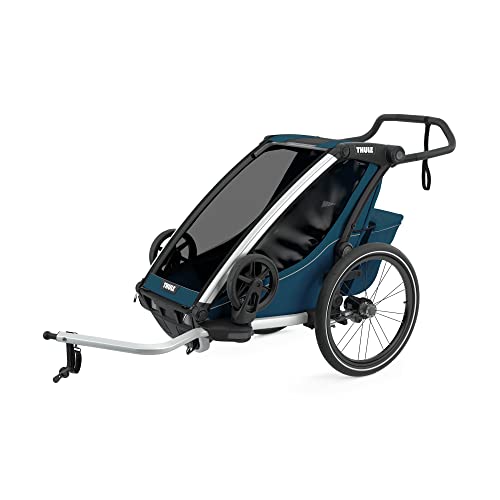
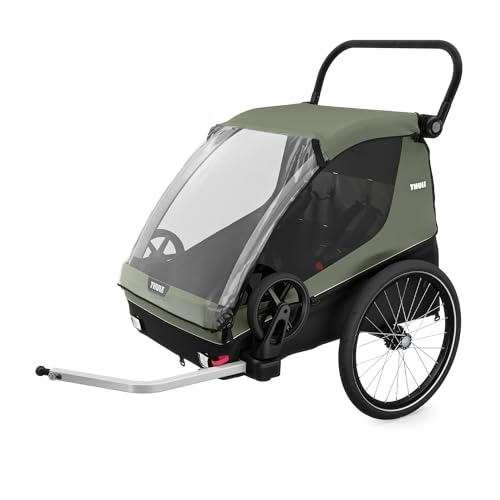
Best Premium: Thule Chariot Cross Multisport Trailer & Stroller
For active families who want one piece of gear to cover biking, jogging, strolling, and even skiing, the Thule Chariot Cross is built to convert between all of them with add-on kits. Adjustable suspension smooths out rough terrain, and independently reclining seats let one child nap without disturbing the other.
- Versatility: Converts to stroller and jogger (ski kit sold separately)
- Comfort: Adjustable suspension, independent seat recline
- Best for: Active families who want a true multi-use investment
Pros:
- Genuinely converts across biking, jogging, and strolling use cases
- Adjustable suspension delivers a noticeably smoother ride
- XL cargo space and compact fold for storage and transport
Cons:
- Significantly more expensive than dedicated single-purpose trailers
- Jogging and ski kits are sold separately, adding to the total cost
Bike Trailer vs. Trailer-Cycle: Which Fits Your Child?
A bike trailer, like all three picks above, tows behind your bike with the child seated and strapped in, which works well from around toddler age through early elementary years, depending on the specific weight limit.
A trailer-cycle, sometimes called a tag-along, attaches to your bike but has the child actually pedaling on their own set of wheels, which suits older kids who've outgrown a trailer but aren't ready to ride solo on busy roads yet.
For younger children who can't yet pedal independently or need to nap mid-ride, a trailer is the safer, more comfortable choice. Once a child is confident pedaling, a trailer-cycle offers more independence while still keeping them connected to an adult rider.
Some families transition through both stages: starting with a trailer while kids are small, then switching to a trailer-cycle once they're old enough to want to pedal but not yet ready to ride solo in traffic.
Frequently Asked Questions
How young can a child ride in a bike trailer?
Most safety guidelines recommend against bike trailers for children under 12 months old, since infants need strong enough neck and head control to safely wear a helmet and handle the bumps of the ride. Many pediatricians suggest waiting until closer to 1 year, and always check the specific trailer's minimum age recommendation.
Does my child need a helmet in a bike trailer?
Yes, a properly fitted helmet is essential every time a child rides in a bike trailer, just as it would be on a bicycle. Even though the trailer itself provides some protection, a fall or collision can still result in head injury without a helmet.
Will a bike trailer fit any bicycle?
Most modern trailers use a universal coupler that fits the vast majority of bikes, but it's still worth double-checking compatibility with unusual frame styles, disc brakes, or thru-axles before buying. Some trailers, particularly premium multisport models, may require a specific adapter for certain bike types.
How many children can ride in a bike trailer at once?
Single-seat trailers are built for one child, while double-seat models comfortably fit two, as long as their combined weight stays under the trailer's rated limit. Trying to seat more children than a trailer is designed for compromises both safety and the harness fit.
Conclusion
The InStep Take 2 is the best all-around pick for most families, delivering real safety features and double-child capacity at a reasonable price. If you only need to carry one child, the InStep Sync covers the same essentials in a lighter, more affordable single-seat package. And for active families who want one piece of gear to handle biking, jogging, and strolling alike, the Thule Chariot Cross is worth the investment. Whichever you choose, the right bike trailer means no one has to miss out on family rides.