Best Bike Floor Pumps in 2026: Everything to Know Before Your First Purchase
Disclosure: We may earn a commission when you buy through links on this page, at no extra cost to you. As an Amazon Associate I earn from qualifying purchases. Learn more

A first purchase guide to the best bike floor pumps: valve fit for Presta and Schrader tubes, honest pressure, readable gauges, stability and spare parts.
A floor pump is often the first tool a new bike owner buys, and it is easy to buy the wrong one with confidence. The shop wall shows a row of tall pumps that all promise huge pressure, yet the one that suits you depends on your valve type, your tire volume and how the gauge reads at floor level. Riders shopping among the best bike floor pumps for the first time do better when they start with compatibility, not with the biggest number on the box.
This guide walks from the basics to the buying decision in that order: what the parts are called, which specifications actually matter, the mistakes new owners make, and how the first inflation should go. The product table summarizes the picks, and the sections after it explain each factor in plain English.






Bike Floor Pumps 101: The Basics
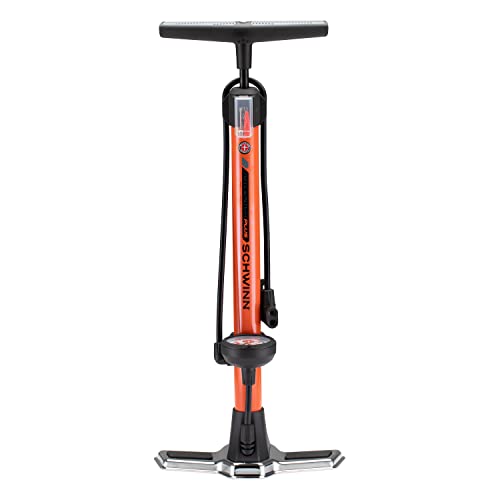
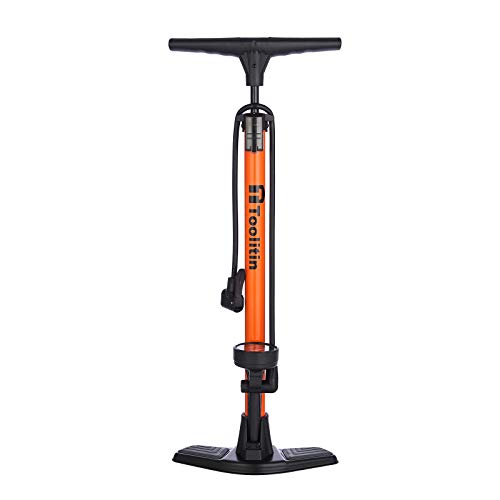
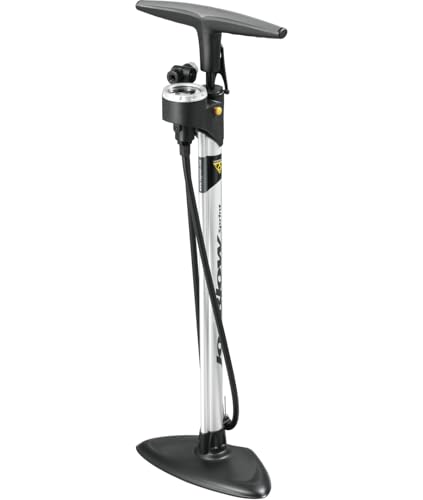
A floor pump is a hand pump that stands on the floor while you work it with both hands. Your feet hold the base steady, the long barrel pushes a large volume of air with each stroke, and a flexible hose connects the pump to the valve on your wheel. That standing design is why a floor pump fills a tire in a fraction of the strokes a small frame pump needs, and why it is the pump most owners use before nearly every ride. A small pump still earns its place on the bike for roadside repairs; the floor pump is the home tool.
The parts are few, and each one shows up later in the buying checks. The barrel is the tall tube that holds the air. The handle drives the plunger inside it.
The chuck, also called the head, is the fitting that clamps onto your valve, and the gauge is the dial or barrel mounted readout that reports pressure as you pump. Battery powered inflators are a different power class that trades strokes for charging, and our guide to the best electric bike pumps covers that route if you prefer it. Everything else in this article is about the manual tool you will use at home.
Key Specs Explained in Plain English
Start With Your Valves: Presta, Schrader and the Head That Fits Both
Your tubes decide the head type, so check your valves before you look at anything else. Presta valves are the thin metal stems found on most road and many mountain bike tubes, and they need a small brass cap unscrewed before air will enter. Schrader valves are the wider, spring loaded stems shared with car tires, common on hybrids, cruisers and children bikes.
Pump heads come in three classes: single fit heads for one valve type, dual heads with a separate opening for each, and switchable heads that convert with a lever or a reversed insert. A household with several bike types should buy a dual or switchable head and save the daily fiddling.
Pressure Honesty: The Printed Maximum Is a Ceiling, Not a Target
Nearly every floor pump advertises a maximum pressure around 160 psi or higher, and almost no rider should aim anywhere near it. The printed maximum is a ceiling that describes what the barrel and seals can survive, not what your tires want. Road tires run at high pressure in a small volume of air, many of them somewhere around 60 to 100 psi depending on tire width and rider weight.
Mountain bike tires run the other way: a large volume at lower pressure, often around 20 to 40 psi. What you need is a pump that reaches your range comfortably, with enough barrel volume per stroke that a fat tire does not take fifty strokes to fill.
The Gauge: Consistency Beats Laboratory Accuracy
A pump gauge reads approximately, and for home use that is good enough, provided it reads the same way every time. What ruins rides is not a gauge that sits a few psi from perfect truth; it is guessing, because tires lose pressure slowly and feel lies. Pick one pressure for your tires, inflate to the same gauge reading each time, and your setup stays consistent.
Gauge position decides whether you can use that reading at all: a large dial mounted high on the barrel is far easier to read than a small dial at the floor between your feet. Markings that highlight the common ranges help new owners stop at the right line without squinting.
Base Stability and Hose Length: The Daily Use Features
You will judge your pump on the days you are in a hurry, and that is where the base and hose earn their keep. A wide base with two clear foot pads keeps the pump planted while you drive the handle down with real force. A wobbly pump tips, kinks the hose and eventually snaps a valve stem, which turns a two minute job into a tube replacement.
Hose length matters for the same reason: a long hose reaches the valve wherever the wheel stopped, lets you work on a bike in a repair stand, and keeps the pump body away from the spokes. Short hoses force the pump against the wheel and make every inflation a small negotiation.
Spare Parts and Chuck Wear: The Year Two Reality
The part of a floor pump that wears out first is the small seal inside the chuck. That rubber gasket grips the valve every time you clamp down, and after a year or two of regular use it hardens, leaks and lets the head pop off at pressure. On better pump classes the gasket, the hose and even the gauge are replaceable with inexpensive parts, so the pump returns to full service in minutes.
On the cheapest classes nothing is replaceable, and a worn seal means a whole new pump. Before you buy, check that the maker sells a replacement head or seal kit; that small check separates a tool you keep for a decade from one you replace twice.
| Valve type | Where you find it | Head you need |
|---|---|---|
| Presta | Most road bikes and many mountain bikes | Presta fit, dual head or switchable head |
| Schrader | Hybrids, cruisers, children bikes and car tires | Schrader fit, dual head or switchable head |
| Both in one household | Mixed garages with several bike types | Dual head, so nothing converts between bikes |
Who Should Buy Which Floor Pump?
The Road Rider With Narrow Tires
Road tires ask for high pressure and modest volume, plus a gauge that reads fine differences near the top of its range. A standard barrel pump with a large, high mounted gauge serves this rider well, and stroke count stays low because each tire holds little air. Riders comparing dedicated options can read our guide to the best road bike floor pumps for the narrow tire case in full. Precision at your working pressure matters more to you than raw barrel size.
The Mountain and Gravel Rider With Wide Tires
Wide tires invert the problem: low pressure, but a great deal of air to move, and small pressure changes you can genuinely feel on the trail. A high volume barrel fills a fat tire in far fewer strokes, and a gauge with a wide, readable low range helps you land on the same pressure every ride. Our guide to the best mountain bike floor pump covers the volume first case on its own. Some riders in this group later add a separate booster style pump for seating tubeless tires, but a sound standard pump remains the everyday tool.
The Household With Several Kinds of Bikes
A family garage mixes valve types, tire sizes and riders who will not read instructions. Your pump needs a dual or switchable head, a gauge everyone can read at a glance, and a base stable enough for a teenager in a rush. The wider family of the best bicycle floor pumps overlaps heavily with this brief, and the general advice is the same: buy for the mix you own, not for one favorite bike. Durability and spare parts matter most here, because this pump will be borrowed, dropped and used weekly for years.
Rookie Mistakes to Avoid
- Buying by maximum pressure alone, then discovering the barrel is too small to fill a wide tire without an exhausting stroke count.
- Forgetting to unscrew the small brass tip on a Presta valve, then forcing the chuck and bending the delicate valve core.
- Yanking the chuck straight off the valve, which tears the seal and can rip the valve stem out of an older tube.
- Inflating to the number printed on the tire sidewall, even though that figure is a maximum limit rather than a recommendation for your weight.
- Leaving the pump in a damp corner where the barrel rusts and the gauge fogs, then blaming the pump for readings nobody can see.
Getting Started: Setup and First Use
Your first inflation teaches you the routine every later one will follow. Stand the pump on a flat floor, set the wheel with the valve near the bottom, and remove the valve cap. For a Presta valve, unscrew the brass tip and press it once briefly to free the seal.
Push the chuck straight onto the valve as far as it goes, then flip the locking lever so the head grips firmly. Stand with a foot on each base pad and use full, steady strokes, letting the handle rise completely each time so the barrel refills. Watch the gauge as you approach your target, unlock the lever, and pull the chuck straight off in one quick motion; a brief hiss as it releases is normal.
Bike Floor Pump Questions Answered
How do I know whether my tubes use Presta or Schrader valves?
Look at the stem itself: a Presta valve is slim, all metal, and has a tiny threaded tip you unscrew by hand, while a Schrader valve is thicker, often rubber coated, and has a pin in the center like a car tire valve. If the wheel has a small knurled ring at the base of a thin stem, that is a Presta. Still unsure, take a photo to the shop or check the tube box from your last purchase, because the head fit depends on the answer.
How often should I check my tire pressure with a floor pump?
Check before every ride if you can, and at least once a week for a bike in regular use. Tubes are not perfectly sealed, and a road tire can lose a noticeable share of its pressure in days while a wide mountain tire drifts more slowly. The habit takes under a minute per wheel once the routine is set. Riding a soft tire invites pinch flats and rim damage, which cost far more than the minute the check requires.
Why does my pump head leak or pop off at high pressure?
The usual cause is the rubber seal inside the chuck, which hardens and shrinks with age until it can no longer grip the valve under load. A head that is not pushed fully onto the valve, or a locking lever left half closed, produces the same drama on a healthy pump. Try reseating the head squarely first. If leaks persist across both wheels, order the seal or head kit for your pump class, or accept that a sealed budget pump has reached the end of its service.
Can one floor pump serve both road and mountain bikes?
Yes, a mid volume pump with a dual head covers both for most households, and it is the sensible first purchase. The compromise shows at the extremes: a very fat tire will take extra strokes, and a very high pressure road tire will take real effort near the top of the range. Households that ride both styles often and care about minutes end up adding a second, specialized pump later. Start with the generalist; let genuine annoyance, not marketing, tell you whether a second pump is needed.
When should I replace a floor pump instead of repairing it?
Replace it when the barrel is dented or rusted through, the gauge has failed outright, or no spare parts exist for the worn seal that made you ask. Repair it when the fault is a chuck gasket, a perished hose or a loose handle, because those parts are cheap and the swap takes minutes on pumps built for service. A pump that has served weekly for many years and needs a second major repair is also a fair replacement candidate. Judge by parts availability first; it decides almost every case.
Final Thoughts
Three checks decide a first pump purchase: the head must fit your valves, the barrel must suit your tire volume, and the gauge must be easy to read at the pressure you actually use. Stability, hose length and spare parts then separate the pump you keep from the pump you curse. Get those right and the best bike floor pumps stop being a confusing wall of tall tubes and become one obvious tool for your garage. Look at the product table with your valve type and tire width in mind, and choose the pump that matches your bikes rather than the largest printed number.