Best Battery for Watches in 2026: Which Type Is Right for You?
Disclosure: We may earn a commission when you buy through links on this page, at no extra cost to you. As an Amazon Associate I earn from qualifying purchases. Learn more
Quartz owners and smartwatch fans alike can match the best battery for watches to their routine with this plain comparison of cell types.
Choosing a power source for a watch sounds simple until you start comparing options, because quartz, solar, automatic, and smartwatch designs all store and use energy in different ways. The best battery for watches is not one universal cell, but the type that matches how often you wear the watch, how much upkeep you accept, and which features you actually use. This guide compares each type side by side so you can choose with confidence.
The comparison table below gives a quick overview, and the sections that follow explain the tradeoffs in plain terms. Read the type comparison first, then check the buying factors that matter most for your daily routine.


Best Battery for Watches: Types Compared
The table below summarizes the main power types. A quartz watch runs on a small replaceable cell, a solar watch charges its cell from light, an automatic watch winds itself from wrist motion and needs no battery at all, and a smartwatch runs on a rechargeable cell that you top up regularly. Each approach suits a different kind of wearer.
| Type | Best For | Pros | Cons | Typical Price |
|---|---|---|---|---|
| Quartz cell | Everyday wear with simple upkeep | Accurate, widely available, low cost | Needs replacement every few years | About $5 to $25 for the cell and fitting |
| Solar cell | Regular wear in daylight | Long intervals between service, no frequent swaps | Needs light exposure to stay charged | About $50 to $300 for the watch type |
| Automatic movement | Collectors and daily wearers | No battery to replace, smooth sweep | Needs service every few years, can stop unworn | About $100 to $500 for service |
| Smartwatch cell | Fitness and notification features | Rechargeable, powers sensors and screens | Needs charging every day or two | About $20 to $50 for a spare charger |
Quartz Watches
A quartz watch uses a tiny cell to send pulses through a quartz crystal, and those steady pulses drive the hands or the digital display. This design is famously accurate, losing only a few seconds each month, and it keeps running whether you wear the watch or leave it in a drawer. Replacement cells are widely sold, and fitting is usually quick and inexpensive.
The tradeoff is regular upkeep. Most quartz cells last about two to five years depending on the movement and any extra features such as a light or an alarm. When the watch starts losing time or stops, a fresh cell usually restores it at once. Choose quartz if you want a watch that simply works with very little attention.
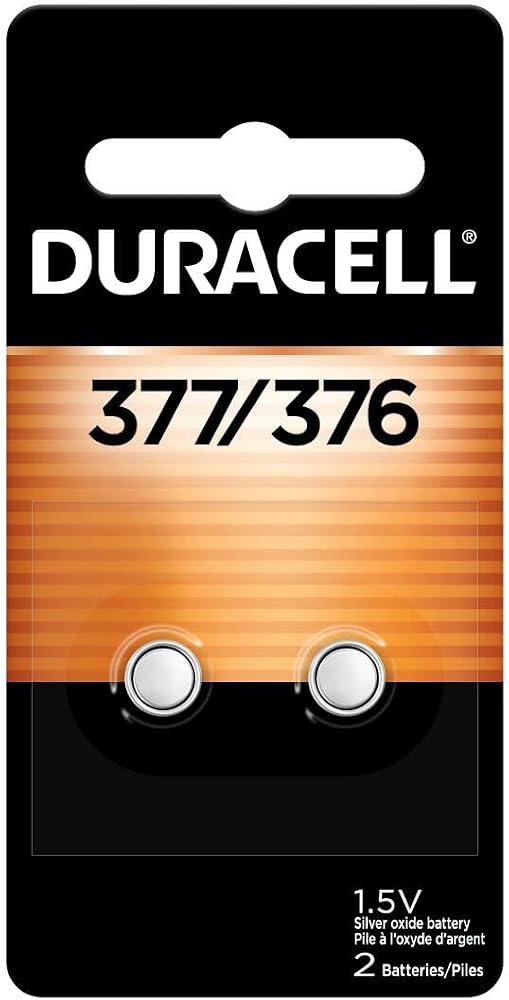
For a quartz watch, the right replacement is the exact size printed on the old cell. Many analog watches use a silver oxide cell with a code such as 377 (also marked SR626SW), while many digital watches use a lithium coin cell such as the CR2032. Silver oxide gives a steady voltage for time-only movements, and lithium suits watches with lights and alarms. Matching the code, and choosing a reputable brand, matters more than any other detail.
Solar Watches
A solar watch captures light through its dial and stores the energy in a rechargeable cell, so it can run for months on a full charge even in a drawer. Bright daylight charges it fastest, but ordinary indoor light also adds charge over time. This design suits people who wear a watch outdoors often or who dislike opening a case for a cell swap.
The main limit is light exposure. A solar watch left in a dark drawer for many months can run down, and a very old rechargeable cell may eventually hold less charge. Keep the watch where it sees light now and then, and it will usually keep going for years without a visit to a repair bench. Choose solar if you want low upkeep with the accuracy of quartz.
Smartwatches
A smartwatch runs on a rechargeable cell that powers a bright screen, sensors, wireless links, and apps, which is why it needs charging far more often than a quartz or solar watch. Most models need a charge every day or two, and heavy use of GPS or workouts shortens that interval. The payoff is a wide set of features in one device, from notifications and maps to step counts and sleep summaries.
Charging becomes part of the routine, much like charging a phone. A magnetic charger or a charging dock by the bed makes it easy, and a spare charger for travel avoids a dead watch on a trip. Choose a smartwatch if you value connected features more than weeks of uninterrupted running time.
Quartz Watches vs Solar Watches: Which Should You Choose?
Quartz and solar watches share the same accurate timekeeping, so the choice comes down to upkeep and habits. Quartz wins on simplicity of repair, because a standard cell swap is available almost anywhere and costs very little. Solar wins on convenience, because you rarely think about power at all as long as the watch sees light regularly.
Consider your routine. If you rotate several watches and leave some unworn for months, quartz is the safer pick, since a fresh cell brings a stopped watch back at once. If you wear one watch nearly every day, especially outdoors, solar is the easier pick, since daylight keeps it topped up without a bench visit. Both types suit everyday wear, and both cost far less to run over time than a watch that needs frequent service.
One more difference matters for travelers. A quartz watch keeps running in a bag or a safe for years, while a solar watch prefers a spot near light. Neither type needs special care beyond that, and both handle normal daily knocks well when the case and crystal are sound.
How to Choose the Right Battery
Start with how you live, not with the cell itself. A watch worn daily for work needs different power than a dress watch worn twice a year, and a fitness companion needs different power than a simple time only piece. The factors below help you match the power source to the job.
Movement Type
Movement type decides the whole power story. Quartz movements are accurate and cheap to run, solar movements add light charging to quartz accuracy, automatic movements use motion instead of a cell, and smartwatch movements trade running time for features. Think about how often you want to visit a repair bench or a charger, and let that answer narrow the field fast.
Crystal and Case Materials
Crystal and case materials affect durability and cost, and they matter more than many buyers expect. Sapphire crystal resists scratches far better than mineral glass, which keeps a dial readable for years, while a steel or titanium case stands up to daily knocks. A well sealed case also protects the cell and the movement from moisture, which is worth checking if you swim or work outdoors.
Features That Matter for Watches
Match features to real use before paying for extras. Water resistance matters if you swim, a clear lume matters if you read the time at night, and a quick release strap matters if you swap straps often. A large case diameter looks bold but can feel heavy on a small wrist, so try the size on if you can. Extra complications such as a date window or a second time zone add charm, but each one can also draw more power.
Smart and Fitness Features
Smart and fitness features change the power equation completely. GPS tracking, heart rate sensing, and an always on display all draw heavily on a rechargeable cell, so a feature rich watch needs charging far more often. These readings are useful for general fitness tracking, but they do not replace medical devices, so treat them as estimates. If you mainly want the time, a simpler watch will run far longer between charges.
Tips to Get the Most From Your Battery
Small habits extend the life of any watch power source. Keep the watch away from strong magnets, which can disturb a quartz movement, and rinse it with fresh water after saltwater exposure to protect seals and straps. Store watches you rarely wear in a cool, dry place, and have automatic watches serviced every five to seven years so the movement stays clean and lubricated. For smartwatches, avoid letting the cell sit empty for weeks, and use the charger made for the model.
When a quartz watch slows or stops, replace the cell promptly rather than leaving a spent cell inside the case, since an old cell can leak and damage the movement. Keep spare cells away from children, and if you are unsure about opening a case, especially a water resistant one, ask a qualified technician to do the swap and check the seal. A careful fitting protects both the watch and its water resistance.
Batteries: Your Questions Answered
What features matter most in batteries for watches?
The most useful features are steady accuracy, a sensible replacement or charging routine, and a case seal that protects the cell from moisture. A long running cell matters less if the watch is hard to open, and a fast charging cell matters less if you dislike daily charging. Look for a design whose upkeep fits your habits, a crystal that resists scratches, and a strap that feels comfortable for all day wear.
What case size fits my wrist?
Case size is a matter of proportion and comfort rather than a single correct number. Measure across your wrist and compare it with the case diameter, keeping in mind that a thick case wears larger than a slim one of the same width. A watch should sit flat without sliding around, and the lugs should not overhang the wrist. If you are between sizes, the smaller option usually feels better for long days.
How water resistant should a watch be?
Water resistance should match the wettest thing you actually do while wearing the watch. A splash resistant watch handles rain and hand washing, a swim rated watch handles pool laps, and a dive rated watch handles deeper water and pressure changes. Ratings assume intact seals, so have seals checked after a battery swap or a hard knock. When in doubt, take the watch off before swimming.
How long does a watch battery last?
A quartz cell usually lasts about two to five years, while a solar rechargeable cell can run for many years before it needs service. Smartwatch cells are measured in days between charges, and their total lifespan is usually a few years before capacity fades noticeably. Usage matters a lot, since alarms, lights, GPS, and bright screens all draw extra power. A watch that suddenly loses time is often simply asking for a fresh cell.
Is a smartwatch worth it over a classic watch?
A smartwatch is worth it if you will actually use its connected features every day, such as notifications, maps, workouts, and contactless payments. If you mainly want the time and a piece that runs for years without charging, a classic quartz or solar watch is the better value. Consider charging habits honestly, because a smartwatch left uncharged becomes a bracelet, while a classic watch keeps working quietly.
Quartz or automatic: which is better?
Quartz is better for accuracy, low cost, and carefree ownership, while automatic is better for craft, character, and the pleasure of a mechanical movement. An automatic watch needs wearing or winding to keep running, plus periodic service, so it asks more of its owner. A quartz watch asks almost nothing beyond a cell every few years. Choose quartz for practicality and automatic for enjoyment, and let that honest answer guide you.
Wrapping Up
The right choice comes down to three questions: how often will you wear the watch, how much upkeep will you tolerate, and which features do you truly need? Quartz suits a watch that must simply work, solar suits a daily wearer who likes low upkeep, automatic suits a collector who enjoys mechanical craft, and a smartwatch suits someone who wants connected features. If you are still torn, think about the watch you reach for most often, since the power source that fits that habit is the one you will enjoy longest.
For most buyers, a quartz or solar design offers the best balance of accuracy, cost, and ease, while a smartwatch earns its place only when its features get daily use. The best battery for watches is the one you never have to think about, so pick the type that disappears into your routine and check the product table above before you decide.
If you want a watch that runs without any cell at all, see our guide to best watches without battery for the automatic and mechanical options. For a closer look at cell free designs in general, our guide to best no battery watches explains how they stay running. Readers comparing classic and modern power will also find best non battery watches useful, and if connected features appeal to you, see best battery smart watches for charging and feature tradeoffs.