Best Beginner Cake Decorating Kits (2026): What to Look For and Kit Types
Disclosure: We may earn a commission when you buy through links on this page, at no extra cost to you. As an Amazon Associate I earn from qualifying purchases. Learn more

Pick the best beginner cake decorating kit with a smooth turntable, sturdy tips and the right bags for your budget and storage.
Your first decorated cake usually happens under pressure. A birthday is tomorrow, the frosting is already made, and you are trying to pipe a border with a zip bag and a pair of kitchen scissors. The best beginner cake decorating kit removes that scramble by putting a turntable, piping tips, bags, and smoothing tools in one box. This guide helps you choose by the space you have, the people who will use the kit, and the budget you want to spend, and the product table below sums up the main kit types at a glance.


Quick Answer: What a Beginner Kit Should Include
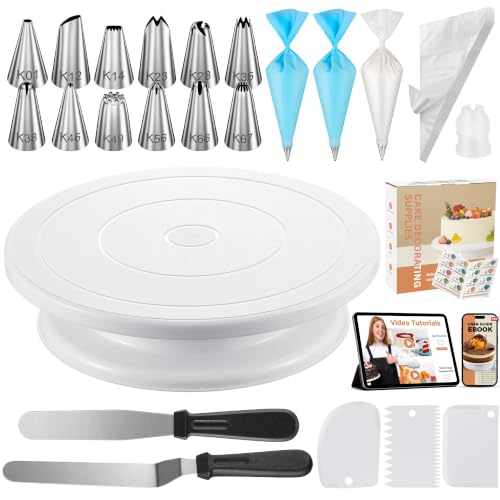
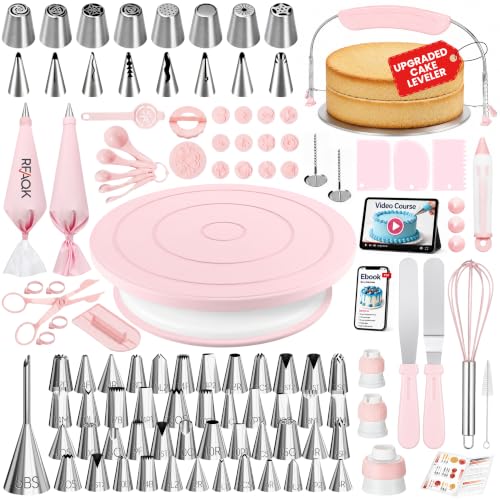
Every useful starter kit covers the same four jobs. A turntable lets you spin the cake while you spread frosting, so your free hand stays steady. Piping tips and bags handle borders, dots, stars, and simple lettering. An offset spatula spreads frosting without dragging your knuckles through it. A bench scraper or icing smoother gives the sides a clean finish. A kit that covers those four jobs with sturdy pieces is enough for your first year of cakes.
Before You Buy: A Quick Checklist for Choosing a Cake Decorating Kit
Size: Match the Kit to Your Space
Kit sizes are usually described by piece count, and the counts can mislead you. A small kit of about 20 to 40 pieces holds the basics and fits in a single kitchen drawer, which suits an apartment or a small galley kitchen. A mid size kit of about 50 to 100 pieces adds more tip shapes, couplers, and a turntable, and it needs a cabinet shelf or a storage tub. Kits above 100 pieces often pad the count with many similar tips and extra bags. Count the tools you will actually hold in your hand, not the total on the box, and check that the turntable diameter fits your counter and your largest cake board.
Which Kit Type Fits Your Routine
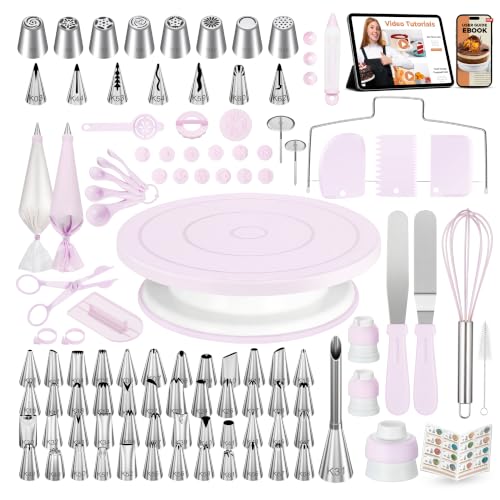
Think about how often you will decorate. If you bake for birthdays a few times a year, a basic kit with disposable bags and a simple plastic turntable covers the job and stores easily. If you bake monthly or run a small home baking hobby, a complete kit with reusable silicone bags and a metal turntable feels better over time and survives more washes. Kits built around Russian piping tips make full flowers in one squeeze, which looks impressive fast, but they teach you less about pressure control than standard tips do. Match the type to your routine first, and let the piece count come second.
Features Worth Paying For, and Ones to Skip
A turntable that spins smoothly on a real bearing is worth paying for, because a wobbly or gritty spin makes smooth sides nearly impossible. Seamless metal piping tips are also worth it, since a seam can split a line of frosting mid border. An offset spatula with a comfortable handle and a bench scraper tall enough for your usual cake height both earn their place. You can safely skip novelty tip shapes you will use once, fondant sculpting tools in a frosting focused kit, and large sets of food coloring when you only need two or three basic colors to start. Buy depth in the tools you touch on every cake, not breadth in tools you touch once.
Realistic Budget Ranges
Under about $20, expect a starter set of tips, bags, and couplers, usually without a turntable or with a very light plastic one. This tier is a sensible way to test whether you enjoy decorating before you spend more. From about $20 to $50, kits add a proper turntable, an offset spatula, and a scraper, and this is where most beginners get the best balance of tools and price. Above about $50, you pay for heavier turntables, reusable bags, and carrying cases rather than new abilities. If you are comparing across all skill levels, our guide to the best cake decorating kit covers the wider field beyond starter sets.
Three Kit Types Compared: Which Starter Setup Fits Your Home
The All in One Kit for Most Homes
This type bundles a turntable, about a dozen standard tips, bags, two couplers, an offset spatula, and a scraper in one box. It suits a household that decorates for birthdays and holidays and wants one purchase to cover the basics. The turntable is usually plastic with a nonslip base, which is light to store and steady enough for frosting work. The main trade off is that each tool is decent rather than excellent, so a keen baker may upgrade the turntable later. For most homes, though, this type removes every common frustration of a first cake at a fair total cost.
The Value Kit for Tight Budgets
A value kit strips the set down to tips, disposable bags, and couplers, and skips the turntable entirely. You can rest the cake board on an upturned bowl or a lazy Susan you already own and still practice piping, borders, and simple rosettes. This type suits you if money is tight or if you only want to learn piping before committing to more gear. The trade off is real: smoothing sides without a spinning stand takes patience, and your results will look rougher. Treat this type as a low cost trial. If you enjoy the piping work, the turntable becomes your next single purchase.
The Long Term Kit for Keen New Bakers
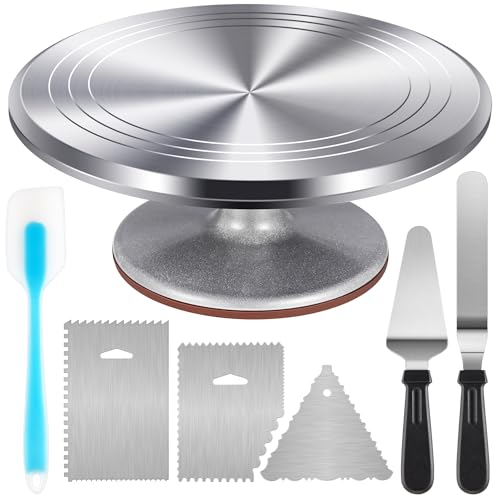
This type spends the budget on durability. It pairs a heavy turntable, often cast metal or thick plastic with a steel bearing, with seamless tips, reusable silicone bags, and a storage case that keeps small pieces from vanishing in a drawer. It suits you if you already bake often, plan to sell cakes to friends one day, or simply hate buying the same tool twice. The trade off is size and price: the turntable needs real shelf space, and the kit costs about two to three times a value set. If your ambitions later grow toward tiered and wedding work, our guide to the best professional cake decorating kit shows what the next level adds.
How to Evaluate a Beginner Cake Decorating Kit
Judge a kit on five points drawn from maker specifications and patterns in verified buyer reviews. First, turntable motion: it should spin freely with no grinding and stop without tipping. Second, tip quality: seamless stainless steel tips hold their shape and wash clean. Third, bag strength: bags should resist bursting at the seam under firm pressure. Fourth, material safety: look for food grade silicone and stainless steel, with plastic parts stated as food safe. Fifth, cleaning: every piece should tolerate warm soapy water, and small tips should fit a standard cleaning brush.
Is a Beginner Cake Decorating Kit the Right Fit for You?
New Bakers Decorating a First Celebration Cake
If you have baked plain cakes but never piped a border, a beginner kit matches your stage exactly. The tools are forgiving: standard tips hide small wobbles in a border, and a turntable does half the smoothing work for you. You will learn faster with a small set you understand than with a huge set you avoid opening.
Parents Decorating With Kids
For family baking, a beginner kit with disposable bags is the practical choice. Each child can hold a fitted bag without a cleanup queue at the sink, and plastic tips survive drops on a hard floor. Choose a turntable with a nonslip base, because small hands push hard while they spin. Skip kits with many tiny parts, since coupler rings and small tips get lost fast in a busy family kitchen.
Occasional Bakers With Little Storage
If you decorate twice a year, a compact kit that nests in one box protects you from the classic problem of finding tips but no bags on the day. A value or all in one kit stored with your cake pans keeps everything together. A large long term kit would sit unused, gather dust, and crowd the shelf your mixing bowls need. Small and complete beats big and scattered for your routine.
Common Buying Mistakes to Avoid
- Chasing the highest piece count. A 200 piece box often holds dozens of near identical tips, so you pay for clutter instead of the turntable and scraper you actually need.
- Buying a kit with no turntable for tall cakes. Smoothing the side of a layer cake on a fixed board forces you to walk around the counter and leaves uneven pressure marks.
- Ignoring bag and coupler sizing. Tips, couplers, and bags must fit each other, and a kit that mixes sizes leaves you with parts that cannot be used together.
- Skipping the cost of refills. Disposable bags and parchment are repeat purchases, so a cheap kit can cost more over a year than one with reusable bags.
- Choosing Russian tips as your only tips. They pipe whole flowers fast but cannot make borders, writing, or leaves, so your first kit still needs standard tips.
Cost of Ownership and Care
Owning a kit costs little beyond the purchase if you care for it well. Disposable bags are the main repeat expense, at roughly a few dollars per pack, while reusable silicone bags remove that cost after one purchase. Wash tips right after use, because dried frosting hardens inside the narrow ends and blocks the next border. Dry metal tips fully before storing to prevent spots, and keep the turntable bearing dry, since water inside the base makes the spin rough. Store tips point up in the case or a jar so the fine ends do not bend, and replace any tip that gets crushed, because a bent tip pipes a lopsided star every time.
FAQ
How do you clean piping tips with narrow ends?
Soak the tips in warm water with a drop of dish soap for about ten minutes, then push a tip cleaning brush or a wooden skewer wrapped in a corner of cloth through each one. Rinse and stand them on a towel to dry fully before storing. Cleaning them the same day matters most, because butter based frosting sets hard overnight and can take repeated soaking to shift.
Is a cake decorating kit worth it for one or two cakes a year?
Yes, if you choose a small kit. A basic set costs about the same as one store bought decorated cake, and it covers every birthday after that. The math fails only for large kits, which need regular use to justify their shelf space. Borrow the logic of the value tier: spend little, store it with your pans, and let the kit pay for itself across two or three family cakes.
How long does a beginner cake decorating kit last?
Metal tips and a sturdy turntable can last many years, because neither wears out in normal home use. The parts that age are bags, which split after repeated washing if reusable, and plastic scrapers, which can warp in very hot dishwasher cycles. Expect the core tools to outlast your beginner stage. Most people replace pieces because their skills grow, not because the kit fails.
What turntable size does a beginner need?
A turntable of about 11 to 12 inches across suits most home cakes, which are usually 6 to 9 inches wide on a slightly larger board. Smaller stands feel tippy under a filled layer cake, and much larger ones waste counter space in a small kitchen. Check the stated weight limit too, since a filled three layer cake is heavier than it looks.
Can a beginner cake decorating kit be used for cupcakes and cookies?
Yes. The same star and round tips that pipe cake borders also pipe cupcake swirls, and a small offset spatula spreads cookie icing neatly. Cupcakes need no turntable, so even a value kit without one handles a full batch. For cookies, use the bags with a small round tip and slightly thicker icing so the outlines hold their shape while you flood the centers.
Final Thoughts
Start with the four core jobs: spin, pipe, spread, and smooth. A modest kit that does those well will carry you through birthdays, school events, and your first layer cakes. The product table above shows how the main kit types stack up by space and budget. Choose the best beginner cake decorating kit for the kitchen you actually have, keep the pieces clean and together, and your second cake will already look calmer than your first.