Best Bed Frames With Drawers (2026): Layouts, Glides and Capacity
Disclosure: We may earn a commission when you buy through links on this page, at no extra cost to you. As an Amazon Associate I earn from qualifying purchases. Learn more

Pick the best bed frame with drawers: compare drawer layouts by glide type, capacity and floor clearance.
A dresser takes up floor space you may not have, and plastic bins under the bed are awkward to reach every day. Drawers built into the frame solve both problems, as long as they open fully, glide smoothly, and leave your mattress properly supported. This guide to the best bed frame with drawers compares drawer layouts and the factors that separate useful storage from wasted money, starting with the product table below.
You will also learn how frame height and floor clearance affect daily comfort, and how to match size and weight capacity to the sleepers.


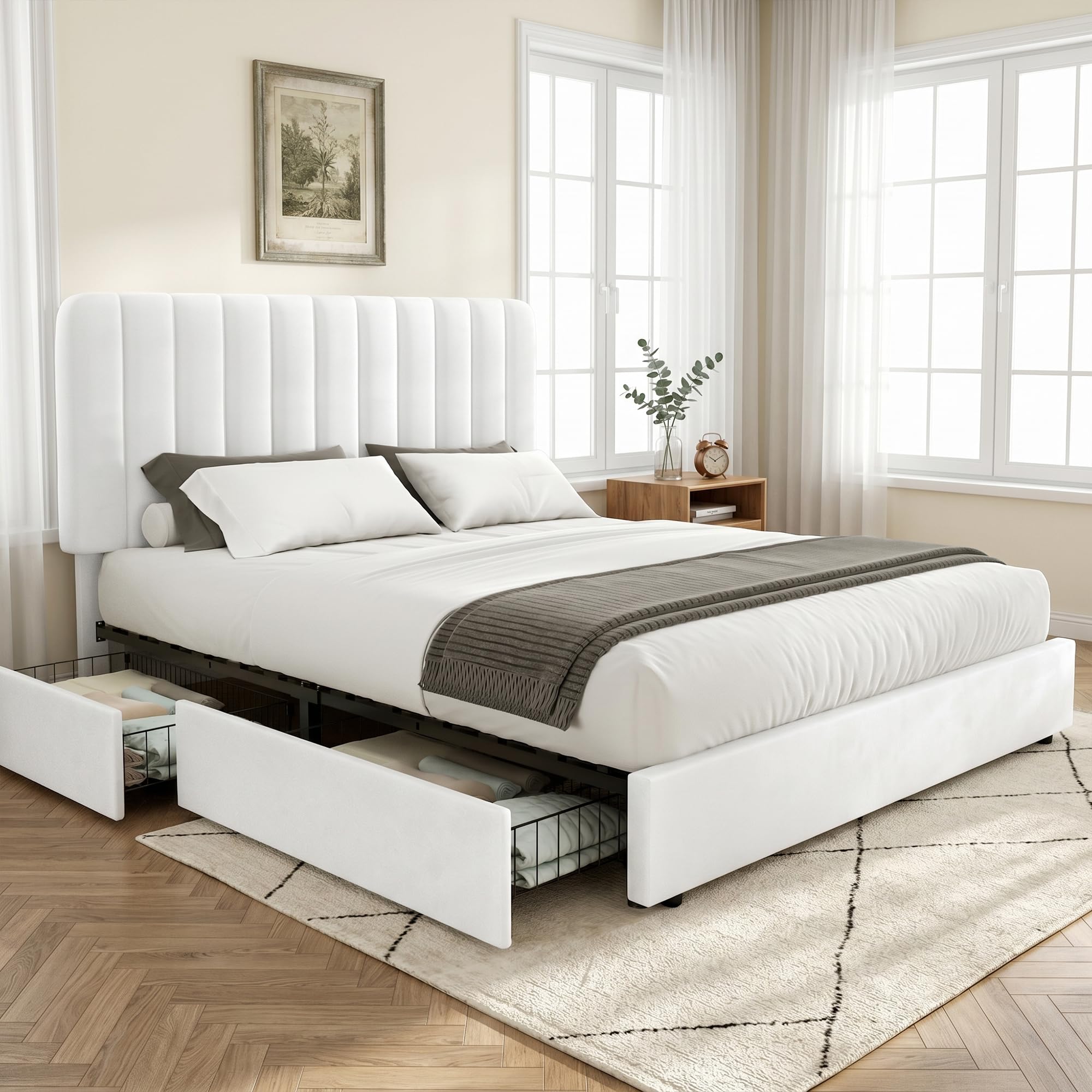


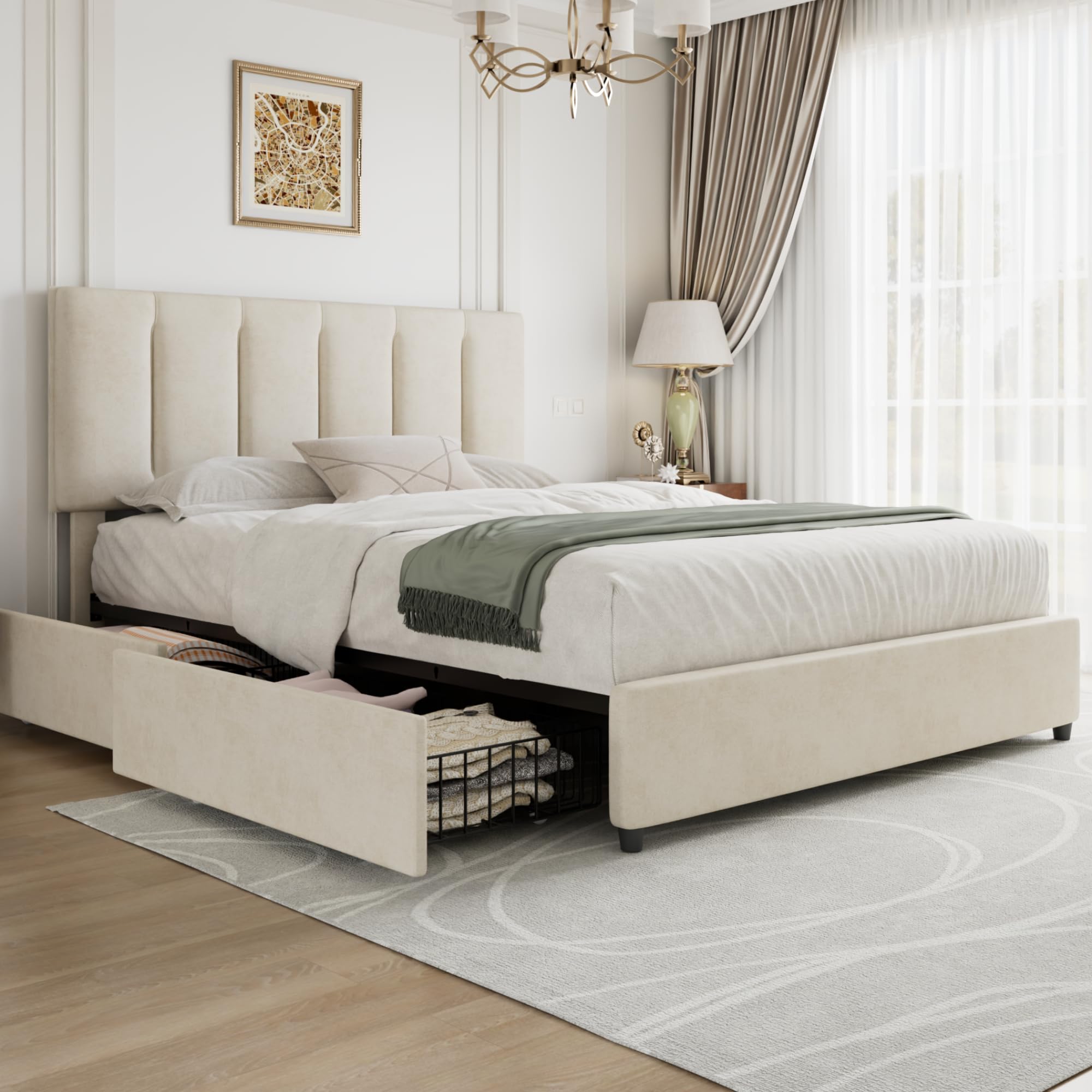


Drawer Layouts at a Glance
Three layouts cover most of the market. Two large side drawers suit rooms where one side is easy to reach. Four smaller drawers, two on each side, organize clothing by category and keep loads balanced. Drawers at the foot work when both sides sit close to walls or nightstands, though they need clear floor space at the end of the frame.
Your room layout decides which drawers you can actually open, so measure your floor plan before choosing the option with the most storage on paper.
Three Drawer Configurations Compared
Two Large Side Drawers
This layout puts one deep drawer on each side, and each one can hold bulky items like spare blankets, winter sweaters, or a full set of bedding. Fewer drawers also means fewer glides to maintain and fewer seams in the frame. The limitation is access. If one side of the bed stands against a wall, that drawer becomes nearly useless, so this layout fits rooms where both sides stay open. It also gives you less sorting flexibility, since each large space mixes whatever you store in it.
Four Drawer Layouts for Shared Beds
With two drawers on each side, each sleeper gets storage within reach of their own side of the bed. Smaller compartments make it easier to separate everyday clothing from linens, and lighter loads glide more easily than one heavy drawer. The trade off is depth, because the center support structure limits how far each drawer can extend. Couples who both want bedside storage usually prefer this layout, while anyone storing mostly bulky items may find the compartments restrictive.
Foot End Drawer Layouts
Drawers that open from the foot of the bed free up both sides entirely, which helps in narrow rooms where side clearance is limited to a walkway. You need open floor beyond the footboard instead, often about 24 to 36 inches so the drawer can extend and you can stand in front of it. This layout pairs well with frames that have no footboard or a low one. Tall footboards block the drawer path, so check the design carefully before choosing it.
How to Evaluate a Bed Frame With Drawers
Start with ergonomics and ease of daily use. Drawers should open without scraping the floor, and the frame height should let you sit on the edge of the mattress with your feet flat. Next, judge build quality and materials, since drawers add moving parts and weight. Then confirm size and weight capacity, and weigh assembly effort and warranty coverage, because a storage frame has more joints than a plain frame. If you are still deciding whether you need drawers at all, our overview of the best bed frame options covers the broader category first.
How to Choose the Right Bed Frame
Size and Form Factor
Match the frame to your mattress size first. Twin and Twin XL frames usually offer one or two drawers, while Full and Queen frames commonly offer two or four. Shoppers comparing sizes directly can see our guide to the best queen bed frame for the most common shared size. King and California King frames spread storage across wider drawers, but they need generous side clearance. Low profile frames sit closer to the floor and hold shallower drawers, while taller frames allow deeper storage at the cost of a higher sleeping surface.
Frame Type
Most drawer frames use a platform structure, where slats or a solid deck support the mattress without a box spring. That design keeps the build simpler and the profile lower. If you are weighing the support question itself, our explainer on best platform bed frame designs covers how slat spacing affects mattress feel. Upholstered frames add padding and fabric around the structure, metal frames keep weight down and assembly simple, and wood frames offer the sturdiest drawer boxes. Storage is the defining feature here, so judge every type by how well its drawers work.
Features Worth Paying For
A headboard matters if you sit up to read, because drawers do nothing for back support, and padding adds comfort worth paying for in that case. Drawer dividers or fabric liners help if you store small clothing items that shift around. Soft closing glides reduce noise when a partner opens a drawer early in the morning. Features to skip include decorative lighting and built in charging ports, since they add cost and wiring complexity without improving storage or support.
Body Size and Weight Capacity
Check the stated weight capacity and remember that it covers the mattress, all sleepers, and anything stored in the drawers. Filled drawers can add a surprising amount of weight, especially with books or dense clothing. Heavier sleepers should look for thick center rails, extra support legs, and closely spaced slats that keep the mattress from sagging between supports. Drawer bottoms matter too. Thin panels bow under heavy loads, so look for reinforced bottoms if you plan to store more than clothing and linens in them.
Adjustability and Daily Comfort
Bed frames offer less adjustability than chairs, but a few details still shape comfort. Some frames let you mount the headboard at different heights to suit mattress thickness. Drawer handles should be easy to grip without bending all the way to the floor, which matters for anyone with limited mobility. A very low frame can also strain knees, while a tall frame with deep drawers suits people who prefer a higher seat edge.
Materials and Durability
Solid wood frames cost more but tolerate years of drawer use, and damaged parts can often be repaired. Engineered wood keeps prices lower, though drawer joints and glide mounts can loosen over time if the panels are thin. Metal frames resist warping and stay light for moving, but their drawers are often fabric or wire rather than rigid boxes. Our comparison of metal vs wood bed frame construction explains how each material ages. Whatever the frame material, metal drawer glides generally outlast plastic wheels.
Assembly and Warranty
Expect assembly to take longer than a plain frame, since each drawer must be built and aligned. Clear instructions and labeled hardware make a real difference, and our walkthrough of how to assemble a bed frame covers the general order of steps. Build drawers on a flat floor so they sit square, and check glide alignment before loading them. On warranty, look for coverage that includes drawer hardware and not only the outer frame, and keep your proof of purchase in case a glide or joint fails early.
How Much Should You Spend?
Basic metal frames with fabric drawers start at about $100 to $200, and they suit guest rooms or short term use. The middle range of about $200 to $500 brings rigid drawers, better glides, and stronger slats for everyday sleeping. Spending about $500 to $1000 usually buys solid wood construction, deeper drawers, and longer warranty coverage. Paying more mainly improves materials and finish rather than storage volume, so set your budget by how long you expect to keep the frame and how often the drawers will be opened.
Common Mistakes to Avoid
- Buying side drawers for a bed that will stand against a wall, which leaves half the storage unreachable.
- Skipping floor measurements, so a drawer opens straight into a nightstand, radiator, or door swing.
- Ignoring the weight of stored items when checking the frame capacity, which overloads slats and drawer bottoms.
- Choosing a frame whose slat spacing is too wide for a foam mattress, which can void the mattress warranty and cause sagging.
- Placing a thick rug where drawers need to roll or glide, which makes them drag and wear unevenly.
- Overtightening bolts during assembly, which can crack wood panels around the drawer openings.
How to Make Your Bed Frame Last Longer
Tighten frame bolts about twice a year, because drawer movement slowly works joints loose. Keep drawer loads balanced between sides so the frame does not rack or twist over time. Vacuum dust from glide tracks and wipe them with a dry cloth, since grit makes drawers stick. Avoid standing inside an open drawer or letting children climb into one, because drawer bottoms are not built to hold body weight. If a glide squeaks, a small amount of silicone lubricant on the track usually restores smooth movement.
Do You Really Need a Bed Frame With Drawers?
You need one if your bedroom lacks a dresser, your closet is full, or you store seasonal clothing and spare bedding that must stay close at hand. Drawers you can reach from a standing position are far easier to use daily than bins you drag out from under a low frame. On the other hand, if you already have ample closet space, a plain frame costs less and is easier to move. Separate under bed bins are also cheaper and can be replaced one at a time, though they collect dust and are harder to open on carpet.
Renters should think about moving as well, since a storage frame is heavier and bulkier than a plain frame. For a large shared bed, our guide to the best king bed frame shows how bigger frames divide storage space.
FAQ
How many drawers does a bed frame need?
Two drawers are enough for one sleeper storing spare bedding or off season clothing. Four drawers suit couples who each want separate space on their own side. More drawers do not always mean more capacity, because the total volume under the mattress stays the same. What changes is how the space is divided, so choose the count that matches how you sort your belongings.
Can a bed frame with drawers work on carpet?
Yes, but the glide type decides how well it works. Drawers on metal ball bearing glides hang from the frame and barely touch the floor, so carpet causes little trouble. Drawers that roll on small wheels drag through carpet pile and can feel heavy to open. If your bedroom has thick carpet, favor suspended glides, and place a thin hard board under any wheel path if the drawers still resist.
Do bed frames with drawers work with an adjustable base?
Most do not, because the drawer boxes occupy the space where an adjustable base needs to sit and move. A few frames have open centers and drawers only along the outer edges, and those can accept certain bases. Measure the interior dimensions of the frame and compare them with the base footprint before ordering either piece, since returns on large furniture are costly and slow.
How much weight can bed frame drawers hold?
A typical rigid drawer holds about 20 to 30 pounds of evenly spread clothing or linens, while fabric drawers hold less. The limit depends on the drawer bottom and glide rating rather than the frame itself. Spread heavy items across several drawers instead of filling one with books or shoes. If a drawer bottom starts to bow, lighten the load right away, because a panel that sags once tends to keep sagging under the same weight.
Are bed frames with drawers hard to move?
They are heavier than plain frames, and the drawer boxes add bulk even when removed. Most models come apart into rails, slats, and drawer units, so two people can move one through standard doorways. If your home has narrow stairs or tight turns, measure those spaces against the longest rail before you buy, not on moving day.
Final Thoughts
The right choice comes down to your floor plan first and your storage habits second. Confirm that every drawer can open fully, match capacity to the sleepers and the load, and favor rigid drawers on metal glides for daily use. The product table above pulls these factors together so you can compare layouts side by side. Chosen with those checks in mind, the best bed frame with drawers turns wasted space under the mattress into storage you will use every week.