
Best Battery Monitors: A Buying Guide for RVs, Boats, and Off Grid Systems for 2026
Disclosure: We may earn a commission when you buy through links on this page, at no extra cost to you. As an Amazon Associate I earn from qualifying purchases. Learn more

Compare the best battery monitors by shunt rating, display, and battery support to track charge in an RV, boat, or solar system.
A battery monitor tells you how much charge is left in your battery, how much current is flowing, and how long it will last, so you are not guessing from a voltage reading. The best battery monitors are most useful in RVs, boats, vans, golf carts, and off grid systems, where a flat battery means lost power or a damaged battery. This guide explains the main types, the features that matter, and how to install and read a monitor.
Use the product table to compare current models, then read on to match a monitor to your battery bank.






Types of Battery Monitors
Shunt Based Monitors
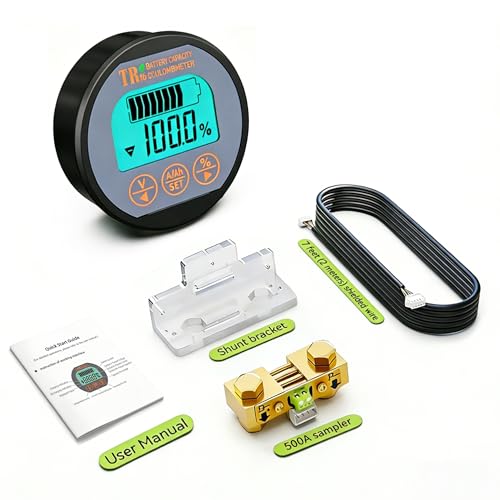
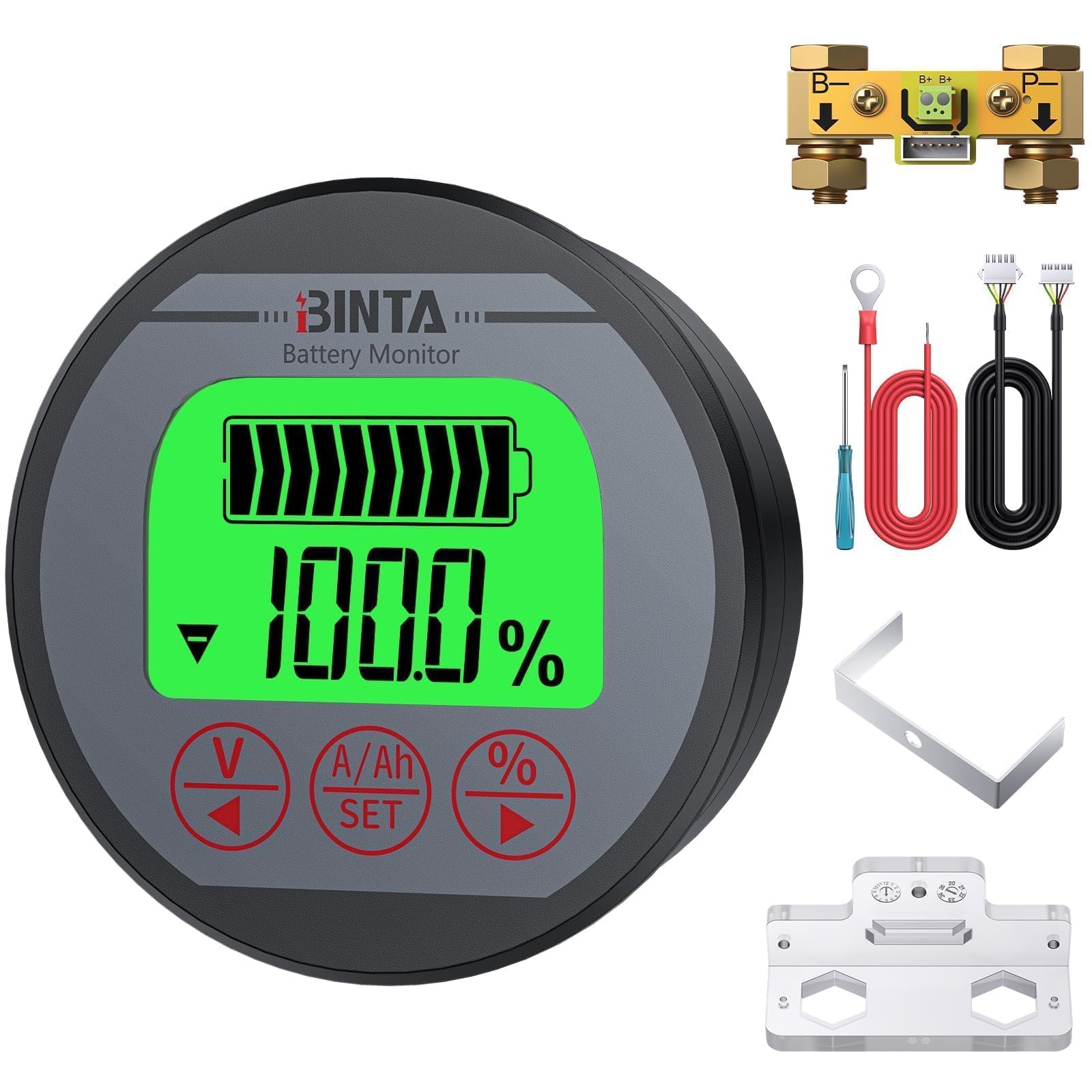
Shunt monitors measure the current flowing in and out of the battery through a shunt installed on the negative cable. They calculate state of charge, amp hours used, and remaining time with good accuracy. They are the standard choice for RVs, boats, and solar systems, and most include a display unit or a Bluetooth link to your phone.
Bluetooth Voltage Monitors
Small Bluetooth monitors clip onto the battery terminals and show voltage, and sometimes a rough health estimate, on your phone. They are simple to fit and suit cars and small batteries, but they do not measure current, so they are less precise for state of charge.
Panel Meters and Multi Function Displays
Panel meters show voltage and current on a screen mounted in a dashboard or panel. They suit permanent installations where you want a constant readout.
Key Features to Compare
Voltage and Current Range
Check that the monitor supports your system voltage, such as 12V, 24V, or 48V, and a current rating above your largest load. A 500A shunt covers most RV and van systems.
Battery Chemistry Support
Make sure the monitor supports your battery type, whether lead acid, AGM, or lithium iron phosphate. Some let you set capacity and charge efficiency for better accuracy.
Display and Connectivity
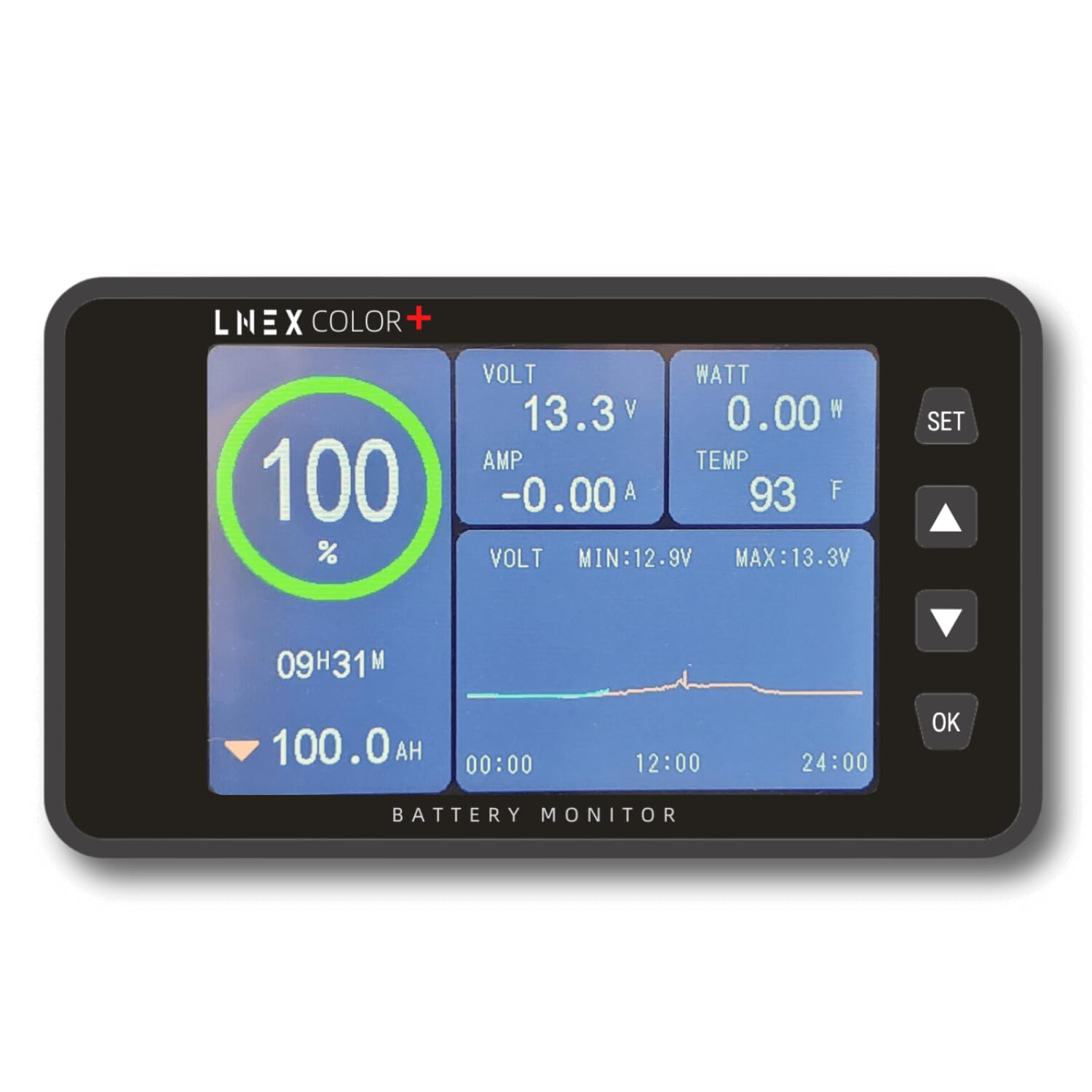
A color screen is easy to read at a glance, while Bluetooth lets you check the battery from your phone. Some models offer both. Look for backlighting and a clear layout.
Alarms and Data
Low voltage and low charge alarms warn you before the battery is damaged. History features show how much energy you used over time.
Installation
Shunt monitors need to be wired into the negative cable, so allow time and use proper fuses and cables. If you are unsure about the wiring, ask a qualified installer.
Common Mistakes to Avoid
- Buying a voltage only monitor when you need an accurate state of charge.
- Choosing a shunt rating below your maximum load.
- Connecting loads to the wrong side of the shunt, which gives wrong readings.
- Skipping the battery capacity setting during setup.
- Working on battery wiring without disconnecting power and using proper protection.
Care and Setup Tips
Follow the manual to set battery capacity and charge parameters, and sync the monitor to full charge periodically so the reading stays accurate. Keep terminals and connections clean and tight, and check cables for wear.
Frequently Asked Questions
What is a battery monitor?
A battery monitor tracks voltage, current, and state of charge so you know how much power is left.
Do I need a shunt?
For accurate state of charge in an RV, boat, or solar system, yes. A voltage only monitor is fine for simple checks on a car battery.
Can I use one on a lithium battery?
Yes, if the monitor supports lithium iron phosphate or lets you set the voltage and capacity. Check the product details.
How accurate are battery monitors?
Shunt monitors are usually accurate to within a few percent when set up and synced correctly. Voltage monitors are less precise because voltage changes with load.
Can I install a battery monitor myself?
Many people do, but you are working with high current batteries, so follow the manual and safety steps. See our guide to the best battery charger and jump starter for related gear.
Final Thoughts
Match the monitor type and shunt rating to your system, confirm battery chemistry support, and install it carefully. Compare your shortlist in the product table above, and the best battery monitors for your setup will give you a clear picture of your power at a glance.


