
Best Bathtubs for 6 Month Old in 2026: Types Compared and How to Choose
Disclosure: We may earn a commission when you buy through links on this page, at no extra cost to you. As an Amazon Associate I earn from qualifying purchases. Learn more

Compare bathtub types for a 6 month old by support, size, drainage and storage, with a clear checklist for safe and simple daily baths at home.
At six months, bath time changes fast. Your baby pushes up, kicks hard, and may sit for a few seconds before tipping sideways. The best bathtubs for 6 month old babies match this in between stage, with support for early sitting and room to splash. Use the product table below to compare each type against your space and routine.
Tubs differ in shape more than in color or price. Some hold a reclined baby, some prop a new sitter upright, and some fold away in a small bathroom.



Who Should Buy a Bathtub for a 6 Month Old?
Start with what your baby can do today. Sitting skill decides the seat angle you need.
Babies Who Sit With a Little Support
Your baby sits for short stretches, reaches for toys, and still tips sideways without warning. Choose a tub with a raised seat back and a contoured base that keeps hips from sliding forward. At this same stage, many families also set up feeding seats, so see our guide to the best high chairs for 6 month old and our guide to the best chairs for 6 month old for the sitting skills your baby uses at meals too.
Babies Who Still Recline and Kick
Your baby has strong head control but prefers to lie back, straighten both legs, and splash with full body energy. Choose a tub with a gentle recline, a padded head area, and enough length for extended legs. A removable newborn sling can help for a few more weeks, but remove it once your baby pushes against it.
Families Moving From a Sink to the Family Tub
Your baby has outgrown the kitchen sink, and lifting a full small tub onto a counter now strains your back. Choose a standalone tub that sits inside the family tub, where splashes stay contained. Measure the inside floor of your family tub first, because curved walls steal usable length.
Key Features to Compare
The best bathtubs for 6 month old babies share a short list of traits: support that changes as sitting improves, honest size limits, a steady base, clear water guidance, and surfaces that dry fast.
Support That Changes From Recline to Sitting
Support defines this age. Look for two positions in one tub, a reclined end for babies who still lean back and a more upright end for new sitters. A contoured seat with a small central rise helps stop your baby sliding down. Never leave your baby alone in water, even for a few seconds, and ask your pediatrician about bath safety for your baby.
Size, Weight Limits and Room to Grow
Check the stated length and weight limits against your baby now, not at birth. Many baby tubs suit babies up to about 25 to 30 pounds, but the useful limit is often length, because a baby who can push feet against the end can tip sideways. Leave a few inches of length beyond your baby today so the tub lasts through the next growth spurt.
Nonslip Surfaces and a Steady Wide Base
Look for textured patches inside the seat, rubber feet or suction grips underneath, and a wide base that resists rocking when your baby kicks one side. Place the tub on a flat surface and press each corner before you add water, because a tub that rocks empty will move more when full. Inside the family tub, fill it partway and test again before lifting your baby in.
Water Depth, Fill Lines and Temperature Cues
At six months, most baths use only a few inches of water, enough to warm the body while your baby sits or reclines safely. A printed fill line removes guesswork and helps another caregiver repeat the same safe depth. Some tubs add a temperature cue that changes color when water runs too hot, but your inner wrist or elbow remains the main check.
Drainage, Materials and Fast Drying
You will empty this tub hundreds of times, so drainage shapes daily life. A drain plug near the low end lets you empty the tub in place inside the family tub, without lifting heavy water. Smooth molded plastic rinses clean and resists odor when it dries fully, while deep seams and fabric slings hold moisture. A hook hole for hanging storage helps the tub dry upright and stay ready.
Types of Bathtubs Compared
Four forms cover nearly every home. Mid range options usually add a drain plug and a firmer seat, while premium options add thicker walls and a temperature cue.
Standalone Convertible Tubs for Daily Home Use
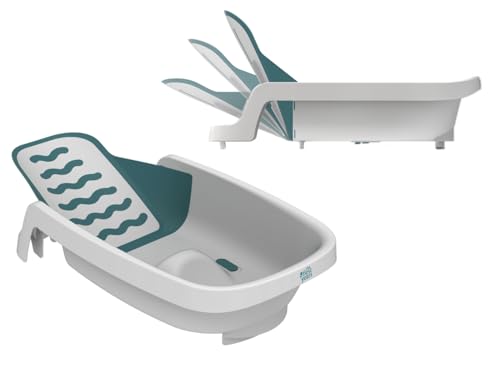
These rigid tubs sit inside the family tub or on the bathroom floor and offer both a reclined end and a seated end. They give the steadiest base and the longest use. Most cost about $25 to $50. Choose this form for daily home use if you have space to store a rigid tub.
Fold Flat Tubs for Small Bathrooms
These tubs collapse at soft joints and hang on a wall or door, which suits apartments and shared bathrooms. Seat support is usually simpler, with one main angle and a removable insert for smaller babies. Most cost about $20 to $45. Check that the opened base feels rigid, because flex makes a new sitter feel unsteady.
Inflatable Tubs for Travel and Visits
These soft tubs pack small, inflate inside a family tub or a shower floor, and cushion every side. They suit trips and short stays where no baby tub lives. Most cost about $15 to $30. Air walls give comfort but less seat structure, so this form fits babies who already sit with light support.
Sink Inserts for Counter and Sink Bathing
These padded inserts shape a sink or wide basin into a small supported seat. They cost about $15 to $35 and store in a drawer. At six months many babies exceed sink length, so treat this form as a short bridge or a travel backup. Check faucet clearance first, because a tall faucet leaves little room for a kicking baby.
Common Mistakes to Avoid
- Keeping the newborn sling in place after your baby pushes against it lets your baby twist into an unsafe position.
- Filling the tub above the printed line raises water around a seated baby who can lean forward.
- Placing a baby tub on a curved surface lets the base rock and spill water with the first kick.
- Lifting a full tub to drain it strains your back and risks dropping the tub near your baby.
- Storing a damp tub in a closed closet traps moisture and leaves odor on skin contact surfaces.
- Choosing a tub by toddler size alone gives a six month old too much room to slide.
Setup and Care Tips for a Baby Bathtub
Read the manual before first use, set the tub on a flat surface, and add water before you bring your baby to the room. Gather the towel, washcloth, soap, and a clean diaper within arm reach so you never step away. After the bath, empty the tub through its plug, then rinse away soap film with plain warm water.
Clean and inspect the tub each week. Wipe seams, the drain plug, and any insert with a mild cleaner the maker allows, rinse well, and hang it to dry in moving air. Check for cracks, sharp edges, and loose plugs, and stop using a tub with damage near the seat. When your baby outgrows it and nears first steps, you can see our guide to the best shoes for 12 month old babies for that next stage.
Frequently Asked Questions
What features matter most in a bathtub for a 6 month old who is learning to sit?
Seat support matters most, followed by a steady base and a clear fill line. A raised back and a contoured seat keep a new sitter upright while you wash. One point many parents miss is seat texture, because a smooth wet seat lets a soapy baby slide even in a well shaped tub.
When should you remove the newborn sling from a bathtub for a 6 month old?
Remove the sling once your baby pushes against it, arches, or shifts sideways in it. For many babies that moment arrives before six months. After removal, lower the water a little for the first few baths, because the firmer seat changes how your baby balances. Stay within arm reach during those first sling free baths.
How long can a 6 month old use a convertible baby bathtub?
Most babies use a convertible tub until about nine to twelve months, when length or a wish to stand ends the routine. The real end point is behavior, not age, because a baby who pulls up on the rim needs the open family tub with close support instead. Measure length again at nine months before you assume the tub still fits.
How much should you spend on a bathtub for a 6 month old?
Most families spend about $20 to $50 for a tub that covers daily home use well. Budget forms under about $25 cover the basics for travel or a second home. Spending more mainly buys thicker walls, a drain plug, and a temperature cue, not a longer period of use for most homes.
How do you clean and dry a bathtub for a 6 month old between baths?
Rinse the tub after each bath, shake off standing water, and hang it or stand it on its end to dry. Once a week, wash seams and the plug area and let the tub dry fully before storage. A tub put away damp can develop odor in the seams within a week.
Final Thoughts
Match the tub to sitting skill first, then to your bathroom and your storage. Support, honest size limits, a steady base, and fast drying will shape every bath more than color or bundled extras. Use the product table above to check form, size limits, and price.
When you compare the best bathtubs for 6 month old options with those points in mind, one form usually stands out for your home. Pick that form, set it up the same way each time, and bath time stays calm.


