Best Bathroom Vanities for Small Bathroom (2026): Floating, Freestanding and Corner
Disclosure: We may earn a commission when you buy through links on this page, at no extra cost to you. As an Amazon Associate I earn from qualifying purchases. Learn more

Choose the best bathroom vanity for small bathroom layouts by depth, drawers, door swing, materials and price.
A small bathroom leaves little room for error. A vanity a few inches too deep can crowd the door swing, block a drawer, and make a tight room feel tighter. Choosing the best bathroom vanity for small bathroom layouts means balancing useful storage, enough sink space for daily routines, and enough open floor to move in comfort. The product table below lines up the main types side by side so you can compare size, storage, and fitting needs before you commit.
If you are still weighing a standard size against a compact one, our guide to the best bathroom vanity covers the wider market, while this page stays focused on rooms where every inch counts.

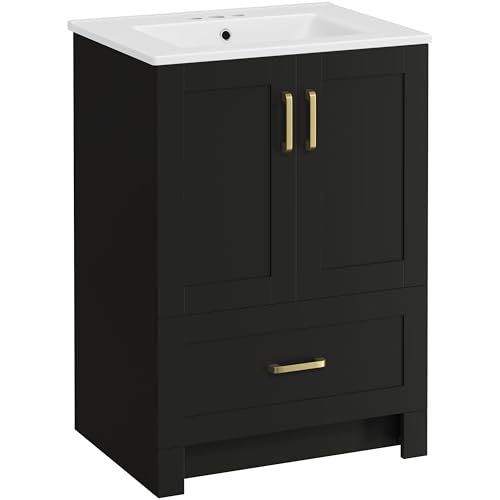


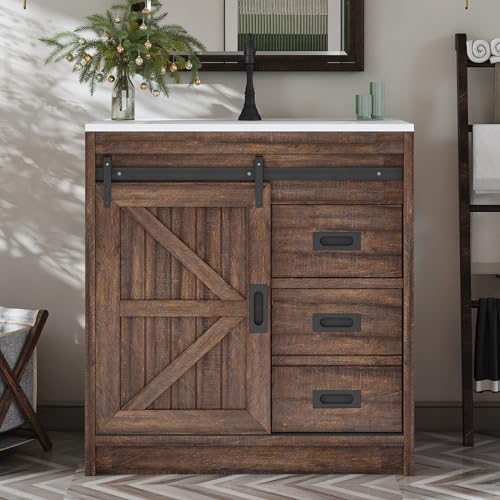
Vanity Types at a Glance
Three types cover nearly every small bathroom. Floating vanities mount to the wall and leave the floor visible, which makes a room feel less crowded. Freestanding vanities rest on legs or a solid base and usually give deeper storage and a simpler install. Corner vanities tuck into an unused corner and free the longest wall for a mirror or the door swing. Readers comparing compact footprints may also want our guide to the best small bathroom vanity, which focuses only on the narrowest widths.
Three Vanity Types Compared for Small Bathrooms
Floating Vanities for Tight Floor Plans
A floating vanity fixes to the wall studs and stops short of the floor, so the room reads as larger than it is. Compact models usually run 24 to 36 inches wide with reduced depth, and storage means one or two wide drawers that wrap around the plumbing inside. The wall carries the full weight of the cabinet, top, and sink, so you need a solid wall and confident fixings before you choose this type.
Freestanding Vanities for Flexible Storage
A freestanding vanity stands on the floor, so it suits renters and anyone whose walls cannot carry a heavy floating cabinet. It often holds more than a floating unit of the same width, and its position can shift a little to meet existing plumbing. The cost is visual bulk. In a very small room a solid base closes in the floor plan, so a legged design is often the better freestanding choice.
Corner Vanities for Awkward Layouts
A corner vanity fits where a straight cabinet will not, such as rooms where the door opens against the only usable wall. You gain a working basin and a little storage without narrowing the main walkway. The limits are real, though. The sink is small, counter space is minimal, and only one person can use it at a time. Measure both walls with care, because corners are often out of square and a poor fit leaves gaps behind the top.
How We Chose the Criteria in This Guide
This guide judges every type against the factors that decide daily satisfaction in a small room: comfort in use, build quality and materials, size and load, ease of assembly, and warranty coverage. These criteria come from manufacturer dimension sheets, published fitting requirements, and patterns that recur in verified buyer feedback, such as drawers that clear plumbing.
How to Choose the Right Bathroom Vanity for a Small Bathroom
Size and Form Factor
Start with the space, not the catalog. Measure the wall width, the distance to the door swing, and the depth you can give up while standing comfortably at the sink. Compact vanities commonly run 24, 30, and 36 inches wide, with reduced depth versions around 18 inches deep instead of the standard 21 inches, and that saved depth often matters more than width. If your wall space sits near the top of the compact range, our guide to the best 36 inch bathroom vanity shows what that width can hold.
Type
Match the type to your walls and plumbing. A floating vanity needs studs or a reinforced wall and plumbing that exits through the wall at the right height. A freestanding vanity forgives floor level plumbing and uneven floors, since adjustable feet can level it. A corner vanity needs two walls that meet closely enough for the top to sit neatly. Style labels such as modern or farmhouse describe door shape and finish, not size, so settle the footprint first.
Features Worth Paying For
The features that earn their cost return space or prevent daily annoyance. Drawers usually beat cupboards, because you can see and reach everything without kneeling and digging at the back. Soft close runners and hinges are worth paying for in a small home, since slamming echoes in tight quarters. An integrated top with a molded sink removes a seam where water and grime collect, and a backsplash protects the wall paint behind the faucet.
Height, Depth, and Clearance
Vanity height now sits around 32 to 36 inches including the top, and taller cabinets suit taller households because they reduce how far you bend at the sink. A shallow cabinet leaves more standing room but shrinks drawer depth and sink size, so test your largest daily items, such as a hair dryer or tall bottles, against the listed internal drawer dimensions before ordering.
Adjustability and Flexible Fitting
Small bathrooms rarely have perfect walls or perfectly placed pipes, so fitting flexibility saves real money. Look for adjustable feet on freestanding cabinets to level the unit on a sloping floor, and adjustable shelves inside a cupboard so tall bottles fit beside stacked towels. Some drawer boxes include a shaped cutout at the back that clears the waste pipe without losing the whole drawer.
Materials and Durability
Small bathrooms with weak ventilation are the hardest rooms of all on furniture. Solid wood handles moisture well when sealed on every face, and our guide to the best wood bathroom vanity explains the timber options in depth. Engineered boards such as plywood cost less and stay flat, but once water reaches a raw edge, the board can swell and the finish can lift. A plywood carcass usually outlasts a particleboard one in a damp room. For the top, ceramic and stone resin resist stains and heat well, while natural stone needs sealing.
Assembly and Warranty
Compact vanities arrive fully assembled, partly assembled, or flat packed. Fully assembled cabinets install fastest but are hardest to carry through narrow halls, which matters in small homes. Check whether the top and sink are included, and whether faucet holes are drilled or left for you to arrange. Read what the warranty actually covers, because many warranties exclude water damage, which is the failure small bathrooms cause most often.
How Much Should You Spend?
Price follows materials and hardware more than size. Basic flat packed cabinets in small widths often sit under $200 and suit a spare bathroom or a rental. The middle ground of about $200 to $500 usually buys a plywood cabinet, soft close drawers, and a ceramic or stone resin top, the combination most small bathrooms need. Spending about $500 to $1,000 brings solid timber, thicker tops, and better drawer hardware. Budget separately for the faucet and any plumbing changes, because those costs can rival the cabinet price on a floating install.
What Matters Most in a Small Bathroom
In a large bathroom, a vanity is mostly storage and style. In a small one, it is also a space planning decision. Door and drawer clearance comes first, because a cabinet that blocks movement fails every day. Visible floor comes second, which is why floating and legged designs feel calmer than solid bases. Storage that matches your actual routine comes third. If you are planning the whole room rather than one cabinet, the bathroom vanity buying guide walks through layout planning in full. Finally, plan for plumbing access, and avoid designs that bury the shut off valves behind fixed panels.
Common Mistakes to Avoid
- Measuring only the wall width and forgetting the door swing, so the bathroom door strikes the new cabinet every time it opens.
- Choosing a standard depth cabinet for a narrow room, so the walkway in front of the sink becomes too tight to stand in.
- Ordering a floating vanity for a wall with no studs in the right places, so the cabinet cannot be fixed securely.
- Ignoring the position of the waste pipe, so the top drawer cannot close once the plumbing is connected.
- Picking open shelving for a bathroom with no other storage, so towels and bottles end up stacked on your limited counter space.
- Skipping the backsplash to save money, so water running down the wall behind the faucet damages paint and plaster over time.
Care and Maintenance
Water is the main threat to any vanity, and small bathrooms concentrate it. Wipe splashes off the cabinet front after heavy use, because water sitting on a joint or a chip works into the material underneath. Run the extractor fan during showers and for a while after, since lower humidity protects finishes and hardware alike. Check under the sink every few months for slow drips at the supply lines and the trap, and fix a drip early, because a soaked cabinet base rarely dries back to its original shape.
FAQ
What is the best bathroom vanity for small bathroom layouts?
There is no single winner, because the best fit depends on your wall, your plumbing, and your storage gap. For most small rooms, a 24 to 36 inch floating or legged vanity with drawers gives the strongest balance of storage and open floor. Add one filter many buyers miss: choose the type your wall and waste pipe support without paid plumbing changes, because install costs can erase the value of a nicer cabinet.
What should I look for in a bathroom vanity for a small bathroom?
Look first at reduced depth, drawer storage that clears the plumbing, and a finish sealed on hidden edges as well as the doors. One extra check is worth your time: read the listed internal drawer measurements, not just the outside width. Two vanities with the same outside size can differ by several usable inches inside, and that decides whether your daily items fit or migrate to the counter.
How long does a bathroom vanity last?
A well made vanity in a ventilated bathroom commonly lasts about 10 to 20 years, with the top and the hardware aging at different rates. You can extend that span without a full replacement. Swapping worn drawer runners, replacing a stained top while keeping a sound cabinet, or repainting the doors can each add years. Water damage at the cabinet base is the one failure that rarely repays repair, so prevention matters more than rescue.
Is a bathroom vanity worth it for a small bathroom?
Yes, in most cases, because a vanity is usually the only closed storage a small bathroom has, and it hides plumbing that a bare pedestal sink leaves exposed. The case weakens if your room already has a separate storage cabinet and you rarely store anything at the sink. Then a slim pedestal can free more floor than any cabinet. Decide by listing what you actually keep in the bathroom today.
How do you clean a bathroom vanity?
Clean the cabinet fronts with a soft cloth, warm water, and a little mild soap, then dry the surface so moisture does not sit in the joints. Avoid abrasive pads and harsh sprays on painted finishes, because they dull the coating that keeps water out. Clear toothpaste and soap buildup from the sink weekly so it cannot stain. For deeper guidance, see how to clean a bathroom vanity.
What is the most reliable bathroom vanity brand?
Reliability depends more on construction than on the name on the box, so judge any brand by the same signs. Look for a plywood or solid wood carcass, drawer runners rated for daily use, a warranty that names its water related terms clearly, and spare hinges the maker still sells. A brand that publishes full dimension drawings is also easier to install correctly, and correct installation is where most early failures begin.
Final Thoughts
In a small bathroom, the vanity has to earn its footprint every day. Measure the room and the door swing first, pick the type your wall and plumbing support, and favor drawers and sealed materials over decorative extras. The product table above pulls the key sizes and features together for a quick comparison. Chosen with care, the best bathroom vanity for small bathroom spaces will give you calm storage, a clear floor, and a room that finally feels easy to use.