Best Bathroom Slippers 2026 How To Choose Wisely
Disclosure: We may earn a commission when you buy through links on this page, at no extra cost to you. As an Amazon Associate I earn from qualifying purchases. Learn more

Compare bathroom slippers for wet floors, grip, comfort, and easy cleaning. Find quick drying, non slip pairs that stay safe from shower to bedroom.
Choosing the best bathroom slippers means balancing grip, drainage, and comfort in a pair that will get wet almost every day. Unlike bedroom slippers, bathroom pairs must handle tile floors, splashes, and damp conditions without turning slippery or staying soggy. The right pair feels secure underfoot, dries between uses, and slips on easily when hands are full.
The product table below lets you compare sole grip, material, and drainage across pairs before you read the details. Use it to shortlist pairs that suit your floor type, then work through the fit and care factors in this guide.





Who Should Buy Bathroom Slippers
Anyone who walks on tile or stone floors after a shower benefits from a dedicated bathroom pair. People with smooth floors need grip most, while people with cold bathroom floors in winter want a pair with some insulation and coverage. Households with shared bathrooms benefit from quick drying pairs that do not stay damp between users.
People with sensitive feet should look for soft linings and adjustable straps, since a rigid slipper can rub during longer wear. If you wear slippers from the bathroom into the bedroom, choose a pair that works on both hard floors and rugs without dragging. Think about your full morning routine, not just the shower exit, when you judge a pair.
Grip, Drainage, And Sole Design
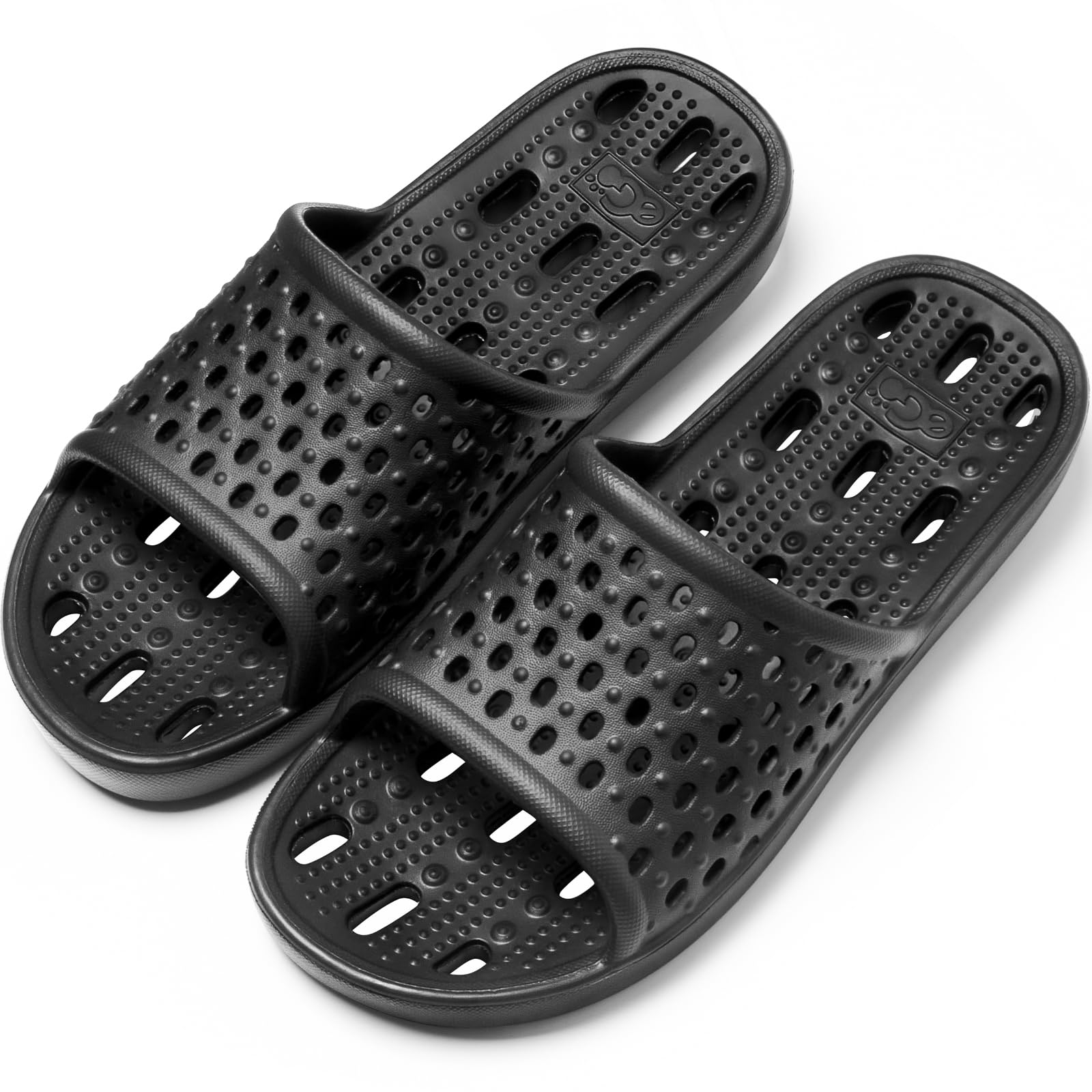
The outsole decides safety on wet tile. Look for a textured rubber sole with grooves that channel water away rather than a smooth flat sole. Deeper tread grips better on wet surfaces, but very deep tread can trap dirt, so a medium tread with open channels is a good compromise. Check grip on a damp floor before committing, since some soles grip well when dry and slip badly when wet.
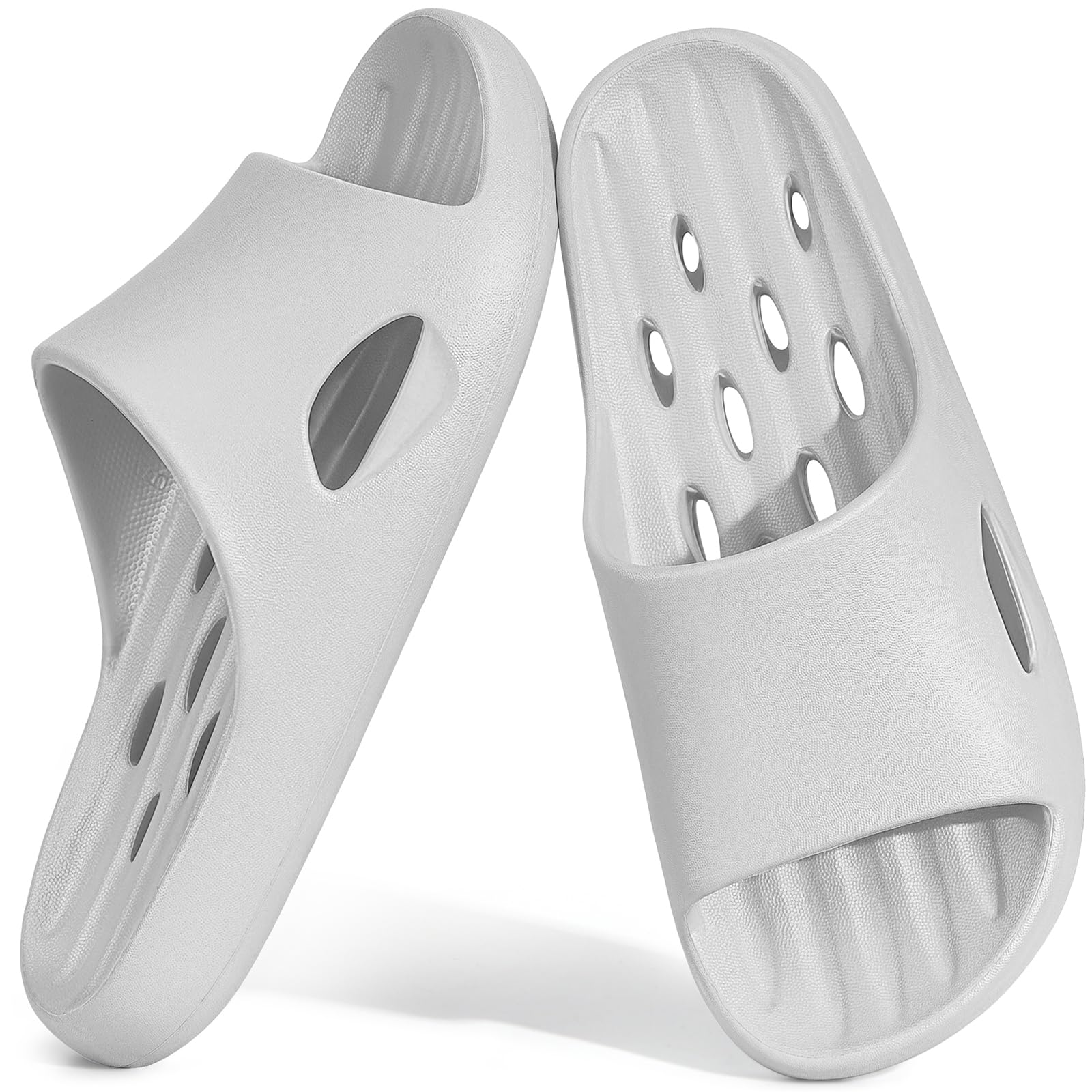
Drainage matters for open toe and slide styles. Holes or channels in the footbed let water escape instead of pooling underfoot, which keeps the slipper lighter and less slippery. Closed slippers without drainage suit dry bathroom routines but can stay damp after a shower. Choose drainage features that match how wet your slippers actually get each day.
Materials, Fit, And Comfort
EVA foam is light, water resistant, and easy to clean, which makes it a popular bathroom slipper material. Rubber soles add durability and grip, while fabric uppers feel softer but take longer to dry. Terry lined pairs feel cozy in winter but need more drying time, so they suit bathrooms with good ventilation and a second pair for rotation.
Fit should be snug enough that the slipper does not slide off mid step, but loose enough to avoid pressure on the toes. Adjustable straps help when feet swell slightly during the day or when the same pair is shared. Try slippers on at the end of the day if possible, since feet tend to be slightly larger then, and check that the heel sits securely without slipping.
Hygiene, Care, And Replacement
Bathroom slippers need regular cleaning because damp conditions encourage odor and mildew. Rinse foam and rubber pairs often and let them air dry fully between uses. Fabric pairs should be machine washable, and you should wash them as often as the care label allows. Rotating two pairs extends the life of both and guarantees a dry pair is always available.
Replace slippers when the tread wears smooth, the footbed compresses unevenly, or the material cracks or peels. Worn tread is easy to miss because it changes gradually, so check the sole every few months by running a finger across it. A pair that once gripped well can become a slip risk once the tread is gone, so do not wait for a fall to replace it.
A Final Check Before You Buy
Before you buy, check the size chart carefully, because slipper sizing varies widely between brands and a size up or down can change grip completely. Read the care label too, since a pair that cannot be cleaned easily will not stay pleasant for long. Keep the receipt until you have worn the pair on a wet floor at home, so a return stays simple if the grip disappoints.
Consider buying two pairs if your bathroom stays humid or if more than one person uses the same bathroom. A dry pair each morning feels better and lasts longer than a single pair that never fully dries. That small extra cost pays off in comfort and safety over the life of the slippers.
Living With Bathroom Slippers
A simple daily habit keeps bathroom slippers pleasant: rinse them after use and stand them somewhere airy to dry. Slippers left in a puddle or a closed shower caddy stay damp and develop odor quickly, while slippers given airflow dry fully between uses. If your bathroom stays humid, keep slippers outside the bathroom door between showers so they dry faster.
Travel is another use worth planning for. A light pair of bathroom slippers packs easily for hotel stays, gym visits, and pool trips, where shared floors make personal footwear wise. Keep a dedicated travel pair in your bag so you never need to walk barefoot on unfamiliar wet floors. The same grip and drainage features that help at home help just as much away from home.
Slippers For Different Household Members
Different household members need different slippers, even in the same bathroom. Children need secure, easy to clean pairs in small sizes with strong grip for wet floors. Older adults need pairs that slip on without bending and stay stable underfoot. Guests appreciate a spare pair in a common size, so they need not walk barefoot on tile.
Buying per person avoids the hygiene and fit problems of shared slippers. Label or color code pairs if several look alike, so each person grabs the right fit every time. A small basket near the bathroom door keeps pairs organized and off the floor, which also reduces clutter and trip risks in the hallway.
Related Buying Guides
For a broader quality comparison, read our guide to best quality slippers.
If maximum grip is your priority, see our guide to best anti slip bathroom slippers.
To complete your bathroom set, read our guide to best bathroom towels.
For women focused styles and fits, see our guide to best slippers for women.
For men focused styles and fits, read our guide to best male slippers.
Frequently Asked Questions
Are bathroom slippers different from regular slippers?
Yes, bathroom slippers use water resistant materials, drainage features, and grippy rubber soles designed for wet tile. Regular bedroom slippers often use fabric soles and absorbent linings that turn slippery and soggy in a bathroom. A dedicated bathroom pair stays safer and lasts longer in damp conditions, and that difference matters most on wet tile.
What sole is safest on wet bathroom floors?
A textured rubber sole with open grooves is safest, because it channels water away and maintains contact with the tile. Smooth plastic soles and worn tread both slip easily when wet. Check the tread regularly, since even a good sole loses grip as it wears down over months of use, since tread condition changes gradually and is easy to miss.
How do I stop bathroom slippers from smelling?
Rinse slippers after use, let them air dry fully, and rotate two pairs so neither stays damp all day. Wash fabric pairs as often as the label allows, and rinse foam pairs with clean water to remove soap residue. Persistent odor after cleaning usually means the material has broken down and the pair should be replaced, which keeps pairs pleasant between washes.
Should bathroom slippers be open toe or closed toe?
Open toe styles drain faster and suit warm bathrooms and shower use, while closed toe styles keep feet warmer and protect toes from bumps. Choose open toe if your slippers get soaked daily, and closed toe if warmth and coverage matter more. Adjustable straps help either style fit securely, and that choice depends on how wet your routine really is.
How long do bathroom slippers usually last?
Most bathroom slippers last six months to a year with daily use, depending on material and care. Foam pairs wear faster than rubber soled pairs, and heavy use shortens life further. Replace them when tread wears smooth, the footbed flattens unevenly, or the material cracks, since worn slippers lose both comfort and grip, so a quick sole check every few months is a wise habit.
Final Thoughts
The product table above gives a quick comparison, but grip and drainage should decide your choice. Pick a pair that holds the floor when wet, dries between uses, and fits securely without pressure. Those three qualities matter more than style alone in a bathroom.
Try the pair on a damp floor at home before you commit, and keep a second pair for rotation if your bathroom stays humid. Choosing the best bathroom slippers is a small decision that makes every shower exit safer and more comfortable.