Best Basic Watches in 2026: A Buying Guide for Everyday Use
Disclosure: We may earn a commission when you buy through links on this page, at no extra cost to you. As an Amazon Associate I earn from qualifying purchases. Learn more

The best basic watches keep dial, fit and water resistance simple. Compare analog, digital and solar styles before you buy.
A basic watch has one job: tell the time clearly, comfortably, and without drama. The best basic watches are simple quartz or digital models with readable dials, durable straps, and a battery that lasts for years. This guide explains the choices that matter, from case size to water resistance, so you can pick a watch you will actually wear every day.
The product table above lists current options at everyday prices. Below, you will find the main styles compared, the features worth checking, and practical advice on fit and care.




What Makes a Watch "Basic"
A basic watch skips smart features and complicated complications. It shows the hour and minute, usually the date, and sometimes a stopwatch or alarm. Most cost roughly $20 to $250. Because there is no charging and no app, a good basic watch is the simplest accessory you own: put it on and forget about it.
Types of Basic Watches Compared
Analog Quartz Watches
Analog quartz watches have hands, a date window, and a battery that lasts two to five years. They are accurate, light, and inexpensive, and they suit office, school, and casual wear. Look for a flat mineral crystal, a clear dial with legible markers, and a case thickness you can slide under a cuff.
Digital Watches
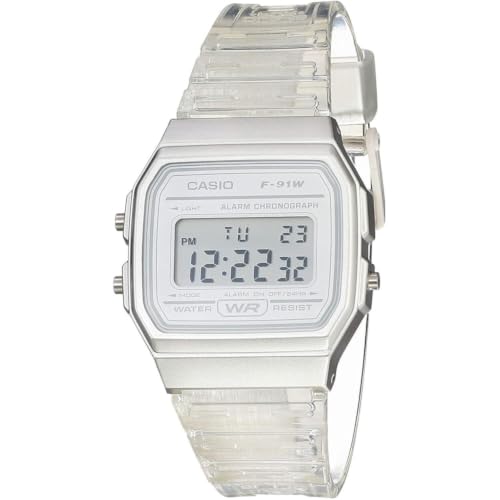
Digital watches show time on an LCD and often add an alarm, a stopwatch, and a backlight. They are tough, cheap, and easy to read at a glance, which is why a few classic models have been popular for decades. They suit sports, work shifts, and kids learning to tell time.
Field and Casual Watches
Field style watches use clean, high contrast dials, fabric or leather straps, and a gentle vintage look. They work as an everyday watch for jeans or a shirt. Many include a night light for the dial, which helps in dark rooms.
Solar and Eco Drive Watches
Light powered watches recharge from sunlight or room light and rarely need a battery change. They cost more, often $150 to $300, but suit buyers who want a basic watch they can wear for years without service.
Key Features to Compare
- Case size: 36 to 40 mm suits smaller wrists, 40 to 44 mm suits larger wrists. Check the lug to lug length, which decides how the watch sits.
- Dial readability: high contrast hands and markers matter more than any extra feature.
- Water resistance: 30 meters means splash resistance, 50 meters handles light swimming, and 100 meters suits regular water use.
- Crystal: mineral glass is common and adequate, while sapphire resists scratches best but costs more.
- Strap: resin and stainless steel hold up to sweat, while leather and fabric feel softer but need more care.
- Battery or power: check expected battery life, or choose a solar model to avoid changes.
Fit, Strap, and Comfort
Comfort decides how often you wear a watch. Measure your wrist and compare it with the case diameter and lug to lug length in the product details. The strap should leave room for one finger when fastened, and the watch should not slide when you hold your hand up. Quick release spring bars let you swap straps without tools, and replacement straps cost little.
Who Should Buy a Basic Watch
Basic watches suit students, commuters, shift workers, and anyone who wants a reliable timepiece without a charger. They also suit gift buyers and kids, since simple models are durable and affordable. They are less suited to people who want notifications, GPS, or health tracking, who should compare smart or running models instead.
Choosing for Your Routine
Think about where the watch will spend most of its time. An office watch benefits from a slim case, a quiet dial, and a steel or leather strap. A school or work watch faces knocks, so resin and a mineral crystal are practical. A weekend watch can lean on fabric straps and a vintage dial. If you wear it nearly every day, spend a little more on the strap and case finish, because those parts take the most wear, and keep a spare strap in a different color to refresh the look without buying another watch.
Care and Maintenance
Wipe the case and strap with a soft cloth, and rinse the watch with fresh water after swimming in the sea or a pool, if the water resistance rating allows it. Avoid pressing buttons underwater, and keep the watch away from strong heat and magnets. Replace the battery when the second hand starts to jump or the display dims, and ask the shop to check the gasket so water resistance stays intact.
Common Mistakes to Avoid
- Choosing a case too large for the wrist, which makes the watch sit awkwardly.
- Assuming 30 meters water resistance is safe for swimming.
- Ignoring dial readability for a fashionable but low contrast face.
- Paying for complications and features you will never use.
- Skipping the return policy, which is your safety net if the fit feels wrong.
Related guides: our best basic smart watches guide covers simple connected models, the best basic running watches guide covers GPS options, and the best quality watches guide looks at higher build standards.
Basic Watches: Your Questions Answered
How do I choose between analog and digital?
Choose analog for a classic look at work or school, and digital for sport, alarms, and quick reading in any light. If you want both, analog digital hybrids exist.
How long does a basic watch battery last?
A quartz watch battery usually lasts two to five years, depending on the model and features like backlights. Some digital models are rated for up to ten years.
What water resistance do I need?
For hand washing and rain, 30 meters is enough. For swimming or snorkeling, choose 100 meters or more, and follow the maker's instructions about buttons and crowns.
Are cheap watches worth buying?
Yes, for everyday use. Inexpensive quartz and digital watches keep excellent time. Higher prices mostly buy better materials, finish, and warranty, not better timekeeping.
What size watch fits a small wrist?
A case of 34 to 38 mm with a short lug to lug length fits most small wrists. Check the product dimensions rather than relying on the label alone.
Final Thoughts
Choosing among the best basic watches comes down to dial readability, a comfortable fit, and the water resistance you need. Use the product table above to narrow your shortlist, and pick the watch you will reach for every morning.