Best Barware Tool Sets in 2026: Which Type Is Right for You?
Disclosure: We may earn a commission when you buy through links on this page, at no extra cost to you. As an Amazon Associate I earn from qualifying purchases. Learn more
Boston, cobbler, or station set: see which of the best barware tool sets suits your home bar, your budget, and your drink list.
Barware tool sets all promise the same home bar, yet they are built around three different shaker styles, and that single choice changes how you mix, how you clean up, and how much counter space the set demands. Add stands, cases, and mixing glasses to the mix and the options multiply fast. Understanding the types first is the fastest route to the best barware tool sets for your habits, because a set built around the wrong shaker style will annoy you every single round.
This guide compares the main set types side by side, explains who each type suits, and then walks through the details that separate a durable set from a drawer full of regrets. Start with the comparison table below, then read the type sections with your own drink list in mind.


Types of Barware Tool Sets Compared
The three types below are organized by shaker style, since the shaker is the tool every other piece supports. Boston sets pair two tins, cobbler sets use a three piece shaker with a built in strainer and cap, and complete station sets bundle either shaker style with a stand and extras. Prices overlap, so let your drinks and your space, not the sticker, sort the types.
Boston Shaker Sets
A Boston set pairs a large mixing tin with a smaller tin or a pint sized mixing glass, and the two seal together by hand pressure. This is the style working bartenders favor, because it shakes fast, pours fast, and rinses in seconds with nothing to disassemble. The seal is also the learning curve: beginners must practice the tap that locks the tins and the squeeze that releases them, and a sloppy seal sprays.
Capacity is generous, typically around 28 oz for the large tin, so two drinks per shake is easy. Choose a Boston set if you entertain, shake often, and want tools that clean as fast as you can rinse them. Typical prices run around $30 to $80 depending on steel weight and included extras.
Cobbler Shaker Sets
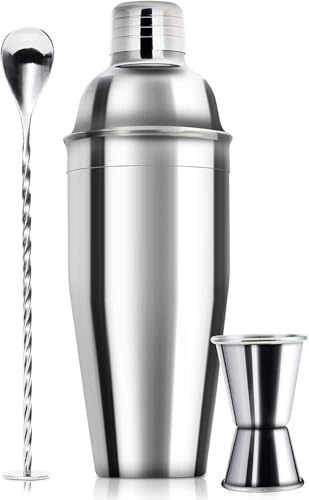
A cobbler set centers on a three piece shaker with a body, a built in strainer top, and a small cap that doubles as a rough measure. It is the friendliest style for a first home bar, because straining is built in and the process feels self contained. The trade offs appear in real use: the cap and strainer top can freeze shut as the metal chills, and the smaller capacity, often around 17 to 24 oz, suits one drink better than two.
Cleaning takes a little longer with three parts and narrow openings. Choose a cobbler set if you make one or two drinks at a time, value tidy presentation, and like the classic look on a bar cart. Typical prices run around $25 to $70.
Complete Station Sets
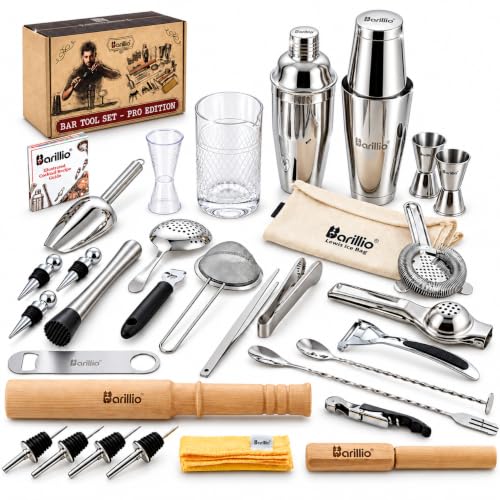
A station set bundles a shaker, jigger, strainer, spoon, muddler, tongs, and often pourers and a wine opener, all arranged on a stand or in a case. The appeal is completeness and display: everything has a place, guests can find tools, and the set reads as a finished bar at a glance. The risk is padding, since some station sets reach high piece counts with items you will never touch while skimping on shaker steel.
Judge these sets by the shaker and jigger first, and treat the stand as furniture you are also buying. Choose a station set for a dedicated bar area, frequent hosting, or a gift that should look impressive on arrival. Typical prices run around $50 to $150.
Boston vs Cobbler: Which Should You Choose?
Compare the two shaker styles on five points. Capacity: Boston tins win, handling two drinks and big ice without strain. Speed: Boston wins again, since sealing and rinsing take seconds. Ease for guests: cobbler wins, because anyone can follow the shake and pour routine without instruction.
Cleaning: Boston wins, with two open tins instead of a narrow necked three piece body. Looks: cobbler usually wins on a cart, with its single polished silhouette. If friends rotate through your kitchen and drinks are occasional, pick cobbler. If you are the house bartender and volume matters, pick Boston and spend one evening practicing the seal with water.
How to Choose the Right Barware Tool Set
Safety Features
Bar tools are gentle compared with kitchen knives, but details still matter. Rolled rims on tins prevent cut lips and fingers, while sharp stamped edges on cheap sets are a real hazard during washing. Muddlers should have smooth, rounded ends that bruise mint without tearing it, and no splinter prone unfinished wood.
Glass mixing pieces need thick, stable bases so a stirring spoon cannot tip them. If a set includes a channel knife or peeler, a cover for the blade is a small feature worth having in a crowded drawer.
Accessories Included
Accessories decide how complete the set feels on night one. A Hawthorne strainer, a jigger with inner markings, and a fine mesh strainer cover nearly every classic recipe between them. Pour spouts help with high volume parties but sit unused in quiet homes.
Ice tongs beat a scoop for garnish work and shared bowls. A stand or storage case protects finishes and keeps the set together, which quietly matters more each year. Count an accessory as value only if you can name the drink or task it serves in your own routine.
Capacity and Working Range
Capacity shows up in three places. Shaker volume sets how many drinks you can chill at once, around 24 to 28 oz for two servings. Jigger range sets your measurement floor and ceiling, and inner marks at quarter, half, and three quarter steps let you build half drinks and split recipes accurately.
Spoon length sets your stirring reach, with about 12 inches suiting standard mixing glasses. If you mostly make single drinks for yourself, a smaller cobbler and a simple jigger are honestly enough, and the money saved buys better bottles.
Warranty and Brand Support
Look for at least a one year warranty and a brand that sells replacement strainers, springs, and caps separately. Bar tool brands with a long retail history tend to keep the same shapes in production, so a piece bought today matches the set years later. If durability standards across tool categories interest you, our guide to the best quality tool sets shows how warranty terms signal build quality in general. Within barware itself, the wider buying guide to the best barware sets covers price tiers and care in more depth.
Stands vs Drawer Storage
How a set stores shapes how often you use it. A stand keeps tools visible and dry, which suits a permanent bar cart or counter corner, but it claims space forever and gathers dust in an open kitchen. Drawer storage hides everything and frees the counter, yet tools rattle, finishes scuff, and the jigger migrates to the back.
A middle path is a set with a compact stand for the counter during party season and a case for storage the rest of the year. Measure your intended spot before ordering, since stand heights vary by several inches.
Tips to Get the Most From Your Barware Tool Set
- Practice the shaker seal with water first. Ten practice shakes teach pressure and release without wasting a drop of anything you paid for.
- Chill your glassware while you mix. A cold glass keeps a strained drink at temperature minutes longer, which makes modest tools taste professional.
- Let dilution do its work. Shake or stir a few seconds longer than instinct suggests; proper dilution is the difference between harsh and balanced.
- Keep tools dry between sessions. Towel drying steel prevents spots and keeps springs and hinges moving freely.
FAQs
Can I mix pieces across brands?
Yes, bar tools follow loose shared sizing, so a strainer or jigger from one brand usually works with tins from another. The exception is fit critical pairing: a Hawthorne strainer should seat on your specific tin without rocking, so check diameter when mixing brands. Finishes will not match exactly, which bothers some display minded owners and nobody else.
Is heavier steel worth it in a barware tool set?
Usually yes for the shaker tins, because heavier steel seals more reliably, resists dents when tins knock together, and feels balanced during a long shake. For spoons, muddlers, and tongs, extra weight adds little, so a set that puts its steel budget into the tins is spending wisely. Judge by shaking water in both a light and a heavy tin if a store allows it.
What specs matter most for home bars?
Shaker capacity around 24 to 28 oz, 304 grade stainless steel, and a jigger with etched inner markings matter most, because they govern batch size, rust resistance, and measurement accuracy. After those, spoon length and strainer fit decide daily comfort. Stands, finishes, and piece counts are presentation choices, pleasant but secondary.
Boston or cobbler: which is better for beginners?
Cobbler is easier on day one because straining is built in and the steps feel obvious, while Boston rewards a short practice session with faster work forever after. Beginners who host crowds should still consider Boston, since making six drinks through a small cobbler gets slow. Honest answer: pick cobbler for solo drinks, Boston for parties.
Final Thoughts
Choose your shaker style first, Boston for speed and volume, cobbler for simplicity, a station set for display and completeness. Then confirm steel grade and jigger markings before you pay for stands and extras. The product table above lays the current options side by side on exactly those points. Decide in that order and the best barware tool sets for your bar will be the ones that still feel effortless on your fiftieth round, not just your first.