
Best Barometer Watches at Every Price: What Your Money Really Gets You for 2026
Disclosure: We may earn a commission when you buy through links on this page, at no extra cost to you. As an Amazon Associate I earn from qualifying purchases. Learn more

Compare the best barometer watches by price tier, with guidance on sensors, GPS, battery life, and durability so you spend where it matters most.
A barometer watch tracks air pressure so you can see weather trends building and read altitude changes on a climb. Prices stretch from under $100 to well over $700, and the gap is not just branding: sensor accuracy, GPS quality, mapping, battery life, and case materials all change as you spend more. Knowing which upgrades change your day outdoors and which only change the spec sheet is how you find the best barometer watches for your budget.
This guide breaks the market into three price tiers, explains what each tier realistically delivers, and flags the features worth paying for. Use the comparison table below for a quick view of the field, then read the tier sections to place your own needs.


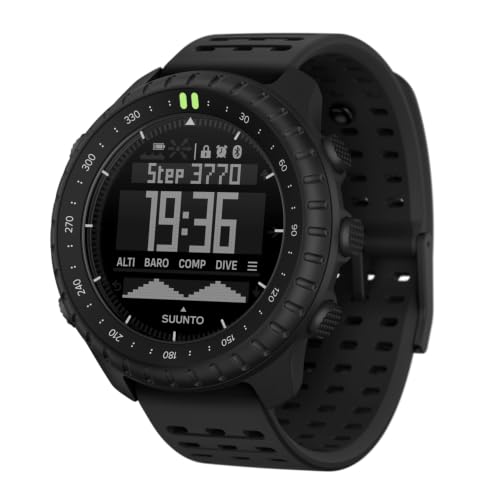
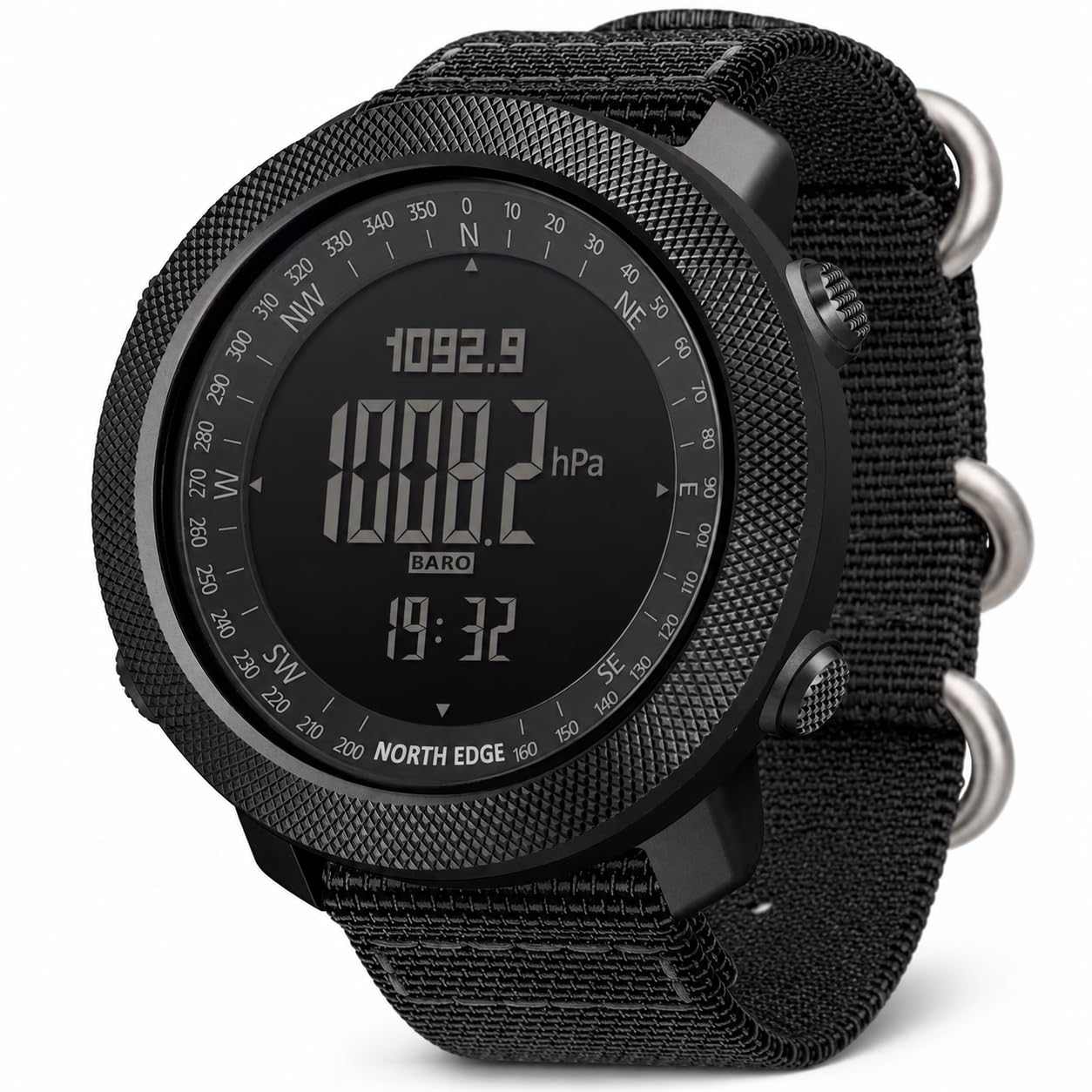


Choosing by Budget: Three Buyer Profiles
Budget Buyers
If you mainly want pressure trend graphs and a basic altimeter for day hikes, the budget tier covers you. Expect a digital watch with a barometric sensor, a storm alarm on some models, and a resin case that shrugs off knocks. You give up GPS mapping and color screens, and altitude readings rely on pressure alone, so they drift as weather moves in. For weekend use on marked trails, that trade off is often fine, and the money saved buys boots or a pack instead.
Midrange Buyers
Midrange buyers get the most complete tool for regular hiking, trail running, and backcountry trips. This tier typically adds GPS, a compass, better water resistance, and either strong battery life or solar charging. Pressure based altitude can be corrected by GPS, which keeps summit readings honest.
If you train with the watch as well, our guide to the best workout watches covers the fitness side of the same decision. For most outdoor users, this is where spending stops feeling like compromise.
Premium Buyers
Premium pricing buys durability and autonomy: sapphire crystal, titanium or stainless cases, detailed topographic maps, and multi week battery life even with GPS running. These watches suit guides, mountaineers, and anyone whose trips run long and remote. The honest limitation is size and weight, since big batteries and rugged cases wear large on smaller wrists. Pay this much only when the extra days of battery or the mapping will actually change your route decisions.
What Your Money Gets You at Each Price Tier
Budget Tier: What to Expect
Budget models, roughly under $150, focus on the core sensor trio of altimeter, barometer, and compass, often called ABC. Screens are basic monochrome, buttons do all the work, and straps are simple resin. Barometric trend arrows and a 24 hour pressure graph are common and genuinely useful for spotting a front moving in.
What you skip is satellite positioning, phone based route planning, and premium materials. Battery life on replaceable coin cells can run a year or more, which some buyers actually prefer over weekly charging.
Midrange Tier: The Sweet Spot for Most Buyers
Midrange watches, roughly $200 to $450, add GPS with route tracking, rechargeable batteries measured in days or weeks, and stronger water resistance for swimming. Many include solar assisted charging that stretches standby time in bright conditions. Sensor quality steps up too, with faster pressure sampling and better altitude calibration options. This tier is also where general build quality becomes a deciding factor, and our overview of the best quality watches explains the case and crystal details that separate a durable watch from a fragile one.
Premium Tier: When Spending More Pays Off
Premium watches, roughly $500 and up, layer on sapphire glass, metal cases, offline maps with turn guidance, and the longest GPS runtimes in the category. Some add dual band satellite reception that holds a fix in deep valleys and dense forest. You also get deeper training and recovery metrics, though those matter only if you train by the numbers. The law of diminishing returns is real here: above this tier you are mostly buying materials, finish, and brand heritage rather than better weather data.
Features Worth Paying For (and Ones to Skip)
Case Size and Wrist Fit
Barometer watches run large because sensors, antennas, and batteries need room, with cases commonly 45 to 51 mm across. On a slim wrist, a 51 mm case can overhang and catch on cuffs and pack straps. Check the lug to lug length, not just diameter, since that decides how the watch sits.
If you are between sizes, the smaller case worn all day beats the bigger screen worn only on trips. Thickness matters under jacket cuffs in cold weather, when you also operate buttons with gloves on.
Brand Reputation, Warranty, and Value
Outdoor watches live hard lives, so warranty terms and service access in the US matter. Look for at least a one year warranty, clear repair pricing after it ends, and replacement straps and charging cables that are easy to buy. Established outdoor brands hold value better and keep software updates coming longer. A cheaper watch abandoned by its app after two years costs more in the end than a supported model that runs for five.
Crystal and Case Materials
Mineral glass resists scratches reasonably well and keeps costs down, while sapphire crystal is far harder to scratch and appears from the midrange upward on some models and widely in the premium tier. Resin cases absorb impacts and keep weight low; stainless steel adds heft and a more traditional look; titanium cuts weight while keeping strength. For a watch that will scrape rock and brush, a raised bezel that shields the crystal is worth more than exotic case metals.
Movement Type (Quartz, Automatic, Solar, Smart)
Most barometer watches are digital quartz or full smartwatches, because pressure sensors need electronics. Solar charging extends time between charges and suits long trips, while standard rechargeable models trade runtime for brighter screens and richer features. Traditional automatic watches almost never include barometers, so if the sensor is your priority, plan on a battery powered watch. Accuracy of the timekeeping itself is a non issue at every tier; the real question is how long the watch runs between charges on your typical trip.
Smart and Fitness Features
Heart rate tracking, sleep scores, and training load metrics ride along on most GPS models. They are useful for training, but treat them as estimates, not medical measurements, and never rely on a watch for health decisions. Notifications and music controls are convenience features that cost battery life. If you want a general everyday recommendation for a first serious watch, our guide to the best watches for guys covers style and sizing basics beyond the outdoor niche.
Best Barometer Watches for Specific Needs
Best Altimeter Barometer Watches: Where Your Money Goes
When comparing best altimeter barometer watches, focus on how altitude is calculated and corrected. Pressure only altimeters drift as weather changes, so look for automatic calibration using GPS at the start of an activity and a manual reference setting for known elevations. Vertical speed and total ascent tracking help climbers and skiers judge pace. Spend first on calibration options and sensor sampling rate, since a pretty map cannot fix an altimeter that wanders 200 feet during a storm.
Long Term Costs to Factor In
The purchase price is only part of ownership. Budget for replacement straps every couple of years if you wear the watch daily, a spare charging cable for travel, and possibly a screen protector for mineral glass models. Rechargeable batteries slowly lose capacity, so a watch that barely lasts your longest trip when new may fall short in year three.
Factor warranty length into the comparison, and remember that coin cell models have tiny ongoing costs but no charging hassle. Total cost over five years often narrows the gap between a cheap watch replaced once and a midrange watch that lasts.
Frequently Asked Questions
How water resistant should a watch be?
For hiking in rain and the odd river crossing, 50 meters of water resistance is enough, while regular swimming calls for 100 meters. Note that these ratings describe static pressure in lab conditions, so avoid pressing buttons underwater unless the maker allows it. A barometer sensor also needs its port kept clear of mud and sunscreen for honest readings.
Is a smartwatch worth it over a classic watch?
A smartwatch earns its price if you use GPS tracking, maps, or training data weekly; otherwise a classic ABC digital watch gives you the same pressure trends with months of battery. Classic styles also age more gracefully, since they do not depend on apps and updates. Choose by the features you will open every week, not the longest feature list.
How long does a watch battery last?
Coin cell ABC watches often run one to two years per battery. Rechargeable GPS models range from about a day in full GPS mode on small models to several weeks on large solar models in smartwatch mode. Cold weather shortens any battery, so on winter trips keep the watch under your cuff and against your wrist for warmth.
What case size fits my wrist?
Measure your wrist and compare it with the lug to lug length: the lugs should not extend past the edges of your wrist. Wrists under about 6.5 inches usually wear 42 to 47 mm cases best, while larger wrists can carry 51 mm. Trying a similar sized watch in a store, even a different model, tells you more than any chart.
Quartz or automatic: which is better?
For a barometer watch the question answers itself, because pressure sensors require quartz electronics; automatic movements cannot run a sensor. Quartz also wins on accuracy and low maintenance. Choose automatic only if you drop the barometer requirement and want a mechanical watch for its own sake, accepting daily winding habits and service costs every few years.
Wrapping Up
Decide your tier by trip length and how much you depend on GPS, then check sensor calibration options and case fit before anything else. The comparison table above shows how the field lines up on price and features. Chosen that way, the best barometer watches for you will be the ones whose battery, sensors, and size match the days you actually spend outside.


