Best Bamix Immersion Blenders (2026): Models for Every Home
Disclosure: We may earn a commission when you buy through links on this page, at no extra cost to you. As an Amazon Associate I earn from qualifying purchases. Learn more

Choosing the best bamix immersion blender? Compare the lineup by household size, shaft length, attachments and budget.
You are making soup for four on a weeknight, the pot is already on the stove, and your counter has no room for a full size blender. A handheld blender you can use right in the pot solves that problem, if you pick the right configuration for your home. This guide helps you choose the best bamix immersion blender by household size, storage space, and budget, so you pay for the attachments and power you will actually use.
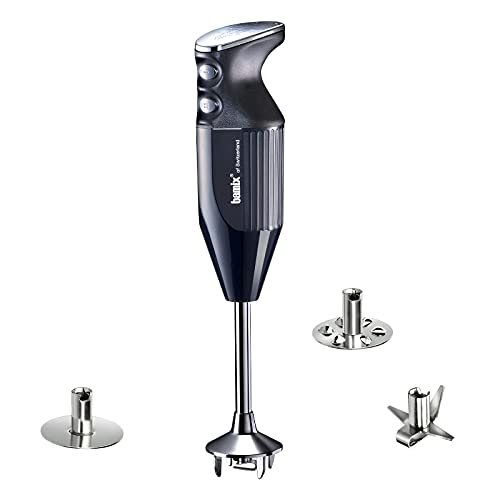
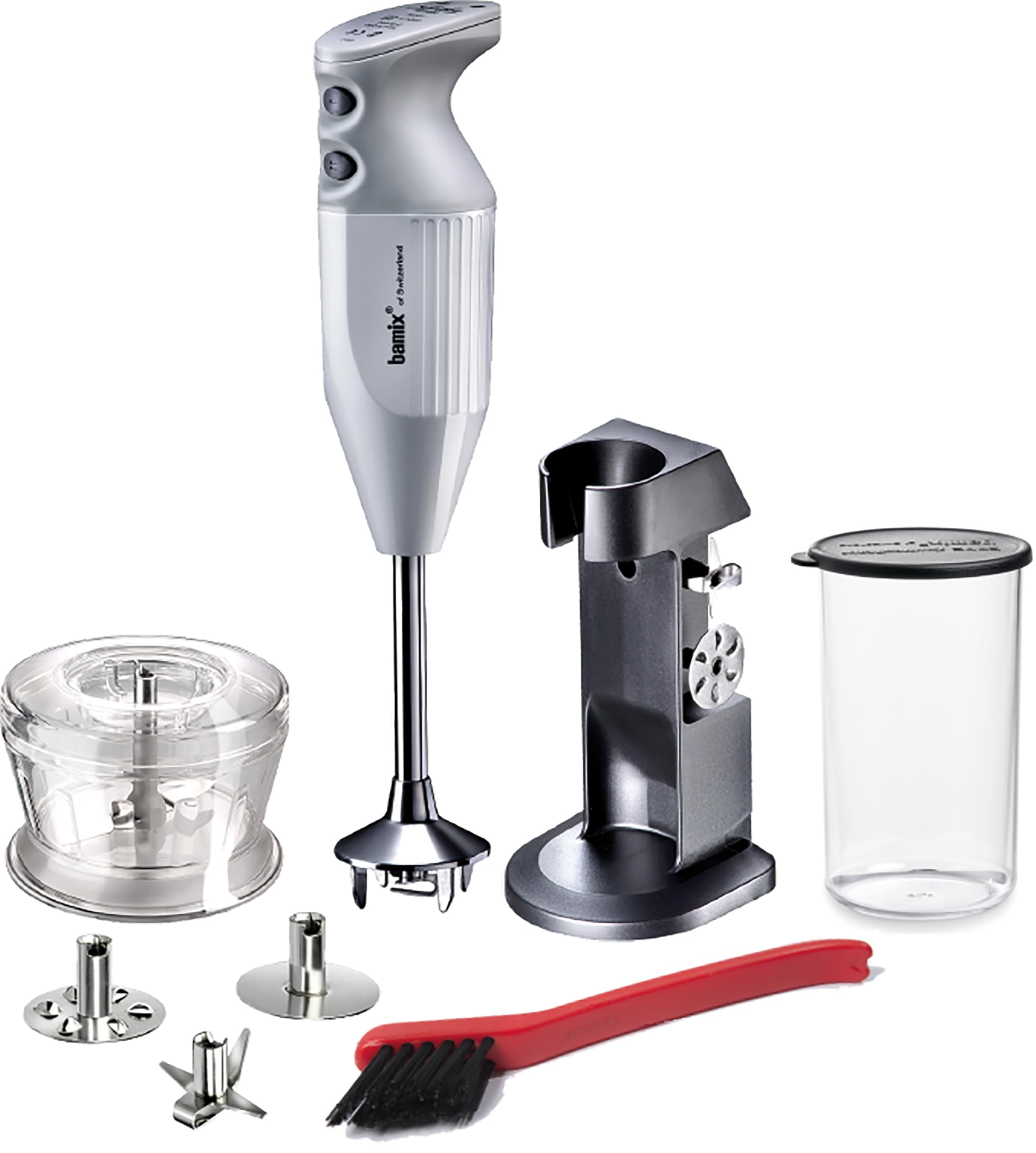
Bamix models look similar at first glance, yet small differences in shaft length, speed settings, and included tools change daily use a lot. The product table below sums up the main lineup types, and the sections that follow explain how each difference feels in a real kitchen.




Quick Answer: The 3 Lineup Types in 30 Seconds
For most homes, a mid length corded model with two speeds and a multipurpose blade covers soup, sauces, smoothies, and baby food without extra clutter. If you cook for one or two people and storage is tight, a compact entry configuration with fewer attachments costs less and stores more easily. If you cook in large batches, use deep pots often, or want one tool for years of frequent use, a longer shaft model with a fuller attachment set is the stronger match.
Before You Buy: A Quick Checklist for Choosing an Immersion Blender
Which Type Fits Your Routine
If you mostly blend soup, stew, and sauce in the pot, a corded model with a standard shaft and simple speed control fits well and never needs charging. If you move around the kitchen a lot, cord freedom sounds appealing, but most Bamix models are corded and the cordless one is newer, so compare that wish against our guide to the best cordless immersion blender before you decide. If you blend thick mixtures often, prioritize torque and a sturdy blade guard over extra accessories.
Features Worth Paying For, and Ones to Skip
A whisk attachment earns its space if you whip cream or beat eggs weekly. A chopper attachment earns its space if you process nuts, herbs, or onions in small batches and dislike pulling out a food processor. A blending beaker matters more than it looks, because its narrow shape lets the blade stay submerged and reduces splashing. Skip a large attachment bundle if you already own a good food processor and a hand mixer, since the extra parts will sit unused in a drawer.
Wattage, Power, and Energy Use
The watt number alone tells you little about results. What you feel in your hand is torque, meaning how well the motor keeps turning when a mixture gets thick. A motor that holds speed in dense soup gives a smooth result faster, so you run it for a shorter time and use less energy overall. Short bursts also protect the motor, since handheld blenders are built for brief jobs rather than minutes of nonstop running. Add a little liquid when a blend stalls instead of forcing the blade through.
Safety Features and Certifications
Look for a listing that shows a recognized safety certification such as UL or ETL, and confirm that the plug and voltage match United States outlets. A guarded power switch helps prevent the blender from starting when you set it down. The blade guard should fully cover the blade from the side, so the edge cannot contact a pan surface or your fingers during normal handling. Unplug the unit before you touch the blade area for any reason.
Counter Space and Dimensions
Measure the drawer or cabinet where the blender will live before you buy. Shaft length decides whether the tool fits flat in a standard drawer, and longer shafts suit deep stockpots but need taller storage. If counter space is scarce, a model that stores in a compact stand keeps the cord and attachments off your work surface. Think about cord length too, since a short cord limits where you can blend relative to your outlets.
Realistic Budget Ranges
Bamix sits in the premium tier for this category, so set expectations accordingly. Most home configurations fall at about $150 to $400, with the total driven mainly by shaft length and how many attachments and blades are included, not by basic blending ability. Spending more makes sense when the extra tools replace other appliances in your kitchen or when you blend daily. Spending less makes sense when your jobs are simple, such as soup and sauce a few times a month. Across the wider category, you can compare value by reading our roundup of the best immersion blender options for every budget.
Three Lineup Types Compared by Home and Budget
1. Best for Most Homes: The Balanced Everyday Configuration
This type pairs a mid length shaft with two speed settings and one or two interchangeable blades, plus a beaker. It handles the widest range of home jobs, from silky soup to chunky salsa, and the second speed gives control with delicate mixtures such as mayonnaise. It suits families of three to five who cook several times a week. The main trade off is storage, since the beaker and extra blade need a planned spot.
2. Best Value: The Compact Entry Configuration
This type keeps the same core idea in a simpler package, with a shorter shaft, fewer blades, and little or no attachment bundle. It is a smart fit for singles, couples, and small apartments where drawer space matters more than batch size. It blends soup for two, smoothies, and dressings with ease, and there is less to wash and store after each use. The trade off appears in deep pots and large batches, where a short shaft forces you to blend in stages. If your cooking stays small scale, paying for length and tools you never reach for adds no value.
3. Best Long Term Investment: The Full Attachment Configuration
This type combines a longer shaft with a broader set of blades and attachments, often including a whisk, a chopper, and a larger beaker. It suits keen home cooks, larger households, and anyone who blends in tall pots. The value is consolidation, since one system can cover blending, chopping, and whisking for small to medium jobs. The trade off is price and cupboard space, and the extra parts only pay off if you use them monthly or more.
Our Selection Process for the Best Bamix Immersion Blenders
We compared lineup types by capacity, blending performance, ease of use, cleaning effort, noise, safety features, and warranty support. We weighted fit for household size and kitchen space heavily, since this guide focuses on how a model lives in your home over years.
The Bamix Immersion Blender Lineup Explained
The lineup is best understood as one core blender offered in different lengths and bundles, rather than as unrelated models. Moving up the range usually adds shaft length, extra interchangeable blades for tasks such as beating or chopping, and more attachments in the box. Core blending of soup and sauce stays similar across the range, so your decision rests on pot depth, batch size, and which extra jobs you want covered. If soup is your main job, our guide to the best immersion blender for soup explains the pot and texture points in more depth. Choosing the best bamix immersion blender for your home therefore means matching the bundle to your routine, not chasing the largest box.
Models also differ in weight balance and grip shape, and a blender that feels secure in a wet hand reduces fatigue. If you have smaller hands or limited grip strength, favor a slimmer body and a switch you can hold down without strain.
Common Buying Mistakes to Avoid
- Choosing a shaft that is too short for your deepest pot, so the motor housing dips toward hot liquid and blending turns awkward.
- Paying for a full attachment bundle you will not use, which adds cost and storage strain without improving your daily cooking.
- Ignoring replacement part costs and availability, so a lost blade or cracked beaker later costs more than you expected.
- Blending in a container that is too wide or too shallow, which causes splashing and leaves chunks unblended at the edges.
- Running the motor in long nonstop bursts on thick mixtures, which overheats the unit and shortens its working life.
Cost of Ownership and Care
Running costs stay low, since each blend uses power for seconds or a couple of minutes at a time. The real ownership costs are replacement blades, a spare beaker, and any attachment you add later, so check those prices before you commit to a bundle. Rinse the shaft and blade right after use so food does not dry in place, wash attachments as the manual directs, and never immerse the motor body in water. Store the blade with its guard in place, coil the cord loosely, and keep the unit dry. Good technique also extends life, and our guide on how to use an immersion blender covers angle, depth, and burst timing in detail.
Your Questions, Answered
What is the most reliable immersion blender brand?
Reliability depends more on build quality, warranty support, and parts availability than on a brand name alone. Look for a metal shaft connection, a motor rated for regular home use, and a maker that sells replacement blades and beakers years after purchase. Keeping receipts and registering a warranty where offered makes any later claim simpler. A brand with clear United States service channels is easier to deal with if a switch or cord fails.
How do you clean an immersion blender?
Unplug the unit first, then rinse the shaft and blade under running water right after blending so residue does not set. For a deeper clean, blend warm water with a drop of dish soap in a tall container for a few seconds, then rinse and dry fully. Our step by step guide on how to clean an immersion blender covers dried food and odor removal. Never put the motor body under water, and keep fingers clear of the blade even when it is off.
Is an immersion blender worth it?
It is worth it if you make soup, sauce, or smoothies at least a few times a month and want to blend in the cooking pot or a beaker instead of moving hot liquid to a countertop blender. That transfer is where spills and burns often happen, so blending in place adds convenience and safety. If you mostly crush ice or process large frozen batches, a full size blender remains the better tool, and the handheld unit becomes a useful second appliance rather than a replacement.
How long does an immersion blender last?
A well kept home unit can serve for many years, and lifespan depends mainly on how often you blend thick mixtures and whether you let the motor rest between bursts. Early warning signs include a burning smell, a switch that feels loose, or a blade that wobbles on its shaft. Stop using a unit with a damaged cord or cracked housing and contact the maker about service. Replacing a worn blade restores performance more often than buyers expect.
Which Bamix immersion blender should I buy?
Match the configuration to your largest regular job. If your deepest pot is a standard soup pot and you cook for a small household, the compact or balanced type is enough. If you use a tall stockpot, blend double batches, or want whisk and chopper tools in one system, the fuller configuration fits better. Renters and small kitchens should weigh storage first, since a model that fits your drawer will be used more than a larger set stored out of reach.
Final Thoughts
Start with your pot size, your household size, and the spot where the blender will live, and the right tier becomes clear. The balanced everyday configuration suits most families, the compact type protects a small budget and a small drawer, and the full attachment set rewards frequent cooks who will use every part. Whichever tier you choose, check the product table above before you order, and pick the best bamix immersion blender that matches the cooking you actually do each week. If you ever blend for events or a small business, compare duty ratings in our guide to the best commercial immersion blender first.