Best Backyard Playground Sets: A Clear Buying Guide for 2026
Disclosure: We may earn a commission when you buy through links on this page, at no extra cost to you. As an Amazon Associate I earn from qualifying purchases. Learn more
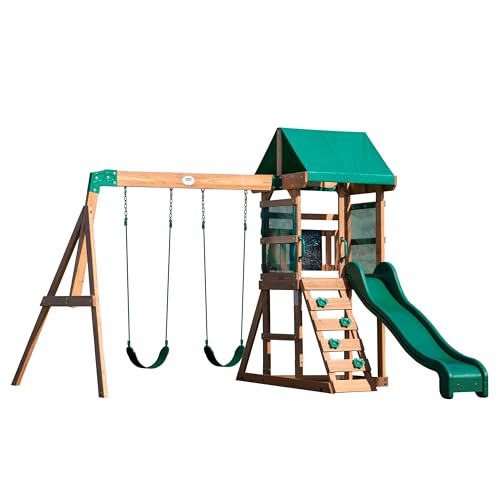
Best backyard playground sets compared by frame, safety surfacing, age range and space needs for your family.
Shopping for best backyard playground sets is really shopping for years of outdoor play, so the frame, the fall surface, and the space around the set matter as much as the slide or swings. A good set matches the ages of the children who will use it, fits the yard with safe clearance on every side, and survives seasons of weather without wobbling or splintering. This guide walks through the basics in plain language and helps you compare options without getting lost in accessory lists. The table of picks below shows the main types side by side.
Start by watching how your children play rather than by picking the biggest tower. Younger children need low platforms, short slides, and easy grips, while older children want taller climbs, longer swings, and room to invent games. A set that grows with the family, through add on parts or adjustable swing heights, often gives better value than a set that thrills for one summer and then feels too small. Measure the yard first, because clearance space decides which sets are even possible.

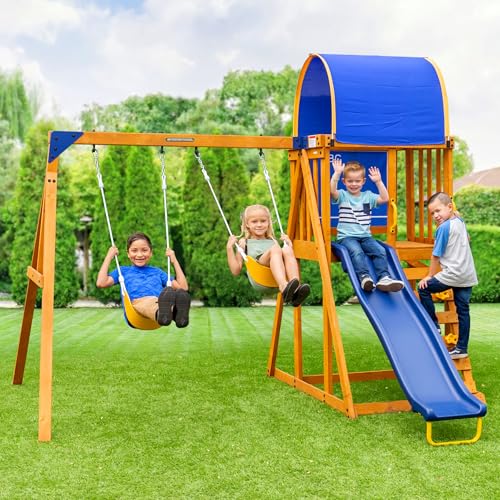

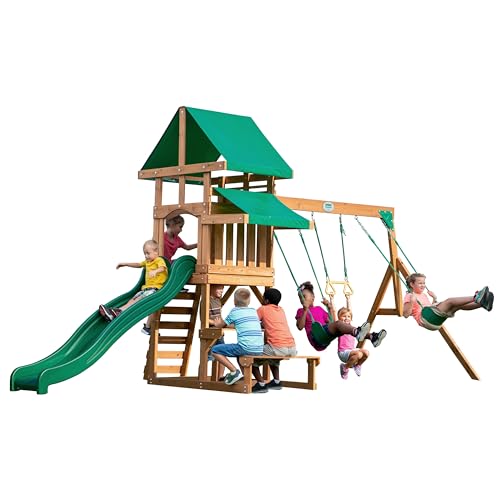


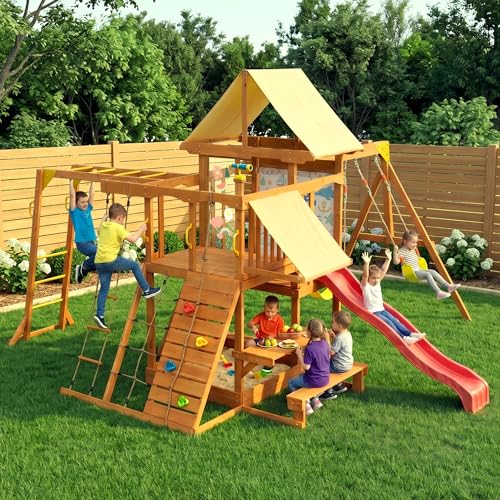
Playground Sets 101: The Basics
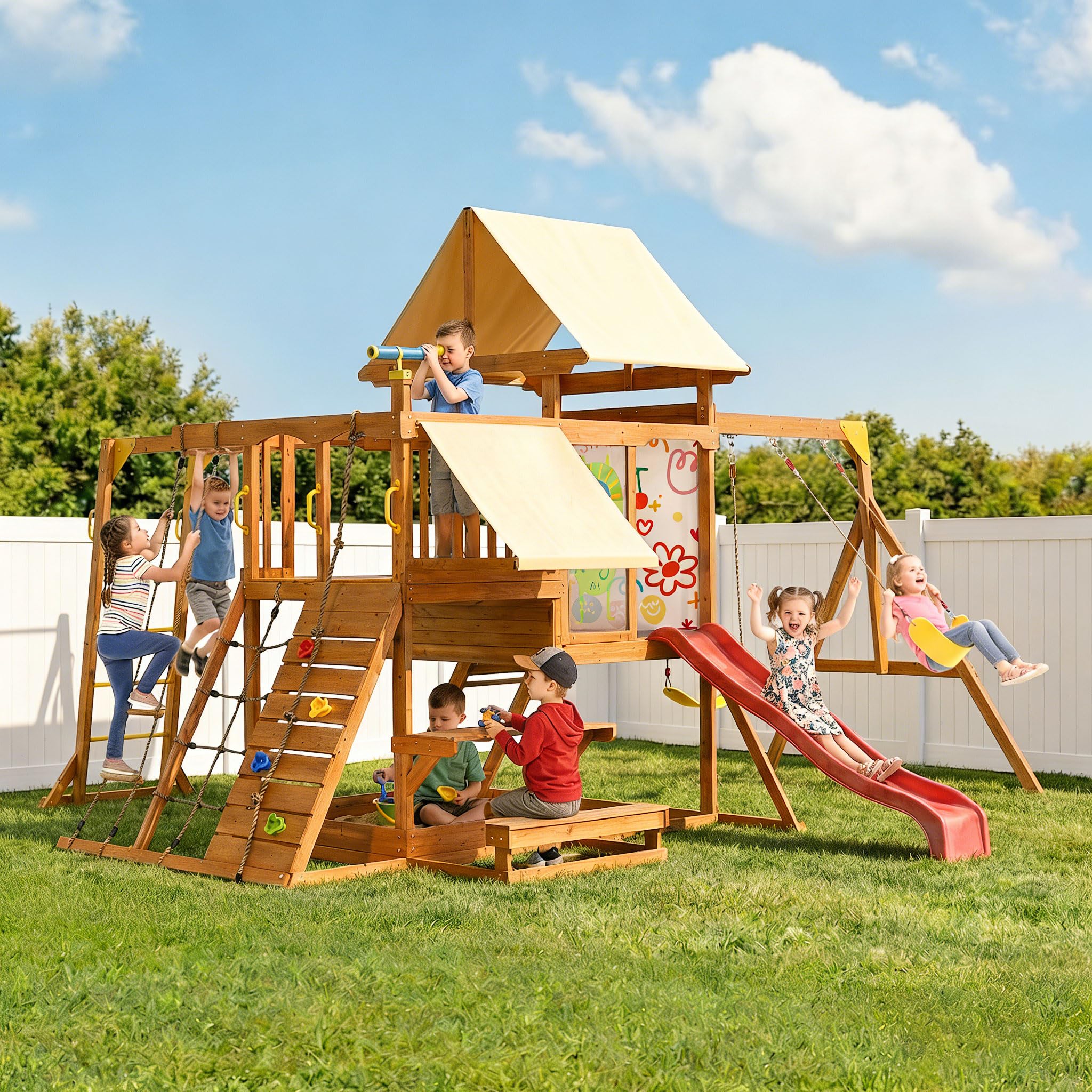
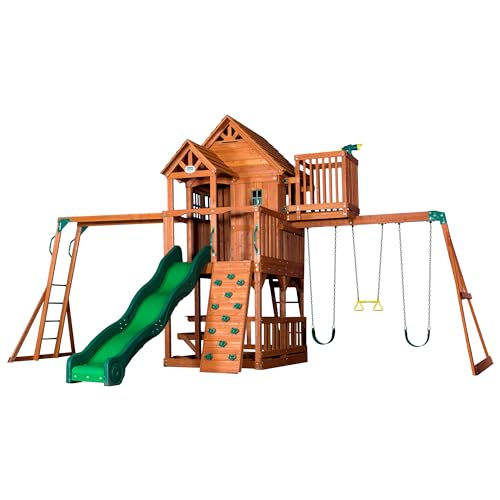
A backyard playground set is a framed structure that combines climbing, swinging, and sliding in one footprint. Common parts include a tower or fort platform, a slide, swing beams, ladders, and climbing walls or cargo nets. Wood sets often look natural in a garden and feel sturdy underfoot, while metal sets can be lighter, simpler to move, and easier to hose down. Vinyl clad wood splits the difference, with a wood core and a low upkeep outer layer.
Safety surfacing is part of the set, not an afterthought. Grass alone wears thin under swings and slide exits, leaving hard ground where falls are most likely. Loose fill such as wood chips or rubber mulch, or rubber mats, cushions falls far better when kept at the right depth. Plan the surface for the whole play zone, not just under the tower, and top it up each season as it compacts or scatters.
Key Features Explained
Frame Material and Build
Wood should be thick, smooth, and treated for outdoor use, with no sharp edges, protruding bolts, or splinters at hand height. Metal frames should feel rigid when shaken, with welded joints rather than loose sleeves that work free over time. Check the weight rating for each part, since a tower rated for younger children may not suit older siblings and friends playing together. A solid frame with good hardware lasts longer and feels safer than a flashy set built from thin parts.
Age Range and Sizing
Manufacturers list age ranges for a reason, because platform height, grip size, and slide steepness all suit certain body sizes. A platform that is thrilling for a nine year old can be frightening for a four year old, and a low slide can bore an older child quickly. If children of mixed ages will share the set, look for two platform heights or a low section beside a taller climb. That mix lets younger children play safely while older children still find a challenge.
Space and Clearance
Every swing needs clear space in front and behind, and every slide needs a clear run out zone at the bottom. As a rule, allow generous clearance beyond the frame on all sides, and keep the set away from fences, trees, patios, and hard paths. A corner spot may look tidy, but it can leave one side with too little room for safe swinging or climbing. Sketch the footprint plus clearance on paper before ordering, and check gate widths for delivery and assembly access.
Who Should Buy Which Type
Families with toddlers should favour low platforms, enclosed sides, and bucket swings that keep small children secure. Families with school age children can choose taller towers, climbing walls, and longer slides, provided the fall surface and clearance match the height. Households with mixed ages do best with a set that offers both a gentle zone and a challenge zone, so no child is left watching from the side.
For a broader view of play structures, compare general playground options before narrowing to a backyard model. See our guide to best playground sets for more detail.
Outdoor rated sets differ in weatherproofing and materials, so check how each frame handles rain and sun over time. See our guide to best outdoor playground sets for more detail.
If swings matter more than towers, a dedicated swing set can give more swinging room for the same yard space. See our guide to best backyard swing sets for more detail.
Mistakes to Avoid
The most common mistake is measuring only the frame and forgetting the clearance zone, which can leave swings too close to a fence or a slide exit facing a path. Another mistake is buying for the oldest child only, which leaves younger siblings with a set they cannot use safely for years. Skipping the fall surface to save money is also risky, because the ground under a set hardens and wears exactly where children land.
Assembly shortcuts cause trouble later, so follow the manual on anchoring and bolt checks even when the set looks stable. Re check bolts, swing hangers, and slide fixings at the start of each play season, and after storms. Replace worn swing seats, frayed ropes, and cracked plastic parts promptly, since small wear can become a failure under a group of excited children.
Care and Everyday Use
Wood frames benefit from an annual check for splinters, cracks, and soft spots, plus a fresh coat of sealant when the finish fades. Metal frames need a check for rust at joints and ground contact points, with touch up paint to slow spread. Keep the fall surface level and topped up, and rake loose fill back under swings and slide exits where play pushes it aside.
Store loose accessories such as small climbing holds or fabric canopies indoors during harsh weather if the manual allows it. Teach children simple rules, such as one child on a swing at a time and no climbing on the outside of rails, and supervise younger children until they know the set well. With steady care, a good backyard set can serve a family for many years and several stages of childhood.
A Final Check Before You Order
Before you order, walk the planned play zone and check for overhead branches, underground services, and drainage that could affect anchors and surfacing. Mark the frame footprint plus clearance with string and stakes, then watch children play in that marked area for a few days to confirm the space feels natural. That simple rehearsal often reveals a fence, path, or slope problem that a paper plan missed.
Ask about spare parts and add on options before buying, since swing seats, ropes, and slide fixings wear faster than frames. A maker with readily available parts saves a full replacement when one component fails. Check whether the set allows a taller section or extra swing later, because that flexibility extends useful life as children grow and interests change.
Plan shade and sight lines from the house, since children play longer and safer where adults can watch easily and sun exposure stays moderate. A nearby water tap helps with cleaning, while a small storage box keeps loose toys from scattering across the play zone. With space, surfacing, and supervision planned together, a backyard set becomes a daily favourite rather than a seasonal novelty.
Frequently Asked Questions
How much yard space does a playground set need?
The frame footprint is only part of the answer, because swings, slides, and climbing parts each need clear space around them. Allow room for a full swing arc in front and behind the beam, plus a clear run out at the slide exit. Sketch the frame plus clearance before you buy, and keep the zone clear of fences, trees, and hard surfaces. A smaller set with proper clearance is safer and more fun than a large set squeezed into a tight corner.
Wood or metal: which lasts longer outdoors?
Both can last well when built from thick parts and good hardware. Wood suits gardens visually and feels warm underfoot, but it needs sealing and splinter checks. Metal resists splinters and can be simpler to clean, but thin tubes can flex, and joints need watching for rust. Vinyl clad wood offers a middle path with lower upkeep. Judge the individual build quality rather than the material label alone.
What fall surface works best under a set?
Loose fill such as wood chips or rubber mulch cushions falls well when kept deep and level, while rubber mats give a tidier, more accessible surface. Grass alone is not enough, because play wears it thin exactly where children land. Whichever surface you choose, cover the full play zone, check depth each season, and top up material that has compacted or scattered. Keep the surface free of toys and tools that could cause trips.
Can a set grow with my children?
Some sets allow add on swings, climbing parts, or taller sections as children grow, while others are fixed in size. If you expect years of use, ask whether parts can be added later and whether swing heights adjust. A set with two platform heights also helps mixed age families. Planning for growth at purchase usually costs less than replacing a whole set after two summers.
How often should I inspect the set?
Give the set a quick visual check weekly during play season, looking for loose bolts, worn ropes, and damaged seats. Do a thorough inspection each spring, checking anchors, hangers, slide fixings, and wood or metal condition. After storms, check for shifted anchors and fallen branches. Small fixes done promptly keep the set safe and avoid larger repairs later.
Final Thoughts
The right set is the one that fits your yard, your children ages, and your willingness to keep up with inspections and surfacing. The table above gives a quick comparison, and the sections here explain what each feature means in daily family life. Measure twice, choose a frame built for your oldest regular users, and leave generous clearance on every side.
With that care, best backyard playground sets can turn an ordinary yard into a favourite place for years of active play. Start with safety and space, then let your children help choose the parts they will love most.