
Best Backpacking Grills 2026: Types Compared and How to Choose
Disclosure: We may earn a commission when you buy through links on this page, at no extra cost to you. As an Amazon Associate I earn from qualifying purchases. Learn more

Compare backpacking grills by packed weight, fuel, cooking area and setup, with clear type guidance for solo hikers, pairs and small trail groups.
A hot trail meal can lift a long day of walking, but a grill that feels fine in a yard can feel foolish inside a pack. The best backpacking grills earn their space by weighing little, packing flat and cooking a real meal on ground that is rarely level. This guide compares the main types in the comparison table below.
Start with how you actually travel. Distance, group size, fire rules on your route and the food you plan to cook will narrow the choice faster than any single spec.



Who Should Buy a Backpacking Grill?
Buy one only if grilled food is a planned part of your trip. The right match depends on the miles you cover, the site rules you meet and how many mouths share each meal.
Solo Hikers Cooking One Simple Meal
You walk far, eat simply and count every ounce late in the day. Choose the lightest grate or smallest folding frame that still holds your usual portion without food sliding toward the edge. It should slide beside your sleep pad or sit flat against the back panel of your pack.
Pairs and Small Groups Sharing Trail Dinners
You cook for two to four people, so a tiny surface forces slow batches and the first servings go cold. Choose a wider grate or folding frame with room for portions to cook side by side. Split the weight between packs.
Hikers Who Stay at Established Campgrounds
You base yourself at sites with a fire ring, a flat pad or a picnic table, and you walk day loops rather than long routes. A compact canister grill suits you well, since it lights fast and gives steady heat on a still evening. Weight matters less here, so stability and surface size can come first.
Types of Backpacking Grills Compared
Three types cover nearly every trail situation, and they differ most in fuel, weight and the rules that govern their use. Prices run about $15 to $40 for grates, about $30 to $80 for folding charcoal frames and about $80 to $180 for canister grills. Timing helps too, so see our guide to the best time to buy grills.
Simple Grates Placed Over a Fire Ring
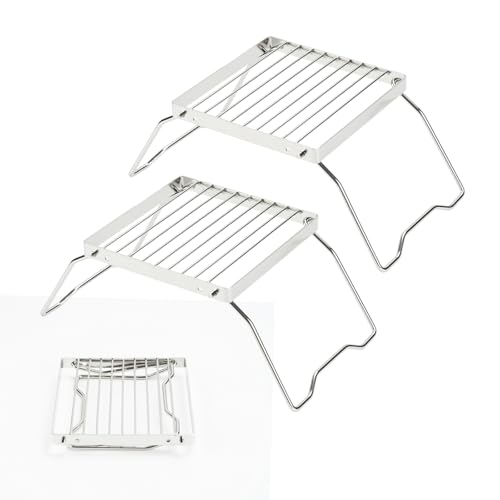
A simple grate is a flat grid of steel or titanium rods that rests on stones or on the rim of an existing fire ring. It is the lightest option, packs almost flat and gives food a smoke flavor no canister can match. You need a legal fire, dry wood and patience while coals settle, and heat control means moving food.
Flat Folding Charcoal Grills for Backpacking
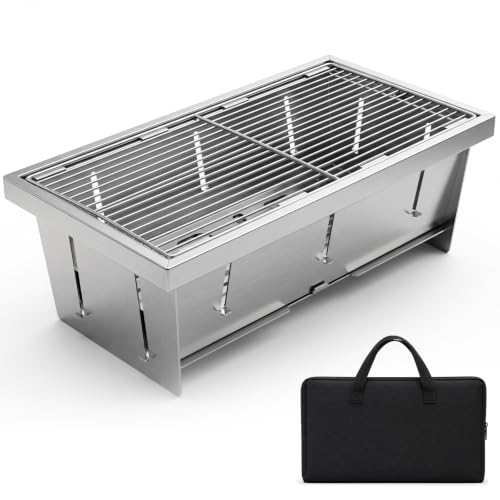
A folding charcoal grill opens into a small box or stand, holds a shallow bed of charcoal and folds flat again for the walk out. It gives more even heat than an open fire and keeps coals contained. If you enjoy this style at home, see our guide to the best coal grills for larger yard models. Carry only the charcoal you will burn, since it adds weight fast.
Compact Canister Grills for Backpacking Trips
A canister grill is a small burner and grate unit that connects to a fuel canister and lights with a built in igniter or a lighter. It starts in seconds, adjusts from sear to simmer and works on many routes where open fires are banned, though local rules still apply. For larger propane units at home, see our guide to the best lp grills.
Key Features to Compare
When you compare the best backpacking grills, work in this order: packed weight, cooking area, fuel, heat control and materials. That order keeps a low price from hiding a grill you will resent by mile ten.
Packed Weight and Folded Size of a Backpacking Grill
Packed weight includes the grate, the frame, any carry case and the fuel you must add, not just the grill alone. Simple grates often weigh about 3 to 12 ounces, folding frames about 1 to 3 pounds and canister grills about 2 to 5 pounds before fuel. Check folded length against your pack, and look for smooth edges that will not abrade a tent.
Cooking Area and Capacity of a Backpacking Grill
Cooking area decides how much food cooks at once. A surface of about 60 to 90 square inches suits one person, and about 90 to 140 square inches suits two people. Larger groups should cook in planned rounds rather than carry a huge frame. Leave gaps between pieces, since crowded food steams and browns poorly.
Fuel a Backpacking Grill Can Carry and Use Legally
Fuel shapes flavor, pack weight and where you may cook at all. Wood costs nothing to carry but depends on dry material and on fires being allowed that day. Charcoal gives steady coals and strong flavor, yet every briquette rides in your pack and ash must ride out. Canister fuel is clean and predictable, but cold can weaken its pressure.
Heat Control and Cooking in Wind on the Trail
Small grills react fast, which helps and hurts. A canister valve lets you drop from a sear to a gentle simmer, while charcoal heat is set by coal depth and grate height above the bed. Wind steals heat and bends flames sideways, so cook in a natural shelter such as a rock or a log and allow extra fuel on exposed sites.
Frame, Grate and Leg Materials on a Backpacking Grill
Materials trade weight against durability directly. Titanium grates weigh the least and resist rust, but they cost more and thin rods can warp under very high heat. Stainless steel costs less and holds its shape well, at the price of more ounces. Check legs and hinges closely, since a wobbling grill spills food and wastes fuel.
How to Set Up a Backpacking Grill Safely Outdoors
Place the grill on bare, level ground, well away from dry grass, low branches and your tent. Test the legs with a firm press before food goes on, and level a wobbling leg with a flat stone rather than material that can burn. Keep water or loose soil within reach for a stray spark.
Never use any grill inside a tent, a vestibule or another enclosed shelter, since burning fuel produces carbon monoxide that you cannot see or smell. Cook in open air even in rain. If anyone near a grill feels dizzy, sick or unusually drowsy, move everyone to fresh air at once and seek emergency help, since those signs can point to carbon monoxide poisoning. Confirm coals are cold, and pack out all ash.
Common Mistakes to Avoid
Most trail grilling problems come from choices made at home, long before the first match.
- Carrying a grill sized for a yard party adds pounds that slow every mile and crowd out food and layers.
- Assuming fires are allowed everywhere can leave you with a wood only grill and no legal way to cook dinner.
- Forgetting fuel weight makes a light canister grill a heavy system once two large canisters join the pack.
- Setting a grill on sloped or soft ground lets it tip, spill hot food and scatter coals onto dry leaves.
- Crowding food edge to edge on the grate steams it pale instead of browning it.
- Leaving ash, foil or food scraps at the site draws animals and leaves the next camper a dirty fire ring.
Care and Maintenance of a Backpacking Grill
Clean the grate while it is still warm, using a stiff brush, a wooden scraper or a ball of foil held in tongs, since warm residue lifts far more easily than residue left overnight. Wipe the frame once it cools, and shake out ash only when it is fully cold. A clean grill also smells less in the pack.
At home, wash removable parts with warm water and mild soap, dry every joint before storage and check legs, hinges and valves for bends or cracks. Store the grill dry and flat. Replace a warped grate or a damaged fuel hose, since a failure at a remote site can end hot meals for the trip.
FAQ
How long should a good backpacking grill last?
A good backpacking grill should last for many seasons of regular trips. Thin grates usually wear first, since heat cycles and scraping slowly thin the rods, while frames last longer when dried before storage. Replace a grate when it sags visibly under a normal load of food, even if no rod has broken yet.
Can a backpacking grill be used where campfires are banned?
Yes, a canister backpacking grill can often be used where campfires are banned, because many fire restrictions allow stoves with a shut off valve. Rules vary by land manager, and some bans cover all flame. Check the current order for your route before you pack, and carry a no cook meal as a backup.
How often should a backpacking grill be cleaned on a trip?
A backpacking grill should be scraped after every cooking session on a trip. That habit keeps old residue from smoking into the next meal and reduces smells that attract insects and animals. Save the deeper wash for home, and never rinse food grease into a stream or onto the ground near camp.
What type of backpacking grill gives the best flavor?
A grate over a wood fire gives the strongest smoke flavor of any backpacking grill type. Charcoal sits close behind, with a cleaner and more even taste, while canister fuel adds no flavor of its own and lets marinades and dry rubs stand out. Choose dry hardwood burned down to coals, since fresh flames add soot more than smoke.
Is a backpacking grill worth carrying instead of a stove alone?
A backpacking grill is worth carrying when grilled texture and flavor are a planned highlight of the trip. A stove alone boils and simmers with less weight and less cleaning, so it wins on fast routes with simple meals. A tiny grate that pairs with a legal fire adds browning for only a few ounces when the menu justifies it.
Final Thoughts
Match the type to your route rules first, then weigh packed size against cooking area, and let group size settle the rest. The product table above lets you check those points side by side. When you compare best backpacking grills with that order in mind, you carry a tool that earns its place in the pack.


