
Best Backpack Leaf Blower: Everything to Know Before Your First Purchase
Disclosure: We may earn a commission when you buy through links on this page, at no extra cost to you. As an Amazon Associate I earn from qualifying purchases. Learn more

The best backpack leaf blower explained: CFM, MPH, gas vs battery, harness comfort and noise for first time buyers.
When fall leaves pile up across a big yard, a handheld blower quickly wears out your arm. Backpack leaf blowers move the engine or battery onto your back and deliver far more air, so you can clear large lawns, long driveways and wet, matted leaves in a fraction of the time. But specs like CFM, MPH and newtons, gas versus battery power and harness designs can be confusing for first time buyers. This guide to the best backpack leaf blower options explains the terms in plain English, compares options and helps you avoid rookie mistakes.
We cover the basics, the key specs, rookie mistakes, setup and first use and answers to common questions. Every blower in the table above is sold new on Amazon US. Wear hearing protection, safety glasses and a dust mask, keep people and pets well away while blowing, never refuel a hot gas engine and check local rules on blower use hours and gas blower restrictions.




Backpack Leaf Blowers 101: The Basics
A backpack leaf blower straps to your back with a harness, with a flexible tube and handle in front. The weight sits on your shoulders and hips instead of your arm, which makes long jobs easier and allows a bigger engine or battery. Most backpack blowers are gas powered with 2 cycle engines, though battery models from brands like Greenworks are growing.
Prices on Amazon range from around $200 for budget gas models to around $600 for commercial grade blowers. Homeowners with half an acre or more, lots of trees or long driveways benefit most from a backpack blower; smaller yards are often fine with a handheld model.
The best backpack leaf blower for a homeowner is often a midrange gas or high voltage battery model rather than the most powerful commercial unit. More power adds weight, noise and cost, so match the blower to your yard size and debris.
Key Specs Explained in Plain English
The key specs are power source, air output, engine type, weight and harness, noise and battery runtime. Here is what each means.
Specs are listed differently by each brand, so compare the same measurements side by side, ideally CFM and newtons together, rather than relying on one big number.
Power Source (Gas or Battery)
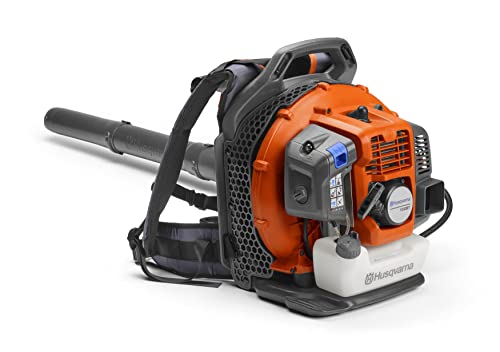
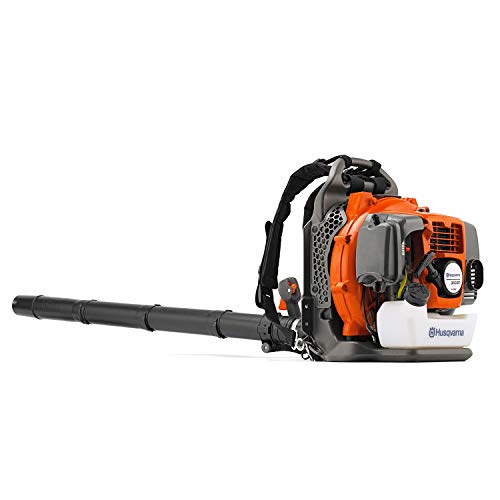
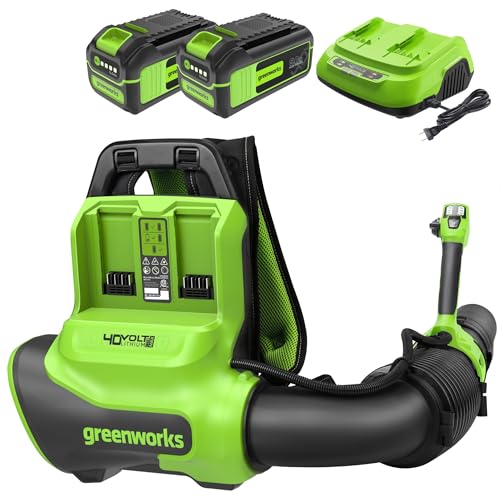
Gas backpack blowers offer the most power and unlimited runtime with refueling. The Husqvarna 350BT, at around $430, uses a 50.2cc, 2.1 HP X-Torq engine that Husqvarna says reduces emissions up to 60% and improves fuel efficiency up to 20%. Battery backpack blowers, like the Greenworks 80V at around $520 with a 4.0Ah battery, run quieter with no emissions and no fuel mixing; Greenworks lists up to 750 CFM, a brushless motor and variable speed control.
Gas blowers need seasonal maintenance like spark plug and air filter changes, while battery blowers mainly need charged batteries and a clean intake.
Corded electric backpack blowers are rare; most homeowners choose between gas and battery.
Air Output (CFM, MPH and Newtons)
CFM measures air volume, which moves big piles. MPH measures air speed, which lifts stuck leaves. Newtons measure total blowing force, combining both.
The Husqvarna 150BT lists 765 CFM, 270 MPH and 22 N. The Husqvarna 360BT lists 890 CFM, 232 MPH and 30 N. The Husqvarna 580BTS lists 1,000 CFM, 220 MPH and 47 N. The PRORUN PBB3000 lists 1,125 CFM, 250 MPH and 50 N.
For a typical suburban lot with a few trees, around 600 to 800 CFM is plenty. Large properties, heavy wet leaves and commercial work benefit from 900 CFM and up.
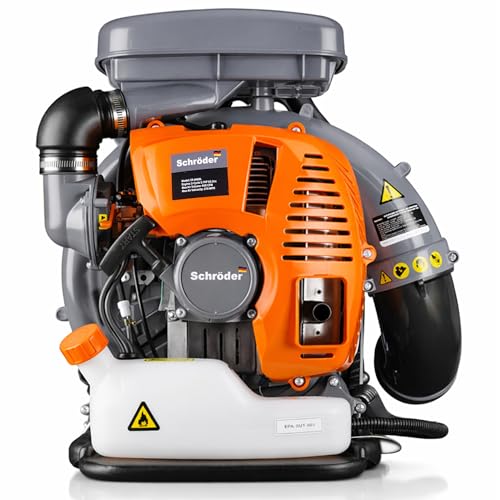
The Schröder SR-6400L lists 920 CFM and 230 MPH from a 63.3cc, 3.7 HP engine, while the PRORUN PBB2884 lists 1,020 CFM and 240 MPH from a 75.6cc engine.
Wet leaves need both strong air speed and volume to move.
Engine Type (2 Cycle or 4 Stroke)
2 cycle engines are lighter and more powerful for their size but need a fuel and oil mix. 4 stroke engines, like the VEVOR 75.6cc backpack blower at around $220, run on straight gas with separate oil, which some owners find simpler. Air purge primers, which Husqvarna lists on its BT models, help engines start easily.
Engine size, listed in cc, gives a rough idea of power: around 50cc suits homeowners, while 65cc to 80cc engines, like the Husqvarna 570BTS and PRORUN PBB3000, suit heavier jobs.
PRORUN says its PBB3000 uses a spring assisted starter that reduces pulling effort by 40%, which helps users who struggle with pull starts.
Commercial grade air filters, like the 580BTS two stage intake, protect engines in dusty work.
Weight, Harness and Balance
Weight matters for long sessions. Schröder lists its SR-6400L at 19.5 pounds with padded shoulder straps. Look for padded, ventilated harnesses and hip belts that shift weight to your hips; Husqvarna's 580BTS uses a ventilated, load reducing harness with a padded hip belt, and PRORUN's PBB3000 adds fan powered back ventilation. Adjustable offset handles reduce arm strain.
Try to adjust the harness before each job so the frame sits snugly on your back; a loose harness makes even a light blower feel heavy.
Fuel adds weight too; Schröder's 65 ounce tank lets you work longer between fill ups but adds pounds when full.
Anti vibration dampeners, like PRORUN's, reduce fatigue in your hands and arms.
Noise and Neighbor Friendliness
Gas backpack blowers are loud, and some towns limit their use to certain hours or ban gas blowers entirely. Battery models run noticeably quieter, which helps in neighborhoods. Wear hearing protection with any blower, and blow at reasonable hours.
Pointing the nozzle low and working at partial throttle also reduces noise and dust for you and your neighbors.
Some homeowner associations set their own rules on blower noise, so check before buying a loud gas model.
Battery Voltage, Amp Hours, and Runtime
Higher voltage means more power, and higher amp hours mean longer runtime. Greenworks offers a 40V backpack blower with a 5.0Ah battery and 660 CFM at around $293 and an 80V model with a 4.0Ah battery. Runtime drops quickly on high speed, so a spare battery helps for large yards.
Battery cost is a big part of the price. If you already own batteries from a brand's lawn tool lineup, buying the bare tool can save a lot, and batteries charge between jobs.
Rookie Mistakes to Avoid
The most common mistake is buying for CFM alone without checking weight and harness comfort. Another is using the wrong fuel mix in 2 cycle engines, which can damage them; follow the maker's ratio and use fresh fuel.
Many buyers skip hearing and eye protection. Running full throttle on light debris wastes fuel and scatters leaves. Finally, buying a gas blower in a town that restricts them causes problems.
Another mistake is storing a gas blower with old fuel in the tank over winter, which can gum up the carburetor. Run it dry or use fuel stabilizer before storage.
Blowing debris toward cars, windows or people can cause damage and injuries from flying stones, so aim carefully.
Getting Started: Setup and First Use
Read the manual and adjust the harness so the weight rests on your hips and the tube reaches comfortably. For gas models, mix fresh fuel and oil at the stated ratio, prime with the air purge bulb and start on a flat surface.
For battery models, fully charge the battery first. Start at low speed, work with the wind and blow leaves into rows, then into piles. Use cruise control, which Husqvarna lists on its BT models, to hold a steady throttle.
Plan your route before starting: begin at the far edges and work toward a collection spot, such as a tarp you can drag to the curb or compost pile.
Clear sticks and stones from the area first, and avoid blowing on very dry, dusty days when possible.
Frequently Asked Questions
How long do backpack blower batteries last?
Battery backpack blowers typically run from about 15 minutes on high to over an hour on low, depending on voltage, amp hours and speed. A spare battery doubles working time.
Lithium batteries also lose some capacity in cold weather, so store them indoors.
Charging time varies by charger, so check whether a fast charger is included.
What voltage should I choose?
Choose 40V for small to medium yards and lighter debris, and 80V or higher for larger yards and wet leaves. Staying with batteries you already own often saves money.
Higher voltage batteries weigh more, so balance power against comfort for long sessions.
Gas or battery: which is better for a small yard?
Battery blowers are usually better for small yards. They are quieter, need no fuel and start instantly. Gas backpack blowers make more sense for large properties and heavy, wet leaves.
For very small yards, a handheld blower may be all you need.
Is a battery backpack leaf blower powerful enough?
Yes, for most homeowners. Battery models like the Greenworks 80V reach up to 750 CFM, enough for many yards. For commercial work and large acreage, gas models still offer more sustained power.
Turbo modes boost power for stubborn piles but drain batteries faster.
Our Verdict
The best backpack leaf blower balances power, comfort and noise for your yard. Husqvarna's 150BT, 350BT and 360BT suit homeowners with large yards, the 580BTS and PRORUN PBB3000 deliver commercial grade force and Greenworks battery models offer quiet, emission free clearing. Choose a comfortable harness and wear protection.
Measure your yard, think about how many trees drop leaves and choose the lightest blower that clears your property comfortably.
For more yard care guides, see the best cordless leaf blower vacuum, the best chainsaw brands, the best compost bin and the best battery powered snow blowers. Then compare current prices in the product table above.


