Best Automatic Hose Reel: Styles, Features and Buying Tips (2026)
Disclosure: We may earn a commission when you buy through links on this page, at no extra cost to you. As an Amazon Associate I earn from qualifying purchases. Learn more

Compare enclosed, open drum and portable styles to choose the best automatic hose reel for your faucet, yard size and climate.
A garden hose left in loops on hot paving cracks sooner, trips people, and makes watering feel like a chore you put off. An automatic reel solves the storage half of that job for you, pulling the hose back into a neat coil with a short tug. Choosing the best automatic hose reel comes down to how the rewind works, how much hose the case can hold, and whether the housing can live outdoors through sun and rain. The comparison table below sums up the main styles so you can match one to your yard before reading further.

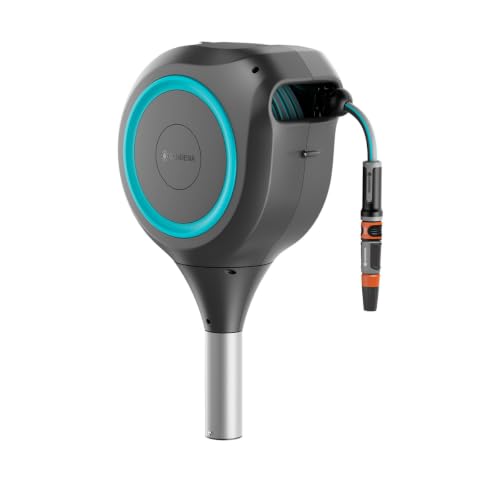


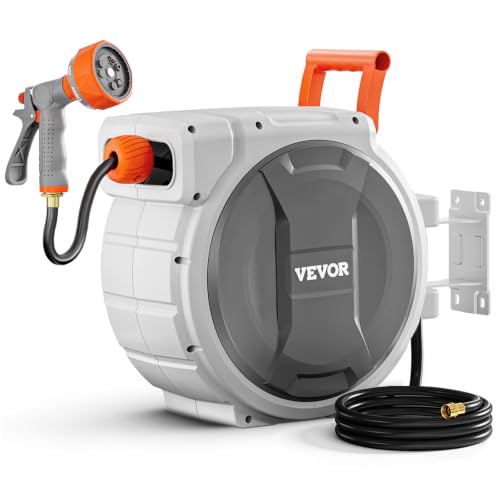


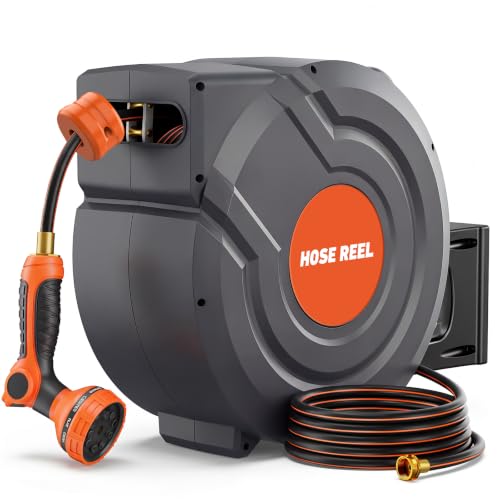

Automatic Hose Reel Styles at a Glance
Automatic reels fall into three broad styles. Enclosed retractable models keep the hose inside a closed case that mounts on a wall or a ground post. Open automatic reels leave the hose visible on a drum and suit garages and workshops. Portable automatic units sit on the ground and can move between faucets. If you want to compare every style in one place first, start with our guide to the best hose reel and then return to the automatic options here.
Three Main Types of Automatic Hose Reels Compared
Enclosed Retractable Reels
An enclosed retractable reel stores the hose inside a housing that shields it from sun and dirt, which helps the hose stay flexible for longer. A spring inside the case does the rewinding, and most designs let you pull out only the length you need and lock it there. A guide arm feeds the hose back in even layers, so the coil does not bunch on one side. This style suits a fixed watering spot, such as one faucet that serves your beds, lawn, and patio.
Open Drum Automatic Reels
An open drum design holds the hose on an exposed spool, often powered by a small electric motor or a water driven mechanism rather than a spring. You can see at a glance how much hose remains and whether the outer layer is worn or dirty. The trade off is exposure, since sun and grit reach the hose every day. This style fits a covered garage or a shaded work area better than an open south facing wall, and it tends to accept longer and thicker hoses.
Portable Ground Based Automatic Reels
A portable automatic reel sits in a low case on the ground and connects to the faucet with a short leader hose. You can carry it to a second faucet, lend it to a neighbor, or store it in a shed without drilling into masonry. The case adds weight once a full hose is inside, so check the total loaded weight before you plan to move it often. This style suits renters and anyone whose watering points change with the season or with new planting.
How We Chose These Categories
We grouped automatic reels by the factors that change daily use the most, namely rewind method, housing material and weather resistance, hose capacity, and the work needed to mount and anchor the unit. We relied on maker specifications and on patterns in verified buyer reviews, such as reports of weak springs, cracked cases, and leaking swivel joints. We left out any style that is no longer widely sold or that needs parts you cannot replace.
How to Choose the Right Automatic Hose Reel
Rewind Type and How It Feels in Use
Most automatic reels use a steel spring that winds as you pull the hose out and pulls it back when you release the lock. Better designs add a slow return feature that controls the speed, so the hose end does not whip toward the case. Motor driven models rewind at the push of a button and help if grip strength is limited, but they need power and cost more. Whichever type you pick, look for a lock that holds at many lengths, not just when the hose is fully out.
Features Worth Paying For
A smooth guide arm matters more than extras, since it layers the hose evenly and prevents jams that strain the spring. A metal swivel joint at the water inlet resists leaks better than an all plastic joint under constant pressure. An included leader hose of decent length saves a separate purchase, and a nozzle holder on the case keeps the spray end off the ground. Wheels only help on portable models you truly move, so skip paying for them on a reel that will stay mounted in one spot.
Weather Resistant Materials
Cases made from UV stable plastic resist fading and cracking through long summers, while powder coated steel frames handle knocks from tools and mowers. Brass or metal fittings outlast thin plastic threads where the leader hose meets the faucet. Rubber seals at the swivel joint are a wear item in every design, so choose a model whose seals you can buy and swap. If your reel will face sea air or pool chemicals, rinse the case now and then and favor metal parts with a coated finish.
Size and Capacity for Your Space
Match capacity to the longest run you actually water, then add a small margin so you are not pulling the hose tight at the far corner. Common cases hold about 65 to 130 feet of standard garden hose, and a thicker hose takes more room than the rating may suggest. Measure the wall or ground space too, since a wide case needs clear swing room when it pivots. Our notes on the best retractable hose reel explain how pivot brackets help in tight side yards.
Assembly and Anchoring
A wall mounted automatic reel is only as solid as its fixings, so the bracket must go into studs, brick, or concrete with the right anchors for that surface. Keep the case low enough that you can reach the hose end without a step, and leave room below for the leader hose to bend without a kink. If drilling into your wall is not an option, a post mount set in the ground gives the same result. Step by step help in how to assemble a hose reel covers the basic tools and order of work.
Care and Off Season Storage
Drain the hose before the first hard freeze, since trapped water expands and can split both the hose and the inlet joint. Wipe grit off the hose as it retracts in late fall, because grit dragged into the case wears the guide and the outer hose layer. Store a portable unit indoors over winter, and leave a mounted case in place only if the maker rates it for freezing weather. In spring, run water through the reel and check the swivel joint for drips before the heavy watering season starts.
How Much Should You Spend?
Basic spring driven cases for shorter hoses often cost under $100, and they suit a small yard with one faucet. Mid priced models at about $100 to $200 usually add a stronger spring, a slow return control, and a longer hose. Larger cases and motor driven designs can run about $200 to $300, which makes sense for long runs or daily use. Paying more should buy capacity, smoother rewinding, and replaceable parts, not decoration, so compare those three points at each price step.
Automatic Reels Compared With Other Styles
The clear gain over a manual reel is effort. You finish watering, give the hose a short pull, and walk beside it as the case takes it in, with no cranking and no armful of wet loops. The cost of that ease is complexity, since a spring or motor can wear out while a simple hand crank has little to fail. A manual model covered in our guide to the best wall mounted hose reel may suit you if you water rarely and want the simplest hardware on the wall.
Looks and yard layout also play a part. A closed automatic case keeps a hose out of sight, though a manually coiled hose hides just as well inside the styles in our guide to the best hideaway hose reel, with no rewind mechanism at all. Cart reels roll to the work and carry very long hoses, but they take floor space and you still coil the hose by hand with a guide. Choose automatic when the same faucet serves most of your watering and the hose goes out and back at least a few times each week.
FAQ
Are automatic hose reels worth it for a small yard?
They can be, if you water often and hate coiling by hand. In a small yard the hose is shorter, so a compact case costs less and the spring has less weight to pull, which helps it last. The honest check is frequency rather than size alone. If the hose comes out once a month, a simple hook does the job for far less money. Our separate guide that asks is a hose reel worth it walks through that cost and effort balance in more depth.
How long does an automatic hose reel last?
A well kept automatic reel often serves for many seasons, and the spring and the hose usually wear out before the case does. You can extend that life by guiding the hose in at walking pace instead of letting it snap back, which reduces shock on the spring and the end fitting. When rewinding grows weak or uneven, ask the maker about a replacement spring or hose before you replace the whole unit, since many cases open for service.
Can you replace the hose inside an automatic hose reel?
Yes, on many models you can, though the work takes care and patience. The case opens, the old hose unclips from the internal drum fitting, and the new hose must match the length and diameter the drum was built for. A longer or thicker hose than the rating will jam or strain the spring. Keep the old hose until the new one is fitted and tested, so you can copy the routing and the position of the stopper ball that sets the retracted length.
Why does an automatic hose reel retract unevenly or jam?
Uneven rewinding usually means the hose crossed over itself on the drum, often after a fast retraction or a pull at a sharp side angle. Pull the full length out in a straight line, then walk it back in slowly while the guide arm layers it again. Dirt packed inside the case opening can cause the same symptom, so clear the opening and wipe the hose. If jams return at the same spot, inspect that section of hose for a flat or swollen patch.
How do you clean an automatic hose reel?
Start with the outside, using a soft cloth, water, and a mild soap on the case, then rinse and let it dry. Pull the hose out fully and wipe it down as it goes back in, which clears grit before the grit reaches the drum. Leave internal parts alone unless the maker gives cleaning steps, since opening a spring case the wrong way can release stored tension. Clean the inlet filter screen at the leader hose connection too, as trapped grit there can cut water flow.
Final Thoughts
Pick the rewind style first, then size the case to your longest watering run, and then check that the mounting surface and the fittings suit your faucet. The product table above pulls those points together so you can compare styles side by side. For most homes that water several times a week from one main faucet, the best automatic hose reel is an enclosed spring driven model with a slow return, a metal inlet swivel, and parts you can replace when they wear.