Best Armless Office Chair (2026): Size, Features and Buying Tips
Disclosure: We may earn a commission when you buy through links on this page, at no extra cost to you. As an Amazon Associate I earn from qualifying purchases. Learn more

What matters when choosing the best armless office chair: size, features, budget and the mistakes to avoid.
Your desk sits in a bedroom corner, the chair has to vanish under it at night, and two adults plus a teenager all take turns using it. That is where the best armless office chair earns its place, because nothing sticks out at the sides to catch on the desk or crowd a small room. This guide helps you choose by space, by who will share the chair, and by budget, and the comparison table below sums up the main types.
If you are still deciding whether you want arms at all, start with our overview of the best office chair styles, then come back for the fit details that matter once the arms are gone.
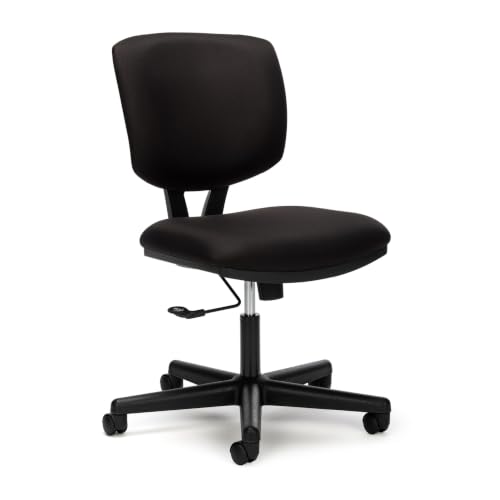


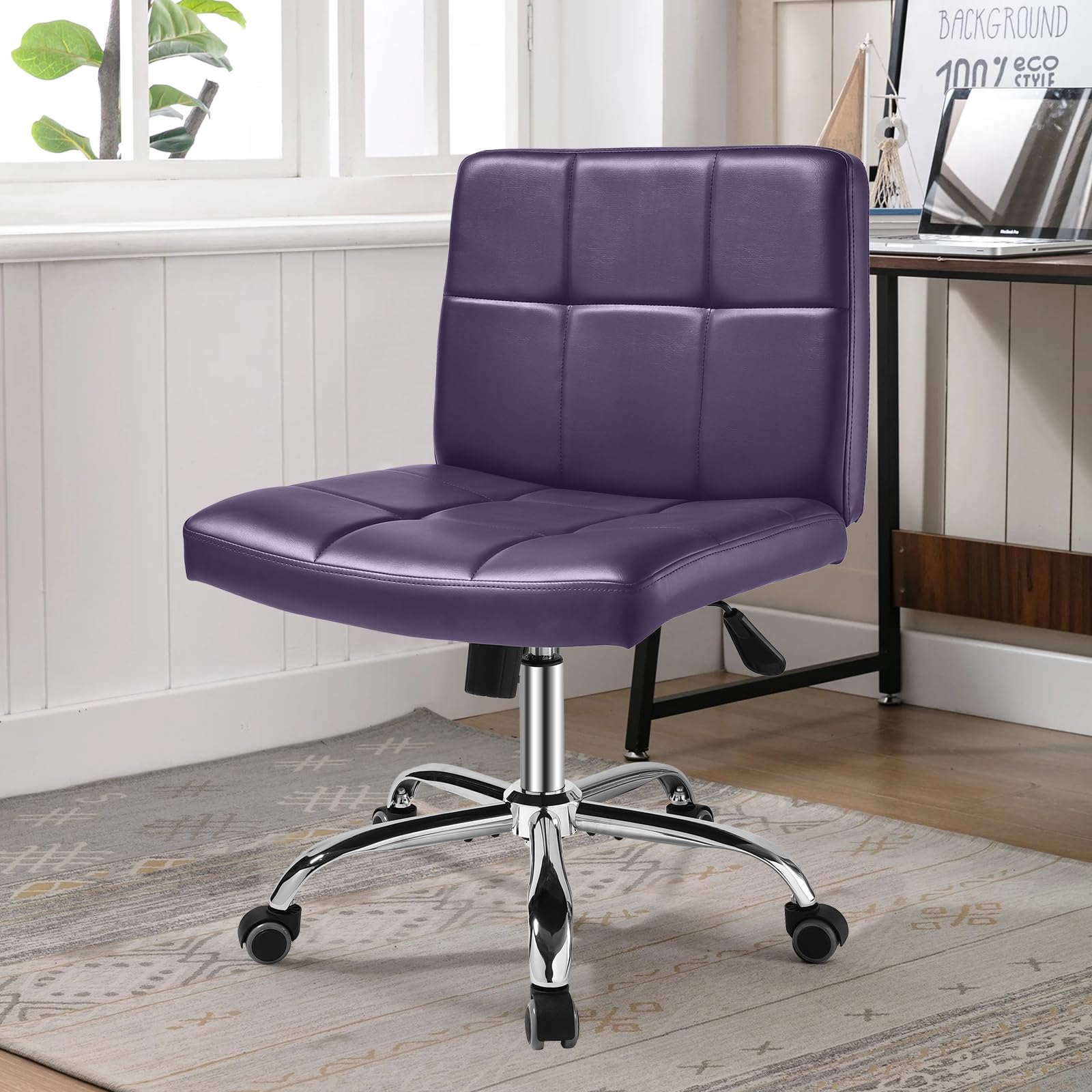
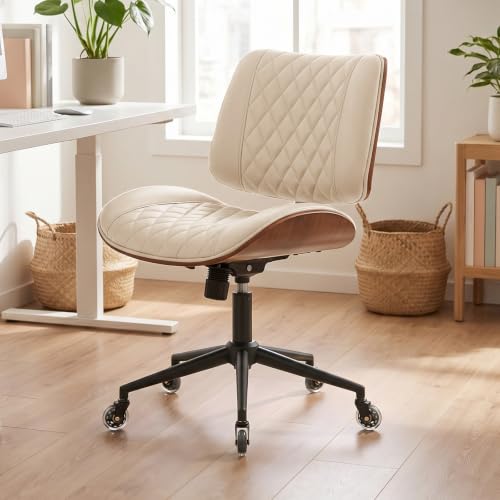
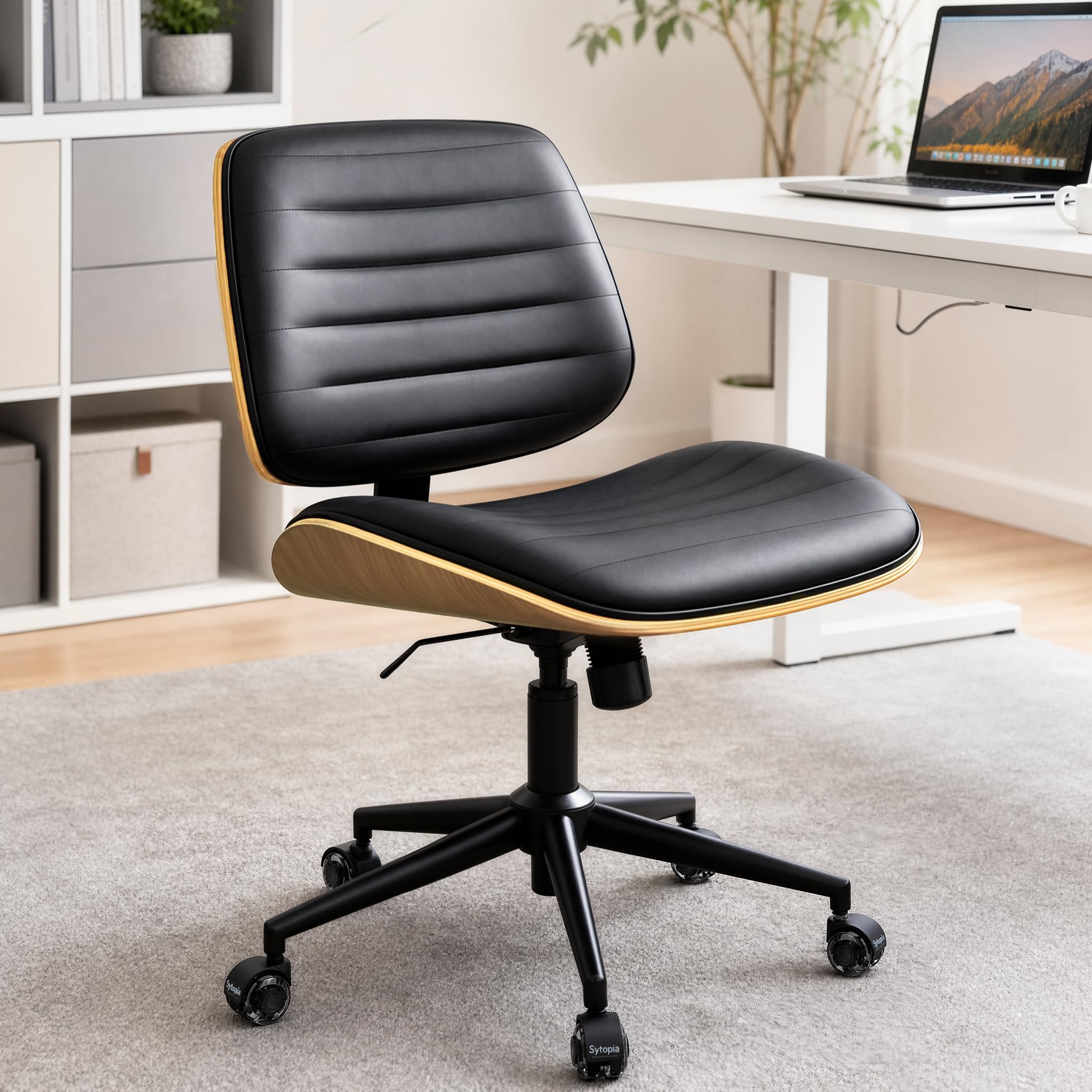
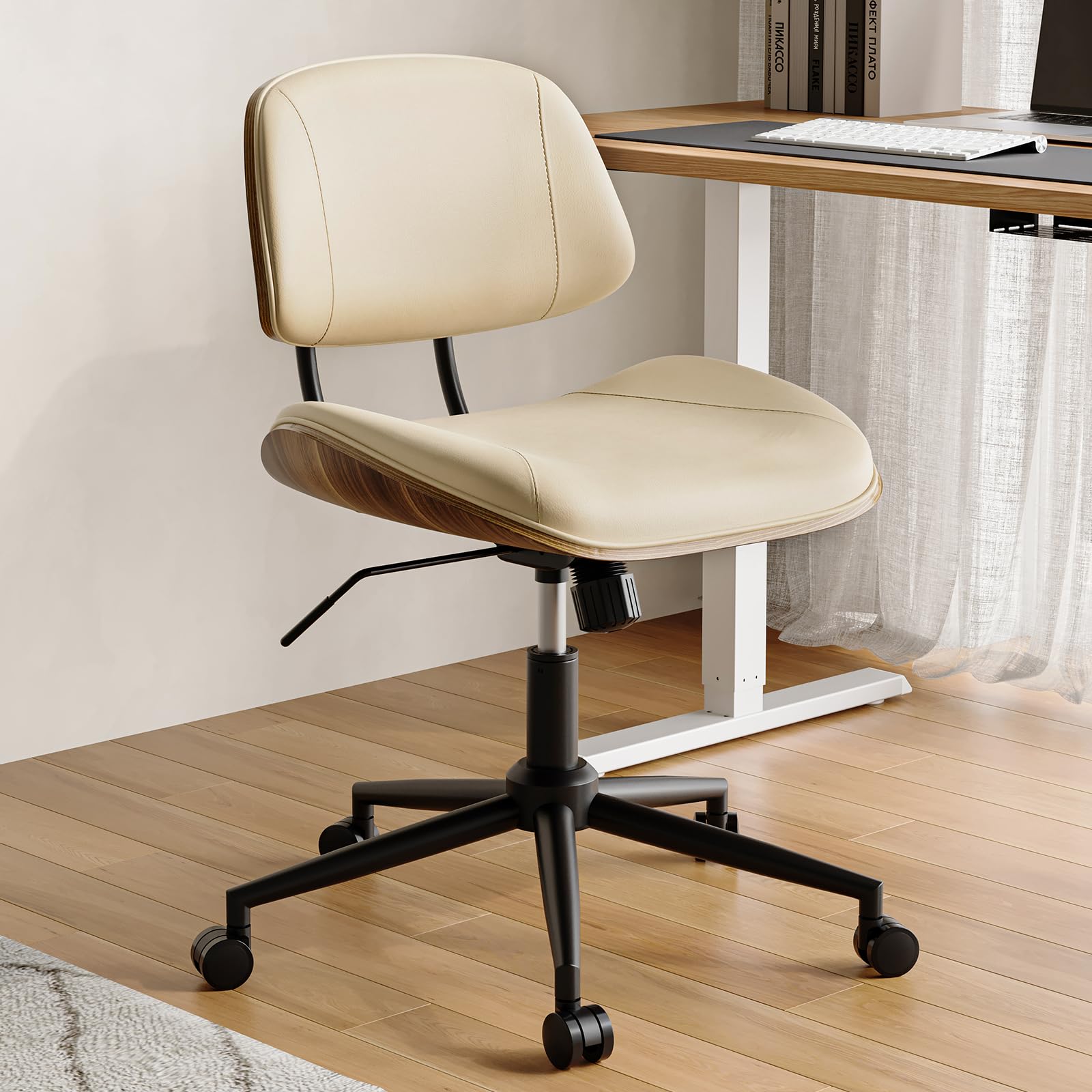
Quick Answer: Three Types That Fit Real Homes
Most buyers choose between three broad types.
- Padded mesh task style. A breathable back and cushioned seat suit long sessions in a warm room, and this type usually offers the most height and tilt adjustment for the money.
- Simple upholstered style. A fabric or faux leather seat with a modest back suits a vanity or a living room corner where looks matter as much as function.
- Wide seat style. A broader seat pan with no arms in the way lets you shift position, sit with one leg tucked up, or share the chair across different body sizes.
Before You Buy: A Quick Checklist for Choosing an Office Chair
Size: Match It to Your Space
Measure the desk opening first, both the width between the legs and the height from the floor to the underside of the desktop or drawer unit. An armless chair only saves space if the seat and back also clear that opening, so compare the overall width and the seat height range against your measurements. Check that the caster base rolls fully under the desk too, because a chair that parks out of the walkway keeps the floor clear for everyone else.
Which Type Fits Your Routine
Mesh backs vent heat and suit warm rooms and long sessions. Padded fabric seats feel softer for shorter sessions. A molded plastic shell wipes clean fast and suits a kitchen table workspace. Think about your routine rather than a showroom label. If you work at the desk most of the day and a family member uses it for homework later, a breathable task style with real adjustment serves both people better than a decorative chair.
Features Worth Paying For and Ones to Skip
Pay for a smooth height lift, a tilt lock you can set and release easily, and a cushion that stays supportive rather than packing flat. A waterfall seat front, where the cushion curves down gently, helps circulation in your legs. Skip novelty extras you will rarely touch, such as massage functions or speakers, because that money buys a stronger frame and better foam elsewhere. A headrest is also optional, since many armless backs are too low to support one.
Body Size and Weight Capacity
Check the rated capacity and stay comfortably under it, because a chair used near its limit wears its lift and cushion out sooner. Seat depth matters as much as width. Sitting with your back against the backrest, you want a gap of about two to three finger widths behind your knees. A seat that is too deep pushes you to perch on the edge without back support, while a seat that is too shallow leaves your thighs unsupported.
Adjustability for Height, Tilt, and Lumbar Support
With no armrests to set, your focus narrows to seat height, tilt tension, and the shape of the backrest. Your feet should rest flat on the floor with your knees at about a right angle, and the backrest curve should meet the small of your back without forcing you upright. Some models add a lumbar pad you can move or remove, which helps when several people share one chair and each needs the support in a different spot.
Materials and Durability
A metal base and a steel frame under the seat outlast thin plastic parts, especially where the chair gets moved between rooms. Mesh should feel taut with no sagging spots, and stitching should be even with no loose threads. Foam density is hard to judge from a listing, so look for a stated cushion thickness and a seat that springs back when pressed rather than staying dented.
Assembly and Warranty
Most armless chairs assemble with a handful of bolts joining the base, lift, seat, and back, and one person can usually finish in about 20 to 30 minutes. Keep the hex key from the box, because retightening those bolts is part of normal care. Read the warranty for what it actually covers. A long frame warranty with short cover for the lift and fabric tells you where the maker expects wear, and replacement lifts are cheap and widely sold.
Realistic Budget Ranges
Spending under $100 usually gets you a simple chair with basic height adjustment and thinner cushioning, fine for light daily use. Spending about $150 to $300 adds a stronger base, better foam, tilt control, and a longer warranty, which is where most shared home chairs sit. Above that range you pay for denser materials, smoother casters, and parts you can replace years later. Match the tier to hours of use rather than to looks.
Types Compared: What Each Armless Style Does Best
For Most Homes: The Padded Mesh Task Style
This is the safe default for a shared home office. The mesh back keeps air moving during long sessions, the padded seat handles different sitters well, and height plus tilt adjustment covers many heights. It is also the easiest type to repair, since its lifts and casters are standard sizes. Choose it when the chair will see daily work hours and more than one user.
For Low Cost: The Simple Upholstered Style
A plain fabric or faux leather chair with a lightly padded back costs the least and blends into a bedroom or living room without looking like office furniture. You give up tilt features and deep cushioning, so it suits shorter sessions such as paying bills, homework, or an hour of laptop work at a vanity. It is also the easiest type to slide fully under a low desk at the end of the day.
For Long Term Use: The Sturdy Frame Style With Replaceable Parts
Paying more for a metal base, a reinforced seat frame, and a maker that sells spare lifts, casters, and covers turns the chair into something you maintain rather than replace. This style suits a household that has already worn out a cheap chair and wants the next one to last through years of daily use. Judge it on frame materials, warranty length on parts, and how easy those parts are to order.
How This Guide Was Put Together
The criteria above come from manufacturer specifications for seat dimensions, rated capacity, and adjustment ranges, combined with recurring themes in verified buyer feedback about cushion life, lift failure, and fabric wear. Types are compared on ergonomics, build quality, size, assembly, and warranty.
What We Like and What We Do Not About Armless Chairs
The clear gain is freedom at the sides. You can pull in close to the desk, turn to reach a printer or shelf without an armrest blocking your hip, and get in and out from the side in a tight corner. Sharing is easier too, because there is no arm height that suits one person and digs into another person's thighs. For guidance on seating position across a full workday, see our notes on the best office chair for long hours, since posture habits matter more once arm support is gone.
The trade off is real support for your forearms. Without armrests, your shoulders carry more load while you type, so desk height and keyboard position need more care. If you already deal with aches, compare the advice in our guide to the best office chair for back pain before deciding, and stop using any chair that leaves you with numbness or pain that lingers after you stand up. Persistent pain deserves a clinician view, not a new cushion.
Common Buying Mistakes to Avoid
- Measuring only the floor space. A chair that fits the room can still fail at the desk if the back is too tall or the base too wide to park under it.
- Ignoring seat depth. A seat that is too deep leaves shorter users perched forward with no back support at all.
- Buying for one user in a shared home. A fixed back shape that suits one person may press the wrong spot on a taller or shorter family member.
- Skipping the capacity rating. Running a chair near its limit shortens lift life and flattens the cushion far sooner than expected.
- Paying for extras instead of structure. Novelty features do not fix a weak frame, and the frame decides how long the chair stays wobble free.
Cost of Ownership and Care
An armless chair has few running costs. Expect to replace casters that pick up grit, tighten bolts about twice a year, and eventually swap the gas lift if the seat starts to drop, a repair covered in our guide on how to fix a sinking office chair. Wipe spills the same day, vacuum mesh with a brush attachment, and follow the fabric specific steps in our guide on how to clean an office chair. Keep the chair out of constant direct sun, because heat and light break down foam and fade upholstery.
Your Questions, Answered
How should you sit in an armless office chair?
Sit back so the backrest supports the curve of your lower back, keep your feet flat, and let your thighs rest level or sloping slightly down. Without armrests, set the desk or keyboard tray so your elbows bend at about a right angle with shoulders relaxed. One point the body sections skip: a small footrest helps shorter users keep that posture when the desk forces a higher seat setting.
How often should you clean an armless office chair?
A quick vacuum of the seat and mesh once a month keeps grit from grinding into the fabric as you move. Treat spills right away by blotting rather than rubbing, because rubbing pushes liquid deeper into foam. Once or twice a year, check the caster axles for wound up hair, since drag from dirty casters is often mistaken for a worn out base.
Why does an armless office chair keep sinking?
The gas lift seals wear with age, so the cylinder slowly loses pressure and the seat drops a little at a time or all at once. Confirm the cause by marking the lift shaft with tape after raising the seat fully, then checking whether it slides down as you sit. A clamp on the shaft can hold height briefly, but a replacement lift is the lasting fix and costs far less than a new chair.
Are armless office chairs worth it for daily work?
They are worth it when space, close access to the desk, or shared use drives the decision, and when your setup lets your forearms rest lightly on the work surface. They are a poor trade if you rely on armrests to unload your shoulders. A practical test many buyers miss: work one full day in a dining chair at your desk, because that trial shows whether you miss arm support before you spend anything.
What is the best armless office chair for a shared family desk?
The strongest choice for a shared desk is the type with the widest useful adjustment, meaning a seat height range that covers the shortest and tallest users, a forgiving lumbar shape, and a cushion firm enough for different weights. Prioritize a rated capacity above the heaviest user with room to spare. Families often overlook back height, so check that the backrest top still meets the shoulder blades of your tallest user.
Final Thoughts
Start with your desk measurements, then pick the type that matches your hours and your users, and let the budget tiers above set a sane spending range. The product table above pulls those trade offs together for a quick comparison. For complete room setups, our guide to the best office chair for home office covers the wider picture. Choose the best armless office chair for the way your household actually sits, and it will earn its corner every day.